






































































































































Multi-cloud computing solutions leverage two or more cloud providers (AWS, Azure, GCP) to optimize performance and fault tolerance. Multi-cloud edge computing processes data closer to users, reducing latency. Cloud application development services enable teams to build applications on the optimal platform for each workload. Ideal for enterprises, fintech companies, and healthcare, they deliver cost savings, uptime, and flexibility.
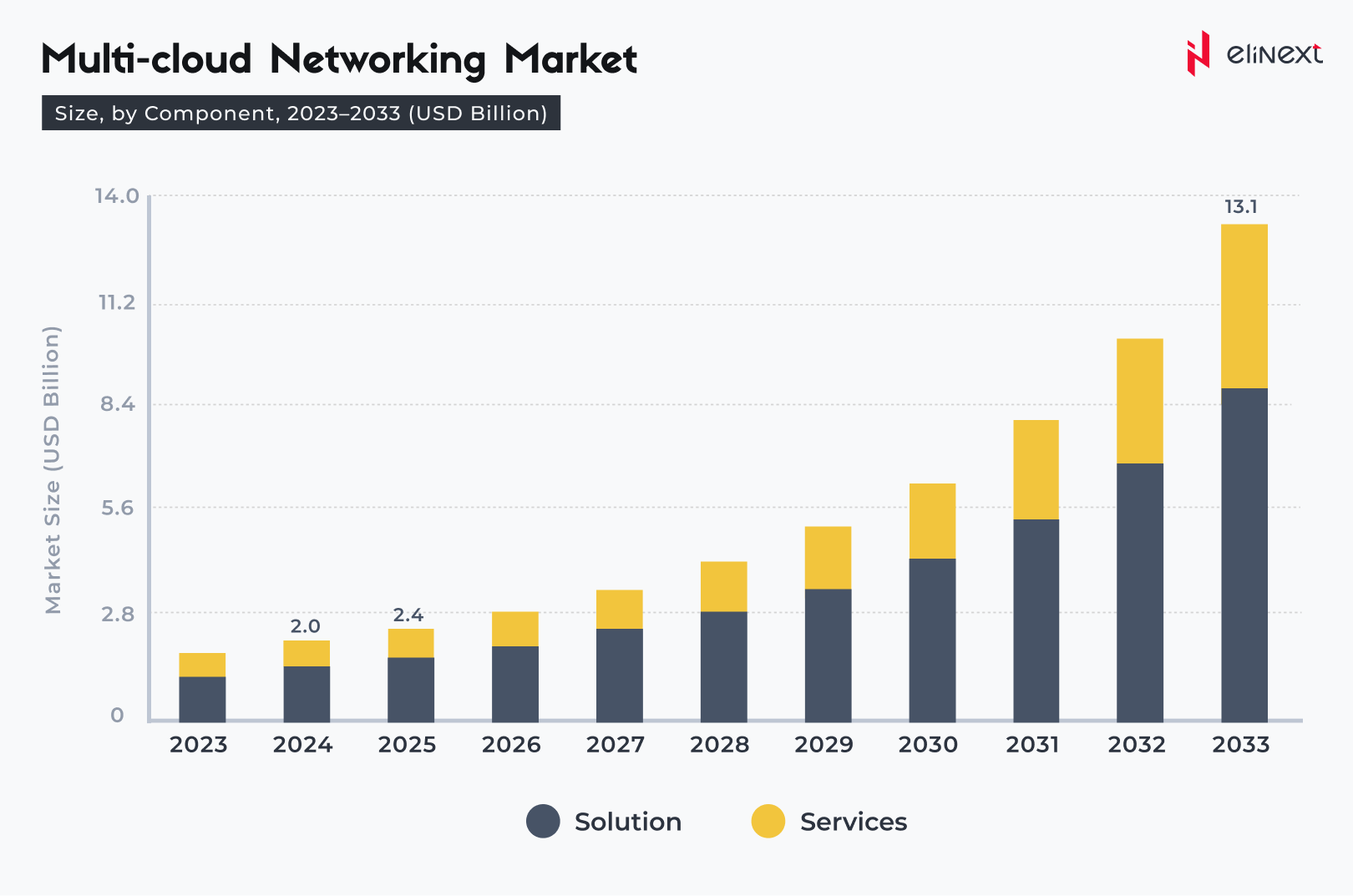
By 2026, the cloud computing market will reach $947.3 billion. 89% of organizations already use multi-cloud computing services, resulting in reduced costs, increased resiliency, and accelerated innovation across all industries.
The adoption of cloud computing capabilities is increasingly becoming a business advantage among enterprises. Cloud business services are considered as a digital transformation engine that ensures optimal working capacity and business continuity: everything from apps to storage can be used over the Internet and paid on a pay-as-you-go basis.
In today’s article, we will focus on one of the biggest trends in cloud computing – multi-cloud management. In particular, we’ll shed light on what multi-cloud is, why it’s a favoured strategy of many European businesses, and what advantages you can derive from a multi-cloud management platform.
Unlock your growth potential today, implement multi-cloud computing solutions.

What is multi-cloud edge computing?
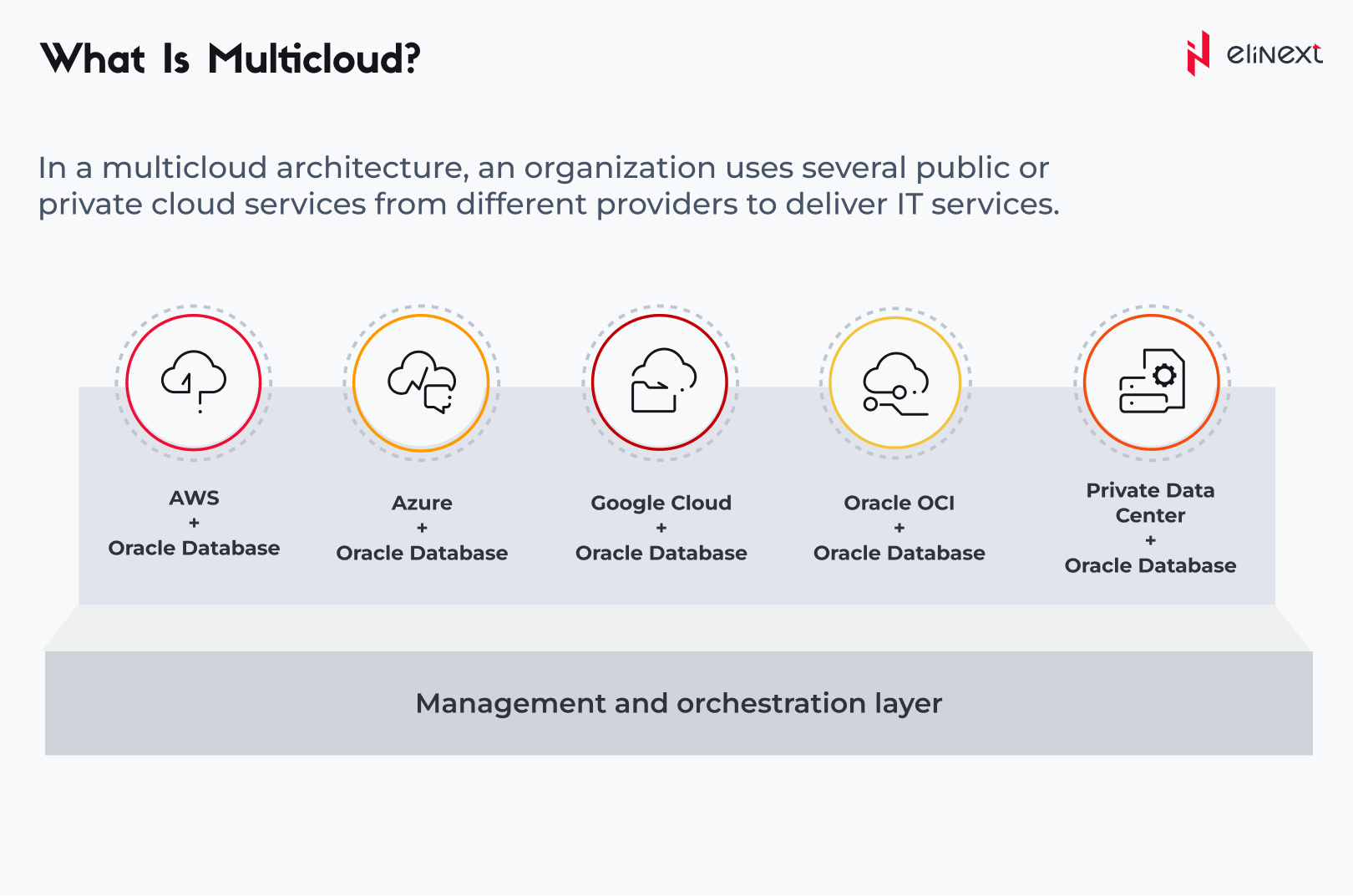
Do you rely on cloud services in your business? If one service provider renders you email service, another delivers you an inventory app or CRM, and your company is backed up by a third-party vendor, this all is known as multi-cloud management. In other words, the term “multi-cloud management platform” refers to the use of one or more cloud deployments of the same type (public or private) supplied by different cloud providers. It involves not only large-scale storage capacities – Infrastructure-as-a-service (IaaS), Platform-as-a-service (Paas), or an application (Software-as-a-service – SaaS) can also be used by various providers.
Forms of cloud computing
Infrastructure-as-a-Service (IaaS)provides users with storage capacities, data centers, network (APIs instead of traditional networking hardware), compute (virtualized compute resources).
Platform-as-a-service (Paas)provides users with a cloud environment (incl. middleware, database management, operating systems and development tools) to build, customize, and test their apps.
Software-as-a-service (SaaS)
provides users with access to cloud-based software instead of installing it.
If you inquired about just a few reasons for a need to diversify your cloud business services, mitigating security risks, and planning optimal costs come first. Distributing individual tasks to vendors means no dependence on one vendor and their business processes. You can assign different levels of security to your data choosing a cloud provider. Besides, your business is not locked in one cloud and does not depend on its functionality and, what is more important, price agreements. Let’s detail the story.
Integration Multi-Cloud Computing Solutions in Europe
You will not be a pioneer in moving your business functions to the multi-cloud. The truth is out there and involves European businesses to increasingly exploit the potential of cloud computing capabilities while the cloud vendors proactively cultivate the market.
As for the multi-cloud computing solutions specifically, while businesses seek to enhance privacy and optimize their workloads through a variety of environments, multi-cloud is becoming more and more common.
Picking the key cloud business services providers in Europe, such companies as Amazon, Google, Microsoft, IBM, and AT&T lead the market, controlling the share of 55%. Alibaba also expanded its capacity in the region by opening two data centers in the UK. These vendors host everything from start-ups to Netflix and Airbnb.
The front runners of European cloud computing capabilities adoption are the UK and Germany. These countries have created cloud-friendly environments that include relevant legislation, national broadcast plans, and average mobile data speeds, and beat a path for other countries’ concerns over multi-cloud edge computing.
In Germany, Microsoft offered Azure cloud services from two cloud centers, the data in which are controlled by an independent German company. It’s this very company or customers who may permit Microsoft to access the data.
The reason is that many European companies are concerned about data confidentiality. Businesses worry that their data may be processed somewhere on the other side of the Earth since the leading multi-cloud computing services vendors are US-based companies.
In order to disrupt this ascendance, the European Commission has launched a project called GAIA-X involving a number of potential use-case examples from various industries – healthcare, finance, public administration, science, and education. The project is supported by the government officials as well as 100 European companies with SAP SE, Deutsche Telekom AG, Deutsche Bank AG, Siemens, and Bosch among them. The project stakeholders should give European cloud computing services much more control.
Regardless of whether the data is finally stored in Europe or processed by providers in the USA, a variety of cloud providers will certainly contribute to competition, which entails economic benefits for the business.
Why can you benefit from multi-cloud computing services?
Firstly, it’s the power of choice that makes multi-cloud app management a pay-off investment. By employing multiple cloud providers, your business can benefit from the best cloud services and match them to your business needs on a tailor-made basis.
Secondly, multi-cloud is about flexibility. In case of business expansion, you can move a new part of the workload to a relevant cloud provider. Reducing the business will not force you to spend on giant hosting environments. The same is about the delivery of additional functionality to your clients in cloud service – there is no need to employ additional manpower.
Thirdly, if you contract multiple cloud providers, you avoid one vendor lock in. If your business is tied to one cloud service, single cloud risk management will cost a pretty penny to migrate to another vendor. You should also bear in mind that your business might always outgrow the current cloud management software offer and there’s no guarantee that a single cloud provider would manage it.
A multi-cloud management platform can significantly reduce costs. Cloud providers set the best price compared to that of rivals. However, the price can be a headache if you do not scale up your business needs and determine requirements. How much should your multi-cloud management costs? How to choose the right package of cloud business services if they seem to be the same? What should you do to succeed with a multi-cloud management platform?
Multi-cloud computing solutions costs management
What else we want to share in our today’s article is a 4-step-program on how to control and optimize your multi-cloud spendings.
- Build your multi-cloud migration strategy. Determine your business needs and goals, map them to cloud service offerings, and track the state of things.
- Visualize your multi-cloud app costs. Take advantage of the cost breakdown structure of your multiple clouds. Accounting data will show where costs can be charged back or redirected for other cloud services. Make realistic budgeting, in other words.
- Learn the real impact of your multi-cloud app management. Know how your corporate departments make use of the cloud. Make sure you accurately allocate cloud services across your enterprise and know how each department benefits from them.
- Optimize your multi-cloud costs. Select the optimal volume for your multi-cloud management platform, scale it up, increase your management effort to map the right cloud resources to individual tasks. Identify unused or underused cloud services. Take advantage of perks and privileges to cloud business services providers offer. Make sure your business gets the best possible rate.
Being a smart multi-cloud costs manager may not be so easy. Despite this, it is worth trying to go multi-cloud and fuel your business with flexibility, scalability, and maximum agility.

Enterprises managing data across multiple regions face latency spikes and outages when locked into a single vendor. Multi-cloud edge computing distributes workloads closer to end users, but integration complexity quickly increases. At Elinext, our cloud native development services connect environments using Kubernetes-based orchestration. The result: 40% fewer incidents, lower costs, and fault-tolerant systems that scale without vendor lock-in.

Conclusion
Multi-cloud computing services are now a business imperative. According to Flexera’s “State of Cloud 2025” report, the share of workloads migrated to the cloud has grown from 36% in 2024 to 78% in 2025, demonstrating that cloud migration services are rapidly evolving. Eighty-seven percent of organizations cite cost effectiveness as their top cloud KPI, and 59% now have dedicated FinOps teams. Financial services firms have invested $31.3 billion in cloud technologies to achieve compliance and resiliency goals. Companies that act now will be leaders tomorrow.
Multi-cloud Computing Solutions: Terms Explained
-
Multi-cloud Architecture
Multicloud architecture is an approach in which organizations use two or more cloud providers (AWS, Azure, or GCP) to optimize performance, resiliency, and flexibility while avoiding lock-in to a single provider.
-
Cloud Orchestration
Cloud resource orchestration is the automated coordination of cloud tasks (resource provisioning, scaling, and lifecycle management) across multiple environments using tools like Kubernetes, ensuring a consistent and efficient operation.
-
Workload Portability
Workload portability is the ability to seamlessly move applications and data between clouds using containers and standardized APIs, enabling flexible deployment strategies in hybrid and multicloud environments.
-
Vendor Lock-in Avoidance
Avoiding single-vendor lock-in is a set of strategies that prevent over-dependence on a single cloud provider by implementing open standards, interoperability frameworks, and portable architectures across platforms.
-
Cloud Bursting
Cloud expansion is a hybrid configuration in which applications run on private infrastructure but automatically scale to a public cloud during peak demand, ensuring performance without overprovisioning.
-
Unified Cloud Management
Unified cloud management provides centralized management, monitoring, and automation across multiple cloud environments, ensuring consistent policies, reducing complexity, and increasing cost transparency at scale.
-
Cross-Cloud Disaster Recovery
Cross-cloud disaster recovery replicates workloads across different cloud providers to ensure business continuity and quickly switch to a backup server and minimizing downtime and data loss if one provider fails.
-
FinOps
FinOps is an operations framework that maximizes the value of cloud resource investments through collaboration between engineering, finance, and business teams, driving cost optimization and financial accountability.
FAQ
-
Multicloud computing solutions deploy edge computing across multiple providers close to users. Enterprises use them to reduce latency and improve real-time performance.
-
Cloud engineering services are multi-vendor strategies that prevent lock-in to a single provider and improve resiliency. Enterprises use them to optimize costs and leverage the best cloud tools.
-
Multicloud computing is the use of multiple cloud providers to run applications. This improves security by reducing the number of points of failure. Backup is provided in AWS and Azure.
-
Multi-cloud computing solutions are fault-tolerance systems that replicate data across providers. Enterprises use them to quickly restore services in the event of a single cloud failure.
-
Multi-cloud computing solutions are global deployment models using regional cloud nodes. Enterprises use them to reduce latency and meet local compliance requirements.
-
Securing and monitoring edge computing in a multi-cloud environment is a complex task that requires considering the needs of multiple providers. Enterprises are addressing this issue with unified management platforms and automation tools.
-
Multicloud computing solutions are available to small and medium-sized businesses on a pay-as-you-go basis. Enterprises use them to improve uptime and access enterprise-grade tools at an affordable price.