








































































































































Mixed Reality Development Company
What Business Challenges We Help Solve with MR Development

Remote Training Simulation
Training becomes inefficient when real-world onboarding is costly, risky, or inconsistent. Elinext builds immersive AR/VR simulations that standardize learning, reduce errors, and enable scalable, faster workforce training outcomes.

Product Visualization
Product visualization is challenging when customers and stakeholders cannot interact with products physically. Elinext creates real-time 3D/AR experiences that improve understanding, reduce prototyping costs, and accelerate purchase decisions.

Remote Collaboration
Remote collaboration suffers when teams cannot effectively interact with complex 3D data. We develop shared MR environments that improve communication, reduce travel needs, and speed up decision-making processes.

Field Service Maintenance
Field service operations are difficult when technicians lack real-time, accurate guidance. Our team delivers AR-based instructions that reduce downtime, minimize errors, and improve equipment reliability and service efficiency.

Design Prototyping
Design prototyping slows down when physical iterations are expensive and time-consuming. Elinext engineers build tools for rapid 3D prototyping, enabling faster validation, lower development costs, and better design decisions.

Data Visualization
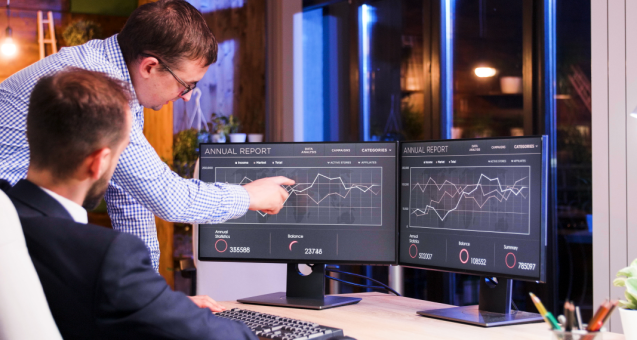
Data interpretation is complex when traditional dashboards fail to show relationships clearly. Elinext creates immersive MR dashboards that improve insight clarity, speed up analysis, and support better operational planning.
-
Remote Training Simulation
Training becomes inefficient when real-world onboarding is costly, risky, or inconsistent. Elinext builds immersive AR/VR simulations that standardize learning, reduce errors, and enable scalable, faster workforce training outcomes.
-
Product Visualization
Product visualization is challenging when customers and stakeholders cannot interact with products physically. Elinext creates real-time 3D/AR experiences that improve understanding, reduce prototyping costs, and accelerate purchase decisions.
-
Remote Collaboration
Remote collaboration suffers when teams cannot effectively interact with complex 3D data. We develop shared MR environments that improve communication, reduce travel needs, and speed up decision-making processes.
-
 Field Service Maintenance
Field service operations are difficult when technicians lack real-time, accurate guidance. Our team delivers AR-based instructions that reduce downtime, minimize errors, and improve equipment reliability and service efficiency.
-
Design Prototyping
Design prototyping slows down when physical iterations are expensive and time-consuming. Elinext engineers build tools for rapid 3D prototyping, enabling faster validation, lower development costs, and better design decisions.
-
Data interpretation is complex when traditional dashboards fail to show relationships clearly. Elinext creates immersive MR dashboards that improve insight clarity, speed up analysis, and support better operational planning.


VisionOS Development Services
by Elinext

Augmented Reality (AR) Development
AR applications for VisionOS place interactive 3D content into physical surroundings using spatial anchors and real-time environment mapping. Elinext develops AR experiences with SwiftUI, RealityKit, and ARKit to improve product visualization, training, and guided interaction.

Virtual Reality (VR) Development
VisionOS VR environments create fully immersive spaces for collaboration, simulation, and digital interaction. As a mixed reality development company, we optimize rendering pipelines, spatial audio, and gesture controls to maintain smooth interaction and visual stability.

Mixed Reality (MR) Development
Mixed reality combines real-world environments with responsive digital objects that react to movement and spatial positioning. Within mixed reality development services, our engineers build MR systems with hand tracking, environment understanding, and real-time 3D interaction for enterprise and consumer applications.
-
AR applications for VisionOS place interactive 3D content into physical surroundings using spatial anchors and real-time environment mapping. Elinext develops AR experiences with SwiftUI, RealityKit, and ARKit to improve product visualization, training, and guided interaction.
-
VisionOS VR environments create fully immersive spaces for collaboration, simulation, and digital interaction. As a mixed reality development company, we optimize rendering pipelines, spatial audio, and gesture controls to maintain smooth interaction and visual stability.
-
Mixed Reality (MR) Development
Mixed reality combines real-world environments with responsive digital objects that react to movement and spatial positioning. Within mixed reality development services, our engineers build MR systems with hand tracking, environment understanding, and real-time 3D interaction for enterprise and consumer applications.
What Our Experts Say


Choose Your
Service Option
Leverage MR development expertise
Hire a dedicated mixed reality developers
Let us handle your MR development project
Mixed Reality Development Services Case Studies
Mixed Reality Development Services We Offer

Mixed Reality Software Development
MR software development focuses on building scalable spatial computing systems for enterprise and consumer environments. Elinext creates applications with Unity, Unreal Engine, OpenXR, and device-specific SDKs optimized for stable real-time interaction.

Mixed Reality App Development
MR applications combine digital objects with physical environments using gesture control, spatial anchors, and environment mapping. Within mixed reality app development services, we develop immersive solutions for training, collaboration, maintenance, and product visualization.

Mixed Reality Consulting Services
Many MR projects fail because hardware limitations and interaction complexity are underestimated early. As a mixed reality development company, Elinext evaluates spatial workflows, rendering requirements, device compatibility, and scalability before development begins.

Mixed Reality Maintenance & Support
MR ecosystems require continuous updates as XR hardware, operating systems, and SDKs evolve. Our engineers maintain rendering pipelines, optimize performance, resolve compatibility issues, and improve interaction stability after deployment.

Mixed Reality Game Development
MR gaming environments require synchronized spatial interaction, low latency, and responsive object behavior. Using MR development services, our team builds immersive gameplay systems with real-time physics, multiplayer logic, and environmental interaction.
Mixed Reality Design Services
MR design requires more than traditional UI because users interact with 3D objects inside physical environments. Elinext creates spatial interfaces, gesture-driven interactions, and immersive UX systems optimized for usability and reduced cognitive overload.
-
MR software development focuses on building scalable spatial computing systems for enterprise and consumer environments. Elinext creates applications with Unity, Unreal Engine, OpenXR, and device-specific SDKs optimized for stable real-time interaction.
-
MR applications combine digital objects with physical environments using gesture control, spatial anchors, and environment mapping. Within mixed reality app development services, we develop immersive solutions for training, collaboration, maintenance, and product visualization.
-
Many MR projects fail because hardware limitations and interaction complexity are underestimated early. As a mixed reality development company, Elinext evaluates spatial workflows, rendering requirements, device compatibility, and scalability before development begins.
-
MR ecosystems require continuous updates as XR hardware, operating systems, and SDKs evolve. Our engineers maintain rendering pipelines, optimize performance, resolve compatibility issues, and improve interaction stability after deployment.
-
Mixed Reality Game Development
MR gaming environments require synchronized spatial interaction, low latency, and responsive object behavior. Using MR development services, our team builds immersive gameplay systems with real-time physics, multiplayer logic, and environmental interaction.
-
MR design requires more than traditional UI because users interact with 3D objects inside physical environments. Elinext creates spatial interfaces, gesture-driven interactions, and immersive UX systems optimized for usability and reduced cognitive overload.
Our Awards and Recognitions
















Advantages of Mixed Reality Development Services by Elinext

Immersive Customer Engagement
MR environments allow users to interact with products, spaces, and digital content in real scale and context. Companies often use immersive interaction to improve product understanding, increase engagement time, and reduce uncertainty before purchasing decisions.

Full AR/VR/MR Technology Support
Different XR ecosystems require different rendering frameworks, tracking systems, and interaction models. As a mixed reality development company, Elinext supports HoloLens, Apple Vision Pro, OpenXR, ARKit, Unity, Unreal Engine, and cross-device spatial computing environments.

Industry-specific MR Solutions
MR applications in healthcare, manufacturing, education, or retail require completely different interaction logic and safety considerations. Our engineers design solutions around industry workflows, operational environments, and device limitations instead of generic immersive templates.

Virtual Product Prototyping
Mixed reality prototyping allows teams to interact with digital product models before physical manufacturing begins. Within mixed reality app development services, we build scalable 3D visualization systems that simplify design review and reduce physical prototyping costs.

Integration with AI, IoT & Cloud Systems
Modern MR platforms increasingly depend on live sensor data, analytics, and cloud synchronization. Elinext integrates MR systems with AI-driven interaction, IoT telemetry, and distributed cloud infrastructure for more adaptive immersive environments.

Long-term Maintenance & Technical Support
MR applications require ongoing optimization because devices, SDKs, and operating systems evolve rapidly. Using MR development services, our team maintains rendering performance, spatial mapping accuracy, compatibility, and interaction stability after deployment.
-
Immersive Customer Engagement
MR environments allow users to interact with products, spaces, and digital content in real scale and context. Companies often use immersive interaction to improve product understanding, increase engagement time, and reduce uncertainty before purchasing decisions.
-
Different XR ecosystems require different rendering frameworks, tracking systems, and interaction models. As a mixed reality development company, Elinext supports HoloLens, Apple Vision Pro, OpenXR, ARKit, Unity, Unreal Engine, and cross-device spatial computing environments.
-
Industry-specific MR Solutions
MR applications in healthcare, manufacturing, education, or retail require completely different interaction logic and safety considerations. Our engineers design solutions around industry workflows, operational environments, and device limitations instead of generic immersive templates.
-
Virtual Product Prototyping
Mixed reality prototyping allows teams to interact with digital product models before physical manufacturing begins. Within mixed reality app development services, we build scalable 3D visualization systems that simplify design review and reduce physical prototyping costs.
-
Modern MR platforms increasingly depend on live sensor data, analytics, and cloud synchronization. Elinext integrates MR systems with AI-driven interaction, IoT telemetry, and distributed cloud infrastructure for more adaptive immersive environments.
-
MR applications require ongoing optimization because devices, SDKs, and operating systems evolve rapidly. Using MR development services, our team maintains rendering performance, spatial mapping accuracy, compatibility, and interaction stability after deployment.
The Benefits of Mixed Reality Development Services by Elinext


Industries We Serve




What Our Customers Think
























Discover All Our AI-Powered
MR Development Solutions

Holistic AI-Powered MR Development
AI-powered MR systems combine spatial mapping, object interaction, analytics, and adaptive behavior into one immersive environment. Elinext develops integrated architecture where AI continuously improves interaction quality and environmental responsiveness.

Advanced Computer Vision Solutions
Computer vision allows MR applications to recognize surfaces, objects, gestures, and movement in real time. Within mixed reality development services, we implement environment tracking, object detection, and spatial recognition for more accurate interaction.

Natural Language Processing Solutions
NLP enables voice-driven interaction inside mixed reality environments without relying only on gestures or controllers. Our engineers integrate conversational AI, speech recognition, and contextual commands for more intuitive immersive workflows.

AI-Powered Predictive Analytics
Predictive analytics inside MR environments helps anticipate user actions, operational risks, or equipment behavior using live data streams. This supports faster decision-making and more adaptive immersive simulations in industrial and enterprise environments.

Immersive AI-Powered Experiences
AI-driven immersive systems dynamically adapt content, interaction, and spatial behavior based on user activity and environment changes. Elinext develops responsive MR experiences that feel more natural and context-aware during real-time interaction.

Seamless AI Integration Solutions
AI integration requires synchronization between models, cloud infrastructure, rendering engines, and spatial computing systems. Our team connects MR applications with AI APIs, edge processing, cloud analytics, and real-time inference environments.
-
AI-powered MR systems combine spatial mapping, object interaction, analytics, and adaptive behavior into one immersive environment. Elinext develops integrated architecture where AI continuously improves interaction quality and environmental responsiveness.
-
Computer vision allows MR applications to recognize surfaces, objects, gestures, and movement in real time. Within mixed reality development services, we implement environment tracking, object detection, and spatial recognition for more accurate interaction.
-
NLP enables voice-driven interaction inside mixed reality environments without relying only on gestures or controllers. Our engineers integrate conversational AI, speech recognition, and contextual commands for more intuitive immersive workflows.
-
Predictive analytics inside MR environments helps anticipate user actions, operational risks, or equipment behavior using live data streams. This supports faster decision-making and more adaptive immersive simulations in industrial and enterprise environments.
-
Immersive AI-Powered Experiences
AI-driven immersive systems dynamically adapt content, interaction, and spatial behavior based on user activity and environment changes. Elinext develops responsive MR experiences that feel more natural and context-aware during real-time interaction.
-
AI integration requires synchronization between models, cloud infrastructure, rendering engines, and spatial computing systems. Our team connects MR applications with AI APIs, edge processing, cloud analytics, and real-time inference environments.


Ready to Turn Mixed Reality Challenges Into Working Solutions?
Our MR Development Roadmap

Discovery & Requirements Analysis
We begin by clarifying business objectives, target users, priority scenarios, system requirements, and technical limitations. This early alignment prevents unclear scope and costly revisions, resulting in a detailed product concept and an actionable MR development plan.

UX/UI and Spatial Design
Our designers create interfaces, spatial layouts, gestures, and interaction patterns based on the environments in which the application will be used. The outcome is an intuitive MR experience that supports real workflows, shortens the learning curve, and encourages user adoption.

Prototype Development
We build an interactive MR prototype to test the core concept, user journey, and technical feasibility before committing to full development. Early validation exposes usability and performance issues sooner, reducing costs and providing practical feedback for the next iteration.

Full-Scale Development
Once the concept is validated, we engineer the complete MR application, including required features, integrations, backend components, and scalable architecture. This stage produces a secure, high-performing solution prepared for deployment and future expansion.

Testing & Optimization
Elinext QA engineers evaluate the application across supported devices, physical environments, interaction scenarios, and system conditions. We identify defects, improve responsiveness, and refine usability to deliver a stable and thoroughly optimized MR product.
Deployment & Support
We manage application release, infrastructure setup, system integration, and production rollout. After launch, our team provides maintenance, updates, troubleshooting, and further improvements to keep the MR solution reliable and effective over time.
-
Discovery & Requirements Analysis
We begin by clarifying business objectives, target users, priority scenarios, system requirements, and technical limitations. This early alignment prevents unclear scope and costly revisions, resulting in a detailed product concept and an actionable MR development plan.
-
Our designers create interfaces, spatial layouts, gestures, and interaction patterns based on the environments in which the application will be used. The outcome is an intuitive MR experience that supports real workflows, shortens the learning curve, and encourages user adoption.
-
Prototype Development
We build an interactive MR prototype to test the core concept, user journey, and technical feasibility before committing to full development. Early validation exposes usability and performance issues sooner, reducing costs and providing practical feedback for the next iteration.
-
Once the concept is validated, we engineer the complete MR application, including required features, integrations, backend components, and scalable architecture. This stage produces a secure, high-performing solution prepared for deployment and future expansion.
-
Elinext QA engineers evaluate the application across supported devices, physical environments, interaction scenarios, and system conditions. We identify defects, improve responsiveness, and refine usability to deliver a stable and thoroughly optimized MR product.
-
We manage application release, infrastructure setup, system integration, and production rollout. After launch, our team provides maintenance, updates, troubleshooting, and further improvements to keep the MR solution reliable and effective over time.
Hire Mixed Reality Developers from Elinext





































FAQ
-
It’s when digital objects interact with physical environments in real time through spatial mapping and tracking. MR systems combine immersive visualization with live environmental interaction and user input.
-
MR combines physical and digital environments with interactive spatial behavior. Unlike AR, MR objects respond to real-world space, while VR replaces the environment completely with a fully virtual experience.
-
MR solutions are widely used in healthcare, manufacturing, education, retail, construction, and real estate. Businesses apply MR for immersive training, equipment visualization, collaborative workflows, and interactive product presentation.
-
Mixed reality applications support devices such as Microsoft HoloLens, Apple Vision Pro, Magic Leap, Meta Quest, tablets, and advanced AR headsets. Device choice depends on rendering requirements and interaction complexity.
-
AI in MR environments supports object recognition, gesture interpretation, voice interaction, predictive analytics, and adaptive immersive behavior. AI models help MR applications react more intelligently to users and surroundings.
-
The timeline depends on interaction complexity, 3D asset production, device support, AI integration, and backend infrastructure. Enterprise-grade MR systems often require several development stages.
-
MR development cost depends on rendering quality, spatial interaction logic, supported devices, cloud infrastructure, and integration complexity. Multiplayer interaction and AI-powered functionality usually increase implementation scope.
-
MR applications can integrate with ERP platforms, IoT devices, AI systems, cloud infrastructure, CRM software, and analytics tools. Integration helps synchronize immersive environments with real operational business data.
-
MR dev services become technically challenging when spatial tracking, rendering performance, gesture recognition, and real-time synchronization must work simultaneously across different hardware and physical environments.