
IT asset management solutions are systems that track, govern, and optimize every hardware and software asset across an organization’s infrastructure. They’re built for IT teams, operations managers, and CIOs who need a single source of truth for their technology estate. When implemented well, they cut wasteful spending, tighten compliance, and free teams from the kind of manual tracking that quietly eats hundreds of hours a year.
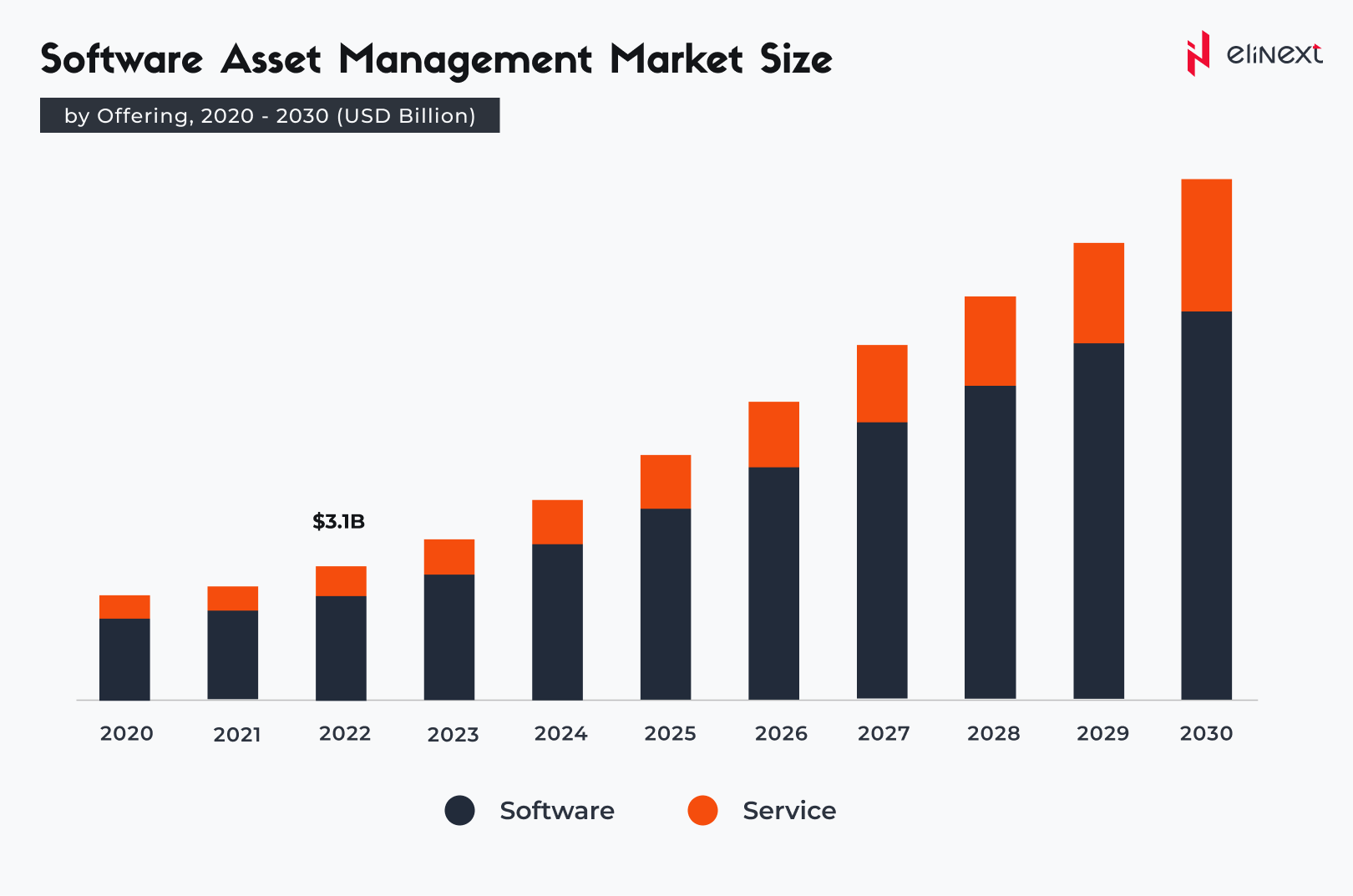
The market is moving fast. Global investment in IT asset management software is forecast to surpass 6.78 billion by 2030.
Key Takeaways
- The global ITAM market is on track to exceed $6.78B by 2030
- Organizations using advanced IT asset management solutions report up to 30% cost savings
- In 2023, cloud adoption increased by 4.2 percentage
What is IT Asset Management and How It Works?
IT asset management is the practice of tracking the full lifecycle of every technology asset an organization owns or uses. This covers physical hardware, software licenses, cloud subscriptions, and virtual resources. At its core, ITAM software works by creating an authoritative inventory, linking each asset to a cost center or owner.
Elinext helps build ITAM foundations from the ground up.
The Rise of AI and ML in IT Asset Management
Artificial intelligence and machine learning are reshaping what IT asset management solutions can do. AI-powered platforms now predict when assets will fail, flag anomalous usage patterns, and recommend license right-sizing before renewal cycles arrive. AI development services bring these capabilities to life through demand forecasting models, intelligent alerting, and natural-language querying of asset data. Meanwhile, ML development services allow ITAM solutions to learn from usage telemetry.
Emerging Trends in IT Asset Management
Modern IT asset management solutions are evolving to address growing complexity in IT ecosystems. Businesses are adopting automation, cloud platforms, and data-driven approaches to improve asset visibility and efficiency.
Automation and AI-Driven Asset Management
Automation in IT asset management software uses AI to handle repetitive tasks such as asset discovery, classification, and reporting. This reduces manual effort and human error. Businesses benefit from faster operations and improved accuracy, resulting in better resource allocation and reduced costs.
IoT Solutions in IT Asset Management
IoT integration allows real-time tracking of physical assets through connected devices. IT asset management services leverage IoT data to monitor asset usage and performance. This leads to enhanced visibility and proactive maintenance, improving operational efficiency.
Cloud-Based IT Asset Management Solutions
Cloud-based ITAM software provides centralized access to asset data from anywhere. Businesses gain scalability, flexibility, and reduced infrastructure costs. The outcome is improved collaboration and real-time asset tracking across distributed teams.
Remote IT Asset Management
Remote management enables organizations to track and manage assets across multiple locations. It asset management solutions ensure visibility in hybrid work environments. This improves control, reduces downtime, and supports distributed operations.
Blockchain in IT Asset Management
Blockchain technology ensures secure and transparent asset tracking. ITAM solutions using blockchain provide tamper-proof records of asset transactions. This enhances trust, compliance, and auditability for businesses.
Sustainability in IT Asset Management
Sustainable IT asset management services focus on reducing e-waste and optimizing asset lifecycles. Businesses benefit from lower environmental impact and improved ESG compliance. The outcome is cost savings and stronger corporate responsibility.
“Data modernization is complex because organizations deal with fragmented systems, inconsistent asset data, and legacy infrastructure. Elinext addresses this by implementing integrated IT asset management solutions that unify data and automate processes. As a result, businesses gain accurate insights, reduce operational costs, and improve strategic decision-making.”
Michael Reeves, Enterprise Infrastructure and ITAM Specialist
Explore IT Asset Management Services by Elinext
Elinext delivers comprehensive IT asset management services designed to optimize asset performance and reduce costs. From implementing ITAM software to customizing scalable IT asset management solutions, we help businesses gain full control over their IT ecosystems. Our expertise ensures improved compliance, efficiency, and long-term value.
Upgrade your IT operations with tailored IT asset management services.
What are the Future Trends of IT Asset Management Solutions?
IT asset management solutions are becoming more intelligent, automated, and data-driven, enabling businesses to make faster and more accurate decisions. As organizations adopt cloud platforms, AI, and IoT, ITAM solutions will continue to evolve toward predictive and autonomous systems. This transformation will improve asset visibility, reduce costs, and enhance compliance across industries.
Conclusion
IT asset management software is essential for businesses aiming to optimize resources and maintain control over complex IT environments. As technologies like AI, cloud, and IoT advance, IT asset management solutions will become more proactive and strategic. Companies that invest in modern IT asset management services will gain a competitive edge through efficiency, cost savings, and improved decision-making.
IT Asset Management: Terms Explained
IT Asset Management (ITAM)
ITAM is the practice of tracking and managing IT assets throughout their lifecycle to optimize usage, reduce costs, and ensure compliance.
Software Asset Management (SAM)
SAM focuses on managing software licenses, usage, and compliance to avoid legal risks and optimize software investments.
Configuration Management Database (CMDB)
A CMDB is a centralized repository that stores information about IT assets and their relationships within an organization.
Asset Lifecycle Management
This refers to managing assets from procurement to disposal, ensuring maximum value and efficiency at each stage.
License Compliance
License compliance ensures that software usage aligns with licensing agreements, reducing the risk of penalties.
IT Asset Discovery
IT asset discovery identifies and catalogs all assets within an IT environment, providing visibility and control.
Cloud Asset Management
This involves tracking and managing cloud-based resources to optimize usage, costs, and performance.
Endpoint Management
Endpoint management focuses on controlling and securing devices such as laptops, desktops, and mobile devices within a network.
FAQ
What is changing most in IT Asset Management in 2026?
IT asset management is evolving toward automation and AI-driven processes. It is used to improve efficiency and reduce manual work. Businesses apply it to gain real-time insights and optimize asset performance.
How is AI transforming ITAM?
AI in ITAM is the use of machine learning to automate asset tracking and analysis. It is used to predict failures and optimize usage. Businesses apply it to improve decision-making and reduce downtime.
What role does cloud and SaaS play in ITAM today?
Cloud and SaaS in ITAM refer to the management of assets in cloud environments. They are used to provide scalability and flexibility. Businesses apply them to enable remote access and centralized management.
How is ITAM evolving with sustainability and ESG goals?
Sustainable ITAM is the practice of reducing environmental impact through efficient asset use. It is used to minimize e-waste and energy consumption. Businesses apply it to meet ESG requirements and improve responsibility.
What is the relationship between ITAM and Software Asset Management (SAM)?
ITAM and SAM are interconnected practices for managing IT and software assets. They are used to ensure compliance and efficiency. Businesses apply them to control costs and optimize resources.
How does ITAM help reduce costs?
ITAM is a strategy for optimizing asset usage and eliminating waste. It is used to track licenses and prevent overspending. Businesses apply it to improve budgeting and reduce unnecessary expenses.
What are the biggest challenges in ITAM for 2026?
ITAM challenges include managing complex infrastructures and ensuring data accuracy. It is used to address compliance and visibility issues. Businesses apply solutions to overcome integration and scalability problems.
What does the future of ITAM look like beyond 2026?
The future of ITAM is defined by automation and predictive analytics. It is used to enable proactive asset management. Businesses apply it to achieve smarter operations and long-term efficiency.
About the Author
Anastasia is a financial and banking IT consultant at Elinext with over 10 years of experience in fintech project delivery. She specializes in client management, RFP bidding, and cross-functional coordination for complex financial sector solutions — helping businesses bridge the gap between regulatory requirements and scalable software implementation.