











































































































































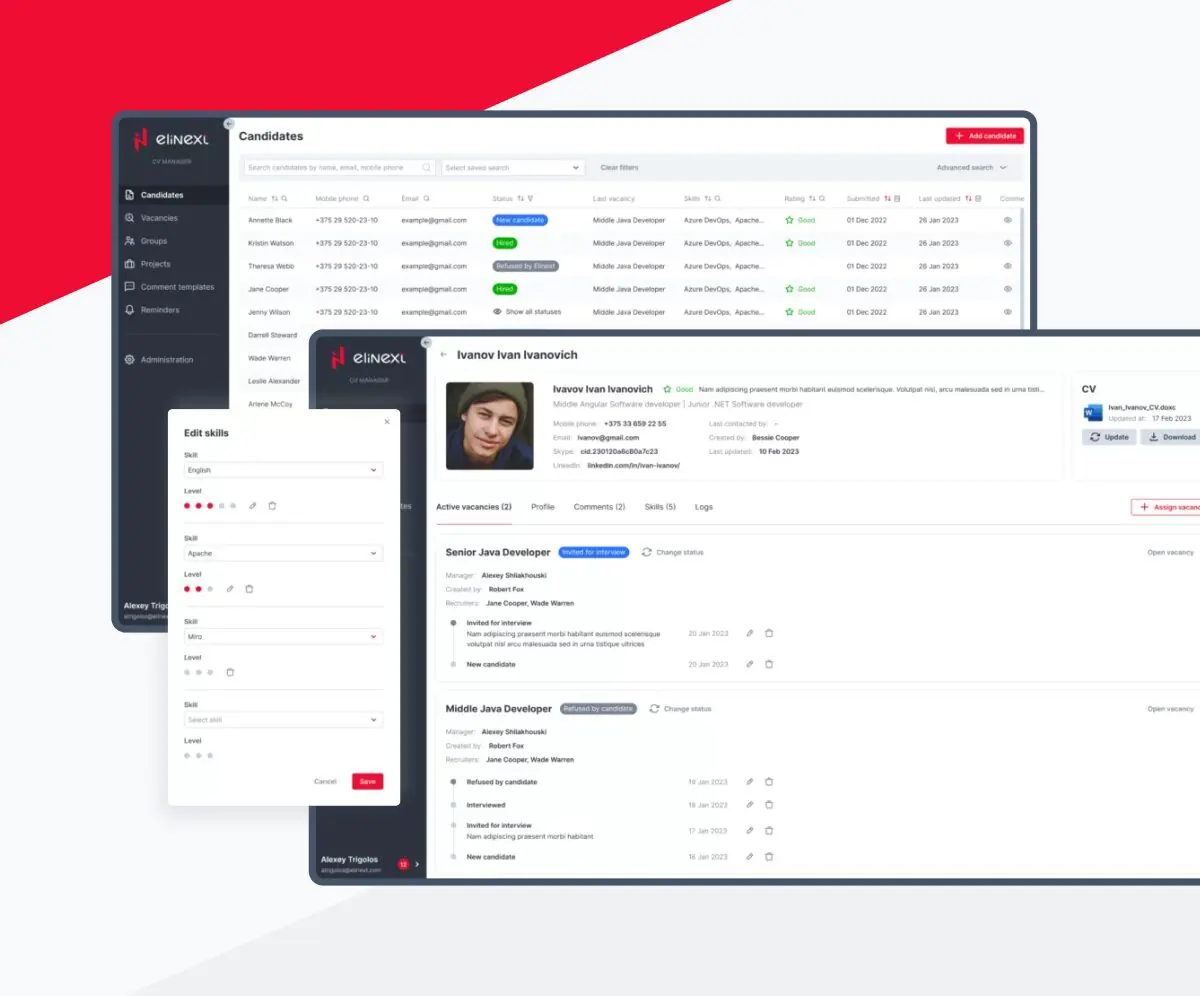

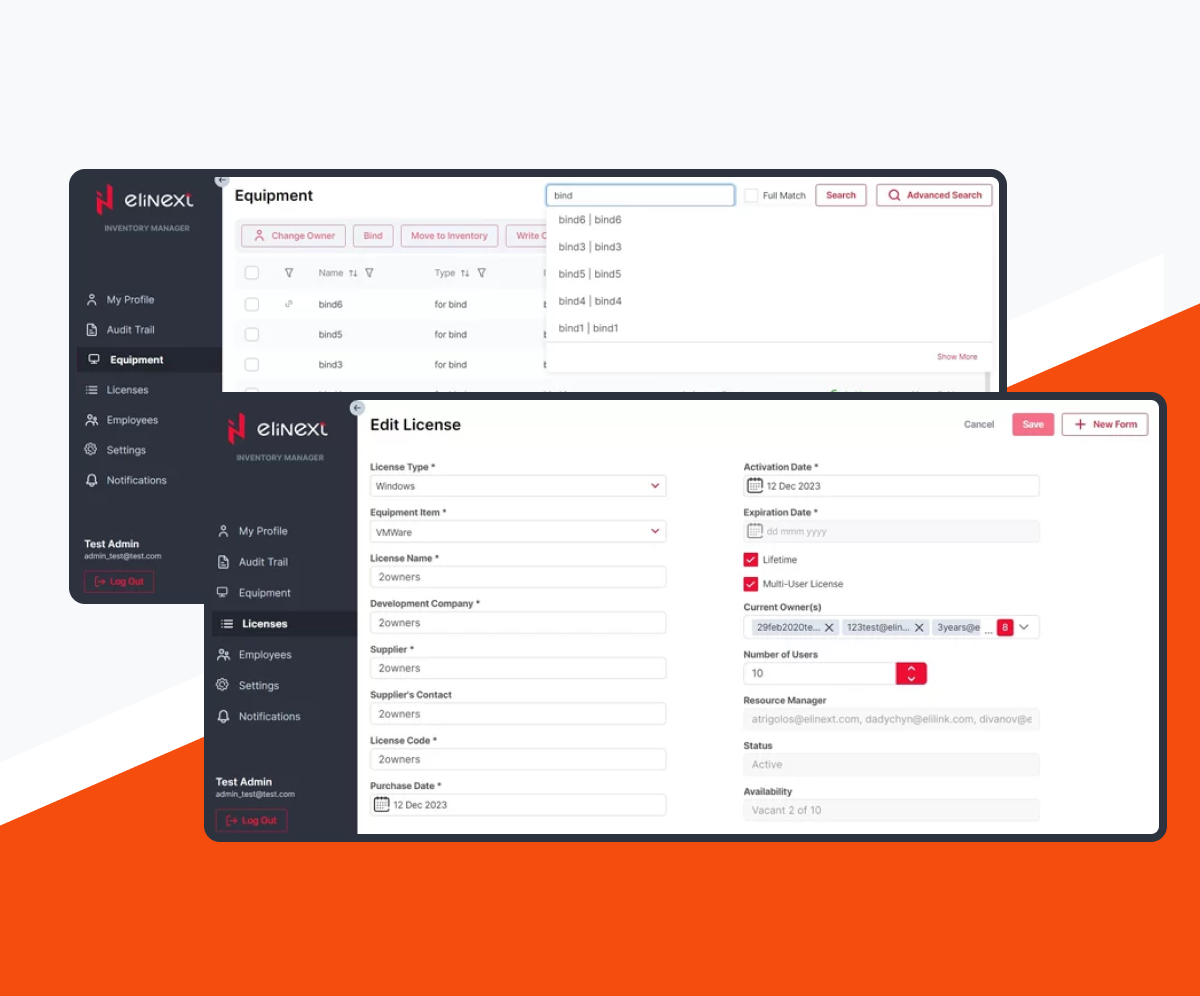


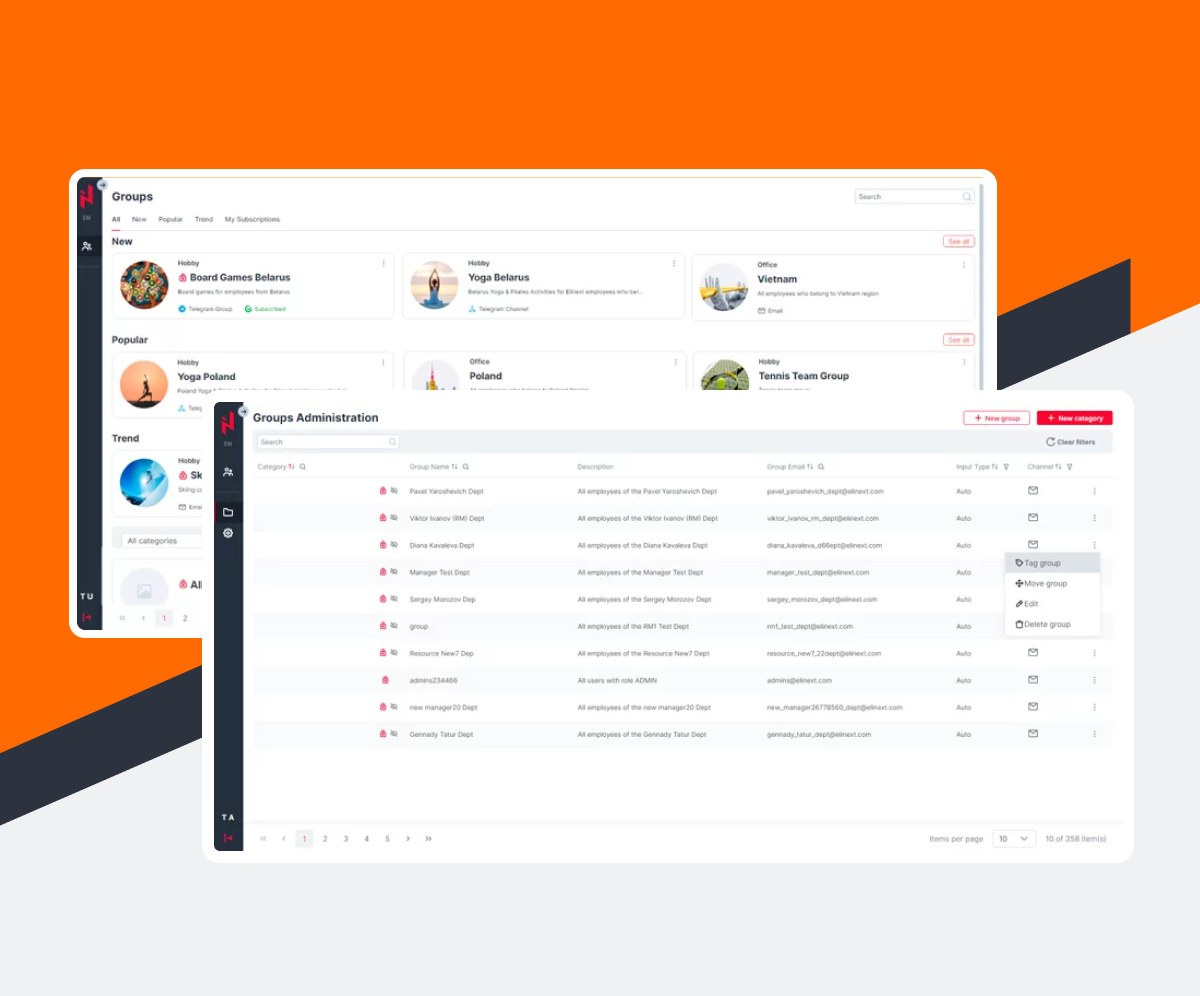







I’ve seen this setup more times than I can count. A billing team runs on a practice management system that’s older than some of the people using it. It has no API and no webhooks. Data leaves through a nightly CSV export, and one person on the team knows which columns can’t be trusted. Claims go out. Denials come back as 835 files nobody has time to read. Money slips away quietly, a few dollars at a time.
At Elinext, we’ve spent years on healthcare software development services, and a good share of that work has been untangling billing stacks like this one. So here’s what I’d tell you over coffee: what RCM actually is, how it differs from billing, where the leaks are, and how to automate without breaking what already works.
What Is Revenue Cycle Management in Medical Billing?
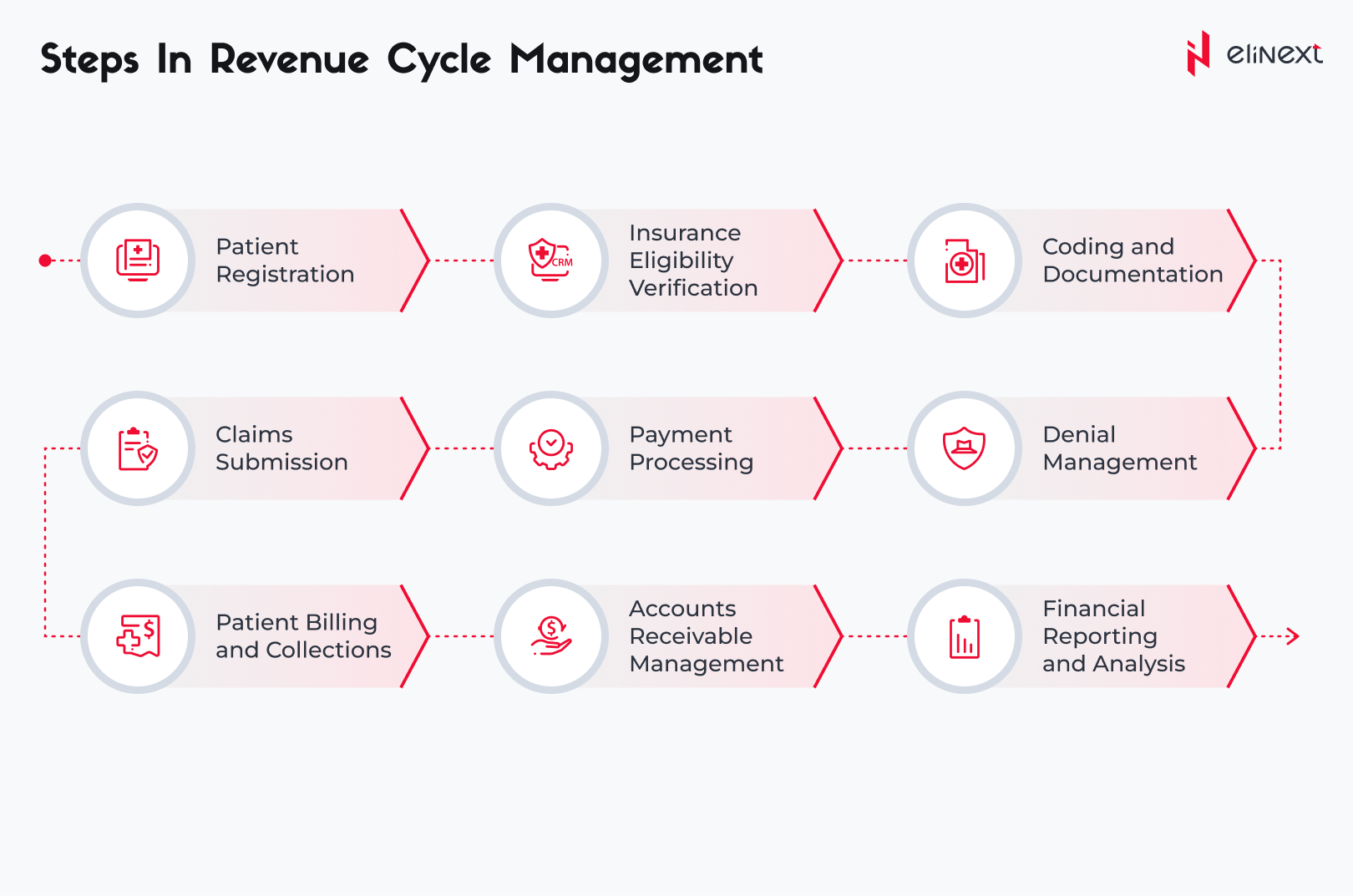
When a finance lead asks me what revenue cycle management in medical billing is, I skip the textbook answer. RCM is every step that turns a patient visit into cash in your account. It starts before the patient walks in, with scheduling, insurance eligibility checks (the X12 270/271 transaction), and prior authorization. Then come charge capture, coding, claim submission (837), remittance posting (835), denial work, and patient collections.
Billing is one link in that chain. RCM is the whole chain, plus the data that tells you which link is about to snap.
Let’s read them together.

Medical Billing vs Revenue Cycle Management: Why the Difference Matters
The question sounds academic. Frankly speaking, it isn’t. Billing is reactive: a claim gets created after the visit and sent to the payer. RCM, by contrast, is proactive. It catches the missing authorization before the visit, instead of after a CO-197 denial lands.
You can see the difference in what teams measure. Billing teams count claims sent. RCM teams track days in A/R, clean claim rate, and net collection rate. That changes the software you need. A billing tool needs a claim form. RCM needs connections to your EHR, clearinghouse, and scheduling, plus analytics across all three.
Where the Revenue Cycle Actually Leaks in Medical Billing
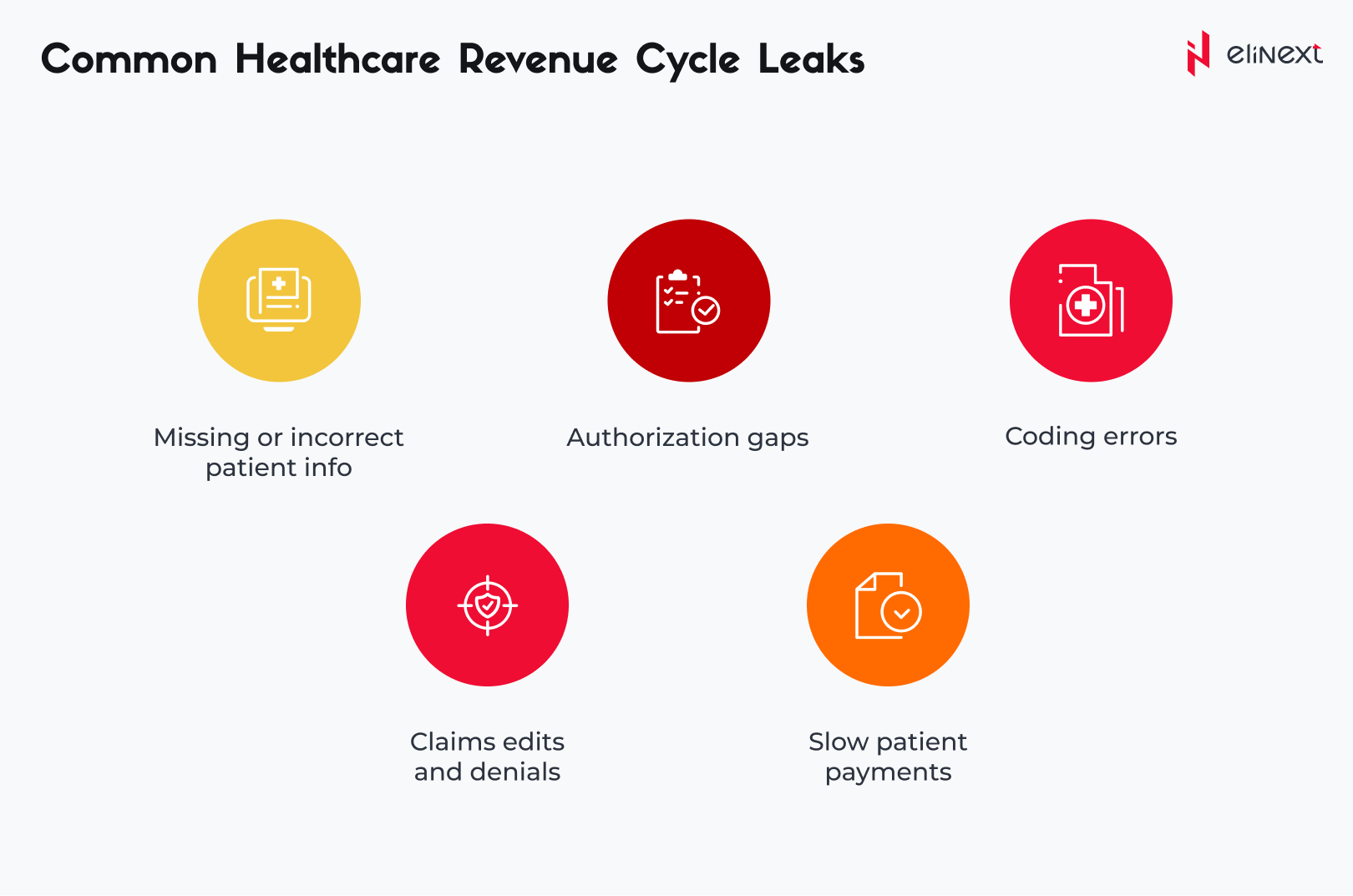
Revenue rarely vanishes in one big event. It drips. In the systems we’ve audited, the leaks tend to show up in the same four places.
The front desk. Eligibility is checked once at booking and never again. A lapsed plan turns up weeks later as a denial.
Charge capture. A procedure is documented clinically but never reaches billing because an interface dropped a segment. A claim that was never created doesn’t show up in any denial report. This is where tight integration with your care delivery management solutions pays off.
Unworked denials. A CO-16 (missing information) can often be fixed in minutes, yet it gets written off because the queue is too long. A CO-29 means the timely filing window has passed, and that money is usually gone.
Underpayments. Payers pay less than the contract says. Unless someone compares the 835 against contracted rates automatically, the gap goes unnoticed.
Honestly, underpayments are my favorite leak to find. That money is already yours.
Your denial data usually knows.
How to Automate Healthcare Payments and Revenue Cycle Management
When we build revenue cycle management for medical billing teams, we don’t start by ripping out the old system. That’s the quickest way to lose a year. We start with an integration layer. For monoliths with no API, that might mean reading the database directly, parsing flat-file exports, or, as a last resort, using RPA bots to drive the UI.
Once the data flows, we automate in the order the money moves:
- Real-time 270/271 eligibility checks at scheduling.
- A rules engine that checks claims against NCCI edits and payer-specific rules before the 837 goes out.
- Automatic posting of 835 remittances.
- Denial queues grouped by CARC code and dollar value.
The Change Healthcare cyberattack in February 2024 added one more rule for us: build for more than one clearinghouse. Practices that could switch routes kept billing. Many that couldn’t went weeks without claims revenue.

Most RCM pain comes from data sitting in systems that were never designed to talk to each other. The EHR knows what happened, the PM system knows who pays, and the clearinghouse knows what got rejected. We connect those three first, then automate the rules between them. The payoff isn’t fewer billers. It’s billers spending their day on the claims that truly need a human.

What Changes When Revenue Cycle Management Is Automated
The first thing the practices we work with usually notice is that mornings get quieter. Remittances post themselves, and staff open a queue sorted by what’s worth their time. Freed-up hours also make staffing easier to plan, especially when billing data feeds your clinical and workforce management solutions.
Next, the reports start showing what’s really happening. You can see denial rates by payer, by provider, and by CPT code. Patient collections change too. Cost estimates and payment options inside patient portal software development services get balances paid before statements go stale.
Now for the caveat. Results depend on your payer mix, your size, and what you’re starting from. A surgical group heavy on prior auth gains more from authorization automation than a primary care clinic with mostly medicare patients.
Key Takeaways
- RCM is the chain; billing is one link. Revenue cycle management in medical billing starts at scheduling and ends when the last patient payment posts. If your software only sees the claim, it misses half the reasons claims fail. Fixing that visibility gap comes before any automation.
- What you measure shows which model you run. Counting claims sent is billing thinking. Tracking days in A/R, clean claim rate, and net collection rate is RCM thinking. In practice, the medical billing vs revenue cycle management shift is a shift in the numbers leadership reviews every week.
- The leaks are boring, and that’s why they’re fixable. Stale eligibility, dropped charges, unworked CO-16 denials, missed filing windows, and silent underpayments never make headlines. They compound month after month. Rules-based automation handles all five well because each one follows a predictable pattern.
- Integrate before you replace. A monolith with no API can still feed automation through database reads, flat files, or RPA. Replacing the core system can wait until the data is flowing and you know which workflows really matter. That order lowers risk and shows returns sooner.
- Your context shapes your results. Payer mix, specialty, volume, and your current stack decide where automation pays off first. Anyone promising the same gains for every practice hasn’t looked at your 835 files. Start with an honest baseline so you can measure real progress.
Conclusion
If you came here asking what revenue cycle management in medical billing is, here’s my short version: it’s billing that takes responsibility for the outcome. The software follows the same logic. Connect your EHR, practice management system, and clearinghouse first. Automate the repetitive, rule-based steps next. Keep people on the exceptions where judgment matters.
Keep an eye on the regulatory calendar, too. Under CMS’s Interoperability and Prior Authorization Final Rule (CMS-0057-F), impacted payers must offer prior authorization APIs starting in 2027. That will make authorization automation far more practical than today’s clicking through payer portals.
My advice? Pick one leak. Measure it, fix it, then move on to the next one.
FAQ
-
Revenue cycle management in medical billing is the full process of turning patient care into collected revenue. It covers eligibility, authorization, coding, claim submission, payment posting, denial management, and patient collections, run as one connected workflow.
-
Front end: scheduling, registration, eligibility checks, and prior authorization. Middle: clinical documentation, charge capture, and coding. Back end: claim submission, remittance posting, denial follow-up, patient billing, and reporting on metrics like days in A/R.
-
Mostly through small failures that repeat: stale eligibility data, charges that never become claims, missed timely filing deadlines, denials nobody works, and payer underpayments nobody checks against contracts. Each one is minor on its own. Together they add up.
-
For a billing company or practice, it means owning results beyond claim submission. That means tracking every claim until it’s paid, working denials by root cause, and reporting net collections back to the provider.
-
Because cash flow depends on it. Strong RCM shortens the time between visit and payment. It shows which payers or codes cause trouble. It also keeps compliance items, like timely filing and No Surprises Act good faith estimates, from slipping.
-
It checks claims before they go out. Real-time eligibility, payer-specific rules, and NCCI edit checks catch errors up front. After submission, denials are sorted by CARC code and sent to the right person with a suggested fix attached.
-
Common building blocks include an integration engine for HL7 and FHIR interfaces, clearinghouse connections for X12 transactions, a claim-checking rules engine, 835 auto-posting, and denial analytics dashboards. For legacy systems with no API, RPA bots fill the gap.
-
The medical billing vs revenue cycle management difference comes down to scope. Billing creates and submits claims. RCM manages the whole financial journey, from the first appointment to the final patient payment, and measures how well each step performs.