
Speed, convenience, and reliability from healthcare providers often demanded by patients could be achieved by AI-driven chatbots. Also, a study by Juniper estimated that chatbots could save $3.6 billion annually to the US healthcare system. That is just in one country!
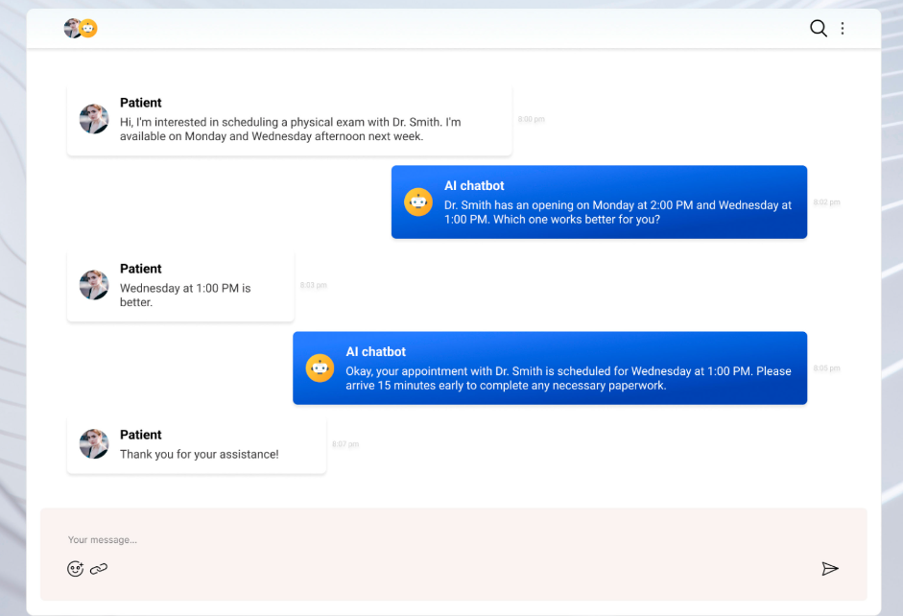
Source: codeit.us
As for convenience, chatbots are the only medical workers that are available 24/7, they’re always online, and the patients’ requests are answered instantly. Also, among the benefits chatbots bring to the table is anonymity.
We want to talk about the development of these chatbots, would your business, or private practice benefit from ordering a custom chatbot development from a company like Elinext, and which steps should you follow to launch a successful AI-Powered Medical Assistant that would be helpful with patient support.
Analyzing the Healthcare Landscape for Chatbot Adoption
Step one is to analyze the current healthcare landscape for chatbot adoption. We did that for you: chatbots are in high demand. However, it remains to be seen if your business, or practice needs it.
The thing is chatbots can’t replace live communication entirely. They lack empathy, intuition, and years of experience physicians possess.
Interesting stats from the research that dates 5 years back. Back in 2019, a hundred doctors practicing in the US were polled on the subject of where they see chatbots’ benefits in healthcare. More than 70% of respondents believed that chatbots would help with organizational aspects (scheduling visits, finding clinics, providing some sort of medical information)
Some physicians believed that chatbots could improve the nutrition of the patients (65%), contribute to patients’ physical activities positively (55% of the respondents), or reduce anxiety (51%)
At the same time, the level of chatbot adoption among the respondents was quite low. Only 30% of participants in the survey admitted that they used chatbots previously, and just 4 of them (13%) were very satisfied with the application. 8 of the respondents (27%) were dissatisfied with their chatbot interactions.
The more recent studies (by Chaves-Yenter – University of Utah), from 2021 show that 70% of those who interacted with chatbots had a good experience with the service provided by them. Surely, different methodologies might have been used for different studies, but the tendency to have bigger adoption rates with time is there.
Assessing the Impact of AI-driven Chatbot for Patients
Regardless of chatbot adoption rates, before entering the game of developing it, one should consider in what ways patient support would be delivered. Let’s list some of the benefits chatbots could
24/7 Availability
While it’s not an effective strategy to hire an online support agent to answer the online requests of the patients, chatbots can easily cover the gap by being available at any time of the day, including traditional non-working hours.
While 86% of patients would appreciate talking to a human, rather than a bot, for guidance for minor health issues, or showing simple directions on how to seek emergency care, would reduce the number of unnecessary hospital visits, and would show some sort of presence.
Increased Patient Engagement Levels
As chatbots could have access to patients’ data, they can create custom-made conversations with patients, based on patient’s health history.
As one could see that chatbots are aware of their specific injuries, or diet plans, they might treat the advice with more consideration. That is the way to create a deep connection between patients and the healthcare provider.
This interactive model fosters a deeper connection between patients and healthcare services, making patients feel more involved and valued.
More Efficient Healthcare Delivery
Such bots as Ada are great for checking your symptoms, which could save you a visit to a doctor now and then. However, this is not everything that it could do. If attached to a specific medical facility, the bot could streamline appointment scheduling, and send you a reminder, or a follow-up after the visit. That would contribute to improving the efficiency of healthcare delivery.
Mental Health Support
One of the greatest TV series of all time Sopranos would have never existed in real life cause telling your secrets to a shrink if you’re a mob’s boss would’ve been “frowned upon” by your colleagues.
However, Tony Soprano could’ve used an app on his phone, and been consulted by a chatbot. With that level of anonymity and comfort, he would’ve found mental health support easier, and more discreetly from his peers.
That’s a joke, certainly. One doesn’t have to be a mob boss to seek psychological help, and as there are still some barriers that keep patients from getting mental health support, chatbots could help.

Source: xevensolutions.com
As one can see, there are many ways chatbots can provide patient support, one just has to set the goals straight on which area the bot will be tackling and keep that in mind during its development and deployment.
Defining the Right Use Cases for Effective Bot Adoption
We won’t go through every use case possible for modern chatbots. Let’s just cover which areas could be covered with chatbots, and which bots are successfully present on the market (your potential competitors).
Symptom Assessment Assistant
Such a chatbot would help patients interpret symptoms and suggest potential conditions. This would allow patients in most cases to begin their care journey from home
Your.MD is a symptom checker and personal health assistant available on the web and as a stand-alone app. Sensely offers a platform to build various types of medical chatbots. Some healthcare providers use it predominantly as symptom assessment. The aforementioned Ada combines input from users with a large database of medical knowledge to provide personalized health assessments.
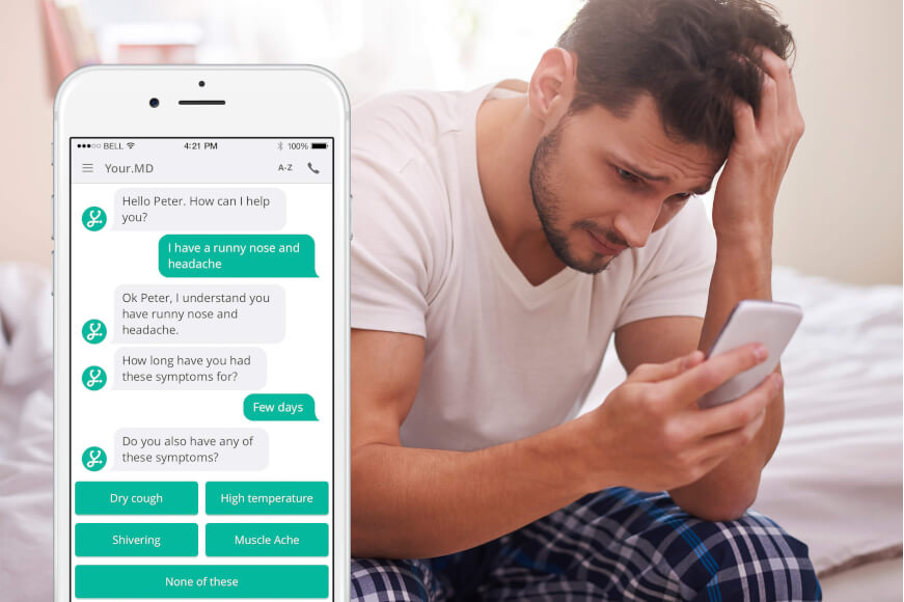
Source: yourmd.com
Patient Education
Conversational agents can educate patients on different aspects of their well-being.
Northwell Health’s chatbot that assists women during and after pregnancy is one example. Also, all three chatbots we mentioned a couple of paragraphs earlier have educational modules to some extent.
Mental Health Assistant
Woebot is an example of an AI chatbot that offers mental health support through brief daily conversations, and tracking mood. it can also provide some advice on overcoming anxiety issues and offer help in tackling depression.
Wysa is designed to help users manage their emotions and thoughts using evidence-based techniques such as Cognitive Behavioral Therapy (CBT) and Dialectical Behavior Therapy (DBT). It has over 100,000 downloads and is one of the leaders in the market.
Others
Appointment scheduling, recruitment assistance for medical positions, and even navigation through medical research are among the functions delivered by modern-day chatbots. Before addressing your provider with a task to develop one for you, choose its primary goals.
Connecting with the Reliable Medical Chatbot Developer
It’s easy enough to scream out “Pick Me! Pick Us!” in this section. Yes, Elinext is a software development company, and we operate in the healthcare field. Naturally, we have developed hundreds of healthcare projects.
To carefully assess your future development partner, have a look at their portfolio. After that, come up with a list of questions you’d like to ask them. For instance, about the background in developing chatbots. How much will their services cost approximately? Can your potential future partner guarantee security and compliance with the relevant regulations (i.e. HIPAA)?
You can always ask these and other questions to consider during a free online consultation, and if you’re satisfied with the answers, chances are, you’ve found your future partner.
Developing Post-Launch Strategies for Healthcare Chatbot Success
Launching an AI-driven chatbot for patient support is not where things end. You have to have and execute your post-launch strategy to thrive in the market.
Monitor and Make Adjustments
Set performance indicators for your bot. Among the possible metrics could be task completion rate, number of errors, user satisfaction rate, number of tasks completed, etc. Analyze human-bot interaction to figure out ways to upgrade the software to refine the possible responses.
Collect Feedback and Act Accordingly
There are multiple ways to gather feedback, and your chatbot development team could suggest to you how to get them. Overall, it is not the most difficult task in the world to get some suggestions on chatbot improvements. As you examine metrics, you will understand patients’ preferences and prepare the upgrades accordingly.
Make Constant Training and Updates
Once you figure out which updates to make, don’t forget to make them. As you update the tool with new data, it remains relevant and increases its accuracy. Also, keep a close look at ever-changing regulations.
Educate Users and Don’t Abandon Marketing Efforts
Make sure you do everything in your power to inform the audience about the chatbot’s purpose and capabilities. Educate patients on the most effective interaction with your bot, gather feedback, and highlight its bright side during your marketing efforts.
Challenges Chatbots in Healthcare Experience
Limited Functionality and Low Adoption Rates
Most companies use non-AI-run chatbots, and their functionality is quite limited. When patients ask about some rare complications, or name symptoms unfamiliar to the program, they quickly get frustrated.
The more advanced the technology, the better are outcomes of the requests. Invest in smarter bot development, and choose reliable providers (Elinext is your go-to company, contact us to get a free quote).
Security concerns
Healthcare cyberattacks bring harm to patients and are costly for providers. Recovering from an incident averages around $10.1 million, often leading to class-action lawsuits.
That’s why information presented to chatbots should be limited. Data minimization, anonymization, and other techniques should be applied.
Distrust to bots
Results of a recent survey show that 3 out of 4 patients do not trust the use of artificial intelligence (AI) in healthcare. The numbers look drastic, but at the same 80% of patients do not know if their doctor is using the technology or not.
Ensure that the chatbot provides information based on the latest medical research and guidelines. Implement systems to collect and act on user feedback, allowing for continuous improvement of the chatbot. These are the best tactics to improve the trustworthiness to you bot.
Conclusion
All in all, developing an AI-driven chatbot for healthcare is not an easy task. We hope our step-by-step instructions have been useful. By following these steps, one could asses how far they’re from delivering a viable and useful chatbot to the competitive and developing market.
75% of patients believe AI will become more natural and human-like over time. Gartner is also predicting big things for conversational AI: according to their predictions by 2026, conversational AI deployments within contact centers will reduce agent labor costs by $80 billion.
If you want to jump into that promising bandwagon of development of AI-based chatbots, contact Elinext to discuss cooperation possibilities.