




















































































































































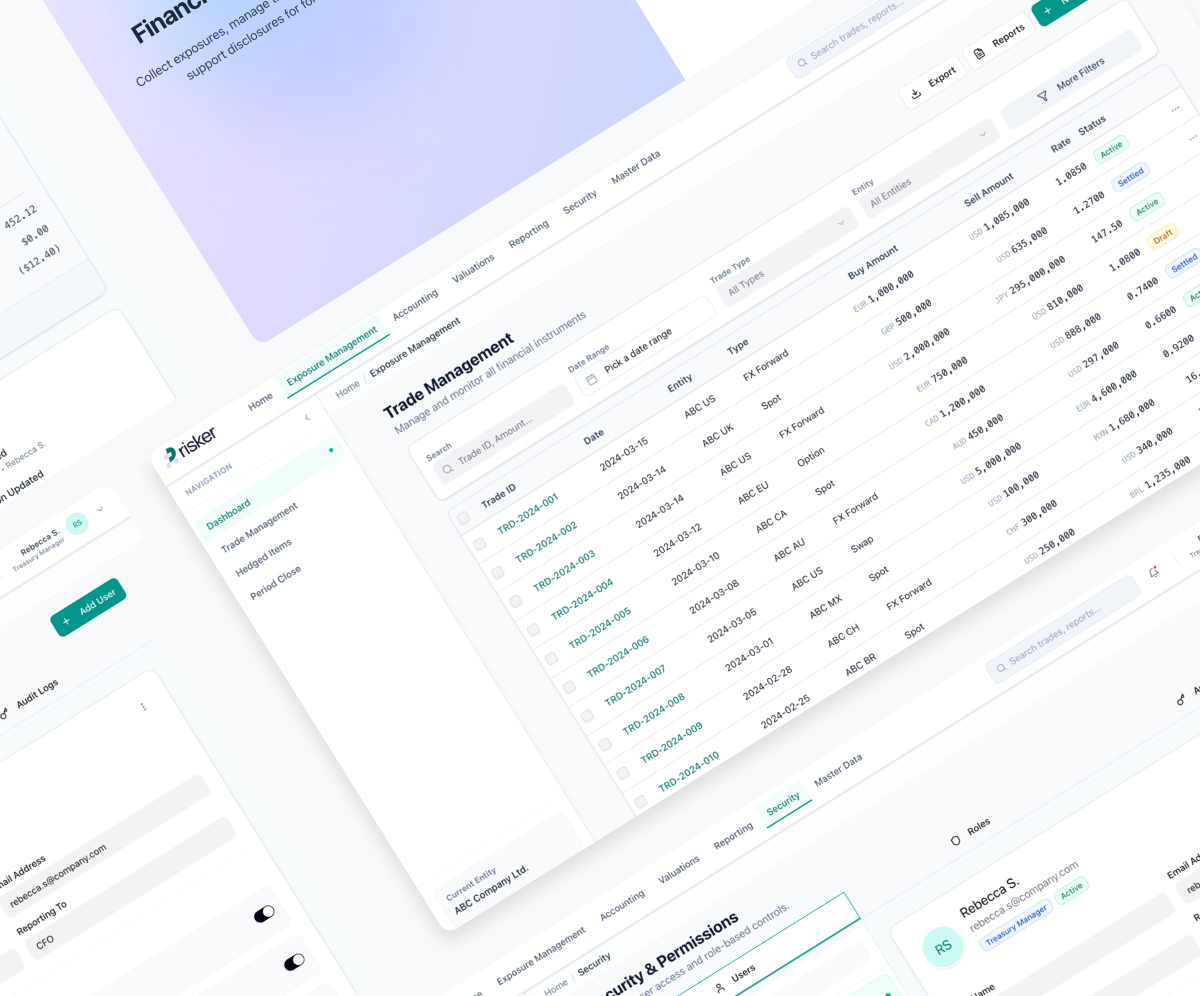
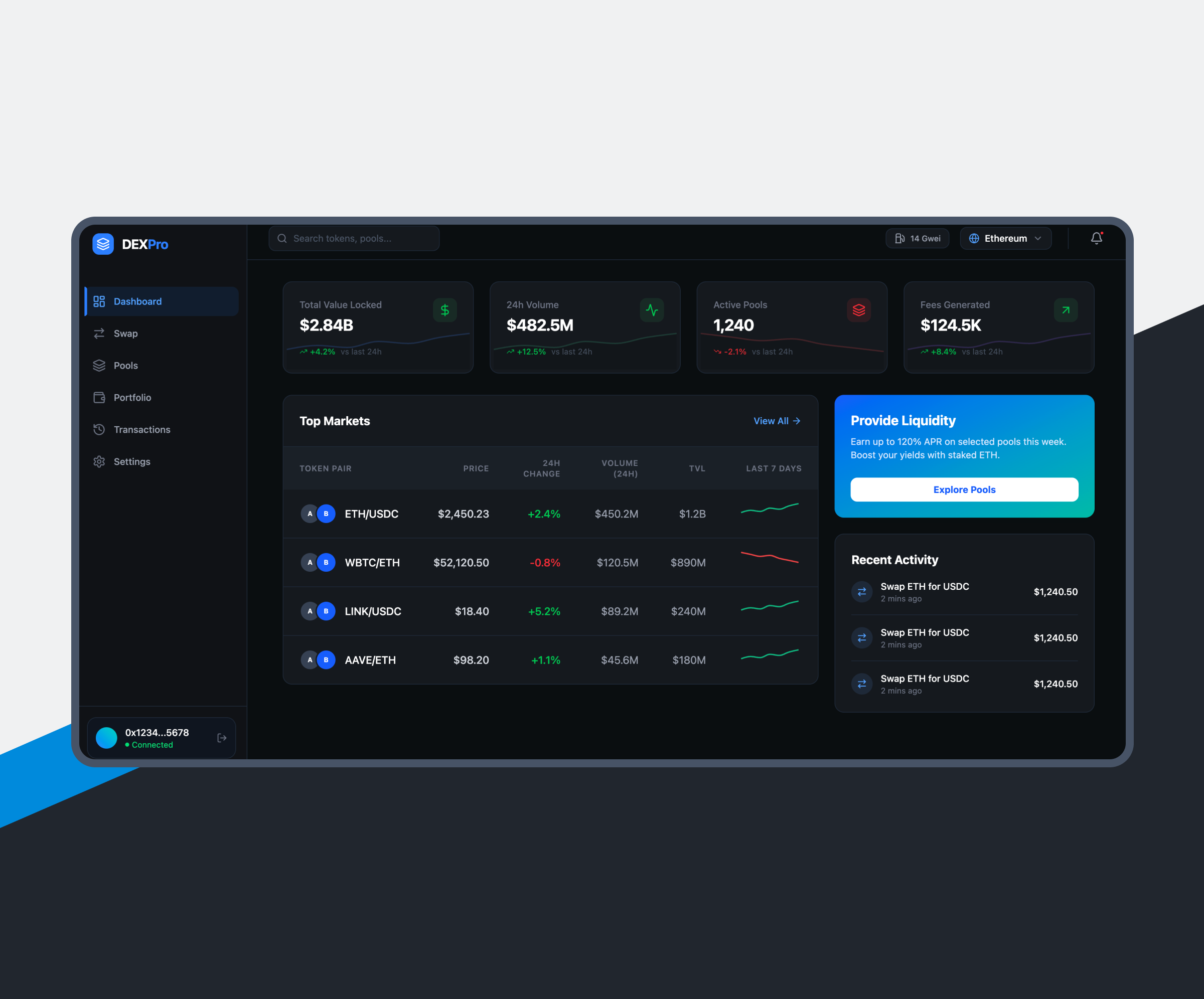
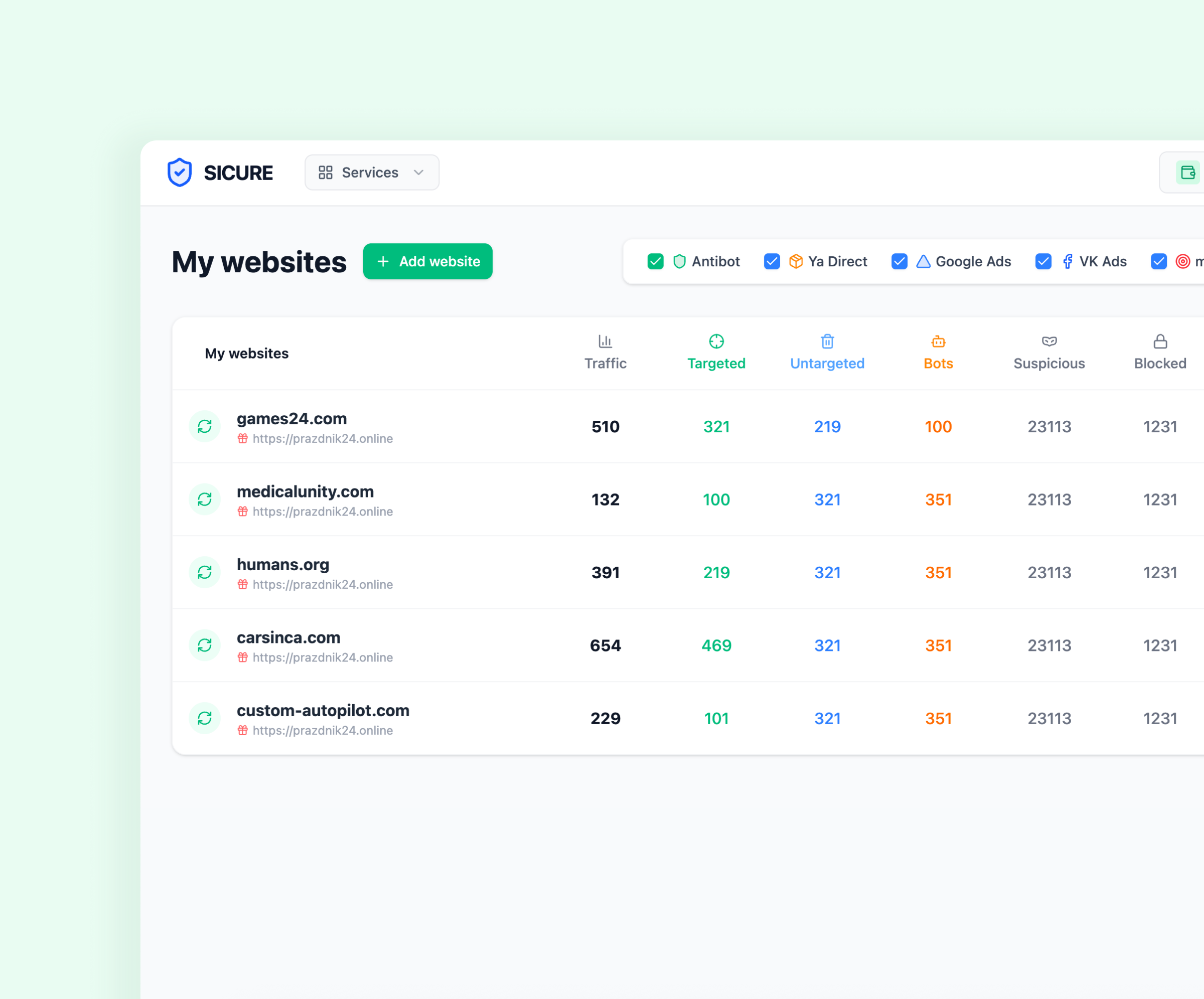

SaaS financial apps help companies manage cross-border cash, reporting, and foreign exchange risks using a single cloud platform. FX exposure management software aggregates data on accounts receivable, accounts payable, and projected revenue, then supports hedging decisions. A SaaS provider seeking euro subscriptions can track their USD/EUR exposure and document forward hedging. SaaS application development services tailor integration with ERP systems, banks, and data providers to the company’s workflow.
- Centralized risk visibility across all divisions and currencies
- Real-time rates, forecasts, and scenario analysis
- Lifecycle tracking of forwards, options, and swaps
- IFRS 9/ASC 815 documentation and audit trails
- API-based integration with ERP systems, banks, and market data
What Is FX Exposure and Why Companies Hedge It
Foreign exchange risk, or exchange rate risk, is the risk that fluctuations in exchange rates will impact a company’s cash flow, asset value, or profit. Companies hedge FX exposure with financial hedging software and an FX hedging platform. Transaction risk affects invoicing; translation risk affects consolidation; and economic risk affects competitiveness. A US firm with euro-denominated expenses purchases a forward contract to lock in the future EUR/USD exchange rate.
3 Types of FX Exposures
1. Transaction Exposure
Transaction risk is the likelihood that a change in the exchange rate will affect the value of a foreign currency payment or receipt in domestic currency. Financial services for SaaS companies use foreign exchange risk management software and SaaS financial risk management solutions to identify and hedge this risk. A UK exporter invoices a US buyer for $500,000; if the dollar falls by 5% before payment, the amount received in pounds sterling will decrease.
2. Translation Exposure
Exchange rate impact is the accounting effect that occurs when a multinational company converts the assets, liabilities, revenue, and profits of its foreign subsidiaries into its reporting currency. SaaS for financial services uses foreign exchange risk hedging software and SaaS treasury management solutions to model this risk. When the euro weakens against the dollar, a US group’s European assets are converted into fewer dollars, impacting reported balances without directly changing local cash flow.
3. Economic Exposure
Economic risk is the long-term impact of exchange rates on a company’s costs, pricing policy, and competitive position. SaaS financial apps, financial hedging software, and SaaS treasury management software help teams model this risk. If the euro weakens, a German manufacturer may lower its US dollar prices and put pressure on a British competitor’s market share. Economic risk is difficult to hedge because it is linked to future demand and competition.
What Do Financial SaaS Applications Do?
Financial services for SaaS companies use financial software development services and cloud applications to identify foreign exchange risks, support hedging decisions, track forward contracts, currency options, and swaps, manage settlements, and maintain audit trails. SaaS for financial services connects treasury dashboards with APIs, Bloomberg, Refinitiv/LSEG, SWIFT, banks, and brokers. It supports CFO decisions rather than performing standalone trading. The treasury software market was valued at $7.49 billion in 2024 and is projected to reach $8.01 billion in 2025.
Use FX exposure management software to transform disparate SaaS financial data into timely, documented hedging decisions.

Key Features of Financial SaaS Application for FX Hedging
1. Centralized FX Exposure Database
Financial services for SaaS companies need a unified currency risk database, not disparate spreadsheets. It aggregates foreign currency receivables and payables, intercompany loans, treasury positions, and executed contracts, then offsets the opposite positions to calculate net exposure. APIs allow connection to SAP, Oracle, or NetSuite. The CFO sees euro receivables offset against euro payables as of today, rather than an outdated Excel snapshot at the end of the month.
2. Real-Time Market Data and Exposure Monitoring
SaaS financial apps and currency risk hedging software integrate spot rates, forward curves, volatility surfaces, and interest rate curves with current exposure metrics. The platform marks open positions using mark-to-market calculations and alerts the CFO when policy limits are exceeded. If unhedged euro receivables exceed an approved threshold, an alert is triggered. Historical data also supports strategy testing.
3. Predictive Analytics and Scenario Modeling
FX risk management software utilizes scenario modeling, sensitivity analysis, Monte Carlo simulation, value-at-risk assessment, expected shortfall, and machine learning/artificial intelligence (ML/AI) forecasting to predict potential currency losses. A CFO simulates a 10% decline in EUR/USD, estimates the impact on profit and loss, and compares hedge ratios before making a decision. Unlike a traditional TMS report focused on past positions, predictive analytics can provide future recommendations—subject to treasury approval.
4. Hedging Workflow and Derivative Lifecycle Management
To hedge FX exposure, the platform manages the workflow from risk identification to proposed hedge, approval, counterparty confirmation, accounting, daily valuation, settlement, and realized profit and loss. It tracks forward contracts, FX options, FX swaps, counterparties, ISDA documents, trade confirmations, premiums, trade closeout offsets, and SWIFT MT300 messages. It can also document hedging relationships in accordance with IFRS 9 and ASC 815.
5. Regulatory Compliance and Audit Reporting (IFRS 9 / ASC 815)
SaaS financial apps can support IFRS 9 and ASC 815 compliance by recording hedge designations, transaction terms, effectiveness testing, fair value or cash flow hedge accounting, OCI movements, disclosures, and audit trails. When a forward contract is issued, the platform associates it with the hedged risk and records the user and timestamp. Auditors can export a complete hedge accounting package, rather than reconstructing evidence from emails and spreadsheets.
6. Mobile CFO Dashboard and Performance Reporting
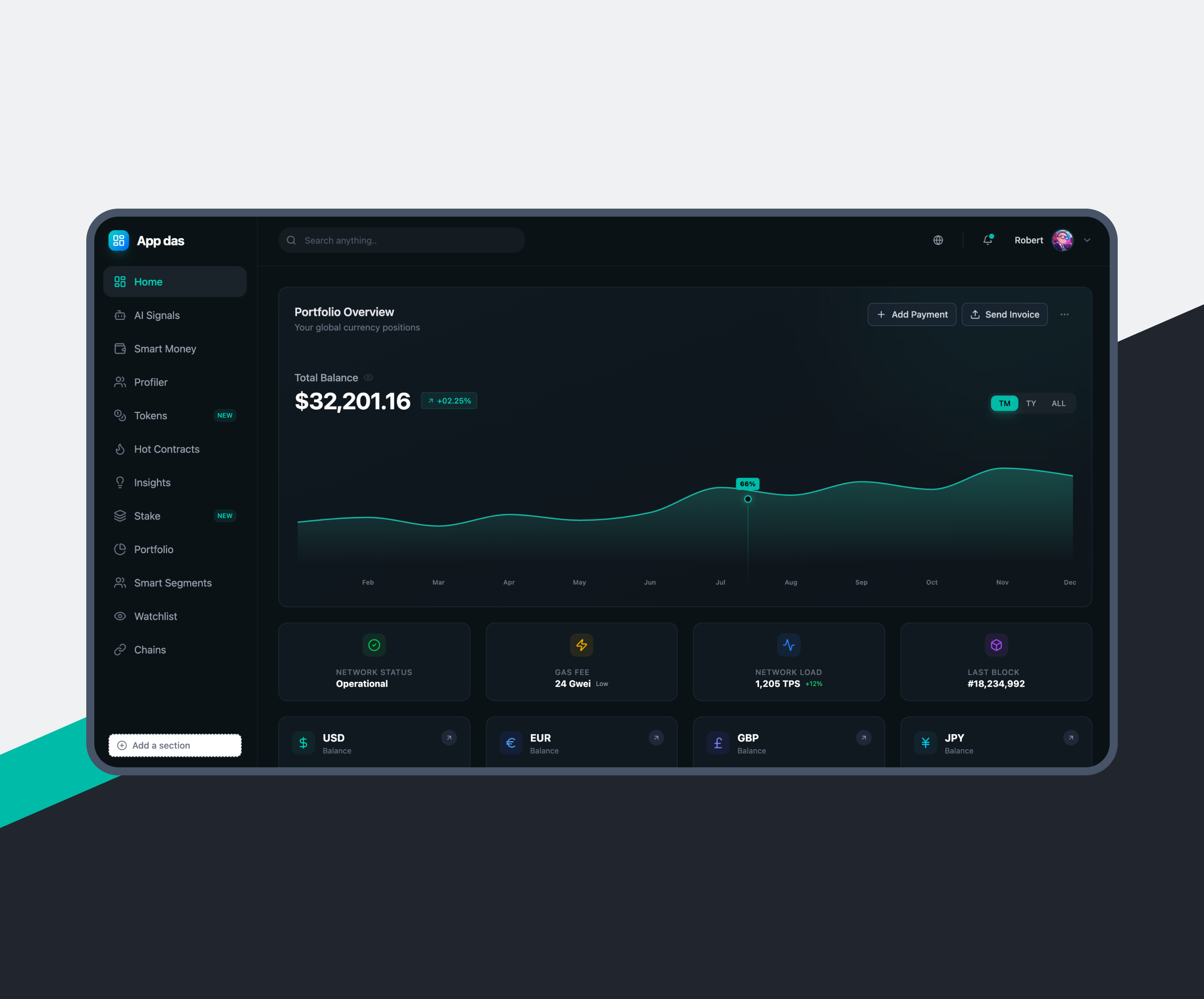
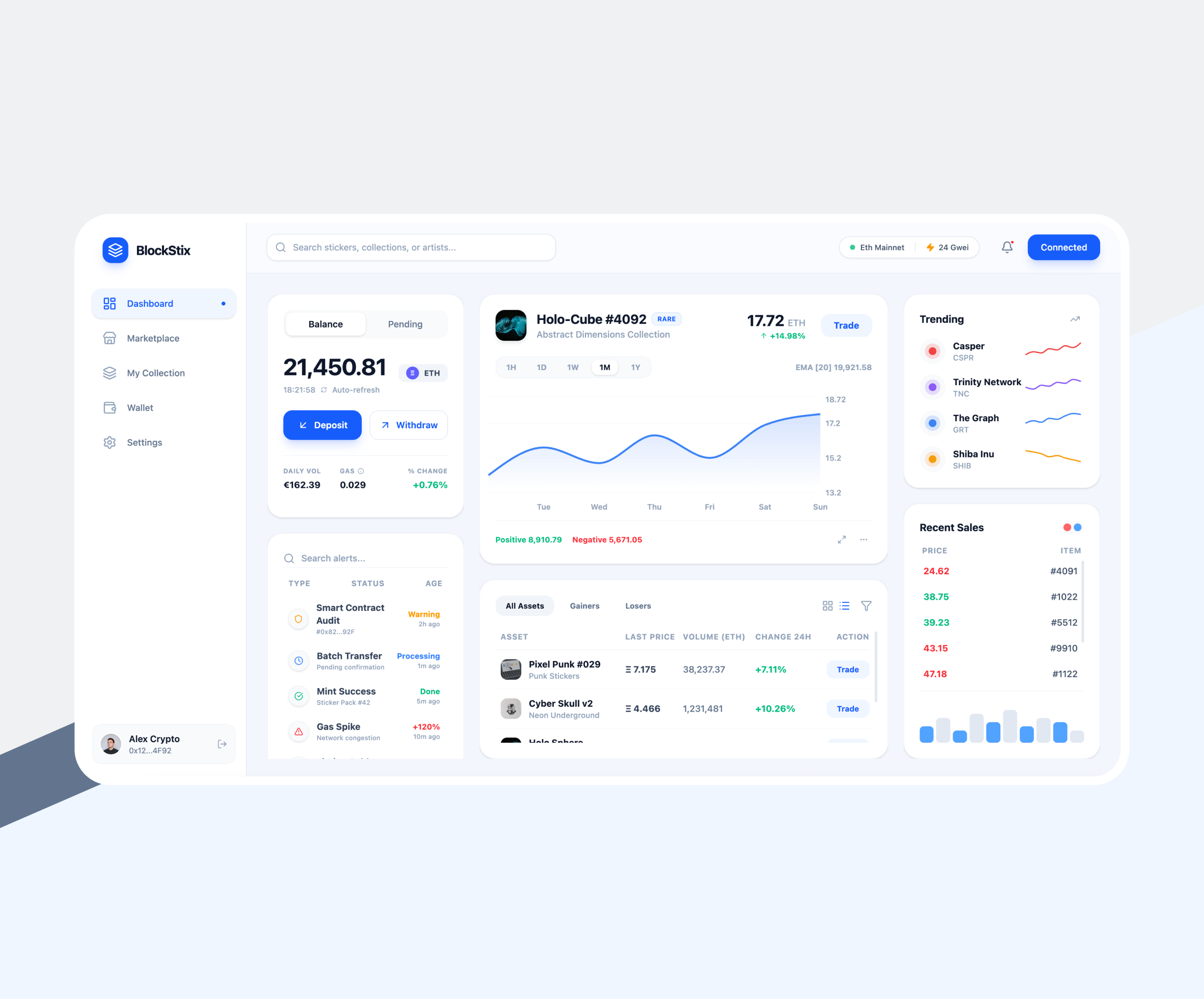
The CFO Mobile Dashboard provides treasury managers with instant visibility into foreign exchange risk, hedge coverage ratio, net open position, mark-to-market profit and loss, upcoming settlements, and policy status. While the custom CRM for travel agencies isn’t treasury-focused, the same principle applies: role-based mobile reporting makes complex data usable. The CFO receives a morning report showing a red policy alert regarding an underhedged euro position.
SaaS vs Traditional TMS: Comparison Table
| Parameter | SaaS FX App (custom / cloud) | Legacy TMS (Kyriba, FIS Quantum, ION/Openlink) | SAP Treasury / Oracle TRM |
|---|---|---|---|
| Deployment | Cloud-native, weeks before go-live | On-premise or hosted, 6-18 months of implementation | Built into SAP/Oracle ERP, 6-24 months |
| License / cost | $20K-$150K/year (SaaS) or $40K-$200K development | 100K-$500K+/year license + implementation | Included in the ERP license (very expensive) |
| IFRS 9 / ASC 815 | Yes (built into modern SaaS) | Yes (full functionality) | Yes (full functionality) |
| Bloomberg / Refinitiv integration | API-native (quickly configured) | Yes, but through legacy connectors | Via SAP Financial Services Network |
| ERP integration | API-first (SAP, Oracle, NetSuite) | Deep, but expensive | Native for SAP/Oracle |
| AI/ML analytics | Yes (modern SaaS are built with ML) | Limited (added gradually) | Limited |
| Mobile access | Yes (responsive / native app) | Limited | Limited |
| Customization | Complete (especially for custom development) | Limited by configuration | Limited by SAP/Oracle configuration |
| Suitable for | Mid-size companies ($50M-$2B revenue), unique workflow | Large corporations ($500M+ revenue), standard workflow | Companies already on SAP/Oracle ERP |
Business Benefits of Financial SaaS Application
-
Reduced P&L Volatility from FX
Financial services for SaaS companies reduce unexpected P&L fluctuations caused by currency fluctuations by displaying risks as they arise, rather than at quarter end. A company with $100 million in currency exposure can model its sensitivity, determine hedging limits, and document decisions in real time. A reliable, universal percentage reduction from switching from Excel to SaaS has not been publicly confirmed, so avoid claims of a fixed “X%” result without company-specific underlying data.
-
Lower Hedging Administration Cost
SaaS for financial services reduces administrative costs by automating rate imports, risk aggregation, trade registration, settlement calendars, and IFRS 9 documentation. Instead of manually updating multiple worksheets and monitoring broker quotes, an analyst can view exceptions in a single dashboard. Savings depend on transaction volume, ERP system quality, controls, and integration scale; use an internal time and cost baseline rather than an unsubstantiated claim of headcount reduction.
-
Faster Response to Market Movements
Financial hedging software shortens the path from risk detection to hedging proposal review and documentation of the approved trade. A 3% change in the USD/EUR exchange rate can trigger a threshold alert, allowing the treasury to assess its position on the same day rather than waiting until month-end. Response speed depends on policy approval limits, bank connectivity, and team availability; do not rely on general speed statistics without validated research.
-
Audit and Compliance Readiness
SaaS treasury management solutions improve audit readiness by storing information on hedging, contracts, approvals, valuations, effectiveness tests, and settlement evidence in a structured log. IFRS 9 requires documentation and ongoing evaluation of relevant hedging relationships. An auditor exports a forward contract, a related invoice forecast, an assignment memo, and a test record from a single workspace. Avoid promises of a one-click audit or a guaranteed zero-objection audit.
SaaS financial apps help finance teams replace reactive spreadsheets with controlled currency workflows.
How to Choose a SaaS Financial App for FX Hedging
1. Map Your Exposure Profile First
Before choosing a SaaS for financial services, create a risk profile: currencies, cash flows, entities, forecast dates, and natural offsets. Treasury management SaaS helps finance teams see where currency risk arises. A USD-based customer with EUR sales can group risks by month and hedge only the actual net gap.
2. Check ERP and Data Provider Integration
Treasury management SaaS should seamlessly integrate with ERPs, banks, and market data feeds before implementation. Powerful FX risk management software reduces manual uploads and pricing errors. SAP invoices, bank account balances, and real-time exchange rates are synchronized daily, giving the treasury a single, reliable view of risk.
3. Verify IFRS 9 / ASC 815 Coverage
When choosing a SaaS for financial services, check for IFRS 9 and ASC 815 support for hedging documentation, effectiveness testing, and audit trails. Currency hedging software helps teams comply. The system links a forward contract to a projected payment in euros and stores supporting data.
4. Evaluate Build vs. Buy
Financial services for SaaS companies should evaluate the feasibility of in-house development or off-the-shelf solutions based on workflow fit, integration needs, regulatory compliance, and long-term operational needs. Off-the-shelf products such as Reval, Salmon Software, FXpert, and GTreasury can provide a faster start but have fixed functionality. Developing an in-house SaaS solution requires more initial effort but can accommodate specific pricing requirements, custom integrations with ERP systems and banks, or specialized control mechanisms. In-house development when no vendor supports the company’s required hedge accounting workflow.
5. Calculate Total Cost of Ownership (TCO)
Calculate the total cost of ownership over three years, not just the first year of subscription. Include SaaS licensing—which often costs between $20,000 and $100,000 or more per year— for implementation, integration, data migration, training, change management, and internal support. Compare this with the ongoing costs of manual processes: analyst hours x premium, plus the financial impact of missed hedging transactions, control failures, and resolving compliance violations. A lower license fee may be more expensive if integration remains manual.
Key Takeaways
- Currency risks come in transactional, translational, and economic forms, each requiring different analysis and hedging approaches.
- SaaS financial applications centralize risk data, market rates, hedging workflows, reporting, and audit evidence.
- Key features include integration with ERP systems, real-time monitoring, scenario modeling, derivatives lifecycle management, compliance automation, and mobile dashboards.
- SaaS can improve deployment speed and accessibility for mid-sized companies, while legacy treasury management systems (TMS) may be suitable for complex global treasury operations.
- Custom development is justified when standard products fail to provide the necessary integration, pricing logic, or regulatory workflows.
SaaS financial apps provide finance teams with a practical framework for managing risk, compliance, and cash flow uncertainty.
Conclusion
ERP for financial services help SaaS companies consolidate risk data, cash flows, reporting, and currency hedging workflows before volatility impacts results. A subscription company can extract euro receivables from its ERP system, offset them against euro expenses, simulate currency depreciation, and execute an approved forward contract. The cloud-based enterprise treasury software segment is estimated to be worth $3.646 billion in 2026, reflecting the demand for scalable, interconnected financial tools.

FX exposure management software is important because the real problem is rarely a lack of data; it’s data scattered across ERP records, banking portals, forecasts, and spreadsheets. As a result, treasury departments discover risks too late or are unable to prove why a hedge was applied. We help organizations develop interconnected workflows that make risks visible, decisions traceable, and reporting ready for finance and audit departments.

FAQ
-
SaaS applications for financial hedging of foreign exchange risks are cloud-based tools that collect foreign exchange risk data and help treasury departments analyze, document, and track hedges. They are used to combine ERP invoices, forecasts, market data, and derivatives records into a single workflow. Companies use them to improve transparency and control. An application compares euro sales forecasts with euro costs and flags the remaining net exposure for review.
-
Foreign exchange risk is the risk that exchange rate fluctuations will change the value of revenues, expenses, assets, liabilities, or future competitiveness in a foreign currency. Companies hedge it to reduce uncertainty in cash flows and reported profits, rather than to speculate on currencies. A US company due to pay €1 million in 90 days might use a forward contract to lock in the dollar value and protect its budget from a rise in the euro.
-
Foreign exchange risk hedging software is a treasury tool that identifies foreign exchange risk, supports hedging decisions, and tracks the lifecycle of derivatives and accounting data. Companies use it to replace disparate spreadsheets and improve control. Key features include ERP and bank APIs, spot and forward data, risk offsetting, scenario analysis, trade logs, mark-to-market, alerts, settlement calendars, role-based approvals, and IFRS 9/ASC 815 reporting. It alerts the CFO when euro currency exposure violates policy.
-
IFRS 9 hedge accounting is a system that reconciles gains and losses from derivative financial instruments to manage qualified hedge risk. Companies use the software to document hedging relationships, track designation dates, conduct effectiveness assessments, calculate costs, and prepare reports. When a company hedges forecast euro revenue with a forward contract, the platform links the contract to that forecast and maintains an audit trail.
-
SaaS FX management applications are cloud-based tools focused on accessible API-based risk monitoring, hedging workflows, and analytics; traditional TMS platforms often provide broader treasury functionality and deeper enterprise configuration. Companies select a system based on the complexity of their operations, integration needs, budget, and support requirements. A mid-sized exporter can quickly deploy a SaaS application to hedge FX risks, while a global group may require a customizable treasury management system (TMS) for multiple banks and organizations.
-
The cost of FX hedging software is the combined cost of licensing, implementation, integrations, data processing services, training, and ongoing support. Companies use a three-year total cost of ownership (TCO) calculation to compare SaaS to manual treasury processes. Typical annual license fee ranges can vary widely, typically from tens of thousands of dollars upwards, while integrations can represent a more significant upfront cost. A cheaper tool can become expensive if the connections to ERP, banking, and accounting require significant work.
-
Financial risk management SaaS is cloud-based risk control software. It is used for hedging currency risks; medium-sized companies can afford to develop their own modules. Mid-sized companies may be able to afford this if the cost of manual operations, missed hedges, or inappropriate licenses exceeds three years of development and operating costs. A company with its own pricing model and NetSuite workflow may be able to justify custom development if standard tools cannot integrate reliably.
-
Financial SaaS applications can support hedge accounting under IFRS 9 and ASC 815 if they are configured to align with the company’s policies and accounting requirements. They are used to document assignments, link hedging instruments to risks, maintain assertions, calculate valuations, support effectiveness testing, and disclose export information. A single forward contract might be linked to a projected purchase of foreign currency and supporting accounting documentation.