


















































































































































Walk into most hospital supply rooms, and you’ll find the same story: a legacy ERP handling purchasing, an EHR sitting in its own silo, and somewhere in between, a spreadsheet somebody updates by hand every Friday. None of these systems talk to each other through APIs. And when systems don’t talk, decisions get made on data that’s already a week stale. That’s how you end up with two problems at once: shelves stacked with supplies nobody’s using before the expiration date, and a stockout in the middle of a procedure that actually matters. This piece skips the “what is a supply chain” basics and gets straight into the mechanics of healthcare supply chain management software development. The kind of work that sits under our broader AI solutions for healthcare: what data these forecasting models actually use, how the methodology evolved, and where the real limits are.
What is a Healthcare Supply Chain Management Software?
At its core, it’s the layer that connects procurement, inventory, EHR, and point-of-use data into a single working system, so stock levels reflect what’s actually being consumed on the floor. The better platforms go a step further and add a forecasting engine on top, turning that connected data into predictions rather than just a live dashboard. That’s where real healthcare inventory optimization starts.
Here’s the part nobody likes to hear: building that connective layer is usually harder than building the forecasting model itself. It’s not glamorous work, but it’s the work that actually determines whether the AI on top of it means anything. And if you’re mapping this into a broader healthcare software development services plan, this connective layer is usually where the real budget goes.
Make your supply come on time, around the clock.

How AI-Driven Demand Forecasting Works in Healthcare Inventory Management
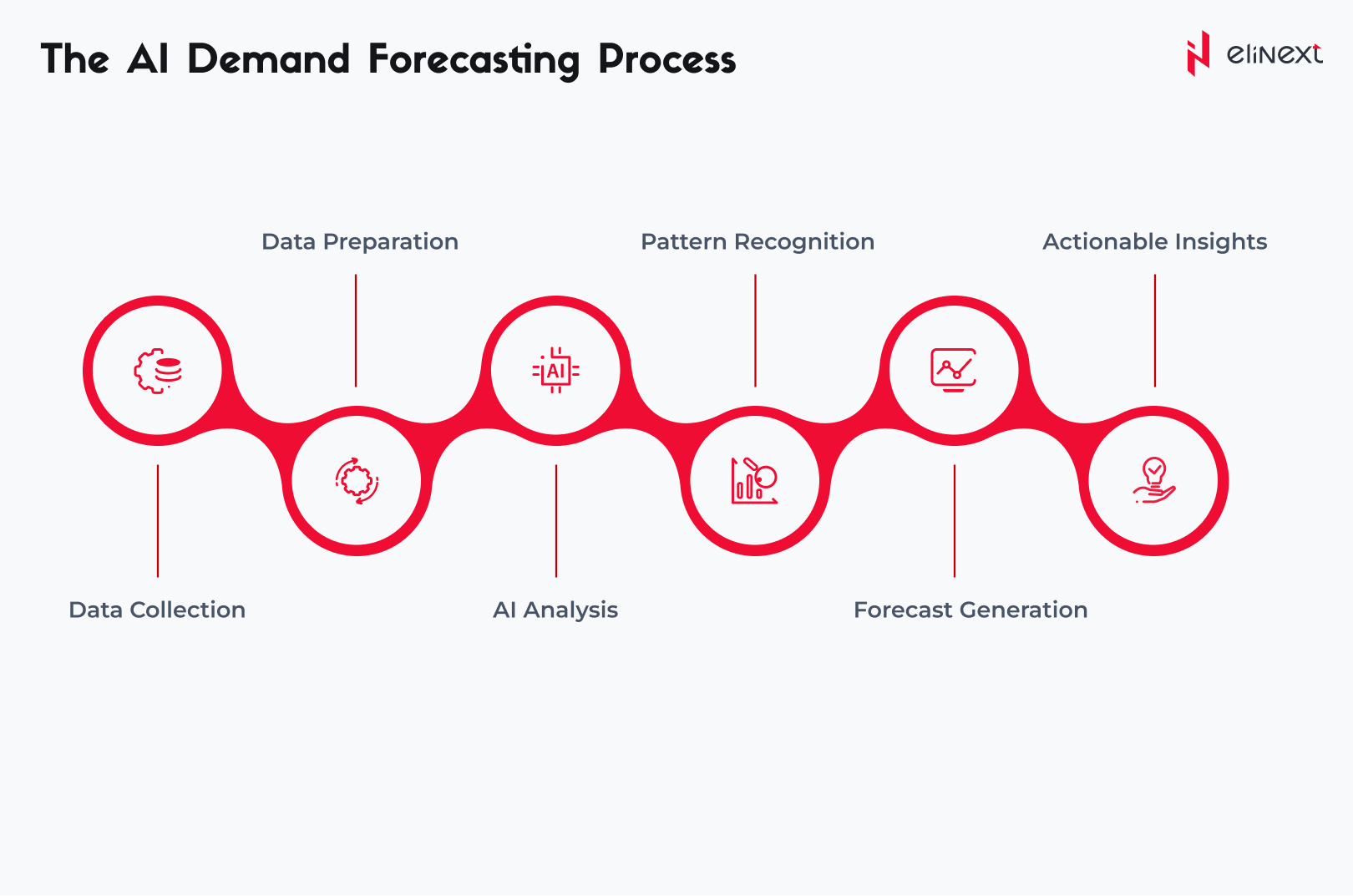
Forecasting models don’t guess. They calculate, pulling from historical and real-time signals, then recalculating as fresh data rolls in. That’s the essence of AI-driven demand forecasting: methodology over guesswork. The tricky part isn’t the math; it’s what you feed it.
-
Healthcare Demand Forecasting Data Inputs
Models typically pull from historical consumption logs, EHR procedure schedules, admissions and census data, seasonal illness patterns, supplier lead times, and sometimes regional epidemiological feeds layered in for extra context. The more granular the point-of-use data (down to the department or even the procedure type), the less the model has to fall back on facility-wide averages. And averages are exactly where unit-level spikes go to hide.
-
The Evolution of Healthcare Forecasting Methods
Early systems ran on par-level reordering: fixed thresholds triggered a purchase order no matter what the trend looked like. Simple, but blind. Statistical forecasting came next: moving averages, exponential smoothing, and finally giving systems some sense of trend. Today’s models bring machine learning inventory forecasting into the mix ( gradient boosting, LSTM networks for time-series work), handling several correlated variables simultaneously, like a surgery schedule colliding with flu season. Pair that with automated inventory replenishment, and reorders trigger themselves once the forecast crosses a threshold, without someone needing to notice first.
Reducing Expired and Wasted Inventory with Predictive Analytics
This is where predictive analytics for inventory management earns its keep in practice. Expired stock is almost never random bad luck. It’s usually the direct result of ordering by gut feel or sticking to fixed par levels instead of tracking actual burn rate. Predictive models flag items trending toward expiration well before the deadline hits, cross-referencing lot-level expiration dates against real consumption velocity.
This ties into the broader work we do in healthcare analytics solutions, where the same velocity-based logic gets applied to other operational metrics, not just shelf stock. Catching these losses early is one lever; the other is using the same models to reduce medical supply stockouts at the opposite end of the shelf-life curve. It won’t fix a badly run supply room on its own, but it will catch the losses that fixed-threshold systems are structurally blind to.
Where AI Forecasting Still Needs Human Oversight
Models trained on history struggle the moment reality does something history never did. A new surgeon joins with different preferences. Two facilities merge overnight. A novel outbreak shows up with zero comparable prior pattern to learn from. In situations like these, forecasts can lag reality by weeks. And that’s not a minor rounding error when it’s PPE or a critical medication on the line. This is exactly why automated inventory replenishment without a human checkpoint is a risky bet: the system will happily keep ordering off a stale pattern until someone tells it otherwise. It’s a similar dynamic to what we see in AI solutions for healthcare diagnosis; a confident model output still isn’t the same thing as clinical judgment. Supply chain managers need real override authority, full stop, plus a feedback loop that pipes corrected outcomes back into the model. Skip that loop and errors don’t just persist. They compound, quietly, until someone notices the numbers stopped making sense.
Getting that human-in-the-loop layer right is a design decision made on day one, not a patch bolted on after something goes wrong.
Talk to Elinext about building forecasting systems with override controls.
What It Takes to Implement Predictive Inventory Software in Healthcare
Implementation starts well before any model gets trained. This is the unglamorous half of healthcare supply chain management software development that most vendor pitches skip over. Data has to be normalized across systems that were never built to share it in the first place. EHR procedure codes, supplier catalogs, and internal SKU numbering almost never line up out of the box, and reconciling them is tedious work that eats more time than most timelines budget for. After that comes assembling a clean historical dataset long enough to actually train on – realistically 18 to 24 months of consumption data, since anything shorter misses a full seasonal cycle.
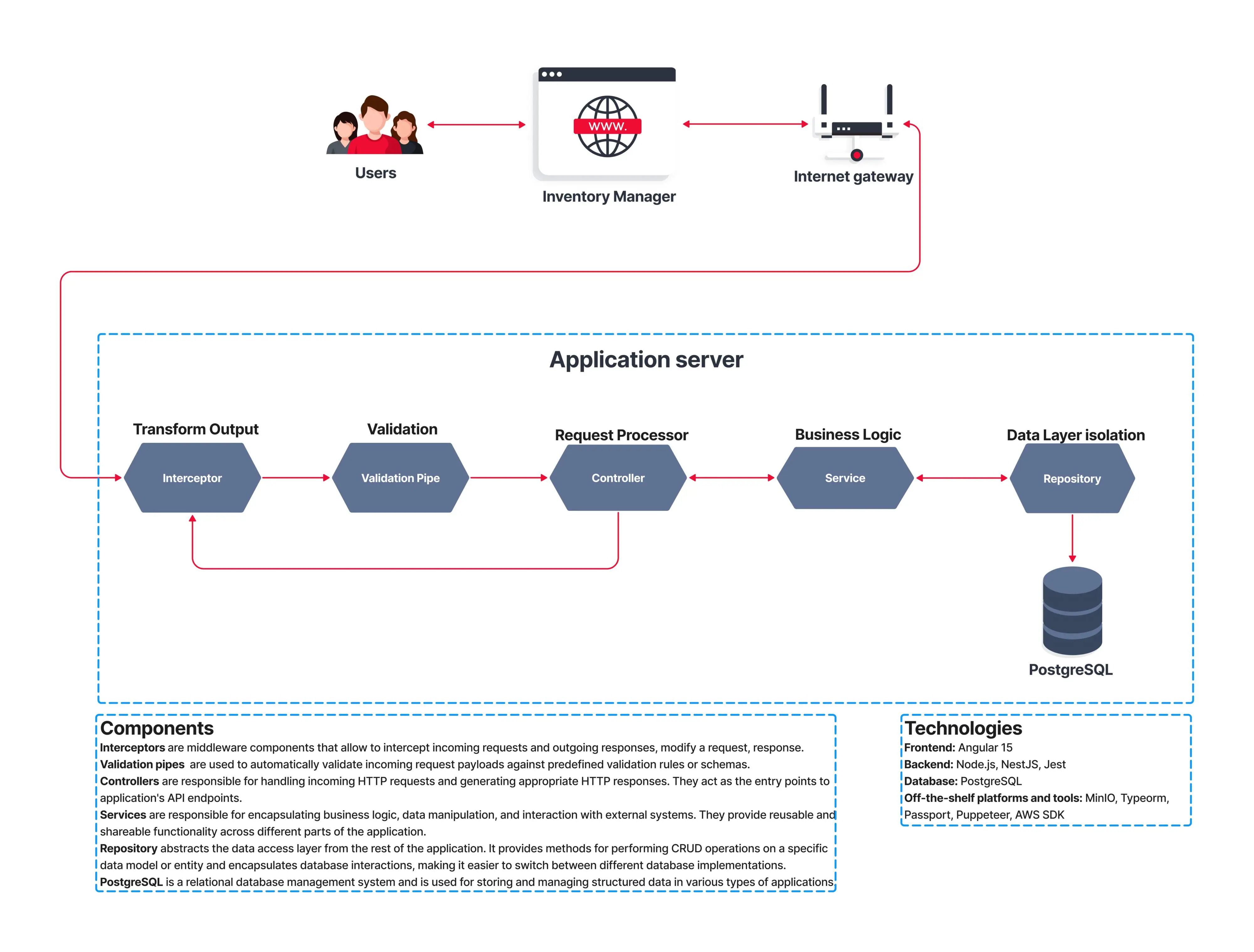
Then the integration work: connecting the forecasting engine to existing procurement and EHR platforms through APIs, since machine learning inventory forecasting is only as good as the data pipeline feeding it. This is standard groundwork we cover under AI software development services more broadly, not just for inventory use cases. Compliance can’t be an afterthought either: HIPAA-covered data handling and audit trails for every automated reorder decision need to be baked into the architecture from the start. In our experience, the phase that blows past its original estimate almost every time isn’t the forecasting model. It’s the data cleanup and integration work sitting underneath it.

The hard part isn’t training a forecasting model. No, it’s that hospital data lives in systems that were never built to exchange it. At Elinext, we spend most of an implementation on integration architecture: normalizing SKU and procedure codes across EHR, ERP, and supplier systems before any forecasting runs. Get that layer wrong, and the model is just producing confident numbers from bad inputs. Get it right, and procurement teams stop reordering from memory.

Key Takeaways
- Forecasting accuracy lives and dies on data granularity – facility-wide averages paper over exactly the department-level demand spikes that per-unit tracking would catch, which is the whole point of healthcare inventory optimization.
- Integration work, not model selection, is usually the longest and most expensive phase, simply because hospital systems were never designed to share data with each other.
- Predictive models cut waste by flagging expiration risk against real consumption velocity for specific SKUs, and the same mechanism works in reverse to reduce medical supply stockouts before they happen.
- Human override and a working feedback loop stay necessary for handling situations the model has never seen before, like a new procedure type or an unfamiliar outbreak pattern.
- Compliance and audit-trail requirements belong in the initial architecture, since bolting them onto an already-automated reorder system afterward is a much harder, messier job.
Conclusion
AI-driven forecasting, the backbone of modern predictive analytics for inventory management, reshapes healthcare inventory management by swapping out fixed par levels and manual counts for models that actually respond to consumption patterns and connected, live data. The gains are real, but they’re bounded. Accuracy comes down entirely to data quality and how deep the integration goes, and even the best model still needs a human ready to step in when something happens that history never prepared it for. If you’re an IT or procurement leader sizing this up, give the integration architecture underneath the forecasting engine the same scrutiny you’d give the model itself. Honestly, it deserves more.
FAQ
-
AI models analyze consumption patterns, procedure schedules, and supplier data together to predict demand at the SKU level, replacing fixed reorder thresholds with dynamic, data-driven ordering.
-
Historical consumption logs, EHR procedure and admission data, seasonal illness trends, supplier lead times, and sometimes regional epidemiological data feed the forecasting model.
-
It reduces stockout risk by flagging demand spikes earlier than manual tracking would, though it can’t fully prevent stockouts caused by sudden, unprecedented demand shifts.
-
Accuracy depends on data granularity and history length – models trained on 18+ months of clean, unit-level data outperform those relying on facility-wide averages.
-
It involves integrating EHR, ERP, and supplier systems via API, normalizing inconsistent data formats, building compliant data pipelines, and layering forecasting models on top.
-
No, smaller practices can apply the same forecasting principles at a smaller scale, though the data volume needed for reliable models may take longer to accumulate.
-
Traditional methods use fixed par levels and manual reordering; predictive analytics continuously recalculates demand from live consumption and contextual data.