









































































































































A multi-agent system is a network of intelligent software agents that collaborate, share information, and make coordinated decisions to achieve common goals. It is designed for organizations that need to automate complex workflows and improve operational efficiency through scaling AI-driven processes. The result that multi-agent AI systems can achieve is faster execution and more accurate outcomes.
As AI adoption accelerates across industries, businesses are increasingly exploring distributed intelligence rather than relying on a single model. The growing volume of multi-agent AI news highlights how enterprises use collaborative agents to optimize logistics, healthcare, manufacturing, and customer service. By combining specialized capabilities, these systems can solve problems that would be difficult for standalone AI solutions to manage.
What is a Multi-agent?
A multi-agent is an autonomous software entity operating within a larger environment alongside other agents. Unlike isolated AI tools, agents communicate, exchange information, and coordinate actions to achieve shared objectives. In modern multi-agent AI systems, each agent is typically responsible for a specific function while contributing to overall system performance.
Single Agent VS Multi-agent Systems
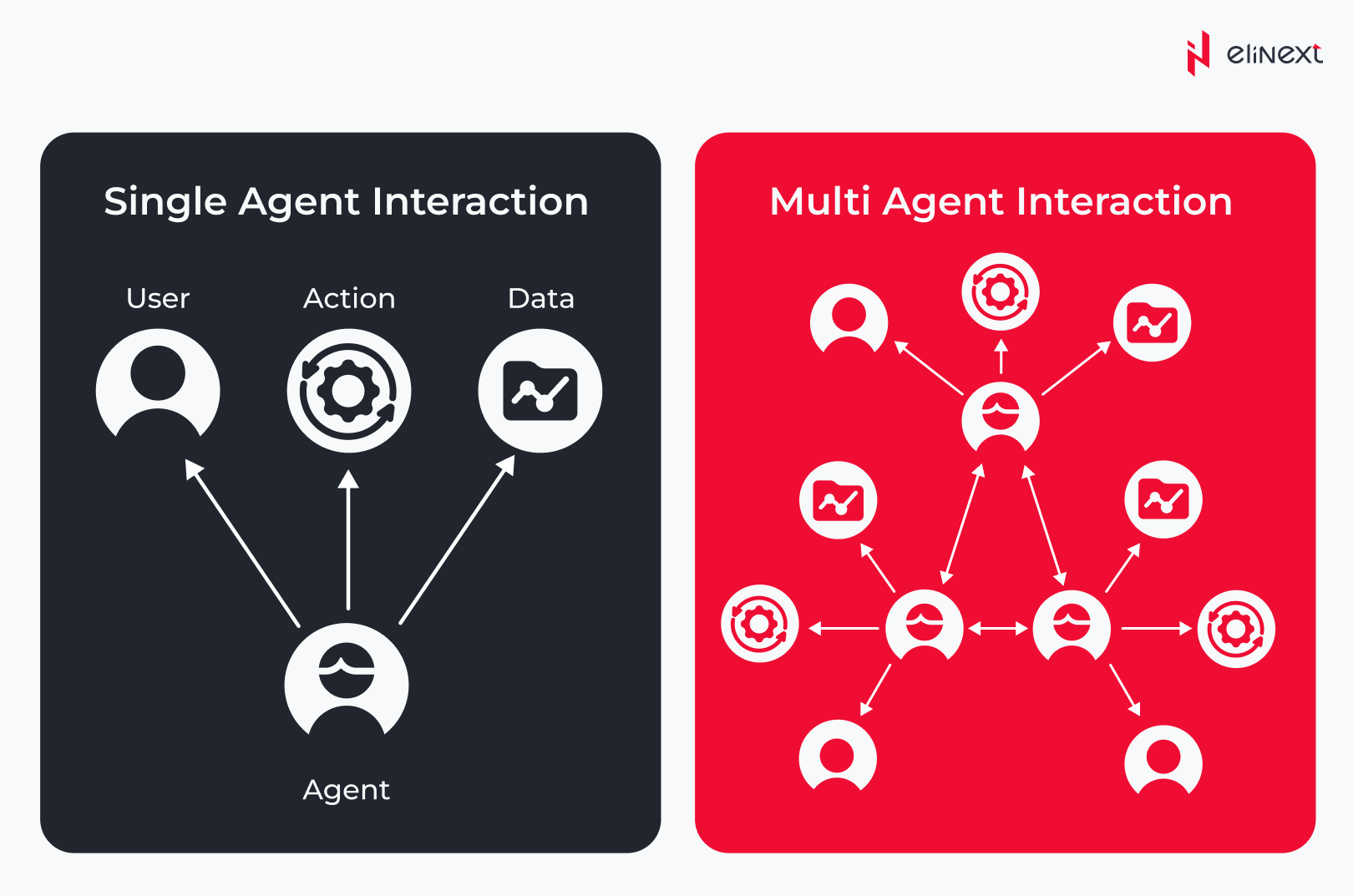
A single-agent system relies on one AI entity to collect information, analyze data, and execute actions. It is suitable for straightforward tasks, but it may struggle with large-scale or dynamic environments. In contrast, multi-agent AI systems distribute responsibilities among multiple specialized agents that collaborate in real time. As reflected in current multi-agent AI news, organizations increasingly adopt this approach to improve resilience, scalability, and decision quality while reducing operational bottlenecks.
Single Agent VS Multi-agent Systems
A single-agent system relies on one AI entity to collect information, analyze data, and execute actions. It is suitable for straightforward tasks, but it may struggle with large-scale or dynamic environments. In contrast, multi-agent AI systems distribute responsibilities among multiple specialized agents that collaborate in real time. As reflected in current multi-agent AI news, organizations increasingly adopt this approach to improve resilience, scalability, and decision quality while reducing operational bottlenecks.
Transform repetitive workflows into intelligent, autonomous operations with AI agents tailored to your business.

Discover Use Cases of Multi-agent Systems
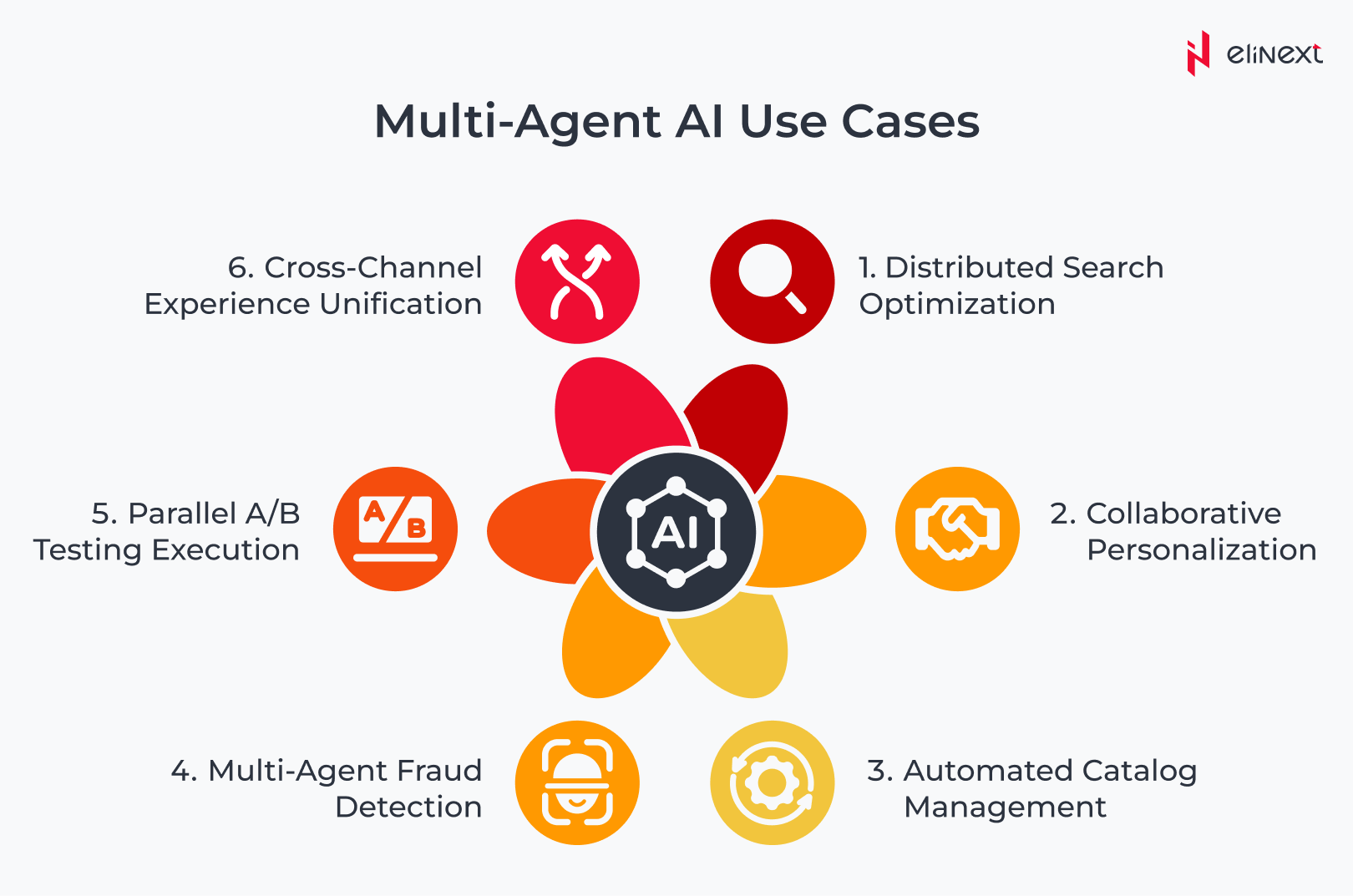
Businesses implement multi-agent AI systems to coordinate distributed operations, automate decisions, and improve responsiveness. The growing interest reflected in multi-agent AI news demonstrates how organizations use collaborative agents to solve industry-specific challenges more efficiently.
Transportation
Transportation-focused multi-agent solutions use interconnected agents to monitor traffic, coordinate routes, manage fleets, and optimize delivery schedules. The business value comes from reduced delays, lower fuel consumption, and improved asset utilization. The outcome is faster transportation services and overall more efficient logistics networks.
Healthcare and Public Health
Healthcare systems employ agents to analyze patient data, monitor public health trends, support diagnostics, and coordinate care delivery. This improves resource allocation and accelerates decision-making for medical professionals. The outcome is improved patient experiences and more efficient healthcare operations.
Supply Chain Management
In supply chains, agents track inventory, forecast demand, coordinate suppliers, and identify disruptions. Businesses benefit from greater transparency, reduced operational risk, and optimized inventory levels. The outcome is a more resilient supply chain capable of responding quickly to changing market conditions.
Defense Systems
Defense organizations use agents to process intelligence, monitor environments, coordinate autonomous assets, and support mission planning. The business value lies in faster situational awareness and improved decision support. The outcome is stronger security capabilities and more effectiv

“Building distributed AI environments is challenging because agents often operate across different data sources, platforms, and business processes. Without proper integration, coordination becomes inefficient and difficult to scale. Elinext addresses this challenge through tailored architecture, interoperability frameworks, and AI engineering expertise. We know from plenty of multi-agent AI news that businesses that successfully coordinate intelligent agents gain better operational visibility.”
Build Your Multi-agent System with AI Solutions by Elinext
Elinext helps organizations design, develop, and deploy multi-agent AI systems aligned with business goals. Our expertise covers architecture design, agent orchestration, integration, and optimization. Through services such as AI integration services and AI software development services, we help businesses create scalable AI ecosystems that deliver measurable results
From strategy and prototyping to deployment and optimization, we help you build AI solutions that deliver measurable business value.
Benefits of Multi-agent Systems
The adoption of multi-agent AI systems continues to grow as organizations seek more flexible and scalable AI architectures. Recent multi-agent AI news demonstrates how distributed intelligence helps businesses improve performance across complex operational environments.
Scalable
Scalability refers to the ability to expand system capacity by adding new agents without redesigning the entire architecture. This enables organizations to support increasing workloads while maintaining performance. The outcome is sustainable, unstoppable growth.
Strong and Reliable
Reliability comes from distributing responsibilities among multiple agents rather than relying on a single point of failure. If one component experiences issues, others can continue operating. Organizations get improved business continuity and system resilience.
Flexible and Adaptable
Flexibility allows agents to respond to changing conditions, new objectives, and evolving environments. Organizations can introduce new capabilities without major infrastructure changes. This results in faster adaptation to market demands and business priorities.
Better Problem-solving
Different agents contribute specialized knowledge and perspectives when analyzing complex situations. This collaborative approach improves the quality of decisions and recommendations, which leads to more accurate solutions.
Faster and More Efficient
Parallel task execution enables multiple agents to work simultaneously rather than sequentially. This reduces processing times and accelerates workflows. The outcome is improved productivity, faster response times, and reduced operational costs.
How do Multi-agent Systems Work?
Multi-agent AI systems operate through coordinated interactions between autonomous agents. Each agent gathers information, evaluates conditions, performs tasks, and communicates with others. Together, they create an intelligent environment capable of managing complex business processes efficiently.
Perception
Perception is the process through which agents collect and interpret information from their environment. Data may come from sensors, databases, applications, or user interactions. The result is a reliable understanding of current conditions that supports informed decision-making.
Reasoning and Decision-making
Agents analyze available information and evaluate potential actions according to predefined goals or learned behaviors. This capability helps prioritize tasks and respond to changing circumstances, which leads to more accurate and context-aware decisions.
Action
After making decisions, agents execute tasks within the system or the external environment. Actions may include updating records, triggering workflows, or controlling connected applications. The outcome is automated execution with minimal human intervention.
Interaction
Interaction enables agents to exchange information, share updates, and coordinate activities. Effective communication ensures alignment across system components and prevents conflicting actions. This means improved collaboration and operational consistency.
Orchestration
Orchestration manages how agents work together toward common objectives. It establishes priorities, coordinates workflows, and resolves dependencies between tasks. Companies are left with optimized system performance that was not there before.
Discover how coordinated AI agents can streamline complex workflows, improve decision-making, and drive greater operational efficiency across your business.
Future Trends in Multi-agent System Development
The future of multi-agent AI systems will be shaped by stronger orchestration frameworks, autonomous decision-making capabilities, and deeper integration with enterprise platforms. Industry analysts increasingly highlight these developments in multi-agent AI news. We expect organizations worldwide to adopt larger agent ecosystems capable of managing end-to-end processes, improving adaptability, and supporting real-time strategic decisions.
Conclusion
Multi-agent AI systems help businesses automate complex processes through coordinated intelligence and distributed decision-making. As organizations seek greater efficiency, collaborative AI architectures are becoming a practical solution for addressing operational challenges. These systems enable faster responses, improved resource management, and stronger business outcomes in all fields from logistics to healthcare.
Multi-agent System: Terms Explained
Agent
An autonomous software entity capable of perceiving its environment, making decisions, and performing actions to achieve specific objectives.
Environment
The digital or physical context in which agents operate, gather information, and execute tasks.
Autonomy
The ability of an agent to act independently without continuous human supervision or external control.
Communication (Interaction)
The process through which agents exchange information, coordinate activities, and share knowledge.
Coordination
The organization of agent activities to ensure efficient collaboration and alignment toward shared goals.
Cooperation
A collaborative approach where agents work together and contribute specialized capabilities to solve problems.
Negotiation
A mechanism that enables agents to resolve conflicts, allocate resources, and reach mutually beneficial decisions.
Distributed System
A network of interconnected components operating across multiple locations while functioning as a unified system.
FAQ
-
A multi-agent system is a collection of autonomous agents that collaborate to achieve common goals. Businesses use these environments to automate workflows, improve decisions, and increase efficiency. Growing multi-agent AI news coverage reflects their expanding adoption.
-
An agent is an autonomous software entity capable of perceiving information, making decisions, and performing actions. Organizations use agents to automate specialized tasks while contributing to broader system objectives.
-
A multi-agent system differs from a single AI system by distributing responsibilities across multiple agents. This approach improves scalability, resilience, and collaboration while enabling more effective management of complex processes.
-
Multi-agent systems are used in transportation, healthcare, supply chain management, finance, manufacturing, and defense. Organizations apply them to optimize operations, automate decisions, and improve responsiveness.
-
The challenges of multi-agent systems include coordination complexity, communication management, integration requirements, and governance. Businesses must ensure agents operate consistently and align with strategic objectives.
-
Multi-agent systems are closely related to artificial intelligence because agents use AI techniques to perceive, reason, and act. Organizations leverage them to create intelligent environments capable of autonomous collaboration.
-
Agents can learn or adapt over time through machine learning (explore Elinext machine learning development services), feedback loops, and continuous data analysis. Businesses use adaptive agents to improve performance, respond to change, and optimize outcomes.