








Despite several pharma industry disruptive forces like complex requirements for drug trials, stricter regulations and cost increases that could change the industry in 2025, the increasing prevalence of chronic disease and growing demand for personalized medicine are fueling the push for innovative drugs, contributing to market growth.
Along with that, automation and the adoption of cutting-edge technologies like AI-powered drug development platforms, among other factors, contribute to addressing industry uncertainties and lead to more breakthrough innovations.
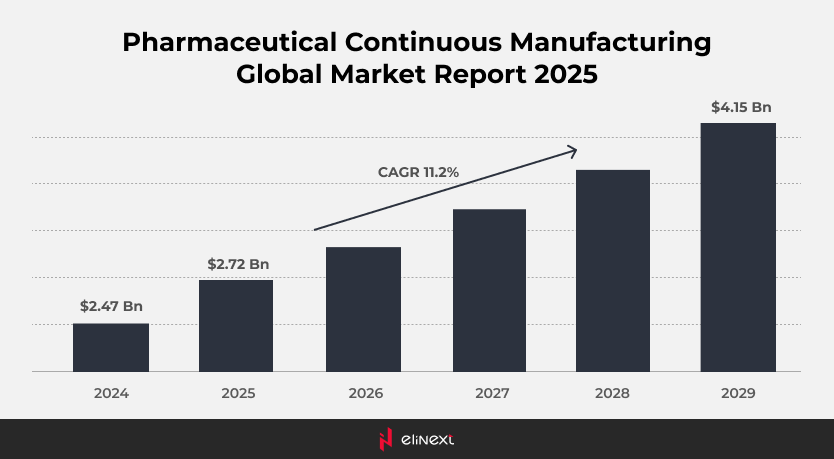
Elinext: Leading Experts in Pharmaceutical Software Development
Having been providing pharmaceutical software development services since 1997, the Elinext team is fully prepared to support pharma businesses with custom, industry-compliant software solutions, assisting you in every step of the development journey, from business analysis and consultation to delivery and post-launch support.
Key Trends Shaping the Pharma Industry
The pharmaceutical industry continues on a path of seismic transformation and is poised for further innovation in 2025 and beyond. From AI solutions integration to personalized medicine, telehealth & remote trials and more, below we examine seven of the most notable trends in pharma industry we see shaping the market landscape in the near future.
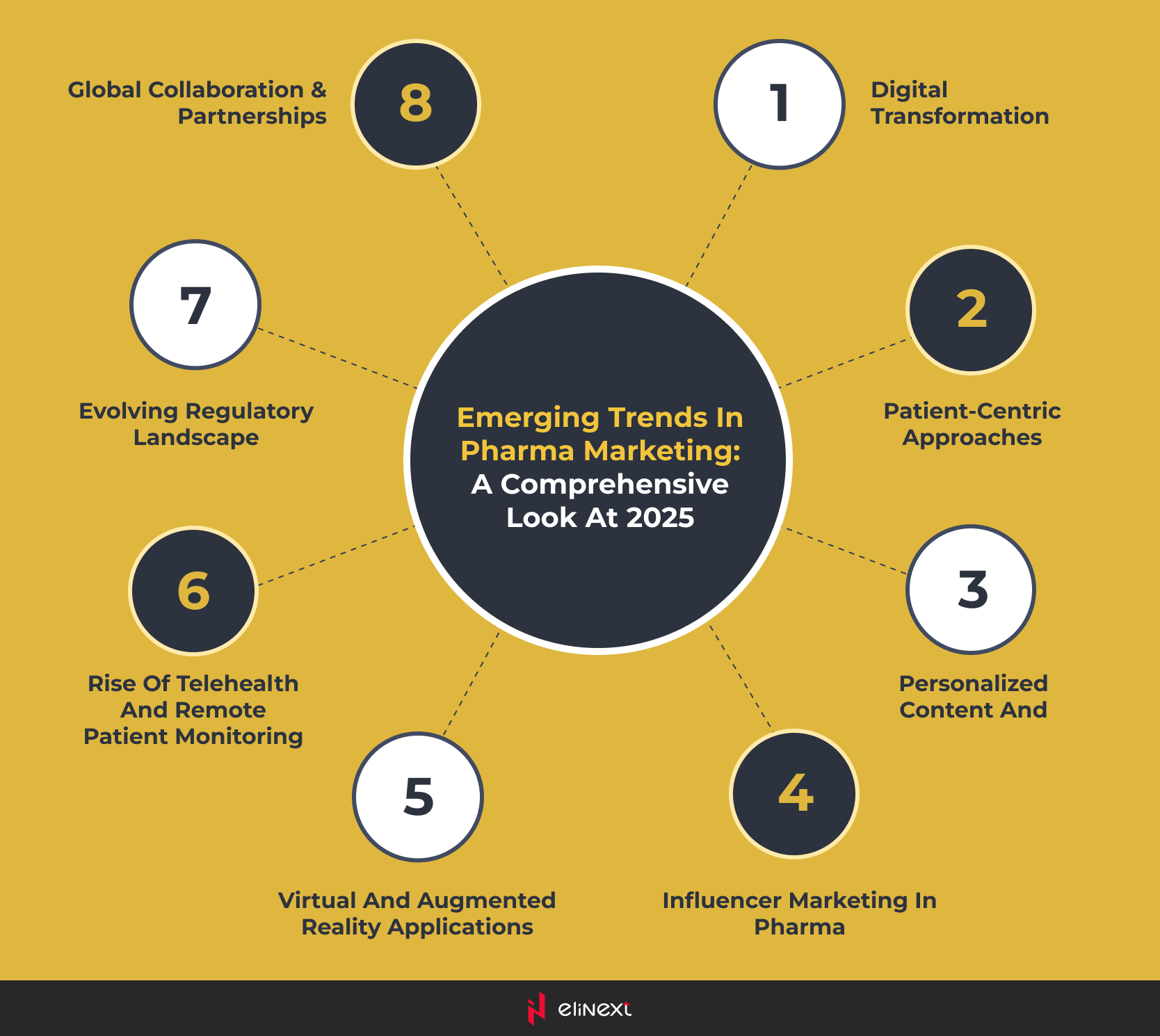
Digital Transformation
Leapfrog digital transformation is one of the key pharmaceutical industry trends in 2025. We observe pharma players replacing siloed, paper-heavy processes with cutting-edge solutions, including autonomous labs, AI-driven drug discovery, digital twins-based manufacturing, etc.
AI Solutions Integration
A surge in the adoption of AI tech has also hit the list of the most transformative pharmaceutical industry trends 2025. An increasing number of global leaders (Pfizer, Moderna, etc.) use AI in the pharmaceutical industry to slash the hefty time and costs associated with vaccine and drug development.
Personalized Medicine
A growing emphasis on the delivery of personalized medicines (developed using genetic, environmental and other patient-specific data) to address the individual needs of patients with serious health conditions continues our list of the top pharmaceutical industry trends in 2025.
mRNA & Advanced Therapies
From antibodies to protein replacement therapies, global vaccines and more, the potential of mRNA therapeutics is immense. In 2025, the global mRNA therapeutics CDMO market generated over USD 5.09 billion in revenue and is on track to hit roughly USD 12 billion by 2033.
Supply Chain Resilience
Among the top pharma digital trends that will force changes in the market throughout the year is the drive for supply chains that are resilient and responsive. With AI, drugmakers can improve demand forecasting, optimize inventory, boost operational efficiency, proactively manage supply chain risks and more.
Telehealth & Remote Trials
A mature telemedicine app development company with 25+ completed telehealth projects, Elinext witnesses the growing role of telehealth in decentralized trials. With the benefits virtual trials bring – boosted patient recruitment, broader patient populations and enhanced data accuracy – they are set to become even more widespread.
M&A and Investment Trends
High mergers and acquisitions activity in the pharma industry completes our list of the top trends in pharma industry of 2025. Driven by pharmaceutical companies’ pursuit of profit-making, growth and expansion, this trend will only continue to gain traction in 2025 and the coming years.
The prevailing and upcoming trends in pharma industry, brought to you by a pharmaceutical software development provider with 27+ years of experience.
Pharma VS Biotech: Competitive Analysis
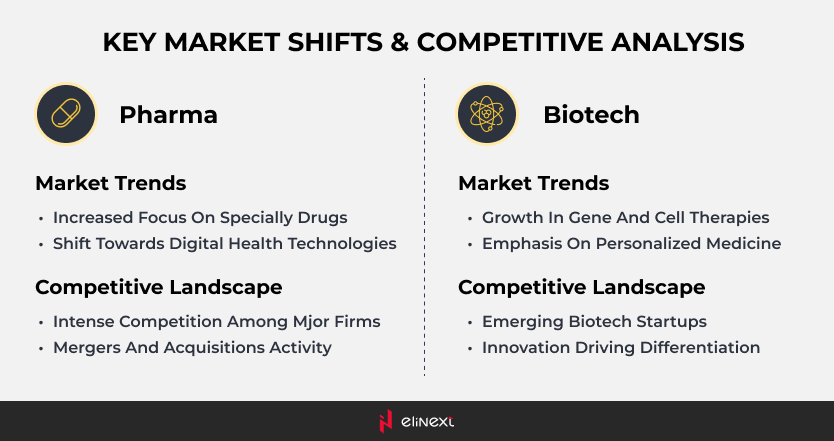
The current pharmaceutical industry trends display that the industry is focused on commercial scale, digital health adoption and production of specialty drugs, where large-cap biotech players drive disruptive innovation in precision medicine and tend to concentrate their efforts on gene editing and cell therapies.
Distinct R&D approaches – chemistry vs biology – shape different risk profiles and investment strategies.
Big pharma competes through mergers and global reach, while biotech companies thrive on forward-thinking mindsets, reasonable risks, cutting-edge science and innovative ventures.
“The rising drug developmenеnt costs and stricter regulatory standards – some of the dominant trends in pharma industry – are pushing even mid-sized and niche pharma firms to expand investments in digital transformation.
In pharma software development since 1997, the Elinext team is willing and able to support them in their digitalization journey, offering the most demanding IT services, such as custom healthcare software development services, ML software development services, generative AI development services, chatbots development services and more.” – Elinext expert
How AI is Helping Pharmaceutical Companies to Stay Competitive
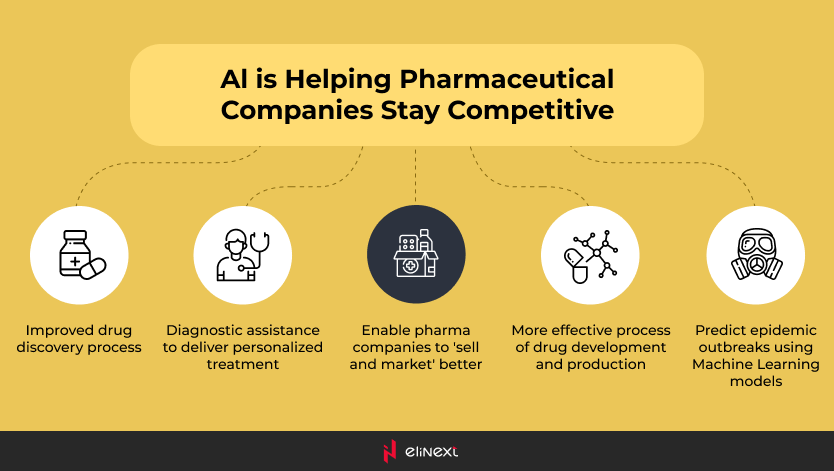
Speeds Up Drug Discovery and Development
From revealing new targets for drug discovery to forecasting probable toxicity, de novo drug design and more, the use of AI in the pharmaceutical industry is radically speeding up the pace at which drug manufacturers are exploring new horizons.
Optimizes Production Processes and Efficiency
AI in the pharmaceutical industry is driving transformative value by improving production line processes, reducing resource wastage (energy, drug compounds, packaging materials, etc.) and operational waste (f. e., non-compliant materials, scrapped products), all while enhancing quality control.
Enhances Diagnostics and Personalizes Treatments
AI algorithms improve medical diagnostics and clinical reasoning by analyzing data from a patient’s history. The technology helps tailor therapies to individual genetic profiles, optimizing treatment efficacy and patient outcomes, especially in oncology and neurological disorders.
Predicts Disease Outbreaks for Proactive Response
AI-based models overcome the constraints of traditional epidemiological methods by collecting and analyzing diverse structured and unstructured datasets (EHRs, social media feeds, genomic sequences, migration patterns, climate trends, etc.), empowering pharma brands to act proactively before a crisis escalates.
Improves Targeting in Sales and Marketing Strategies
By analyzing search trends, behavioral data and digital interactions, AI tools assist pharma sales and marketing teams in creating targeted marketing materials for different channels (e.g., social posts, emails, banner ads), enhancing the effectiveness of retargeting campaigns, segmenting audiences and more.
Stay ahead of the game by anticipating top pharmaceutical industry trends.
Partner with a global AI software development services provider to create next-gen pharma solutions ready for fundamental changes in the market.
The Future of Pharma Digital Trends
The pharmaceutical industry trends 2025 – including rapid digital transformation, increasing adoption of AI-based solutions for accelerated drug discovery, disease outbreaks prediction, and ultra targeted marketing materials generation, along with high mergers and acquisitions activity, among others mentioned top pharma digital trends – highlight that the industry is successfully undergoing the path of digital transformation and seems prepared for the widespread use of AI and other emerging technologies.
Conclusion
AI presents tremendous potential for life sciences – speeding up drug research and development processes, reducing costs associated with new drug production and enabling precision medicine.
Yet, a full-scale adoption requires a strategic, risk-aware approach tailored to pharma’s stringent regulatory landscape. Success hinges on custom-built solutions with robust governance, not ready-made AI models.
Pharma brands should prioritize scalable systems aligned with business goals, supported by a robust, future-ready tech stack.
FAQ
1. What is the biggest trend in the pharmaceutical industry right now?
The most prominent pharmaceutical industry trends 2025 are leapfrog digital transformation, widespread adoption of AI-powered solutions, growing focus on personalized medicine, industry shift toward decentralized clinical trials and more.
2. How is personalized medicine changing patient care?
Unlike traditional medicine, which offers a one-size-fits-all treatment approach to all patients, personalized medicine considers an individual’s genetic profile to tailor therapies to their unique needs. Such an approach reduces unwanted drug reactions and improves treatment outcomes.
3. Why are emerging markets important for the pharma industry?
With such key growth drivers like a large and aging population, urbanization, rising healthcare expenditure, expanding healthcare infrastructure, etc, emerging markets possess a promising array of opportunities for pharmaceutical brands looking for growth and expansion.
4. What are decentralized clinical trials (DCTs)?
DCTs refer to clinical trial activities that are carried out at locations other than a conventional clinical trial site. Participants can partake in research from their homes or local healthcare facilities by using telehealth and other advanced technologies.
5. How is the industry addressing sustainability?
Some initiatives demonstrating companies’ commitment to building a greener pharmaceutical industry include investment in renewables, net zero buildings, switching to electric vehicles, optimizing international distribution networks to cut greenhouse gas emissions and more.
