About Client
The client is a small but ambitious company operating in the business process automation and enterprise SaaS space. The company aimed to build a no-code platform that would allow organizations to digitize and automate internal workflows without requiring technical expertise.
Their vision was to turn to web development services to create a solution that enables business teams, including operations, HR, IT, and finance, to replace manual processes, spreadsheets, and email-based approvals with structured digital workflows.
At the early stage, the client had only a product concept and business goals but lacked a fully designed product, technical implementation, and brand identity. To bring the idea to market, the client was looking for no-code platform development services at a reasonable price. They ended up being partnered with Elinext to design and develop the platform from scratch, including the product interface, frontend implementation, infrastructure components, and supporting marketing materials.
Business Challenge
The main objective was to build a fully functional no-code platform that would allow users to create digital forms and automate workflows within a single system. Actually, to do it from scratch, and with the emphasis on front-end development services.
They needed no-code platform development services to get a SaaS solution that empowers organizations to transform cumbersome manual processes into clear, traceable, seamless digital workflows.
The client faced several business and technical challenges at the start of the project.
From a business perspective:
- The product required a modern and intuitive UI/UX that would be accessible to non-technical users
- There was no established brand identity to support product positioning and sales efforts
- A professional marketing website was needed to communicate the platform’s value proposition
- Sales enablement materials were required to support investor outreach and early customer acquisition
From a technical perspective, these were challenges to our software product engineering services:
- The platform needed a complex drag-and-drop form builder with dynamic logic capabilities
- The frontend architecture had to be scalable and ready for future feature expansion
- A seamless design-to-development workflow was required across multiple deliverables
- A browser-based remote desktop solution had to be implemented to support virtual workspace access
During development, an additional technical challenge arose with the remote desktop functionality. The initial implementation using traditional remote desktop protocols delivered poor multimedia performance, necessitating a fundamental architectural change.
Process
This is how we approached SaaS application development services, or, to be more specific, no-code platform development services we’ve delivered could be separated into several stages. Let’s dive deeper into each of them.
Stage 1. Platform Design
Our no-code platform development started with requirement analysis and product definition. The team worked closely with the client to translate the initial idea into a structured product concept.
UI/UX design services took off as the designer created wireframes and an interactive prototype of the form builder platform. This prototype allowed early validation of user flows and helped identify usability issues before development began. The prototype was reviewed and approved by the client before moving to implementation.
Stage 2. Platform Development
During the second phase, the team delivered high-fidelity UI designs and a complete design system.
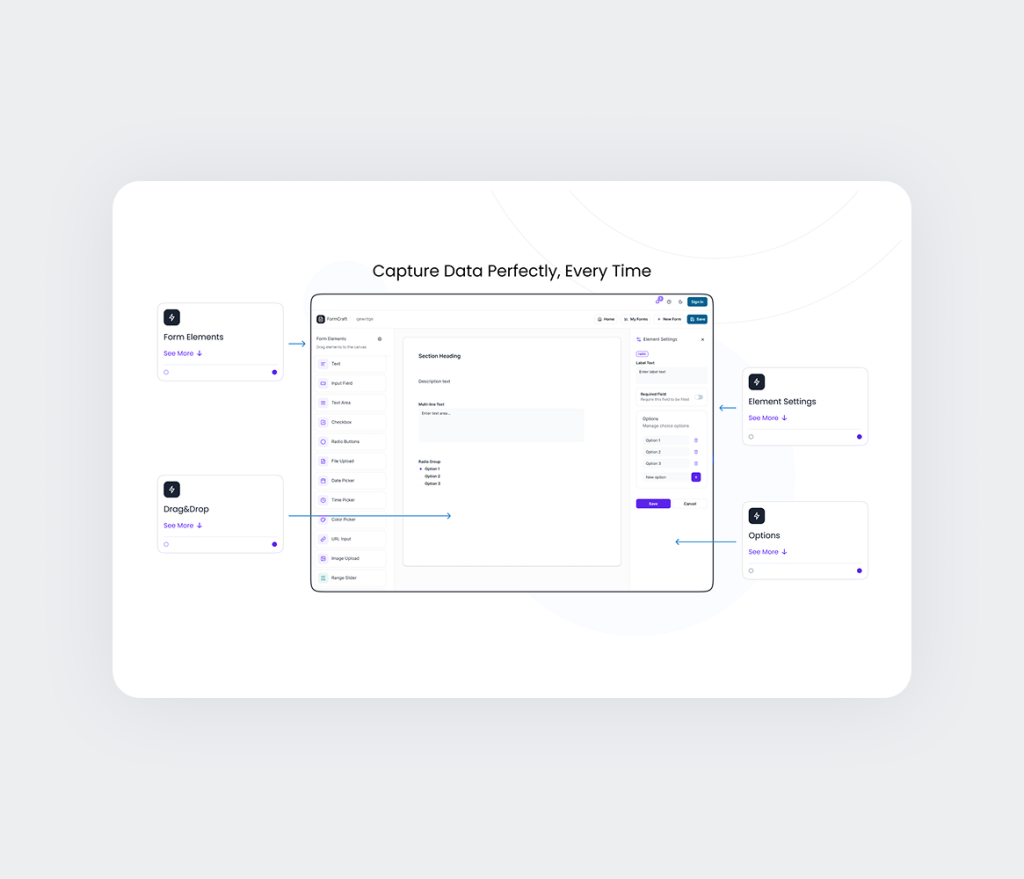
The frontend developer implemented the platform using JavaScript, translating Figma designs into a functional interface. The system included a visual drag-and-drop form builder, real-time preview functionality, and a scalable component structure.
Manual QA testing was conducted to ensure correct functionality across different browsers and screen resolutions.
Stage 3. Website, Branding, and Sales Materials
In parallel with no-code platform development, the team worked on additional deliverables required for product launch. The marketing website was designed and developed to present the platform and its value proposition. A comprehensive brand book was created, including logo guidelines, color palette, typography, and visual identity rules. A sales presentation was developed to support investor meetings and customer acquisition efforts.
This parallel execution allowed the project to meet tight deadlines without compromising quality.
Stage 4. DevOps as a Service and Remote Desktop Solution
As part of the platform capabilities, a browser-based remote desktop solution was required to provide users with access to virtual environments.
The initial implementation used Apache Guacamole with RDP/VNC protocols. However, testing revealed significant issues:
- Video lag and stuttering
- Audio synchronization problems
- High latency due to protocol limitations
DevOps changed the technical solution during the implementation because the system was lagging.
Stage 5. QA and Software Testing Services, Refinement, and Delivery
Throughout the no-code platform development project, the team continuously refined features based on feedback and real usage scenarios.
Adjustments included:
- Improving UX flows in the form builder
- Optimizing performance for larger datasets
- Refining workflow logic and system behavior
- Adapting DevOps architecture to meet performance requirements
The project was delivered using a structured, milestone-driven approach, with close collaboration among design, development, and the client. All was supervised with the help of our IT project management services.
Final Product Overview
The final product is a no-code SaaS platform that enables organizations to digitize and automate business processes through a unified system.
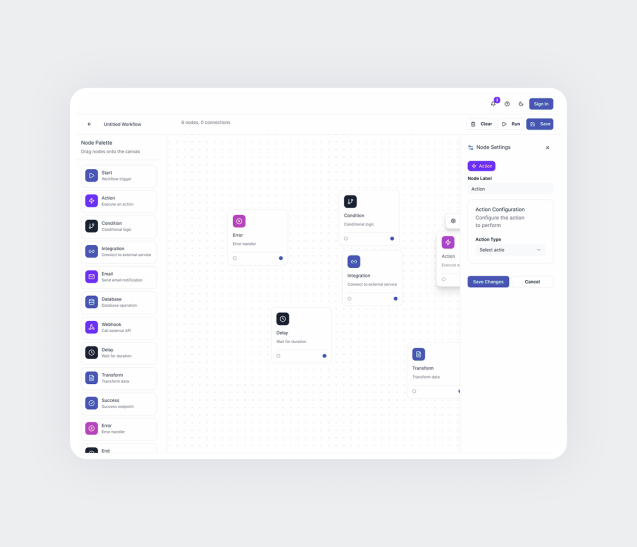
The platform combines three core components:
Form Builder
- A visual drag-and-drop interface that allows users to create dynamic forms without technical knowledge
- The system supports conditional logic, reusable templates, and structured data collection
Workflow Automation
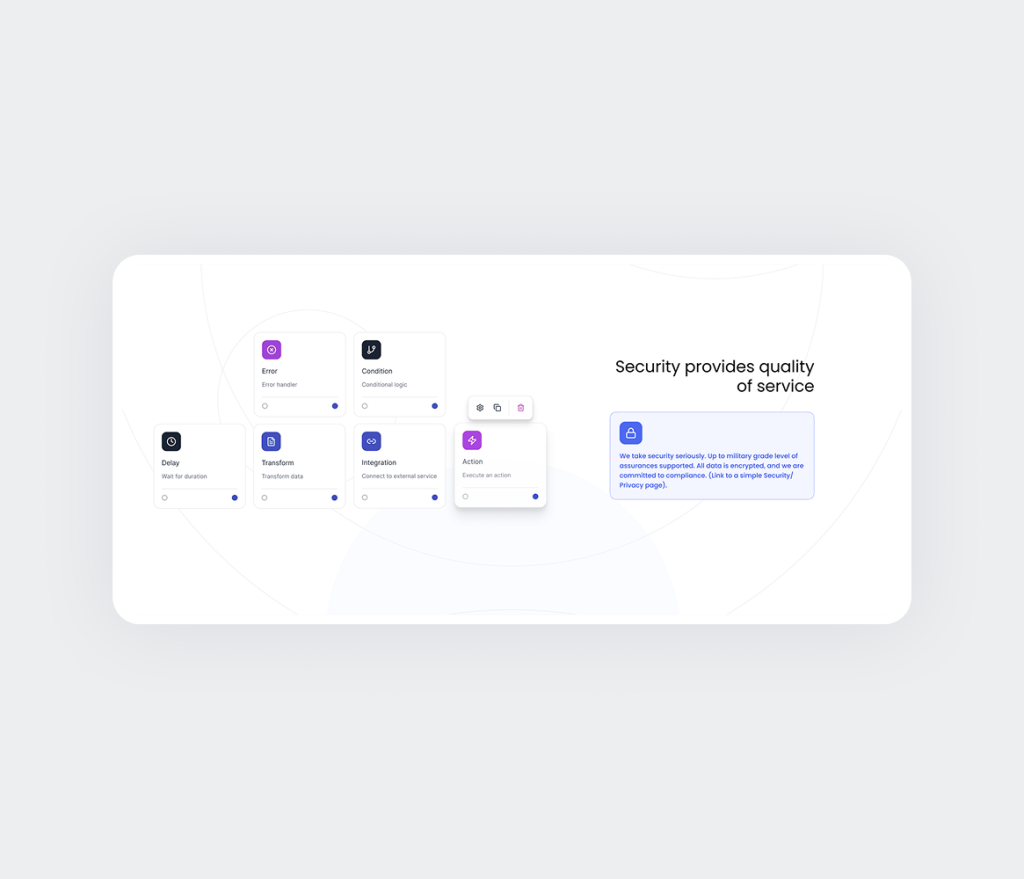
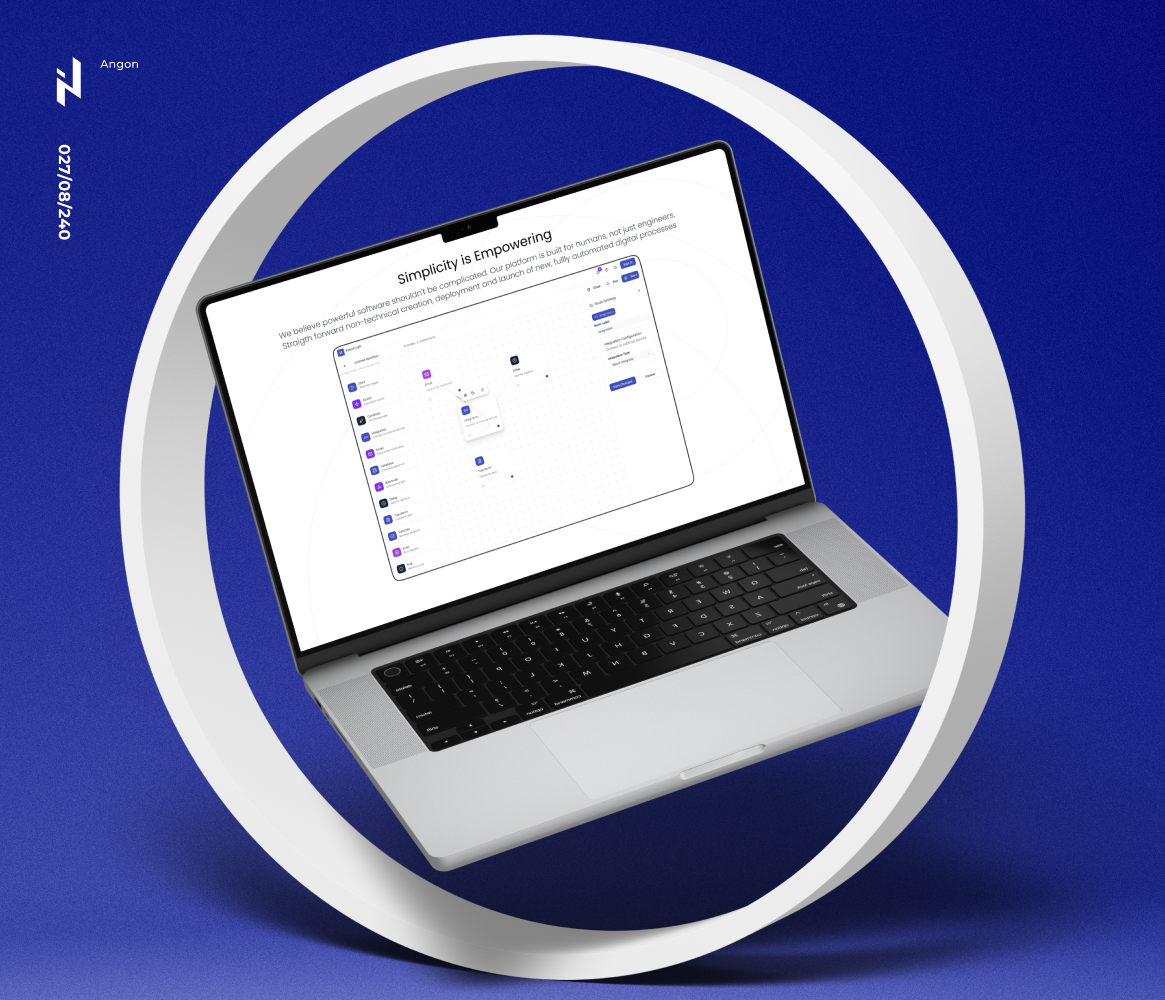
A business process automation software development led to a no-code workflow builder that enables organizations to design and automate processes such as approvals, task routing, and internal operations. Workflows can be configured and launched quickly without development effort.
Dashboard and Reporting
A centralized dashboard providing real-time visibility into process performance, data insights, and workflow tracking.
Additionally, the platform includes:
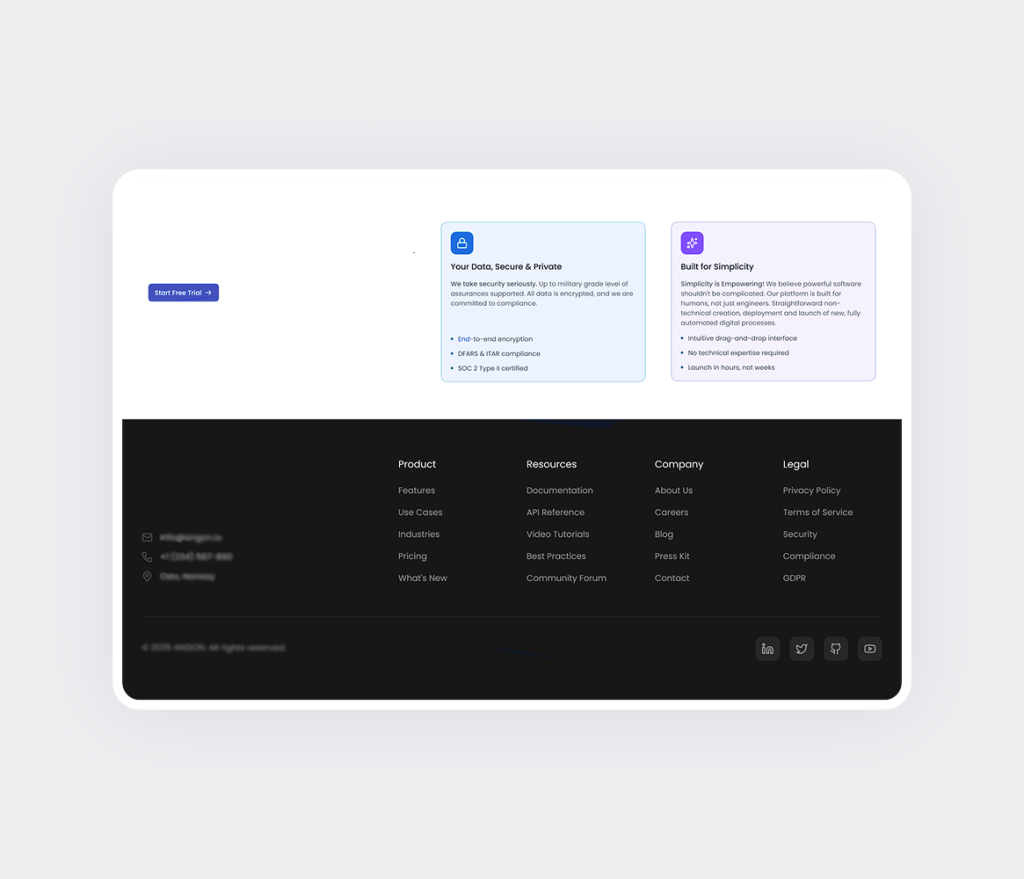
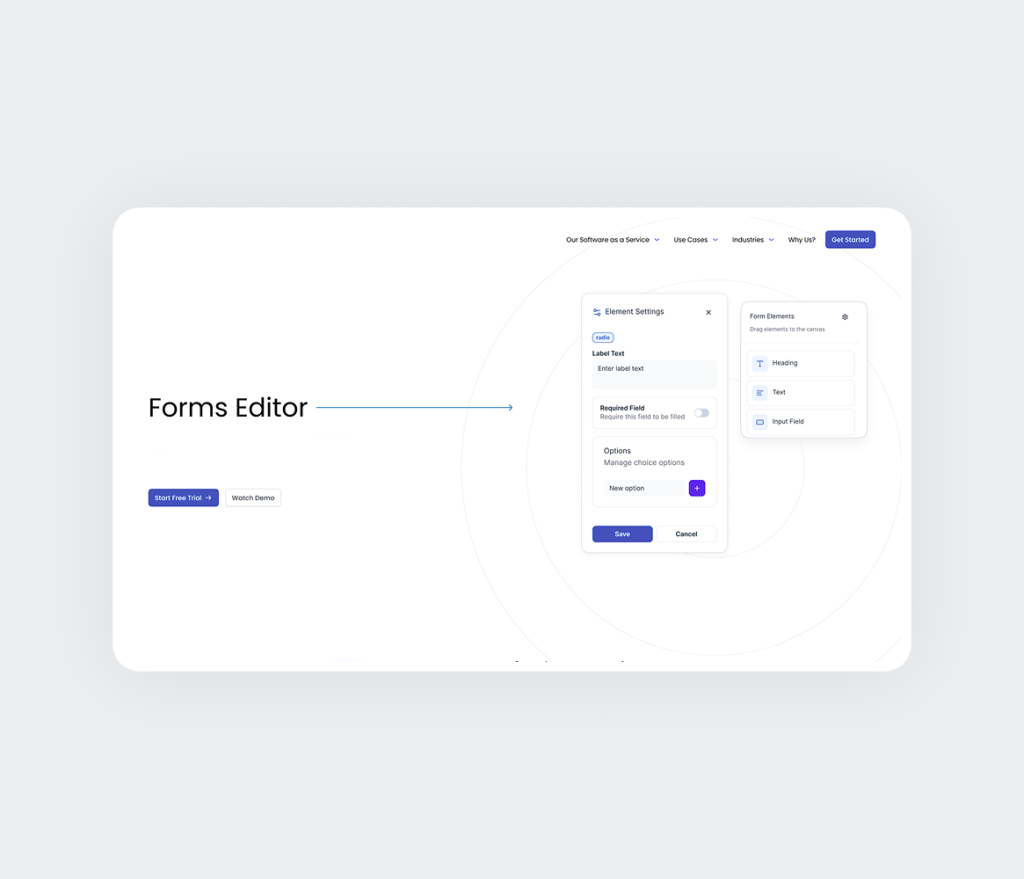
- A marketing website aligned with the product’s positioning
- A complete brand identity system
- Sales materials supporting go-to-market activities
- A browser-based remote desktop solution for accessing virtual environments
The system is built with a scalable frontend architecture and integrates with backend services via REST APIs, ensuring flexibility for future development.
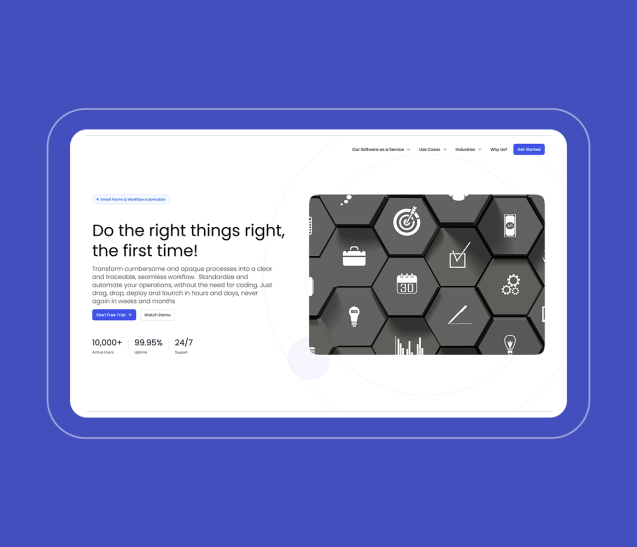
Also delivered:
Marketing Website
- Multi-page website presenting the product’s value proposition
- Designed and developed in alignment with the brand identity
Brand Book
Logo usage rules, color palette, typography system, iconography guidelines, and application examples.
Sales Presentation
Investor and customer pitch deck covering product overview, key benefits, market opportunity, and differentiators
Business Effects for Client
The project of this business process automation software development was delivered within the planned ~3-month timeline. The phased structure (platform → development → website & brand materials) allowed the team to deliver value incrementally while maintaining quality across all workstreams
The client’s business benefits from our business process automation software development were substantial. The delivered solution enabled the client to transform an early-stage concept into a fully functional product ready for market entry.
- Accelerated time-to-market. The full platform, website, brand identity, and sales materials were delivered within approximately 3–4 months, enabling a rapid product launch.
- 40–60% reduced manual process complexity. The no-code platform allows users to replace manual workflows, reducing process execution time.
- 30–50% improved productivity for business users. Intuitive UI and workflow automation reduce dependency on technical teams, increasing operational efficiency.
The delivered solution, as a result of business process automation software development, provided a scalable product foundation capable of supporting increasing data volumes, multiple users, and future feature expansion without requiring architectural changes. At the same time, the combination of a fully functional platform, cohesive brand identity, and professional sales materials strengthened the client’s market positioning, improving their ability to attract investors and early adopters. Overall, the collaboration with Elinext delivered a comprehensive digital product ecosystem that effectively supports the client’s go-to-market strategy and long-term growth.
The client is continuing to evolve the product based on the foundation established during this engagement