



In 2025, real estate technology trends will be driven by artificial intelligence, the Internet of Things, big data, blockchain, and immersive augmented and virtual reality (AR/VR). IoT software development services enable smart home automation, predictive maintenance, and energy savings — CBRE reduced energy costs by 20% thanks to the Internet of Things. Realtech benefits include faster transactions, lower costs, and improved tenant experience. 67% of buyers prefer virtual tours, and blockchain-based smart contracts reduce transaction times from weeks to minutes. These innovations can shorten the sales cycle by 31% and reduce operating costs by up to 35%.
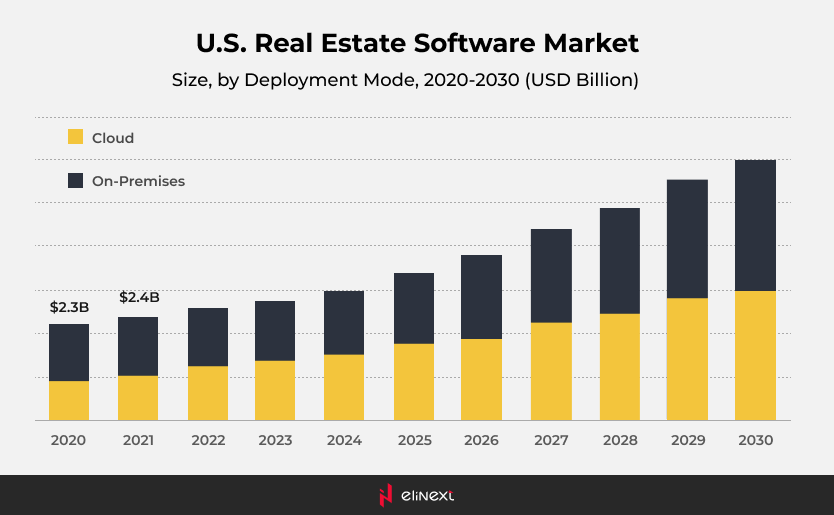
Key Takeaways
- 96% of home buyers search for properties online—digital presence is now a must
- Global real estate market to reach $654.4 trillion in 2025, driven by tech adoption
- AI, IoT, and big data are the top trends, with IoT smart home spending at $157B and AI-based solutions at 26% of innovations
Elinext: Your Partner in Real Estate Software Development
Trends in the real estate industry demonstrate the need for digital solutions. Real estate software development company Elinext offers specialized platforms for virtual tours, IoT integration, and smart property management, helping agencies increase sales and efficiency.
Top Real Estate Technology Trends
The future of real estate technology is driven by augmented and virtual reality (AR/VR) app development services, the Internet of Things (IoT), and artificial intelligence (AI). Trends in the real estate industry include virtual tours, digital twins, blockchain for secure transactions, and big data analytics. AR/VR allows buyers to view properties remotely, while IoT sensors automate energy management. These trends increase engagement, reduce costs, and make the real estate buying process more transparent and efficient.
Virtual Tour Software
Virtual tour software allows buyers to view properties online in 3D or VR. Listings with virtual tours receive 87% more views and sell 31% faster. In a Toronto condo project, 50% of the units were pre-sold weeks in advance using VR previews, making virtual tours a must-have.
Signing Papers
Real estate technology trends now include digital signatures in contracts. Electronic signature platforms reduce paperwork, speed up closings, and reduce errors. DocuSign allows buyers to sign documents remotely, reducing closing times from weeks to days and improving customer satisfaction.
Email Automation
Realtech benefits include email automation for lead management and client updates. Agents use automated emails to send property alerts and follow-up messages, increasing engagement and saving time on a weekly basis. This increases conversions and streamlines communications.
Buying and Selling Websites
Platforms like Zillow and Redfin allow users to search, compare, and list properties online, reaching 96% of buyers. These sites offer virtual tours, price analytics, and instant messaging. Trends in the real estate industry show that buying and selling sites are playing a major role.
Real Estate Management Software
Buildium allows landlords to track payments and applications online, reducing administration time and increasing tenant satisfaction. Real estate technology trends include management software that automates rent collection, maintenance, and tenant engagement.
Digital Twins for Real Estate
Developers use digital twins to visualize renovations and track building performance, reducing operating costs by up to 35%. New real estate technology such as digital twins create 3D replicas of properties for planning, marketing, and management.
Real Estate CRM Software
Real estate CRM software development services provide platforms for lead management, automated follow-up, and personalized communications. A CRM system helps agents track customer preferences and schedule showings, increasing sales and customer retention.
Blockchain Solutions
Real estate technology trends include blockchain for secure and transparent transactions. Smart contracts automate transactions, reduce costs by 30%, and reduce closing times from 45 days to minutes. Propy enables instant real estate sales worldwide using cryptocurrency payments.
Big Data Solutions
Big data development services analyze market trends, property values, and buyer behavior. Agencies use big data to set optimal prices and target marketing, increasing sales by 20% and reducing time to market.
Real Estate Mobile Apps
The Zillow app offers instant notifications and virtual tours, making property searches faster and more convenient for buyers and agents. Real estate mobile apps allow users to search listings, plan trips, and receive notifications on the go.
IoT Smart Home Automation
Trends in the real estate industry are emphasizing IoT smart home automation — smart thermostats, locks, and sensors. CBRE used IoT to reduce energy costs by 20%. 78% of first-time buyers in 2025 consider smart home features essential.
AI Assistants and Conversational Chatbots
Artificial intelligence development solutions enable the creation of AI assistants and chatbots to provide 24/7 customer support. Chatbots instantly answer real estate questions, schedule tours, and qualify leads, saving agents time and improving customer service.
Data Visualisation Software
Agents use visual tools to display market trends and compare properties, helping clients make informed decisions quickly. Data visualization solutions turn complex real estate data into interactive dashboards.
Stay ahead in real estate. Order software development to integrate key technology trends!
Best Real Estate Virtual Tour Software Features
Property software allows creating the following VR effects. Basically, VR-tour special features enabled to your platform might attract additional customers and close questionable deals.
Business owners must pay attention to special features that new real estate technology can bring—capabilities your virtual tour software might add to the table:
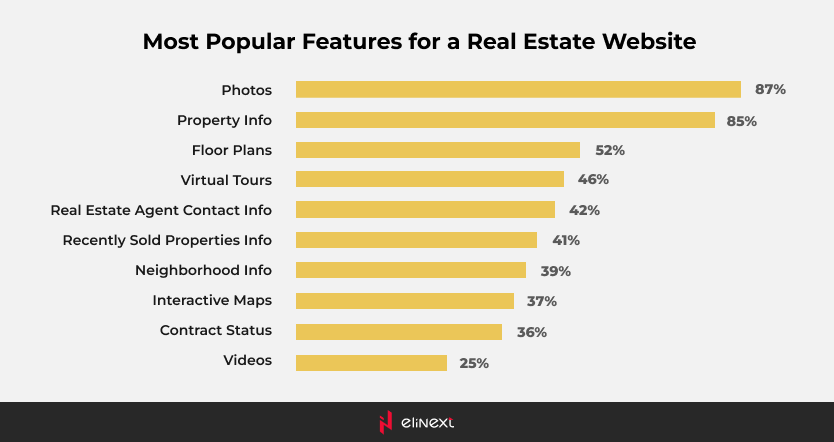
Schemes of floor plans
By looking at them, the potential buyers (tenants) can understand the dimension and layout of the building. The plans give a quick and complete overview of an asset. Also, virtually any MVP version of the real estate software can cover this functionality.
Online listings with 2D floor plans are more likely to get more leads, conversions, sales.
3D presentations
Thanks to the detailed model with furniture and roundabout rotation, clients can view an asset from different angles. 3D presentations may include captivating videos and images of the place.
Finally, 3D virtual tours
Modern tools — shaped by trends in the real estate industry — let buyers or tenants explore any space from any device.
Special VR equipment allows them to do all this in the VR mode and feel like they’re inside the building.
The real estate agent has to make sure the online tour contains hi-resolution images for creating a great customer experience. In addition that international clients are able to use the virtual excursion for fast examination
European or Asian home buyers now use virtual tours to look around offers in the US more often than they did before
For companies arranging open house campaigns, virtual tours are perfect for scaling and saving money for real open houses.
Since events are now forbidden due-to the safety reasons, the high-tech lets many clients test the waters and grasp the real look and feel of the property at a distance.
“The future of real estate technology is driven by artificial intelligence, the Internet of Things, and immersive augmented and virtual reality. Our clients are using digital twins, smart home automation, and blockchain to streamline transactions, reduce costs, and create engaging experiences. These innovations are changing the way we market, manage, and sell real estate.”
Elinext Real Estate Tech Expert
What are the Future of Real Estate Technology
The future of real estate technology is immersive, data-driven, and automated. With AR/VR app development services, you can expect lifelike virtual tours, AI-powered scenography, and 3D collaborative planning. Digital twins, IoT sensors, and predictive analytics optimize service, pricing, and tenant engagement across the entire property lifecycle.
Conclusion
Real estate technology trends in 2025 are revolutionizing the industry. AI, IoT, blockchain, and AR/VR drive efficiency, transparency, and engagement. Virtual tours boost sales by 31%, IoT cuts energy costs by 20%, and blockchain reduces transaction times to minutes. With 96% of buyers searching online and $157B spent on smart home tech, embracing these trends is essential for growth, customer satisfaction, and competitive advantage
FAQ
What are the major technology trends in the real estate industry today?
Top trends include AI for pricing, IoT for smart homes, big data analytics, blockchain for secure transactions, and augmented and virtual reality for virtual tours. Modern buyers prefer virtual tours, and the implementation of IoT contributes to energy savings and increased property values.
How is artificial intelligence being used in real estate?
AI automates property valuations, predicts prices, and powers chatbots for customer service. AI-powered platforms analyze market data to set optimal prices and match properties to buyers, increasing efficiency and sales.
What role does big data play in real estate decision-making?
Big data analyzes market trends, buyer behavior, and property values. Agencies use big data to target marketing, set prices, and forecast demand, resulting in faster sales and more informed investment decisions.
How are VR and AR changing the property buying experience?
Virtual and augmented reality make it possible to create immersive virtual tours and 3D visualizations of real estate. Listings with virtual tours receive 87% more views and sell 31% faster, allowing buyers to view homes remotely and make confident decisions.
What is the impact of blockchain on real estate transactions?
Blockchain enables secure, transparent, and fast transactions. Smart contracts automate transactions, reduce costs by 30%, and reduce closing times from weeks to minutes. Propy instantly closes real estate transactions worldwide using cryptocurrency payments.
How are smart homes influencing real estate demand?
Smart homes with IoT devices increase property values and attract buyers. 78% of first-time home buyers in 2025 consider smart home features essential, and IoT-enabled homes can sell for 5% more than traditional properties.
What future technologies might further disrupt the real estate industry?
Emerging technologies such as AI-powered digital twins, advanced blockchain tokenization, and 5G-powered augmented and virtual reality will further transform the real estate market. Digital twins enable real-time property management and remote customization, transforming the industry.
