Blockchain in supply chain management is a decentralized technology that records every transaction transparently and securely. It is designed for manufacturers, distributors, and retailers seeking efficiency and trust in their operations. The result is improved traceability, faster processing, and reduced operational risks. Today, global supply chains face challenges such as counterfeiting, delayed shipments, and opaque tracking. Blockchain provides a modern solution that combines automation with real-time visibility, helping businesses stay competitive in complex markets.
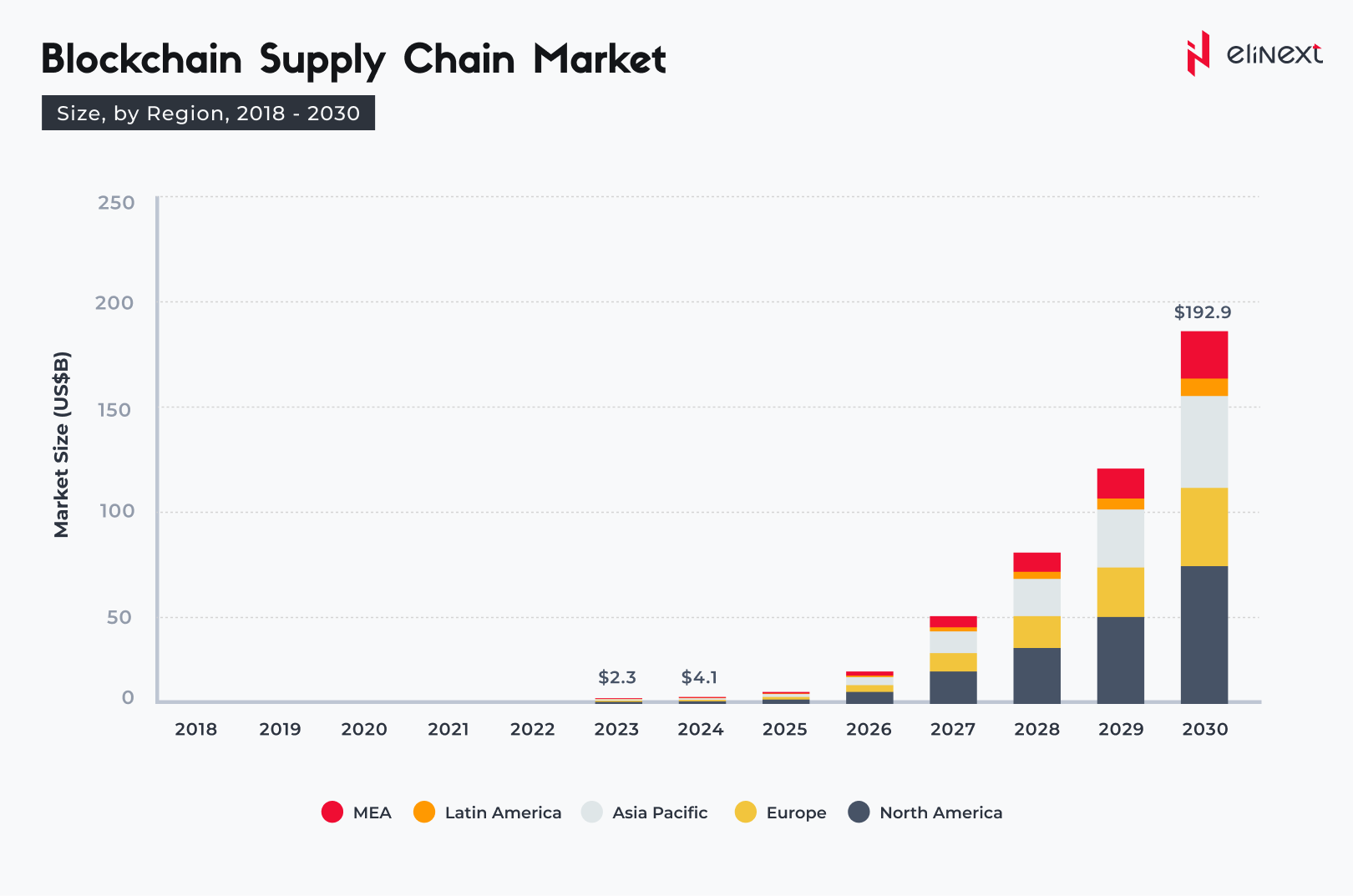
Blockchain supply chain market
What is Blockchain Technology in Supply Chain Management?
Blockchain technology in supply chain management is a distributed digital ledger that records transactions from production to delivery. It ensures that all stakeholders can access the same, tamper-proof information. Businesses use it to verify authenticity, track shipments, and streamline operations. By replacing traditional paper trails with secure, automated processes, blockchain reduces errors and enhances trust between partners.
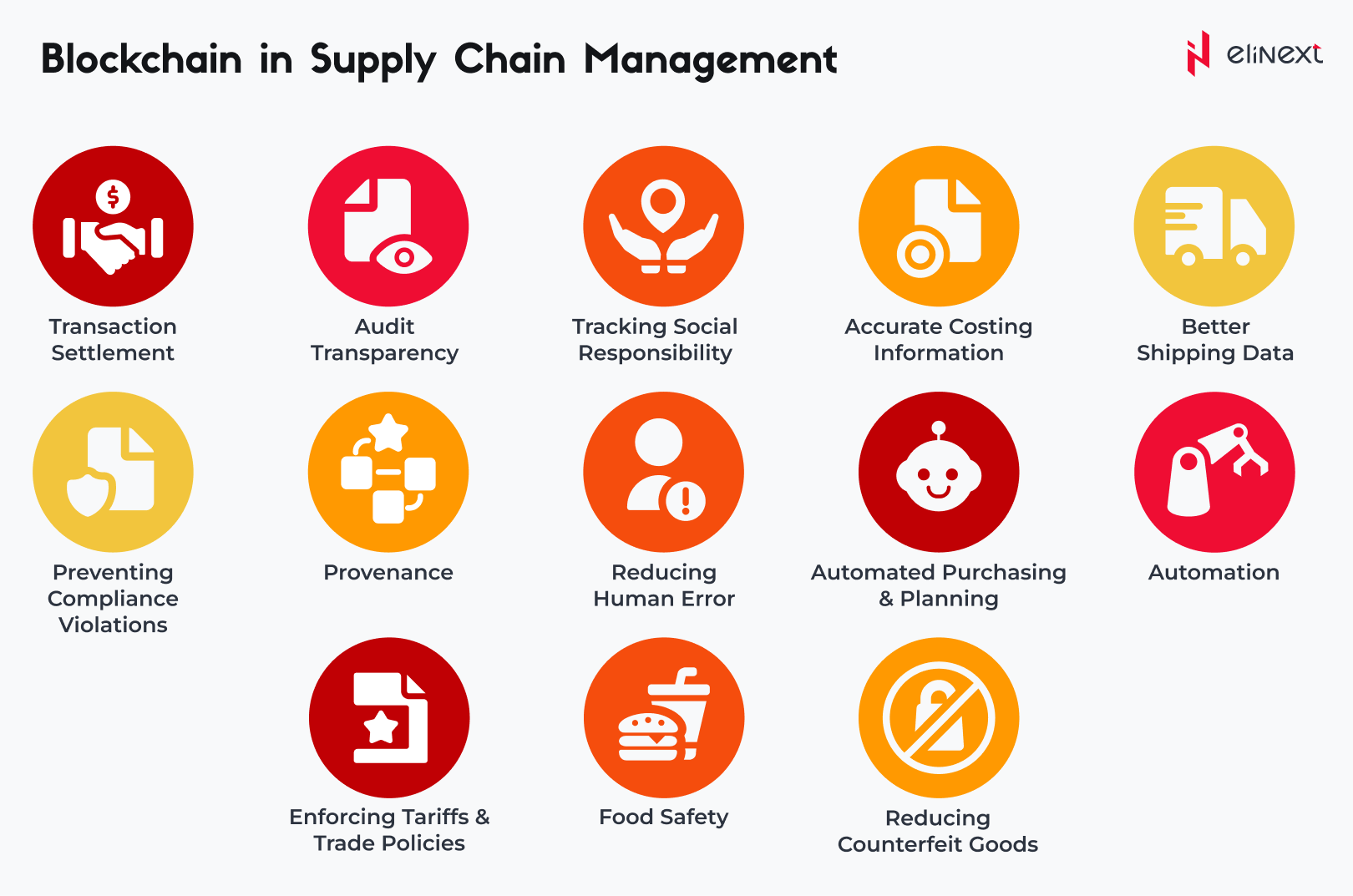
Blockchain Technology in Supply Chain Management
Why Use Blockchain for Supply Chain Management?
Blockchain in supply chain improves supply chain efficiency by creating transparent, verifiable records at every stage. It minimizes human error, reduces delays, and strengthens security for sensitive product information. Companies gain better decision-making insights and build trust with customers and suppliers. The technology also integrates smoothly with smart contract development company services, enabling automatic enforcement of agreements.
Transform your supply chain operations with blockchain-driven solutions.
Key Components of Blockchain for Supply Chain Management
Blockchain in supply chain management combines several components that together enhance supply chain performance. Businesses benefit from real-time tracking, automated workflows, and strong data protection. Many companies hire blockchain development services or supply chain software development services to maximize operational impact.
Real-Time Tracking and Transparency
This feature allows companies to monitor products throughout the supply chain. Businesses benefit from accurate shipment updates and shared visibility across stakeholders. The outcome is fewer delays, faster issue resolution, and improved operational reliability.
Healthy Customer Relationships
Blockchain strengthens relationships by providing proof of product authenticity and delivery timelines. Companies gain customer trust and reduce complaints. The result is stronger loyalty and brand reputation.
Strengthened Traceability
With blockchain in supply chain management, every transaction is recorded immutably, making it easy to trace product history. Businesses can quickly identify issues or recalls. This ensures accountability and compliance with industry standards.
Enhanced Security
Data stored on blockchain is encrypted and resistant to tampering. Companies reduce the risk of fraud or cyberattacks. The outcome is a more secure supply chain environment.
Reduced Costs and Higher ROI
By automating record-keeping and eliminating intermediaries, blockchain lowers operational costs. Businesses see better resource allocation and efficiency gains. The result is a higher return on investment and streamlined processes.
Faster Processing
Smart contracts automate routine approvals and payments. Companies save time on manual processing and avoid bottlenecks. The outcome is accelerated workflows and faster delivery.
Effective Tradeability
Blockchain simplifies asset tracking and digital transfers between partners. Businesses gain smoother logistics and clear ownership records. The result is more reliable trade operations and reduced disputes.
Better Quality Control and Compliance
Blockchain ensures that quality checks are logged and verifiable. Companies can demonstrate compliance with regulators. The outcome is higher standards and reduced risk of fines or penalties.
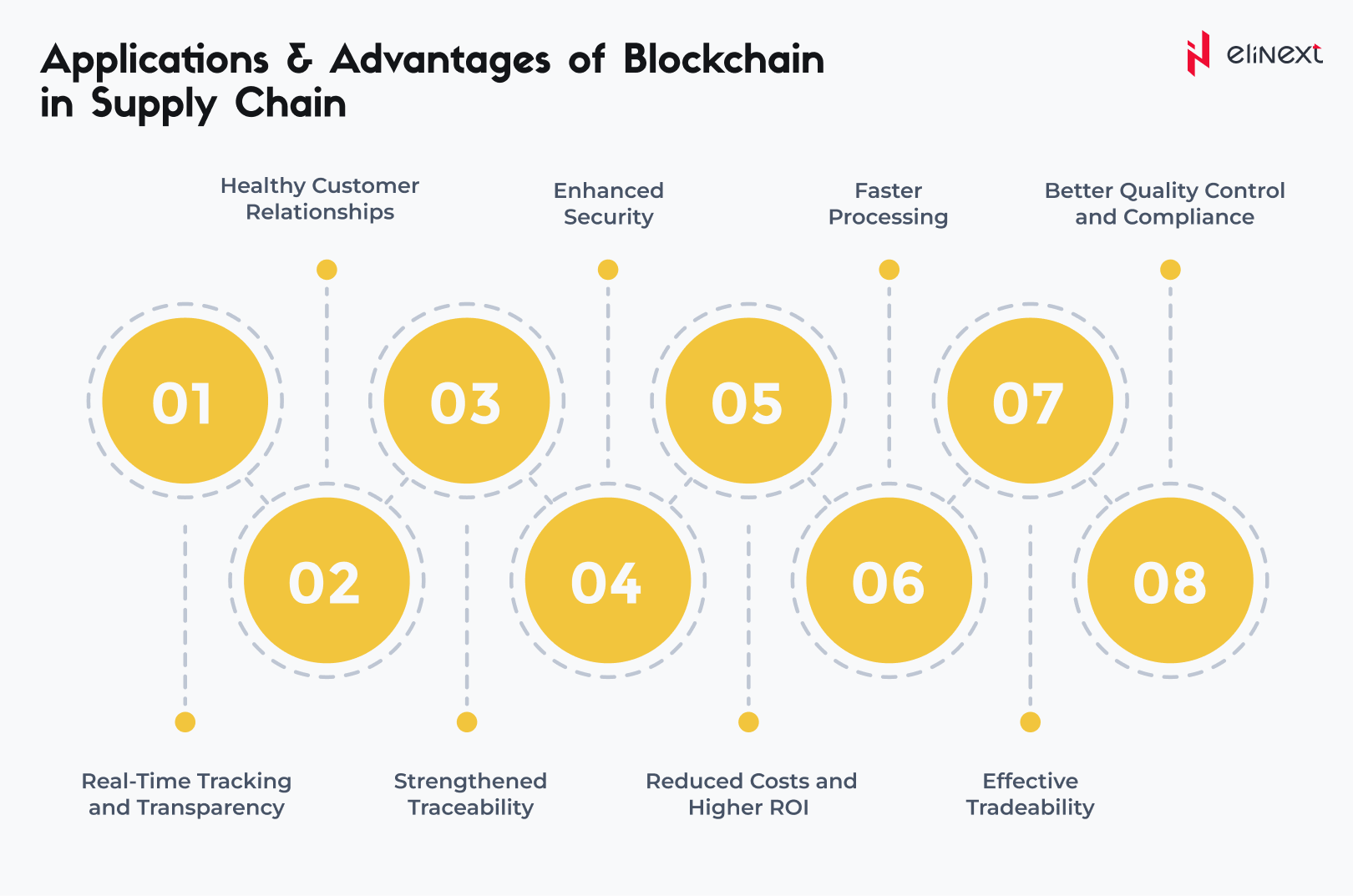
Applications and Advantages of Blockchain in Supply Chain
“Modernizing supply chains is challenging because legacy systems often cannot handle real-time tracking or secure transaction verification. At Elinext, we integrate blockchain solutions into existing infrastructure to ensure transparency and traceability. This approach reduces errors, prevents fraud, and allows businesses to make faster, data-driven decisions.” — Maxim Dadychyn, Senior Blockchain Solutions Architect
Explore Blockchain Development Services by Elinext
Elinext offers end-to-end blockchain development services for supply chain organizations. From smart contract development to warehouse management system development services, the company helps businesses automate workflows and secure product data. By combining expertise with scalable platforms, Elinext ensures blockchain adoption delivers measurable business impact while maintaining flexibility and compliance.
What is the Future of Blockchain Technology in Supply Chain
Blockchain technology in supply chain is reshaping the chains by enabling fully transparent, automated, and secure operations. Companies hiring tokenomics consulting and development services and adopting this technology will see faster processing, enhanced trust, and lower operational risks. As digital ecosystems expand, blockchain will integrate with IoT, AI, and predictive analytics to further optimize logistics, compliance, and product quality. Forward-looking businesses that embrace these trends gain a clear competitive edge.
Improve operational efficiency with blockchain technology.
Blockchain in supply chain is transforming supply chains by providing secure, transparent, and automated processes. Businesses adopting it benefit from real-time tracking, enhanced compliance, and stronger customer trust. As global supply networks grow increasingly complex, blockchain enables companies to respond quickly, reduce costs, and maintain competitive advantage.
Blockchain in Supply Chain: Terms Explained
Distributed Ledger Technology (DLT)
A digital ledger distributed across multiple nodes, ensuring transparent, tamper-proof records for all participants.
Smart Contracts
Self-executing agreements coded on blockchain that automate approvals and payments in supply chains.
Consensus Mechanism
A process by which blockchain participants validate transactions, ensuring integrity and trust without a central authority.
Traceability
The ability to track a product’s complete history through immutable blockchain records.
Provenance
Verification of the origin and journey of products to ensure authenticity and regulatory compliance.
Tokenization
Representation of assets as digital tokens on a blockchain to simplify tracking and trading.
Immutable Ledger
A blockchain record that cannot be altered, providing a permanent, verifiable history of transactions.
Decentralization
Distribution of blockchain control across multiple nodes to prevent single points of failure or manipulation.
Digital Identity
Secure representation of stakeholders, products, or devices on a blockchain for authentication and verification.
Interoperability
The ability of different blockchain networks and systems to communicate and share information seamlessly.
FAQ
How does blockchain improve supply chain transparency?
Blockchain improves transparency by creating an immutable ledger of every transaction. Businesses gain a shared, real-time view of product movements. This reduces disputes, strengthens accountability, and builds trust across partners.
How does blockchain help with product traceability?
Blockchain ensures every product stage is recorded and verifiable. Companies can track items from production to delivery. The outcome is faster recalls, better compliance, and higher quality assurance.
Can blockchain reduce fraud in supply chains?
Blockchain reduces fraud by encrypting transactions and maintaining tamper-proof records. Unauthorized changes are impossible, which protects assets and improves overall security. Businesses can confidently verify authenticity at every stage.
How do smart contracts make supply chains smarter?
Smart contracts automate approvals, payments, and compliance checks. Companies save time and reduce manual errors. The result is faster, more reliable workflows and fewer operational bottlenecks.
Can blockchain help with inventory management?
Yes. Blockchain in supply chain provides real-time inventory data visible to all stakeholders. Businesses reduce stockouts, optimize storage, and improve supply chain planning. This leads to more efficient operations and lower costs.
How does blockchain support quality control?
Blockchain logs every quality check and inspection in an immutable ledger. Companies can verify compliance instantly and detect defects early. The outcome is higher product quality and reduced regulatory risks.
About the Author
Maxim leads the Generative AI practice at Elinext, helping companies design and deploy AI-powered solutions — from custom LLM integrations and conversational systems to full-scale AI transformation. He bridges deep technical expertise with a pragmatic focus on business outcomes, guiding clients through every stage of the AI adoption journey.