



By 2026, AI is expected to transform industries not by replacing human talent, but by amplifying it. From healthcare to manufacturing, finance to education, AI for industries will streamline operations, improve decision-making, and unlock new creative possibilities. This evolution marks a shift toward collaboration between humans and intelligent systems, and redefines productivity and innovation across sectors.
Setting the Stage: The Role of AI as a Support Tool
AI today serves as a powerful support tool, enhancing rather than replacing human expertise. AI impact on industries is diverse. In healthcare, it enables doctors to perform faster diagnostics; in finance, it detects patterns of fraud; in manufacturing, it predicts equipment failures. AI in industries complements skills, enabling smarter, faster, and more accurate outcomes.
Key Takeaways
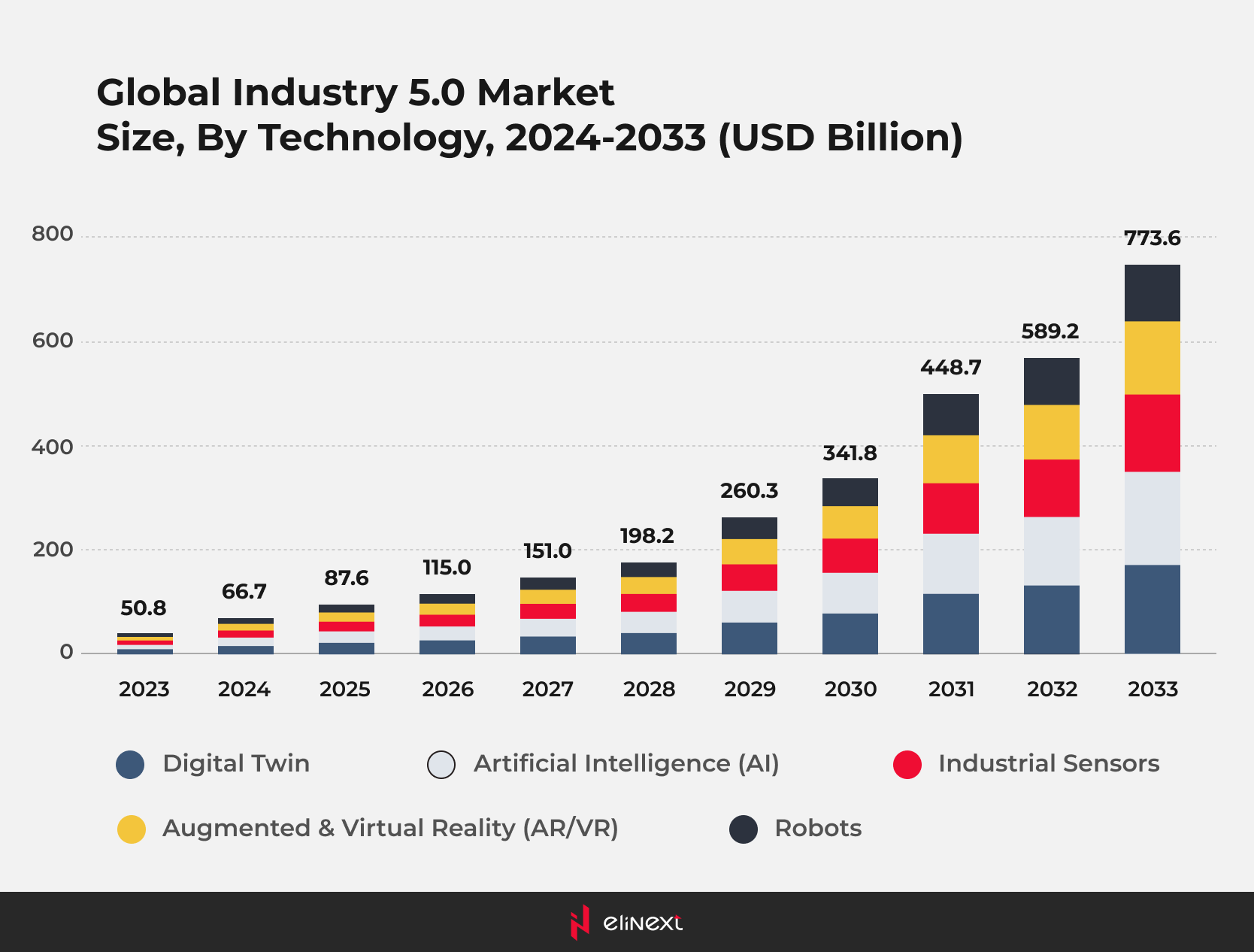
- 31.3% Growth rate of the industry 5.0 to rise
- 27% Market Share: Automotive-dominated Industry 5.0 in 2023.
- 36% Market Share: Asia Pacific led with USD 18.28B in 2023.
Key Industries Affected by AI
The use of AI in industries streamlines processes, improves decision-making, and expands human potential. Rather than replacing jobs, it empowers professionals with more tools to do their jobs.
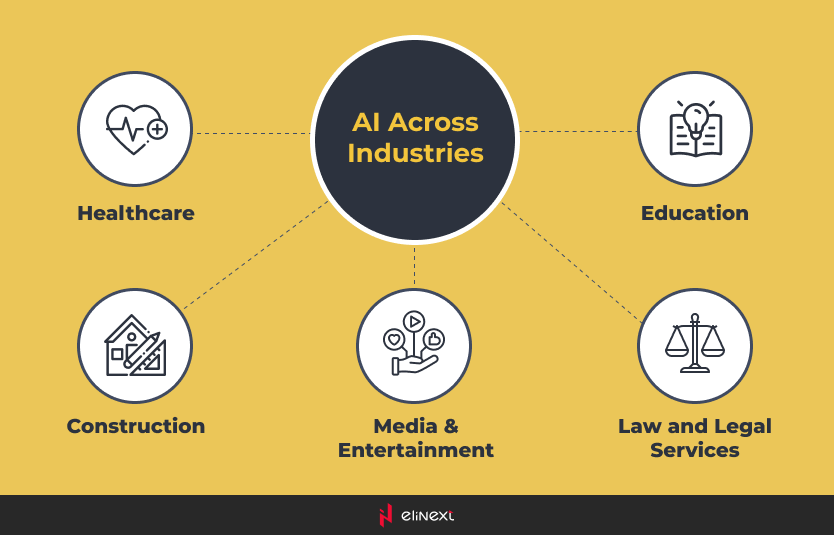
Healthcare
AI accelerates diagnostics, predicts patient outcomes, and supports treatment planning. From analyzing medical images to managing patient data, it enables doctors to make more accurate decisions and spend more time on patient care. AI-driven drug discovery is also cutting research timelines.
Education
AI personalizes learning experiences, adapting content to students’ strengths and weaknesses. Automated grading, intelligent tutoring systems, and language learning apps free educators to focus on mentorship and creative instruction while giving students customized pathways to success.
Construction
AI optimizes project planning, resource allocation, and safety monitoring. It predicts potential delays, reduces material waste, and uses drone-based inspections for site analysis. By improving efficiency, AI helps projects stay on time and within budget while enhancing worker safety.
Media & Entertainment
AI powers content recommendations, streamlines video editing, and even generates music or visual effects. It helps media companies analyze audience preferences, optimize production schedules, and personalize experiences, making entertainment more engaging and accessible.
Law and Legal Services
AI assists with contract review, legal research, and case prediction, reducing the time spent on repetitive tasks. It helps lawyers identify relevant precedents faster and uncover key case insights, allowing them to focus on strategic thinking and client relationships.
“AI impact on industries doesn’t mean replacing human expertise, but to elevating it. By automating repetitive tasks and uncovering insights at unprecedented speed, AI frees professionals to focus on creativity, strategy, and problem-solving — skills that define the true value of human work in every industry.”
― Marcus Liu, AI Strategy Consultant.
Why AI Won’t Fully Replace Humans in These Industries
Despite rapid advances, AI for industries cannot fully replace humans due to limitations in understanding context, demonstrating empathy, and handling unpredictable situations. Trust, regulatory requirements, and the preference for human interaction reinforce the need for people. Ethical considerations, judgment calls, and social factors further ensure that humans remain central in decision-making across industries ― even industries affected by AI.
How Elinext’s AI Software Development Solutions Help Transform Your Business
Elinext is an AI software development company that offers ML software development solutions, LLM development services, ChatGPT development services, AI integration services, chatbots development solutions, generative AI development, and AI agent development services.
By integrating AI for industries, Elinext’s clients can streamline workflows, improve decision-making, and boost efficiency. Industries affected by AI can focus on strategic growth and innovation while staying ahead in competitive markets.
Discover how Elinext’s AI solutions elevate your business
Preparing for the Future: Collaboration, Not Competition
The future of work lies in humans and AI collaborating, not competing. By embracing AI as a partner, industries can enhance creativity, improve efficiency, and tackle complex challenges. Preparing for this shift means upskilling teams, fostering adaptability, and designing workflows that leverage AI’s strengths while preserving the uniquely human skills that drive innovation and judgment.
Conclusion
AI is set to transform industries by amplifying human potential rather than replacing it. Across healthcare, education, construction, media, and law, AI enhances efficiency, insight, and creativity. By focusing on collaboration, ethical use, and human-centered design, businesses can harness AI responsibly, ensuring innovation thrives while preserving the essential human touch.
FAQ
1. Will AI eventually replace jobs in some industries?
Yes, AI impact on industries will involve automating repetitive or routine tasks, but many roles will evolve rather than disappear entirely.
2. What kind of jobs will AI enhance rather than eliminate?
Jobs requiring creativity, critical thinking, and interpersonal skills will be boosted by AI, allowing humans to focus on higher-value work.
3. How can professionals prepare for working with AI?
Upskilling in AI tools, data literacy, and adaptability helps professionals collaborate effectively with AI and stay competitive.
4. Are there ethical concerns using AI in industries?
Yes, concerns include bias, privacy, transparency, and accountability, requiring careful regulation and human oversight.
