







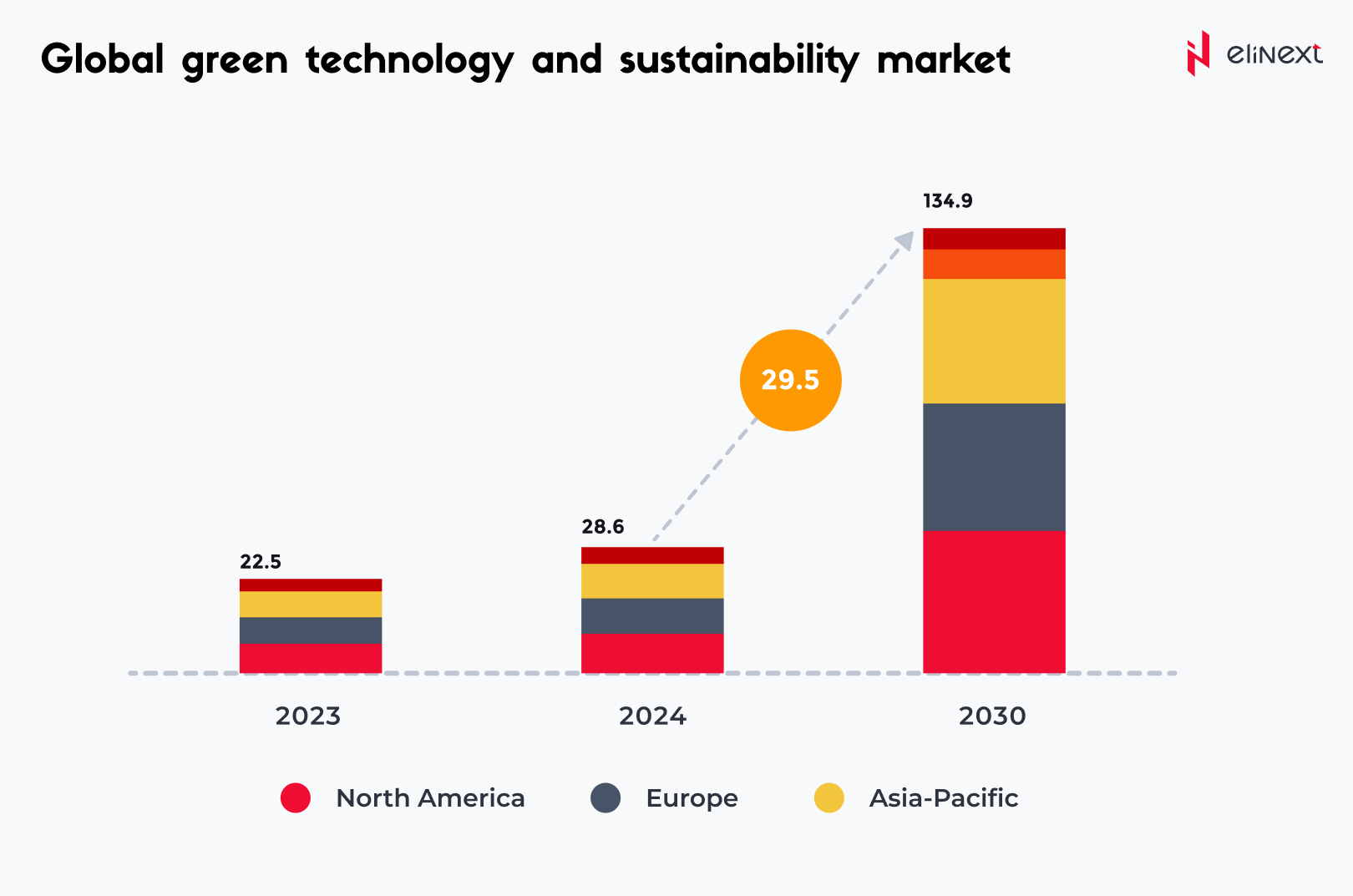
As the adoption of green AI accelerates in 2026, organizations face growing pressure to balance innovation with environmental responsibility. The global green-technology and sustainability market is projected to grow from USD 25.5 billion in 2025 to USD 73.9 billion by 2030. Its compound annual growth rate of about 23.7%. Green AI implementation offers a path forward, emphasizing energy-efficient models, sustainable infrastructure, and mindful development practices. Green AI approach not only reduces carbon footprints but also lowers costs and improves scalability, helping businesses build smarter, cleaner, and more resilient AI systems.
Key Takeaways
- Green AI optimizes large-scale infrastructure, such as data-center cooling or renewable-energy systems, to cut energy use and shrink environmental impact.
- Smart algorithms help industries minimize resource waste by fine-tuning operations such as irrigation, routing, and production timing.
- Green AI supports business goals by lowering energy costs, strengthening sustainability credibility, and aiding ESG compliance.
What is Green AI?
Green AI refers to the development and use of artificial intelligence in ways that minimize environmental impact. It emphasizes energy-efficient models, low-carbon infrastructure, and responsible data practices. By reducing the computational resources required to train and run systems, Green AI helps organizations innovate while supporting broader sustainability goals.
Why Green AI Matters in 2026?
In 2026, Green AI matters because rising energy costs, tighter sustainability regulations, and increasing model complexity make traditional AI approaches less viable. Environmentally-friendly AI reduces carbon footprints, cuts operational expenses, and helps organizations meet ESG commitments while still advancing innovation.
Find out more about Green AI development services
Real-World Applications of Green AI Across Industries
Green AI is reshaping how industries operate by cutting energy use, improving efficiency, and supporting sustainability goals. From healthcare to transportation, eco-focused AI solutions are driving smarter, cleaner innovation.
Green AI Solutions for Healthcare
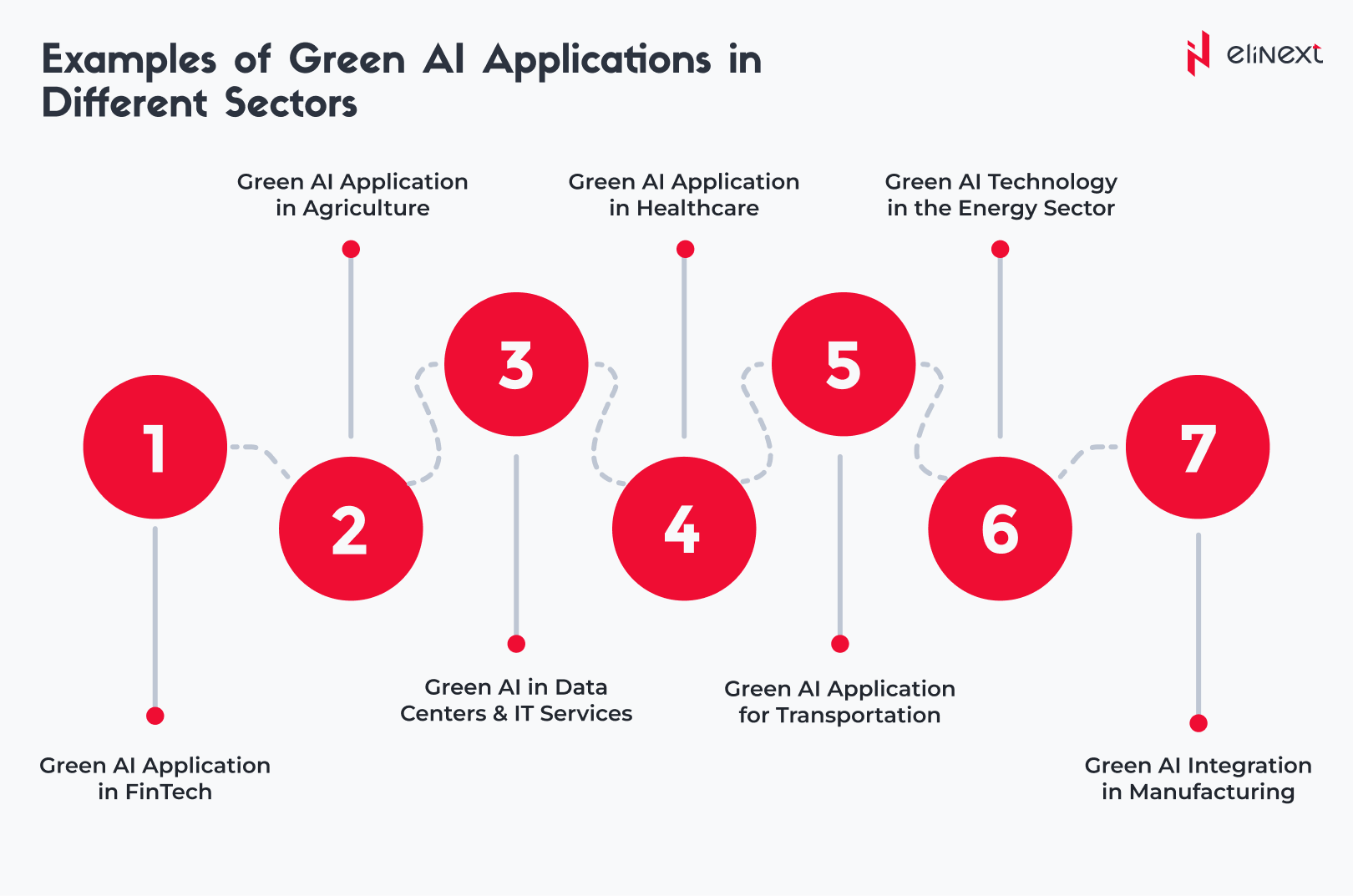
Hospitals use energy-efficient AI models to streamline imaging analysis. For example, Yale New Haven Hospital adopted Aidoc’s AI imaging platform to accelerate the analysis of CT scans for conditions such as pulmonary embolism and intracranial hemorrhage.
Green AI Solutions for FinTech
FinTech platforms, such as Stripe and PayPal, rely on optimized algorithms that process transactions with lower computational power. Green AI also enhances fraud detection and risk modeling while reducing server usage, helping financial institutions lower costs and meet sustainability standards.
Green AI Solutions for Agriculture
AI-powered tools minimize water, fertilizer, and energy waste by analyzing soil data, weather conditions, and crop health. Green AI enables precision farming, smarter irrigation, and reduced machinery use, helping farms boost yields while shrinking environmental impact.
Green AI Solutions for Education
Educational platforms, such as Duolingo, Khan Academy, and Coursera, use AI models to personalize learning. Green AI supports lighter content delivery systems and enables schools to adopt more sustainable EdTech practices.
Green AI Solutions for the Energy Sector
Energy providers like Siemens Energy use AI to forecast demand, optimize grid performance, and monitor renewable systems with reduced processing requirements. National Grid (UK) applies machine learning to improve grid reliability and integrate renewable generation forecasts.
Green AI Solutions for Manufacturing
Factories apply resource-efficient AI to monitor equipment, reduce waste, and optimize production schedules. Green AI cuts energy use across assembly lines, improves predictive maintenance, and supports sustainable manufacturing practices with lower operational overhead.
Green AI Solutions for Transportation
Transportation networks leverage lightweight AI algorithms to optimize traffic flow, plan efficient routes, and reduce idle time. Green AI advances EV charging management, fleet optimization, and smart mobility services that cut fuel consumption and emissions.
“Green AI isn’t just a trend—it’s a necessary shift toward smarter innovation. By designing models that use fewer resources, we reduce environmental impact while improving scalability, cost efficiency, and long-term resilience across every industry.”
Dr. Lena Marwick, Sustainability Technology Strategist
How Elinext Supports Green AI Adoption
Elinext offers green AI development services, artificial intelligence development solutions, Internet of Things (IoT) solutions, and Machine Learning development services.
By providing green AI development services, Elinext helps organizations to reduce costs, cut emissions, and enhance long-term sustainability.
Custom ML and AI Development
Elinext designs machine-learning models that prioritize efficiency, reducing computational load while maintaining high accuracy. This helps organizations deploy powerful AI systems with lower energy use and more sustainable performance.
Edge AI Integration Solutions
By moving intelligence closer to devices, our developers enable faster processing with reduced cloud dependence. Edge AI improves responsiveness, cuts data-transfer energy, and supports greener, low-latency applications across industries.
IoT Integration Solutions
We connect IoT devices with streamlined AI to optimize energy use, monitor resources, and reduce waste. These solutions help businesses create smarter, more sustainable environments across factories, buildings, and supply chains.
Cloud Optimization and Cost Reduction
Elinext enhances cloud efficiency by tuning workloads, reallocating resources, and adopting greener configurations. This reduces energy consumption, lowers operational expenses, and ensures a sustainable cloud footprint.
Sustainable Software Architecture
At our company, we build systems with lightweight code, modular design, and minimal resource overhead. Sustainable architecture extends system longevity, improves performance, and supports eco-conscious digital transformation.
Predictive Analytics and Automation
Our experts optimized analytics to forecast demand, reduce downtime, and automate processes with fewer computational resources. This boosts efficiency while keeping energy usage and operational impact low.
Modernizing Legacy AI Systems
Elinext upgrades outdated AI solutions with efficient models, cleaner pipelines, and modern frameworks. Modernization reduces processing waste, enhances performance, and aligns legacy systems with today’s sustainability standards.
Ready to build smarter, greener AI solutions?
Green AI Solutions: Outlook for 2026
Green AI is set to become a defining force in 2026 as organizations demand cleaner, more efficient technologies. Advances in renewable-powered infrastructure will reduce energy consumption while boosting performance. Companies adopting these approaches early will gain a competitive edge through lower costs. A good example is Google, which uses AI to cut data-center cooling energy and is pursuing 24/7 carbon-free operations. Another is Microsoft, which has explored renewable and experimental data-center designs such as its underwater Project Natick initiative.
Conclusion
Green AI is rapidly transforming how organizations innovate, offering a path to powerful technology with a smaller environmental footprint. By embracing efficient models, sustainable infrastructure, and smarter automation, businesses can reduce costs, meet ESG goals, and stay competitive. Green AI implementation is not just beneficial. It’s becoming essential.
FAQ
What is Green AI?
Green AI focuses on developing and deploying artificial intelligence systems that minimize energy use, reduce carbon emissions, and promote sustainability.
Why is Green AI important in 2026?
In 2026, as AI models grow more complex, Green AI ensures innovation remains energy-efficient, cost-effective, and aligned with global sustainability goals.
How does Green AI reduce energy consumption?
It uses optimized algorithms, lightweight architectures, and renewable-powered data centers to lower computational demand and energy usage.
Is Green AI more expensive to implement?
While initial optimization may require investment, Green AI lowers long-term costs by reducing energy use, hardware strain, and cloud expenses.
Can Green AI improve model accuracy?
Yes, efficient AI models often enhance accuracy by focusing on relevant data, faster learning, and smarter resource allocation.
How does edge computing support Green AI?
Edge computing processes data locally, cutting cloud transfers and latency, which reduces energy waste and improves system efficiency.
How can businesses start adopting Green AI?
They can begin by auditing energy usage, optimizing models, choosing sustainable infrastructure, and implementing eco-friendly AI frameworks.
How can Elinext help with Green AI implementation?
Green AI implementation for Elinext means building efficient AI systems, modernizing legacy solutions, and integrating sustainable technologies to cut energy use and boost performance.
