



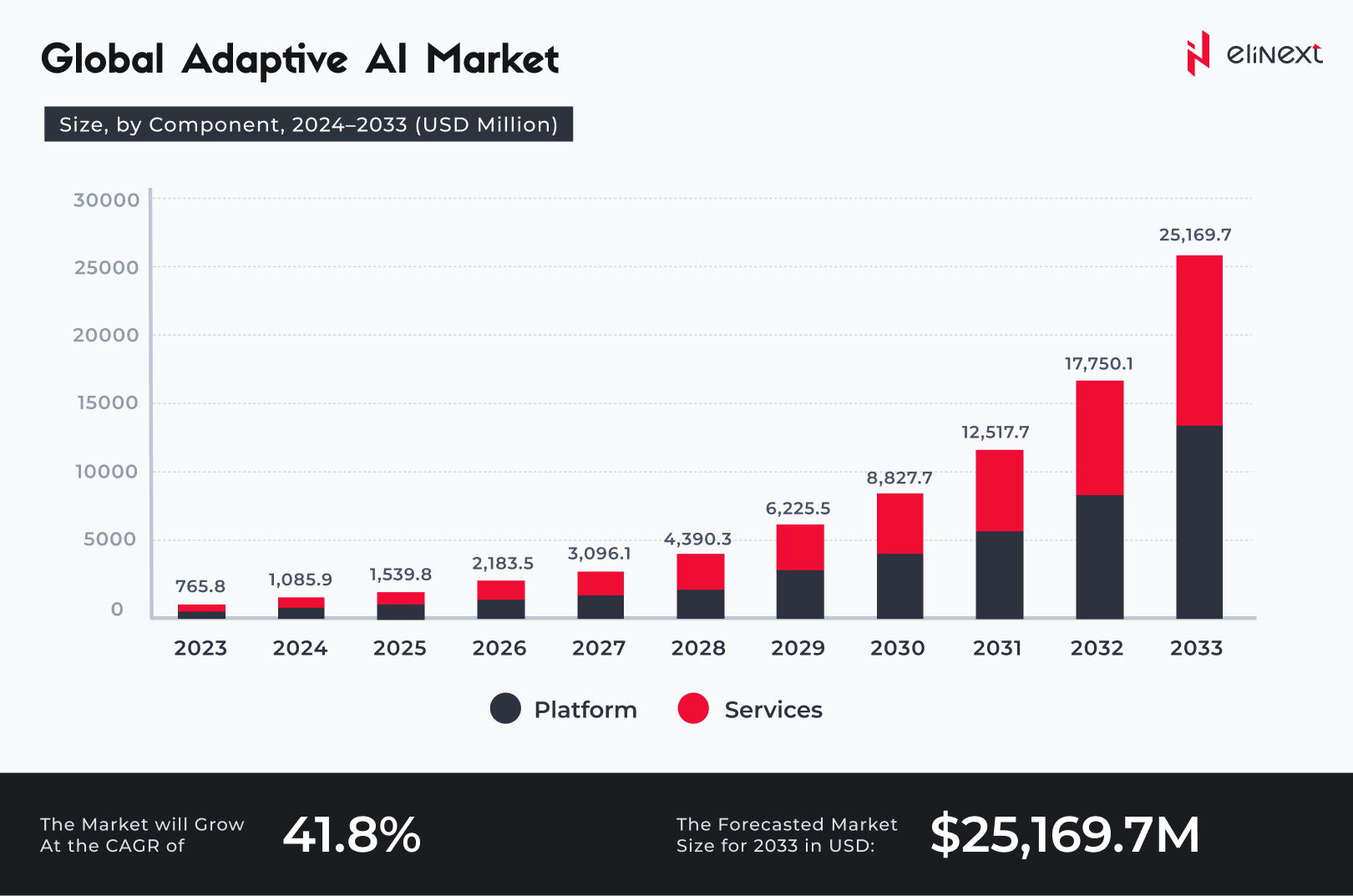
Adaptive AI is quickly becoming a core part of modern business. The Global Adaptive AI Market report indicates that the field is growing rapidly, increasing from approximately USD 1,5 million in 2025 to over USD 25 million by 2033. As companies become familiar with AI integration and market trends and move toward systems that learn in real time and improve on their own, CTOs will need to understand how these tools can sharpen operations and strengthen long-term strategy.
Key AI Integration Trends 2026
AI integration trends 2026 shift from experimentation to practical deployment. Companies focus on stability, clarity, and responsible use as systems become more embedded in daily operations and long-term planning.
AI Governance and Compliance
Clear rules around data use and accountability are becoming essential as part of AI integration and market trends. Organizations are adopting lightweight frameworks that track model behavior, record key decisions, and ensure systems can be audited without slowing down operations.
Integration of AI with Legacy Systems
Older platforms are being adapted rather than replaced. Companies use modular connectors and small, targeted updates to let AI tap into long-standing databases and workflows, reducing disruption while extending system life.
Emphasis on Explainable AI (XAI)
Teams want models that can show why they reached a result, not just what the result is. Simple visual traces and step-by-step reasoning summaries help technical and non-technical staff trust outcomes and catch issues early.
Expansion of Domain-Specific AI Applications
Instead of broad, generic tools, industries favor tailored systems tuned to their data patterns. These focused models handle niche tasks more reliably, giving teams clearer outputs and faster paths to practical use.
The Development of Self-Governing AI Agents
More systems can now act on preset boundaries without constant oversight. These agents manage routine tasks, coordinate small workflows, and react to changing conditions while staying within defined operational limits.
The Growth of Multimodal AI Systems
Tools that combine text, images, audio, and structured data are becoming standard. This mix improves accuracy and gives teams more flexible ways to analyze information, especially where context matters.
AI-Driven Cybersecurity Enhancements
AI monitors unusual behavior patterns across networks, catching threats before they escalate. These systems adjust rules automatically and flag suspicious actions even when attackers try to mimic normal activity.
Increased Investment in AI Infrastructure
Organizations are strengthening data pipelines, storage layers, and model deployment tools. This foundation helps teams scale experiments into stable services without rebuilding systems every time they expand.
AI-Powered Decision-Making Frameworks
Leaders rely on structured dashboards powered by real-time models. These frameworks surface the most relevant signals, compare scenarios, and offer clear options so teams can act with more confidence.
Talent and Skill Development for AI Leadership
Companies are training managers to understand AI integration market trends: model behavior, data constraints, and operational risks. This blended skill set helps leaders guide projects, set practical goals, and avoid costly missteps.
“By 2026, AI shifts from a promising add-on to a core operational layer. CTOs who focus on adaptive systems with existing infrastructure will gain the most ground. The aim isn’t rapid adoption. It’s building an environment where AI decisions reliably support the pace and pressure of modern business.” — Mira Han, AI Systems Architect
Elinext AI Integration Solutions for Your Business Needs
Elinext brings nearly three decades of software development expertise to the table. Since 1997, it has helped companies embed artificial intelligence directly into their workflows. Our services range from machine learning and neural-network design to AI-powered analytics, automation, and custom model deployment. Elinext is best at turning raw data into smarter processes that scale with your business.
What Should CTOs Think About When Planning AI Adoption
CTOs need to balance their vision with structure while understanding AI integration trends 2026. Effective AI adoption starts with clear goals, solid data quality, and realistic expectations about integration. The focus is on building systems that fit existing operations while leaving room for steady growth and refinement.
Key points:
- Define measurable outcomes before selecting tools
- Assess data readiness and cleanup needs
- Plan for integration with current systems
- Establish governance and risk-control practices
- Set timelines for testing and gradual rollout
- Prepare teams through training and role updates
Ready to move from ideas to real AI results?
Elinext can help you build and integrate solutions that match your business goals.
The Future Trends in AI Integration Services
AI integration trends 2026 is moving toward tools that learn on the go and work smoothly with existing systems. Companies are focusing on practical automation, clear tracking of decisions, and solutions built for specific industries. As AI use grows, businesses need systems that are reliable, easy to understand, and ready to expand.
Conclusion
AI integration trends 2026 are about more than technology. They are about strategy, reliability, and clarity. CTOs who prioritize adaptable systems, transparent decision-making, and smooth alignment with existing operations will gain lasting value. Success will come from thoughtful planning, responsible use, and tools designed to grow with the business. An AI software development company Elinext offers tools to help you grow: generative AI development services, chatbot development services and AI integration services.
FAQ
What are the major AI integration trends expected in 2026?
AI integration trends 2026 will focus on adaptive systems, multimodal capabilities, and domain-specific applications. Explainable AI, self-governing agents, and stronger integration with legacy systems will dominate. Businesses will also invest more in AI infrastructure and decision-making frameworks.
What challenges come with this next wave of AI integration and markets trends in 2026?
The main challenges of AI integration market trends include ensuring data quality, managing AI governance and compliance, integrating with older systems, and keeping models interpretable. Organizations will also need to address cybersecurity risks and skill gaps to prevent misuse or operational disruption.
What should businesses do to prepare for 2026’s AI integration market trends?
To fit AI integration market trends, businesses should audit existing data, define clear goals, and build scalable infrastructure. Establishing governance, testing AI in small workflows first, and training teams in AI literacy will help ensure safe, effective, and growth-ready adoption.
What should developers do to prepare for the next AI-integration wave?
For the next wave of AI integration market trends, developers should focus on building modular, explainable models that integrate smoothly with current systems. Learning about domain-specific AI, security practices, and real-time adaptation will be key, alongside staying current with new frameworks and deployment tools.
