

About Client
Our client is a German IT security consulting and managed services company specializing in Microsoft 365 security, compliance, and cloud infrastructure management. The company cooperates with organizations across regulated industries, helping them maintain strong security postures, meet compliance requirements, and protect critical business data in cloud environments.
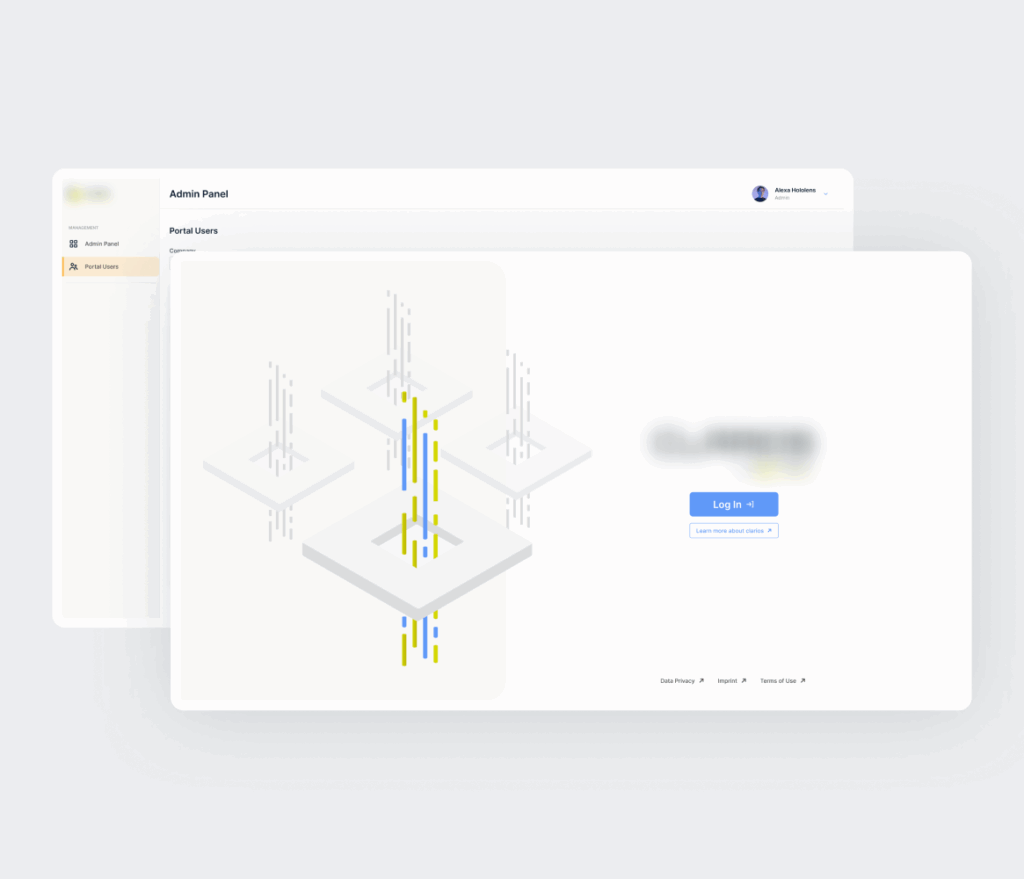
The client approached Elinext to support the creation of a proprietary SaaS platform design aimed at enhancing how organizations monitor, analyze, and improve their Microsoft 365 security posture. Elinext contributed UI/UX design services and SaaS product design expertise to transform complex security data into an intuitive, scalable, and user-friendly solution. Our SaaS design services enabled our client to deliver clearer insights, accelerate audit preparation, and strengthen the overall value of their security offerings for end customers.
Business Challenge
The customer identified a significant business and market challenge in the Microsoft 365 security space. Their clients required continuous visibility into security configurations, audit readiness, and compliance status, while existing approaches relied heavily on manual processes, fragmented tools, and reactive assessments.
Business challenges our client faced before SaaS platform design:
- Organizations struggled to maintain current security audits or conduct them at all, putting compliance at risk
- IT teams lacked resources and time for continuous education on evolving security best practices
- Management needed clear, actionable insights into their security posture, but received only technical data
- Companies were unaware of hidden vulnerabilities and misconfigurations that could lead to security breaches
- Limited internal capacity prevented the quick implementation of the identified security improvements
Technical Challenges Elinext’s SaaS design services ought to solve:
- Create a centralized SaaS platform design to provide real-time visibility into M365 tenant security configurations
- Conduct an annual audit preparation, which could be time-consuming and prone to human error without proper QA testing services
- Deal with security data scattered across multiple Microsoft tools without a unified visualization
- Enable automated comparison against industry security benchmarks and best practices
- Overcome the lack of historical trend analysis to track security improvements over time
After conducting the manual security assessments with the help of native Microsoft tools, Elinext developed a proprietary SaaS product design that would not only solve these client pain points but also position them as innovators in the M365 security space, creating a new revenue stream and competitive differentiator in the managed services market.
Process
The project of SaaS design services was divided into three main phases to ensure a structured and efficient delivery process:
Phase #1 – Design Strategy & Methodology: (One month)
During the initial project phase, Elinext conducted stakeholder interviews and requirements gathering, performed competitive and market analysis, and defined the information architecture and feature priorities. The team validated core concepts through low-fidelity wireframes and laid the foundation for a scalable design system, including color schemes, typography, and core UI/UX design for SaaS. As a result, Elinext delivered user research documentation, information architecture diagrams, wireframes, initial design system guidelines, and a technical architecture proposal that aligned business goals with technical feasibility.
Phase #2 – Design & Prototyping (around 4 months)
In this phase, Elinext SaaS design services focused on high-fidelity visual design for all core modules, created interactive prototypes for stakeholder validation, and expanded the design system into a complete, reusable component library. The team ensured a smooth transition to development by preparing detailed design specifications, handoff materials, and developer documentation, delivering high-fidelity mockups, a fully documented design system, and an interactive prototype ready for implementation.
Phase #3 – MVP Development & Iteration (2+ years)
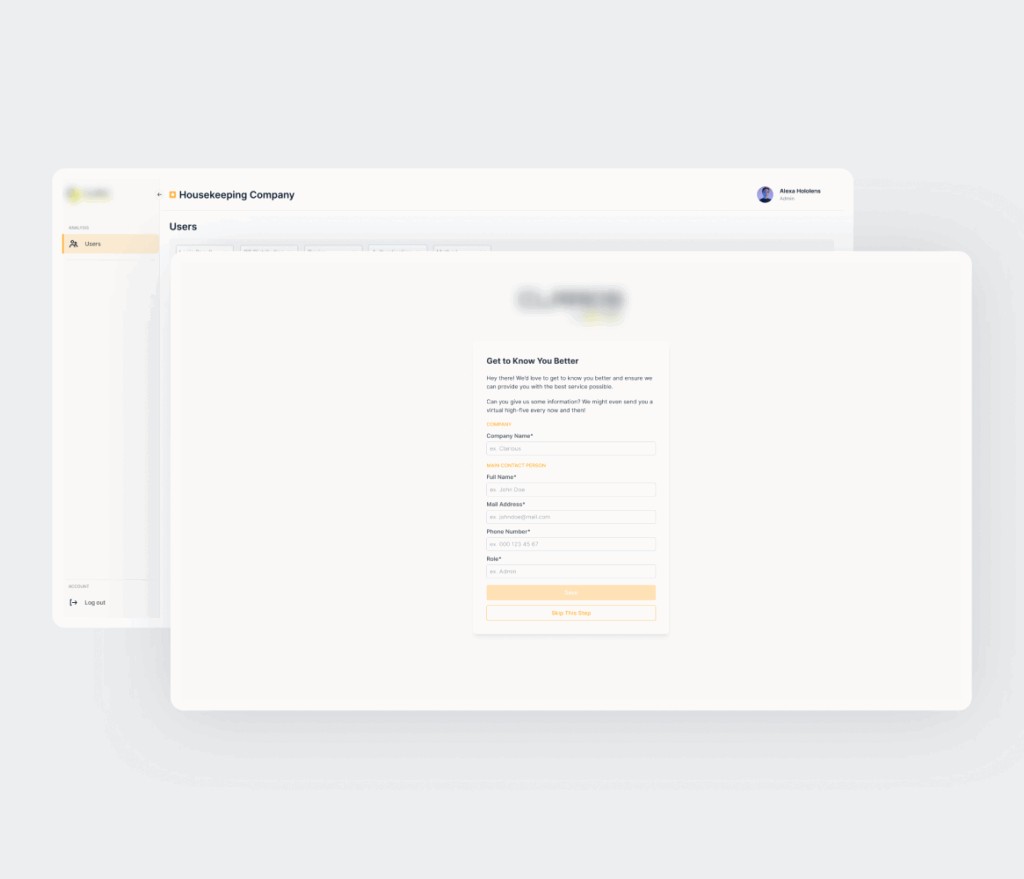
During the iterative development phase, Elinext worked in agile one-month sprints, providing continuous design support, conducting regular SaaS platform design reviews with the development team, and refining the solution based on beta testing with selected customers. The team addressed technical constraints through iterative SaaS product design adjustments, resolved bugs, optimized performance, and delivered advanced features such as multi-tenant management, advanced analytics, and an optimized onboarding flow. As a result, Elinext delivered a functional MVP with core modules, beta user feedback reports, refined UI/UX design for SaaS based on real-world usage, an updated design system aligned with technical limitations, and initial user documentation and help materials.
Final SaaS Product Design Overview
The project of SaaS platform design was delivered within the expected 2.5-year timeframe, though the timeline was intentionally flexible given the iterative, agile approach. The extended timeline allowed for:
- Thorough user validation at each major milestone
- Adaptation to changing Microsoft 365 ecosystem updates
The final solution of SaaS design services was a comprehensive SaaS web application with the following architecture:
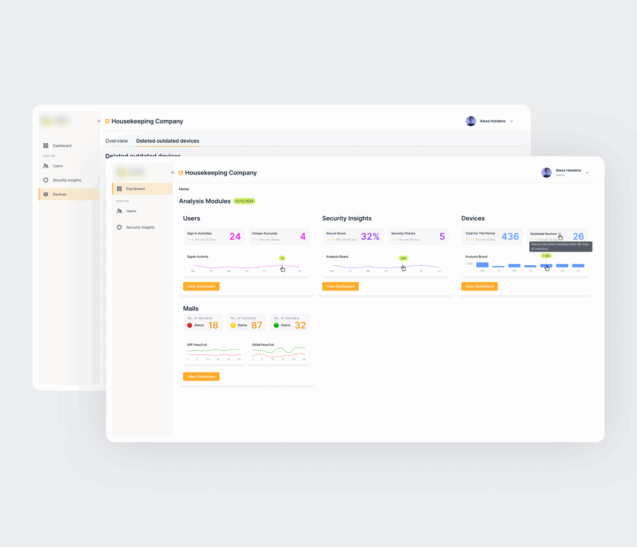
Module 1: Security Dashboard & Overview
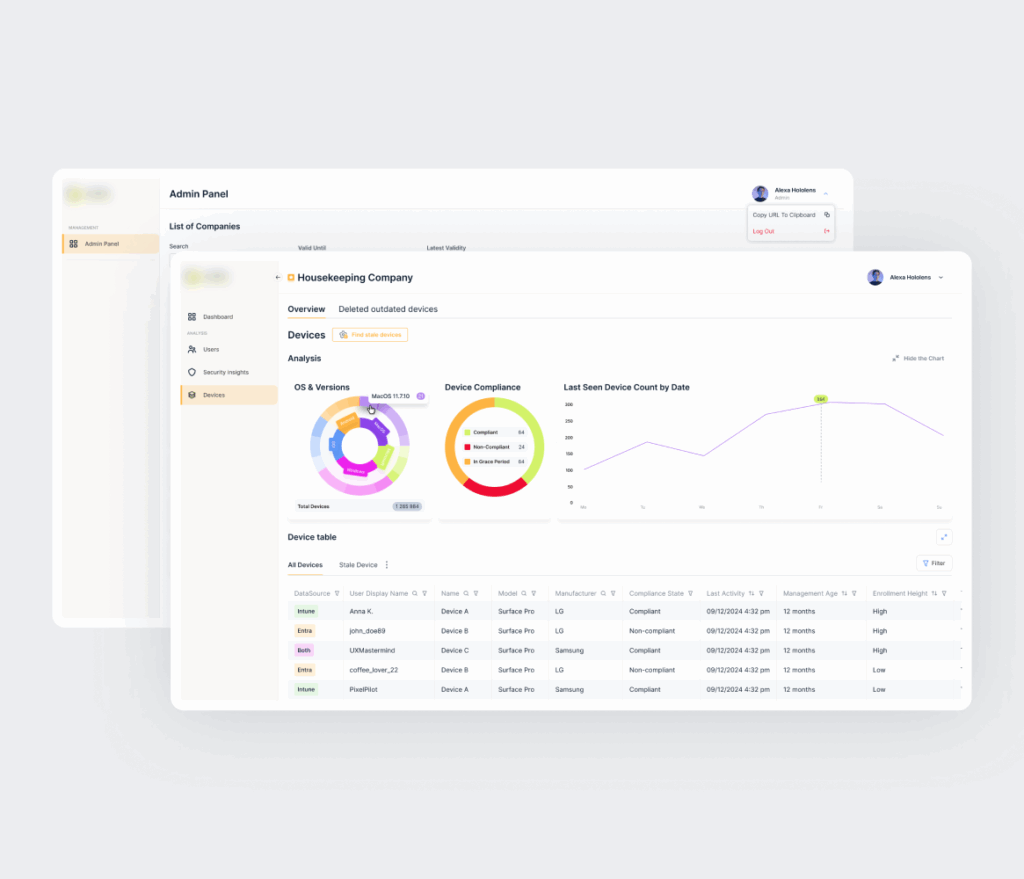
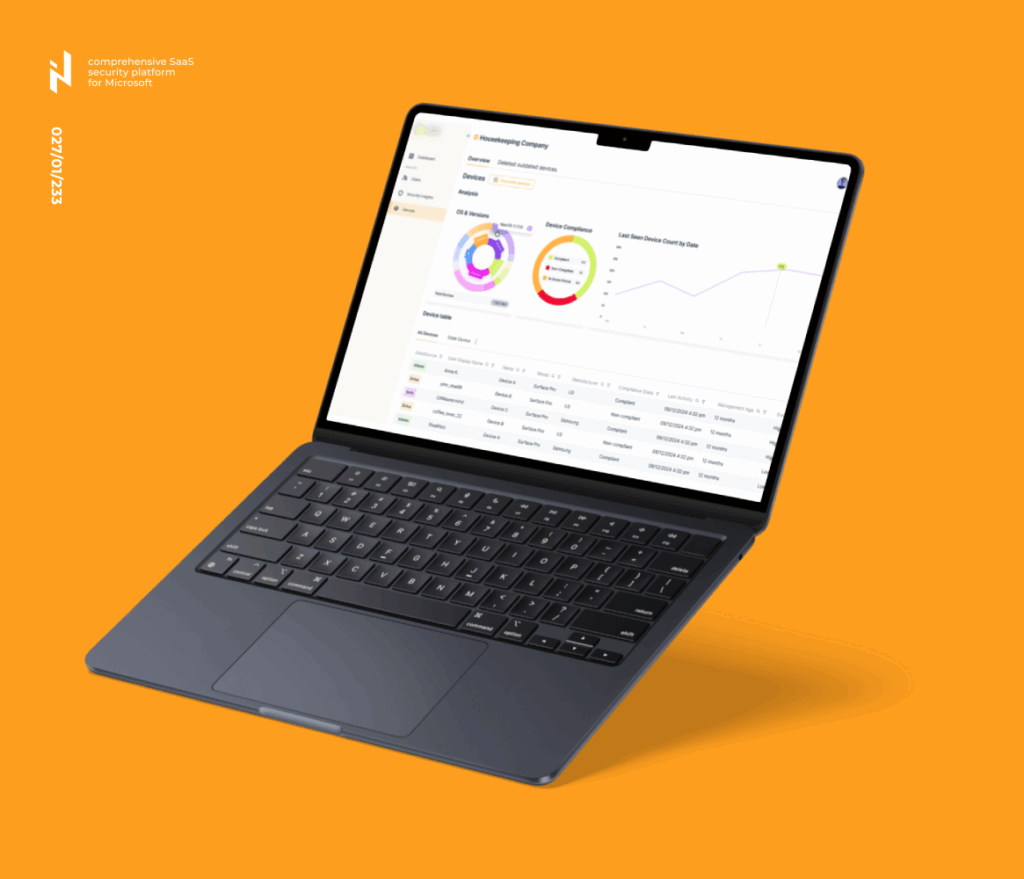
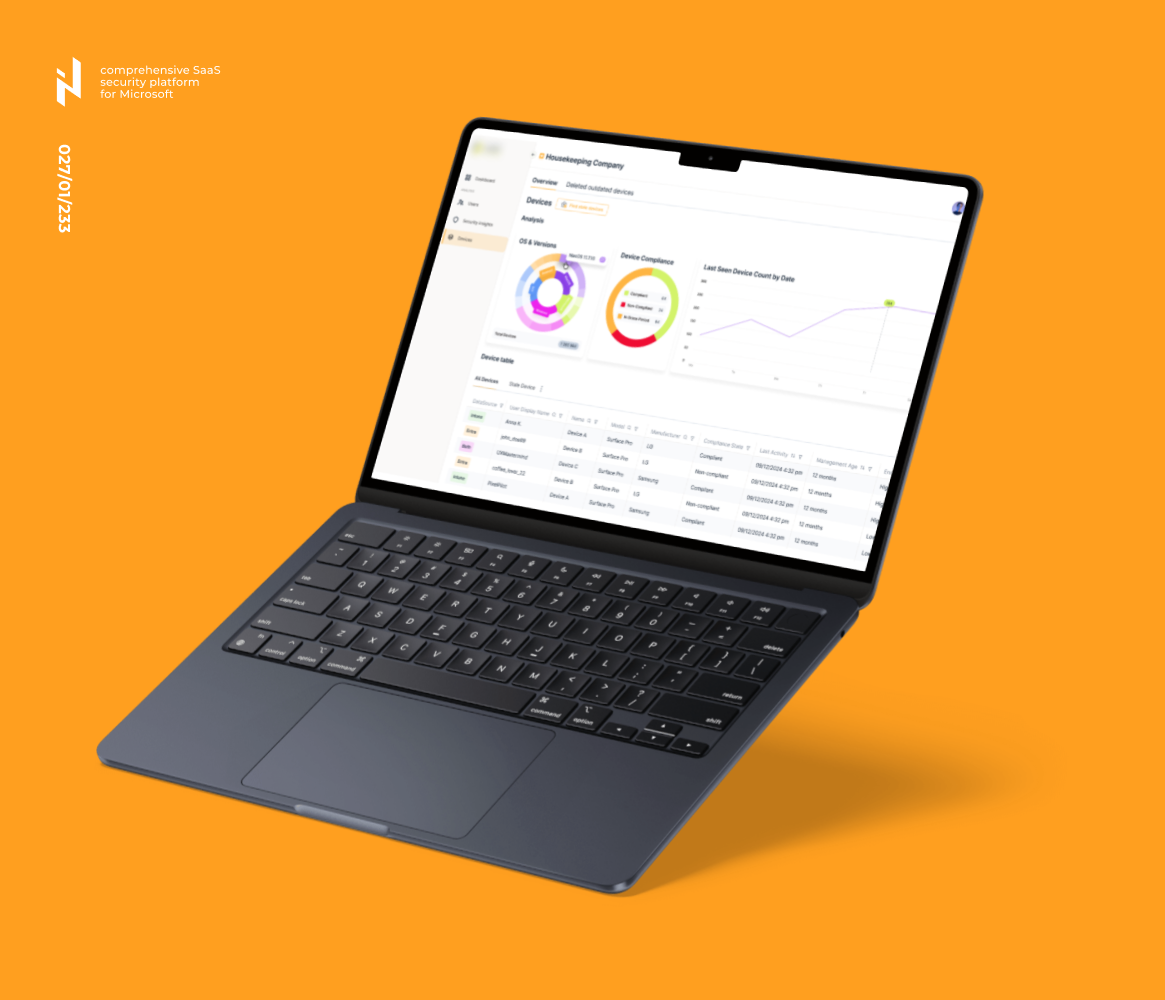
A centralized dashboard that provides real-time visibility into the Microsoft 365 security posture, highlighting critical risks, compliance status, and key metrics through intuitive visualizations and customizable widgets.
Module 2: Audit Preparation & Compliance Management
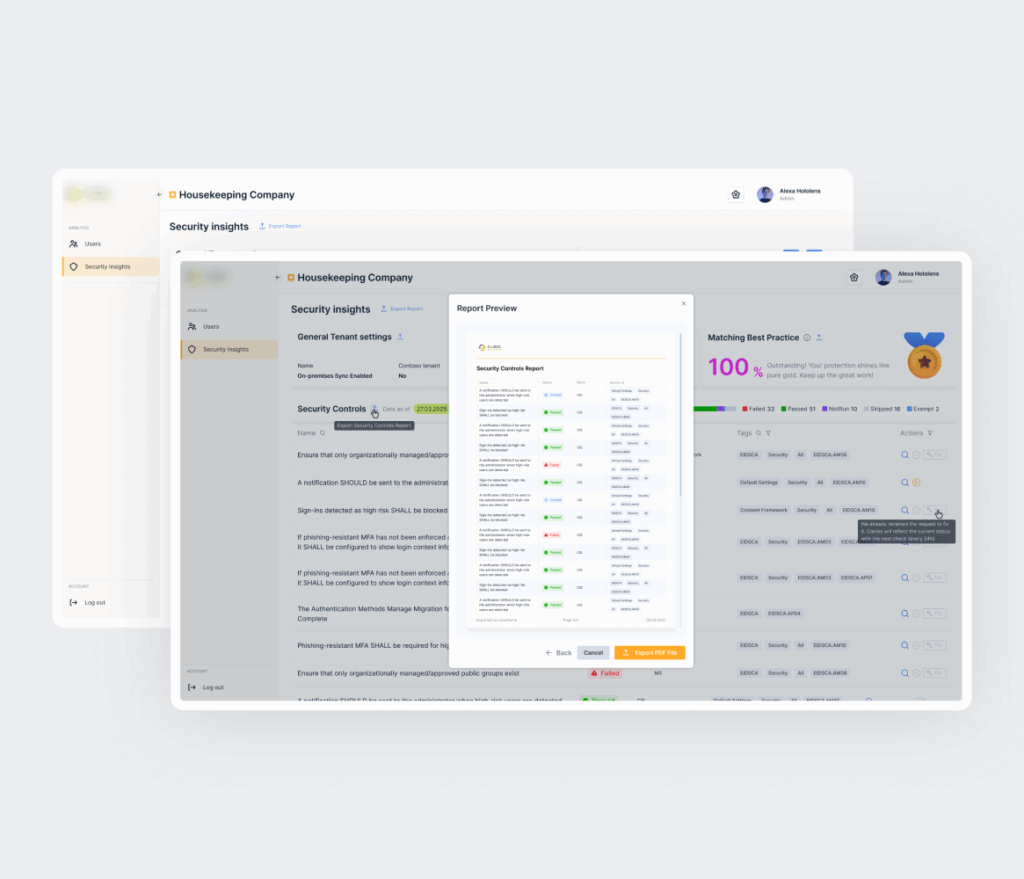
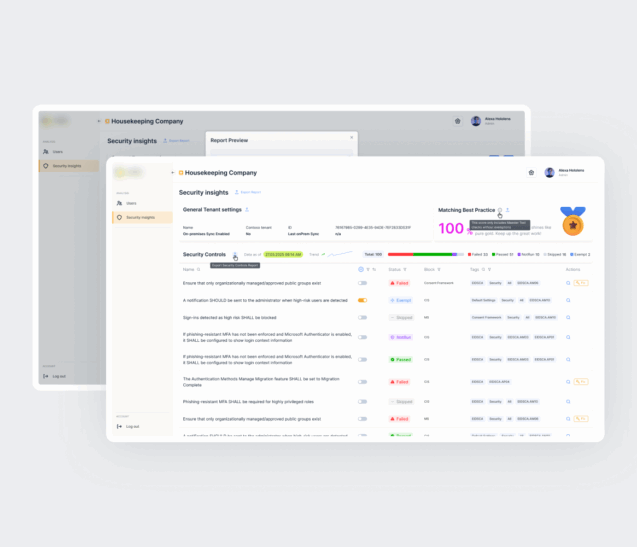
An automated audit-readiness module that compares tenant configurations against industry standards, identifies compliance gaps, and generates audit reports to significantly reduce manual preparation effort.
Module 3: Security Insights & Analytics
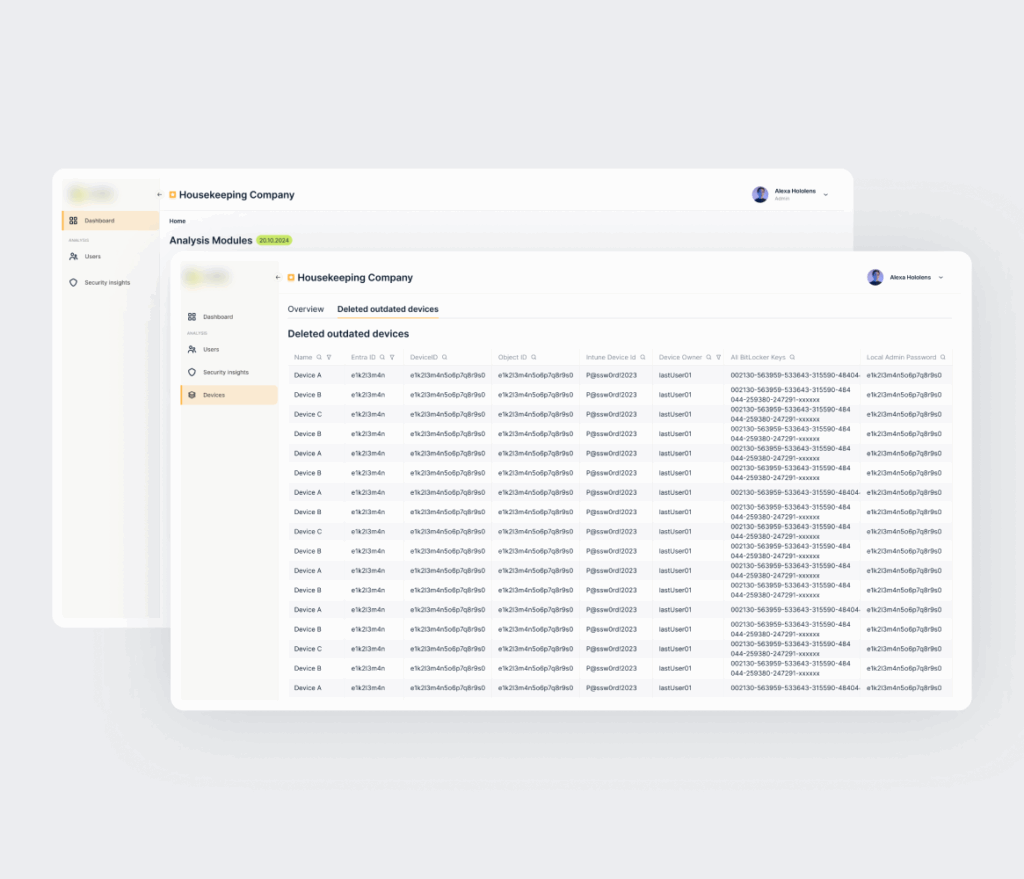
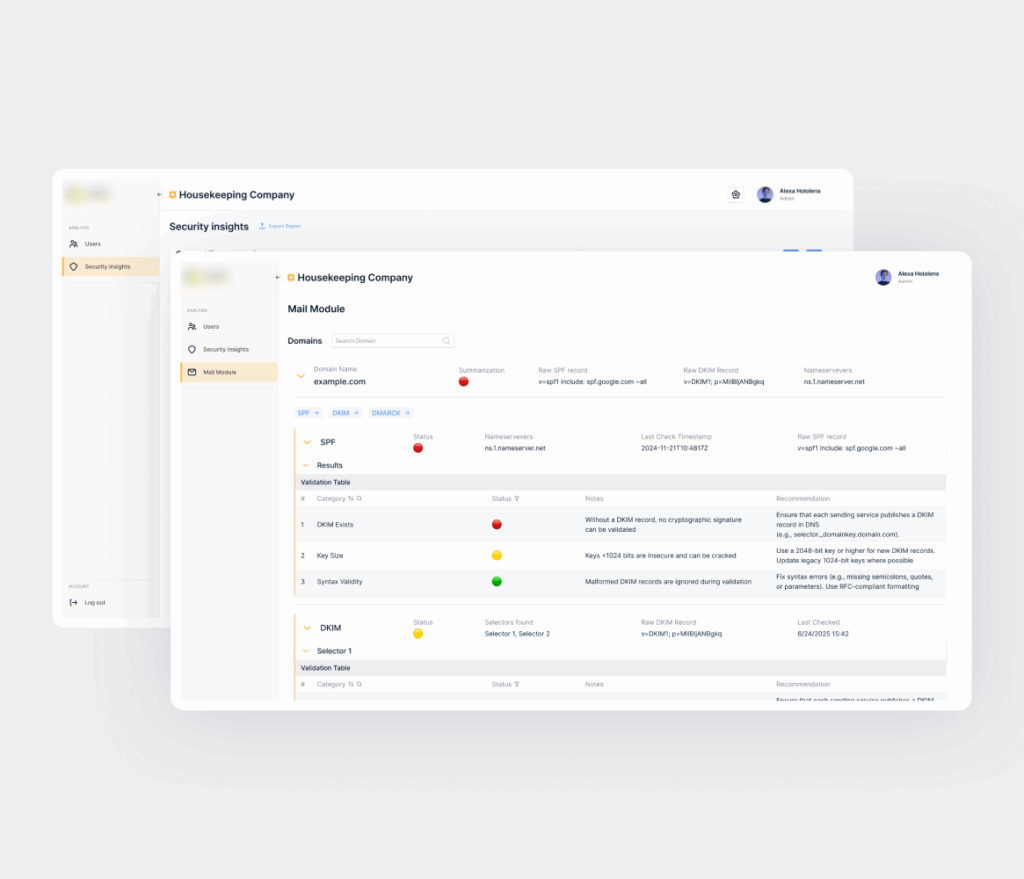
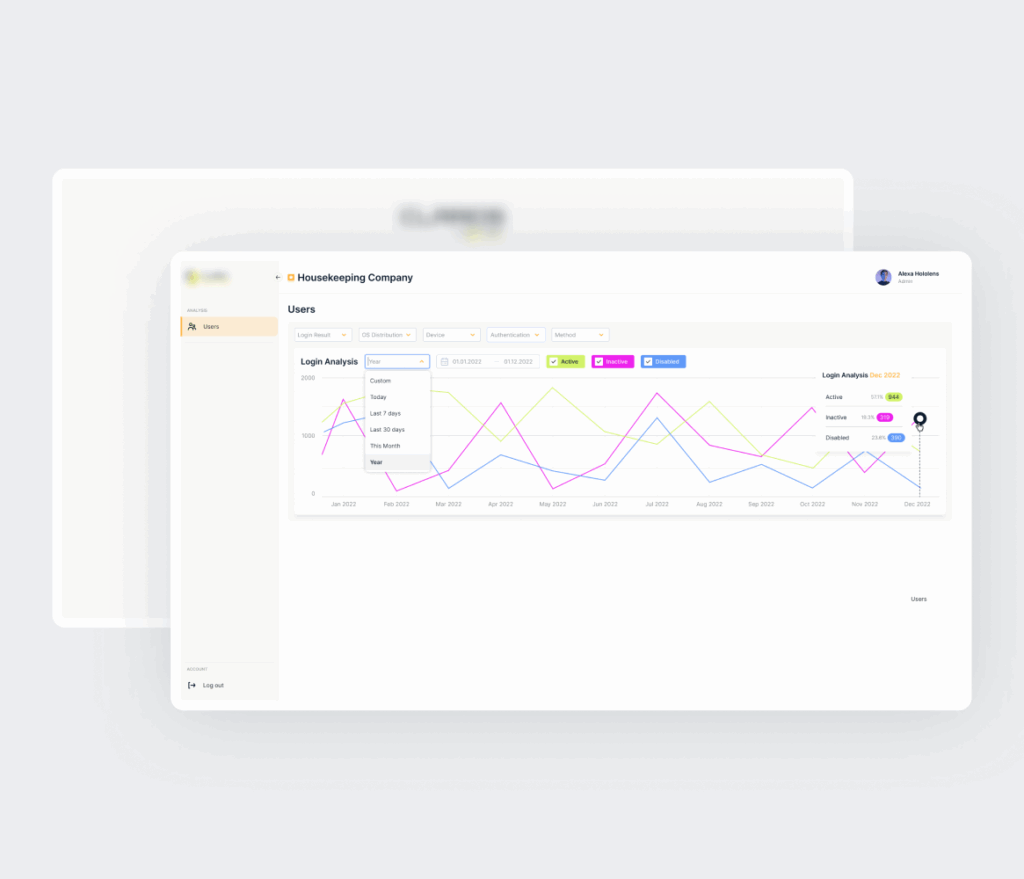
An advanced analytics module offering deep visibility into security configurations, user behavior, and risk trends through interactive charts, drill-down analysis, and exportable reports.
Module 4: Automated Recommendations Engine
An intelligent recommendation system that delivers prioritized, actionable security improvements with step-by-step guidance, impact estimation, and progress tracking.
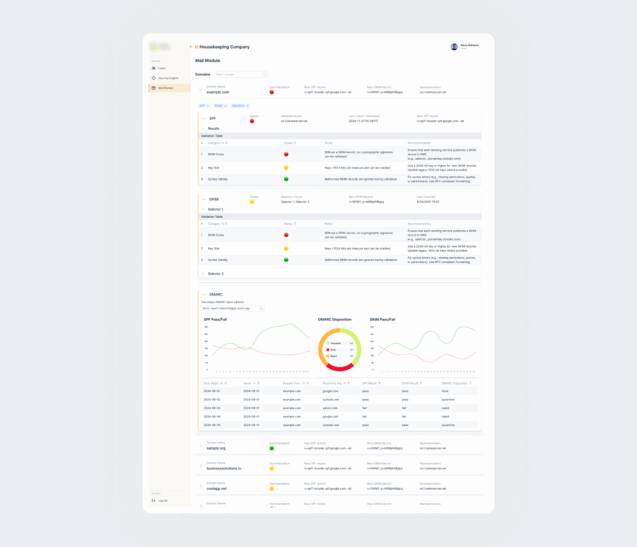
Module 5: Email Reporting & Notifications
An automated notification and reporting module that keeps stakeholders informed through scheduled reports and real-time alerts without requiring constant platform access.
Module 6: Multi-Tenant Management
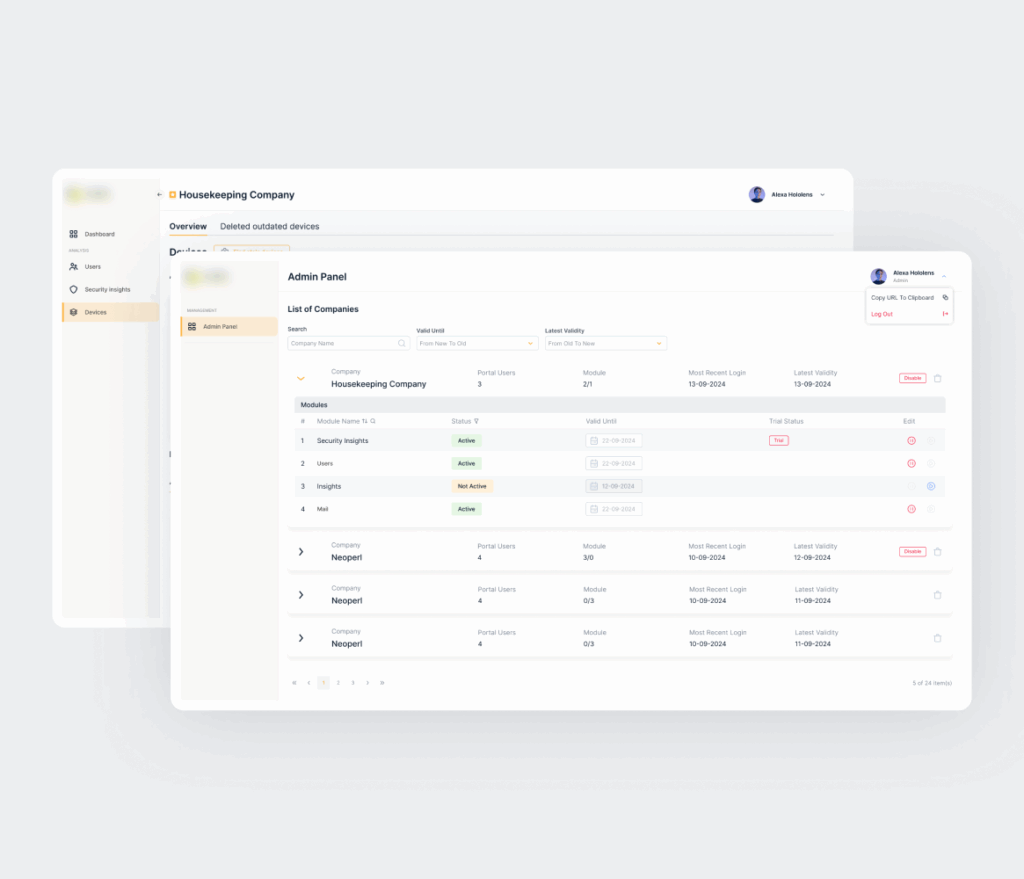
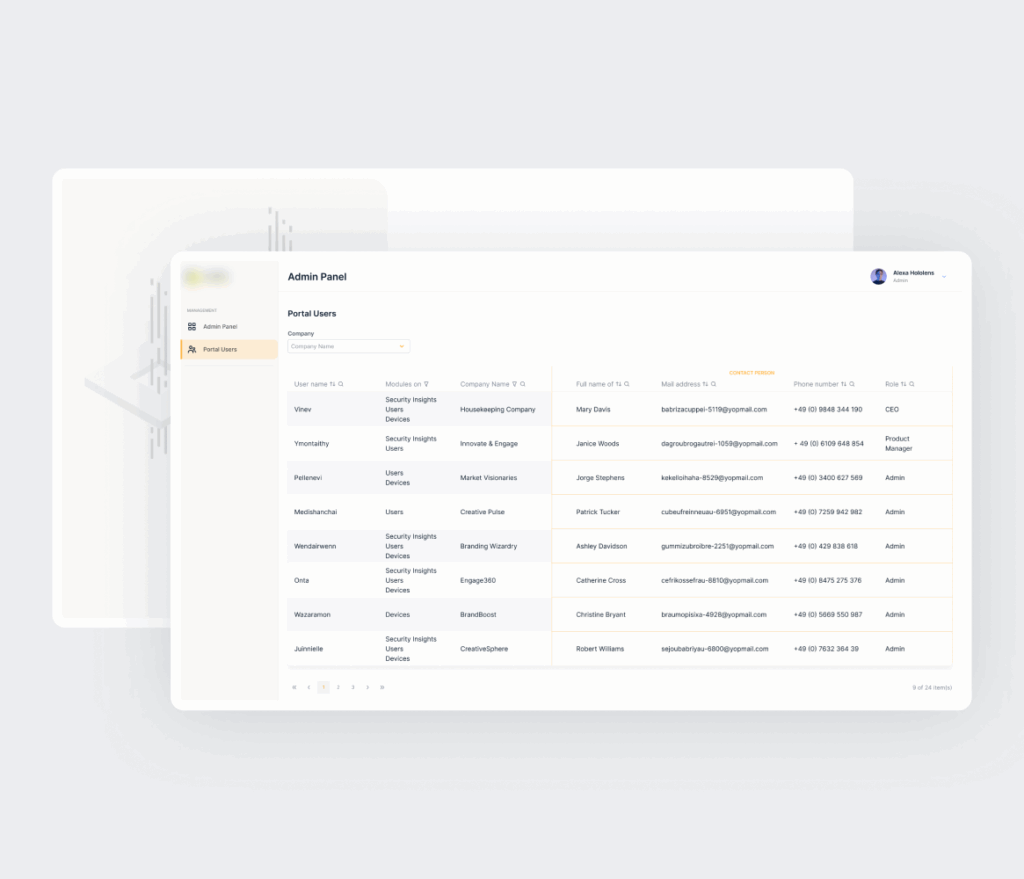
A dedicated interface for managed service providers, enabling centralized oversight of multiple tenants with comparative dashboards, bulk operations, and client-specific reporting.
Business Effects for Client
The project was delivered within the planned timeframe using a flexible, agile approach that allowed for continuous validation, adaptation to Microsoft 365 ecosystem changes, and beta testing with real customers. This ensured that the final solution was stable, relevant, and aligned with real-world usage before full-scale launch. We also conducted usability testing and UX audit services before implementing ths solution.
Immediately after implementation, the customer launched a proprietary SaaS platform that clearly differentiates their service offering in the Microsoft 365 consulting market. Security assessments that previously took hours can now be completed in minutes, while automated audit preparation significantly reduced manual effort and improved consistency across engagements. The intuitive user interface enabled fast adoption with minimal training, and early user feedback confirmed high usability and design quality.
These are some numbers on business effects for companies using these platforms:
- 5–10 active users per organization using the platform on a regular basis
- Up to 70% reduction in time required to assess Microsoft 365 security posture
- 60%+ decrease in manual effort for audit preparation through automation
- 50% faster onboarding of new users due to intuitive UI and standardized workflows
- 30–40% increase in consultant efficiency by reducing repetitive manual tasks