

About Client
Our client is a German manufacturer with a decades-long track record in professional coffee equipment and an established global distribution network. Their machines are used by a wide range of businesses worldwide. The scale differs: from small hospitality venues to large, multi-location operators. They also supply coffee machines and other kitchen equipment to the distributors and certified service partners.
To support modern operations, the client created an IoT fleet monitoring platform that connects coffee machines to the cloud and enables remote monitoring, analytics, and centralized management. The platform is designed to serve three distinct user groups:
- Small businesses (cafés, restaurants, hotels): day-to-day monitoring, cleaning/service compliance, consumption control
- Large enterprises (multi-location operations): fleet-wide performance analytics, remote configuration, role-based access, governance
- Distributors/service partners: proactive maintenance, supply optimization, remote diagnostics, reduced on-site visits
Business Challenge
The client’s IoT fleet monitoring platform was technically functional, but it was not meeting user expectations or supporting the company’s commercial goals.
Key issues of the current solution included:
- Outdated UI and inconsistent experience that did not match a premium brand positioning
- Low adoption and recurring user complaints about navigation, unclear workflows, and difficult-to-find information
- Gaps in critical functionality needed for daily operations (administration, roles/permissions, content and pricing management, etc.)
- Weak competitiveness versus modern IoT fleet management solutions in the market
- Limited effectiveness as a sales tool for large enterprise customers due to UX friction and unclear value proposition
The company needed UI/UX design services – re-design – for the IoT fleet monitoring platform that could both improve usability for existing users and serve as a compelling, presentation-ready concept for enterprise sales and internal decision-making.
Process
We embedded into the client’s working rhythm through a highly collaborative approach with frequent reviews and structured feedback during our manufacturing software development services; our designers weren’t new to Internet of Things (IoT) Solutions in this industry.
Phase 1 — Usability Testing and UX Audit Services (1 week)
- Full platform walkthrough and task-based evaluation
- Heuristic evaluation (usability principles, best practices)
- Mapping of key user flows for each user type
- Feature inventory and gap analysis (what exists vs. what users actually need)
- Competitive benchmarking of comparable IoT / fleet management tools
Deliverable: UX analysis report with prioritized issues, severity ratings, and improvement recommendations.
Phase 2 — Persona Development & Use-Case Validation (2 weeks)
After early concept feedback, we introduced a dedicated persona phase to ensure decisions were grounded in real-world needs:
- Analysis of user feedback provided by the client
- Personas for three segments (small business/enterprise/distributor)
- Journey mapping and validation of key workflows
Deliverable: persona set + journey maps used to refine navigation, prioritization, and screen structure.
Phase 3 — High-Fidelity Redesign of IoT fleet monitoring platform & Interactive Prototype (6 months)
- Creation of a complete design system (typography, components, layout rules, interaction patterns)
- Redesign of platform modules for desktop + mobile-responsive experience
- Building a fully clickable Figma prototype with realistic flows, states, and micro-interactions
- Iterative design reviews and refinements aligned with stakeholder needs and presentation goals
Deliverable: comprehensive interactive prototype + design system + handoff-ready design documentation.
Final Product Overview
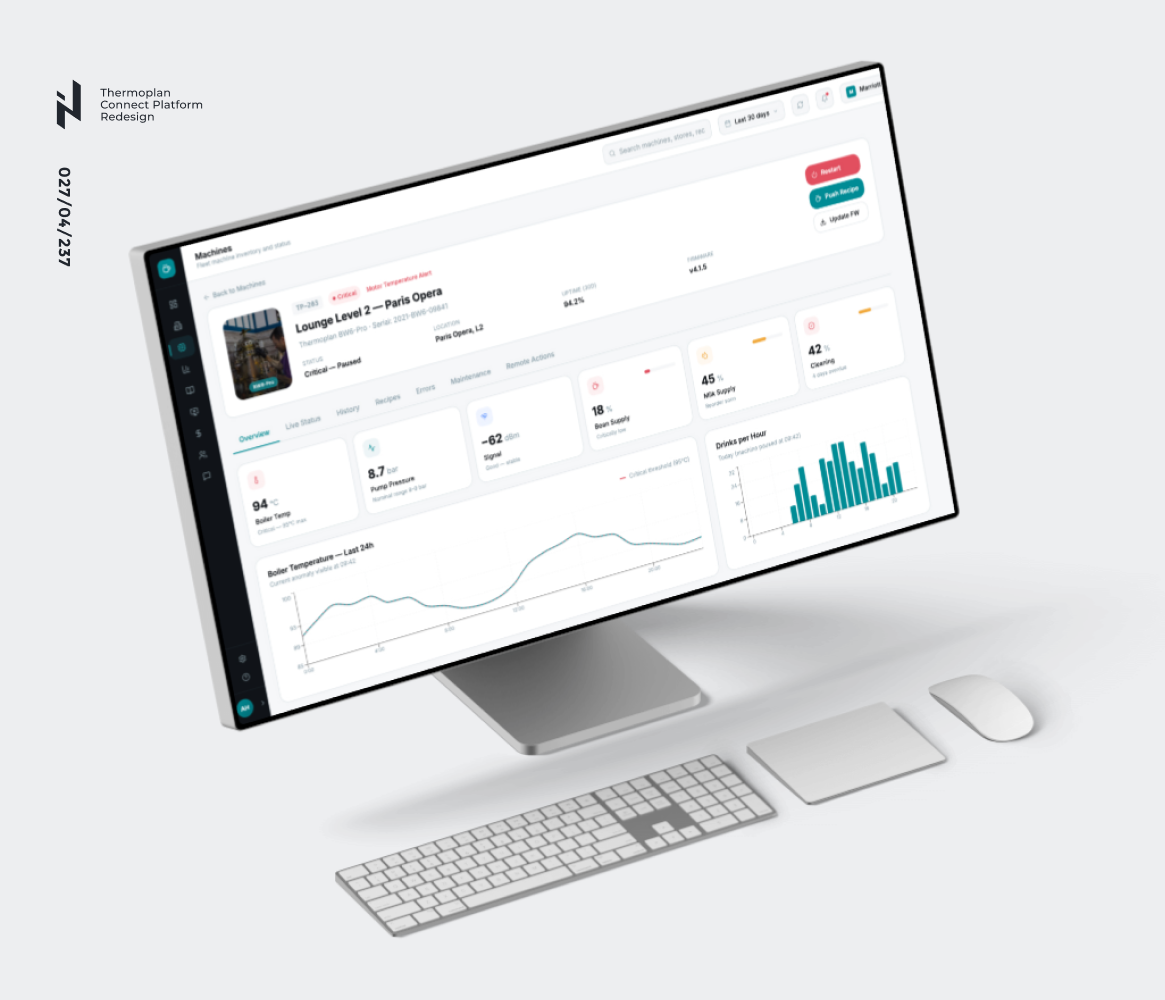
The redesigned solution is a complete, implementation-ready concept of a modern IoT fleet monitoring platform for connected commercial equipment, delivered as a high-fidelity, clickable prototype (desktop + mobile) in Figma.
It includes:
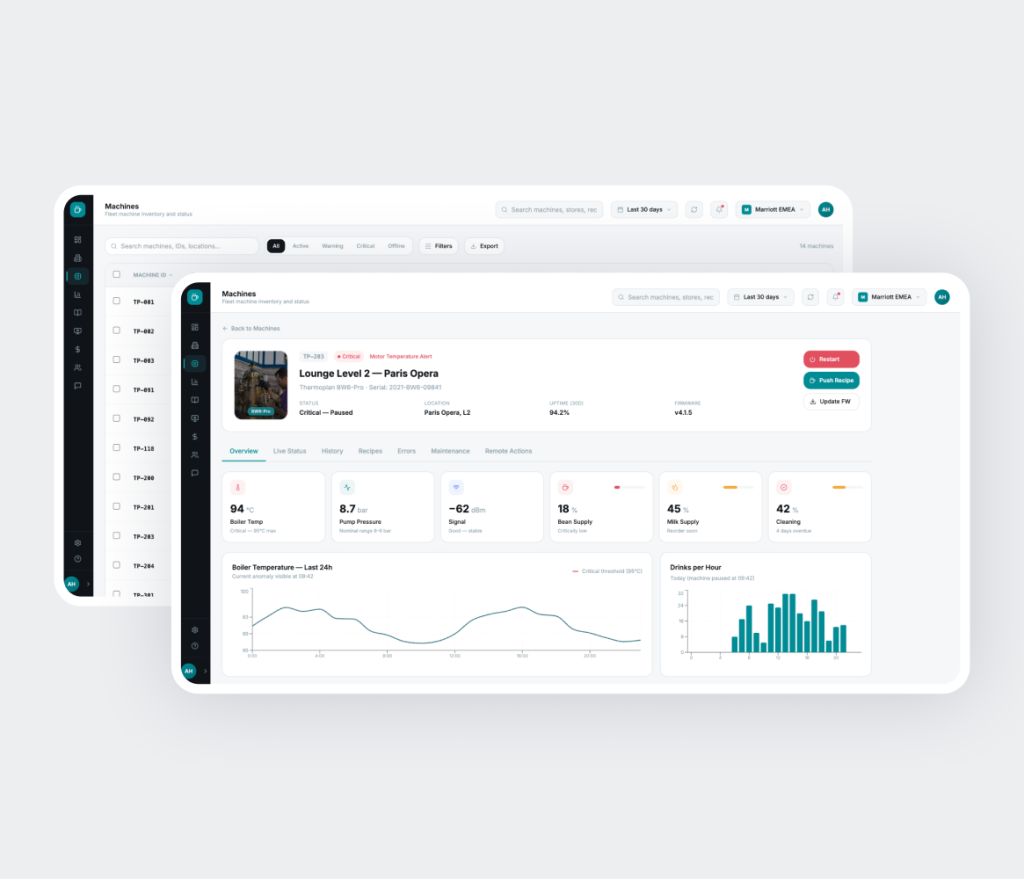
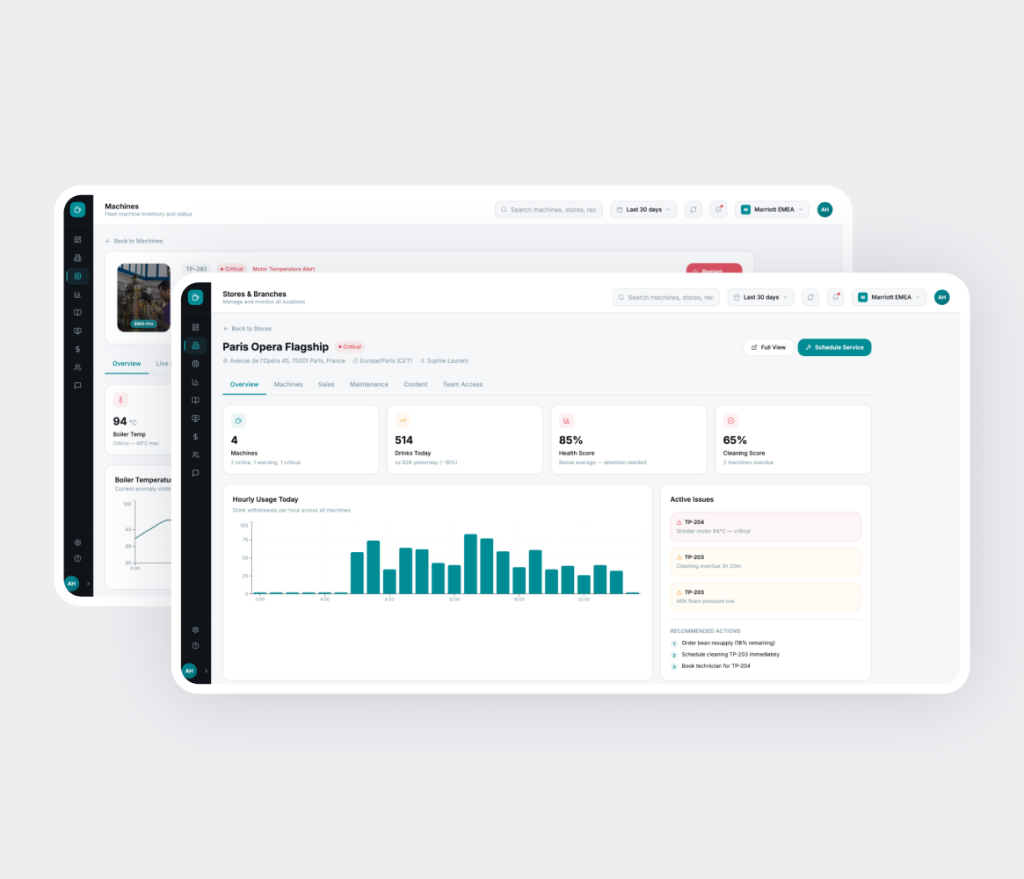
- Real-time monitoring of machine health, connectivity, errors, and operational status with clear visual indicators and drill-down views
-
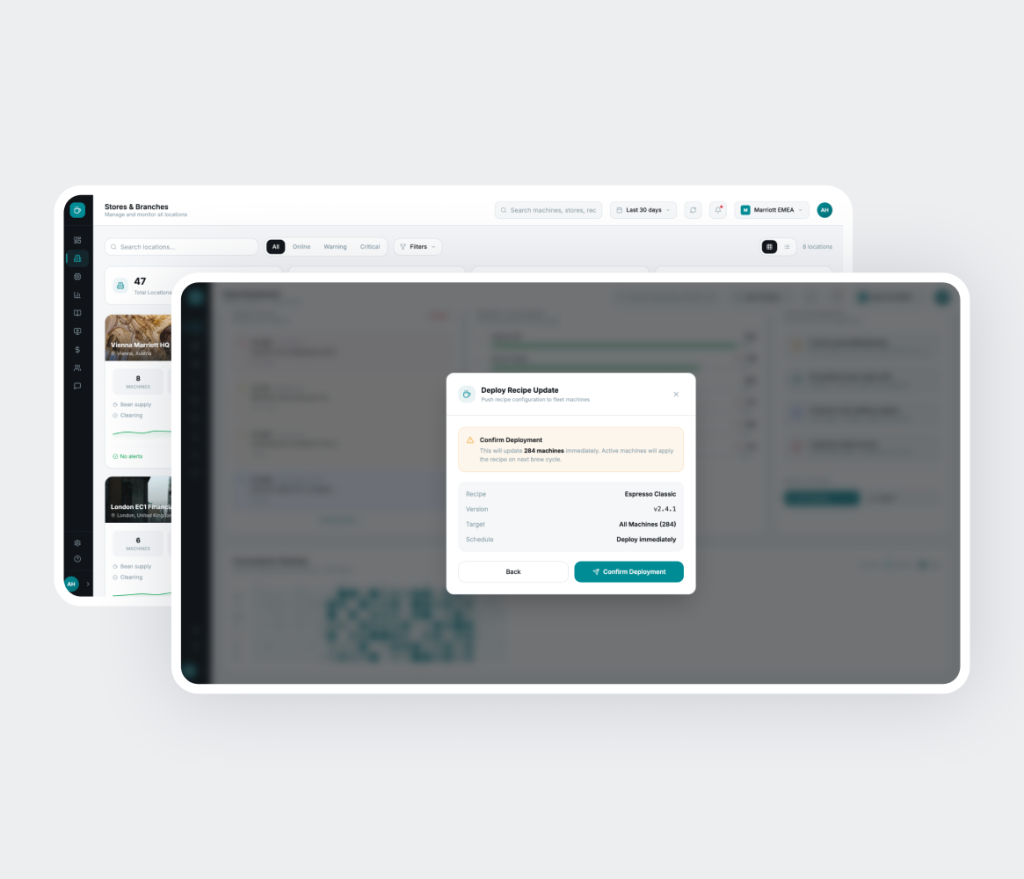
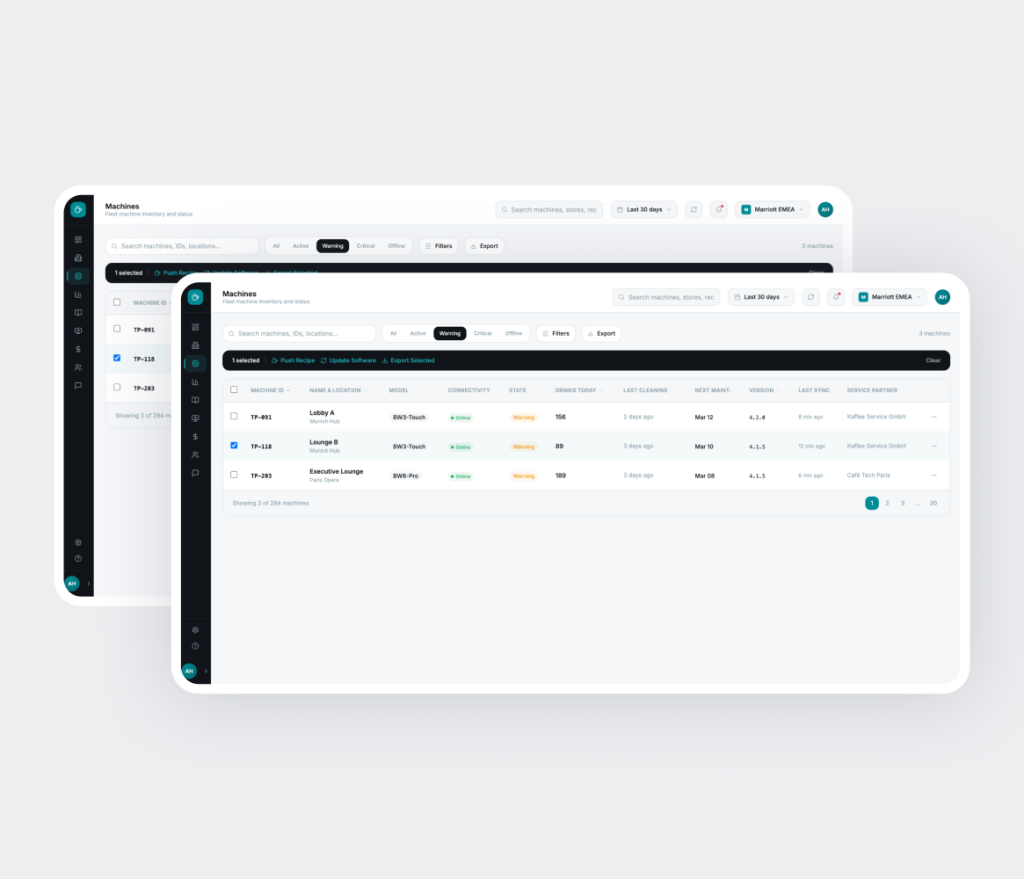
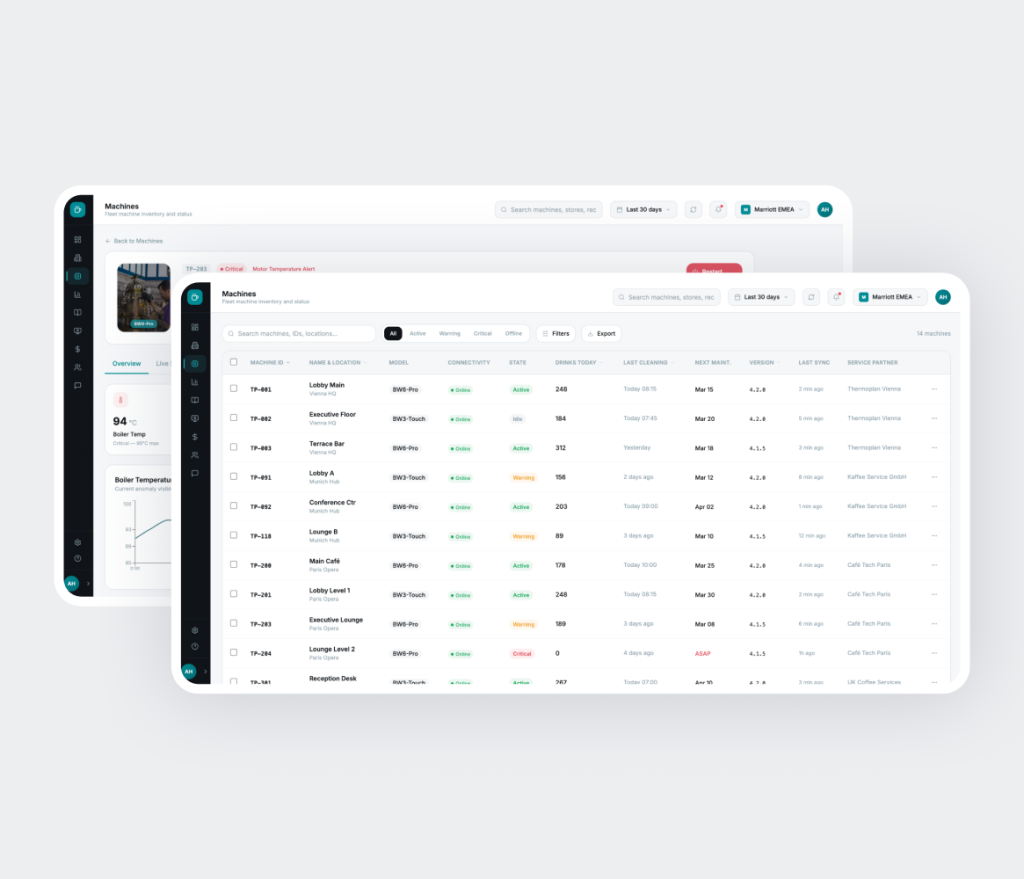
Fleet and location management to oversee machines across multiple sites, filter by status, and prioritize issues quickly
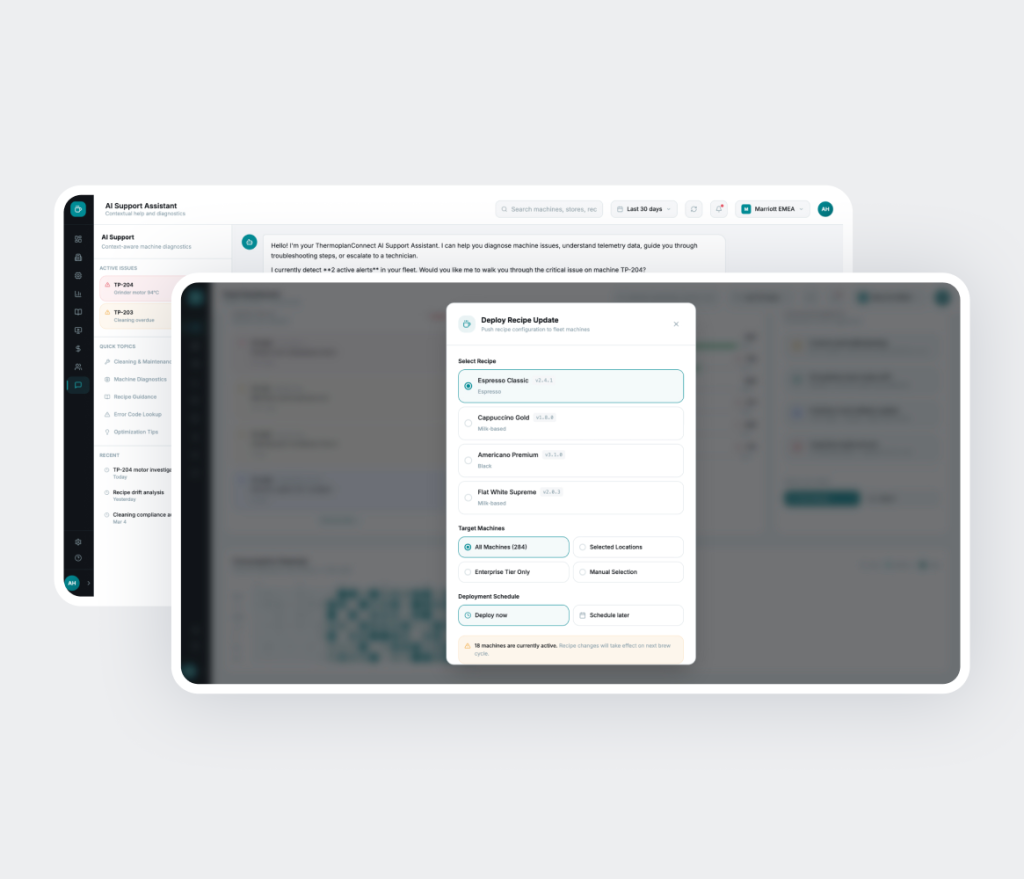
- Remote control and configuration to update settings, deploy recipes/configurations, and manage devices at scale
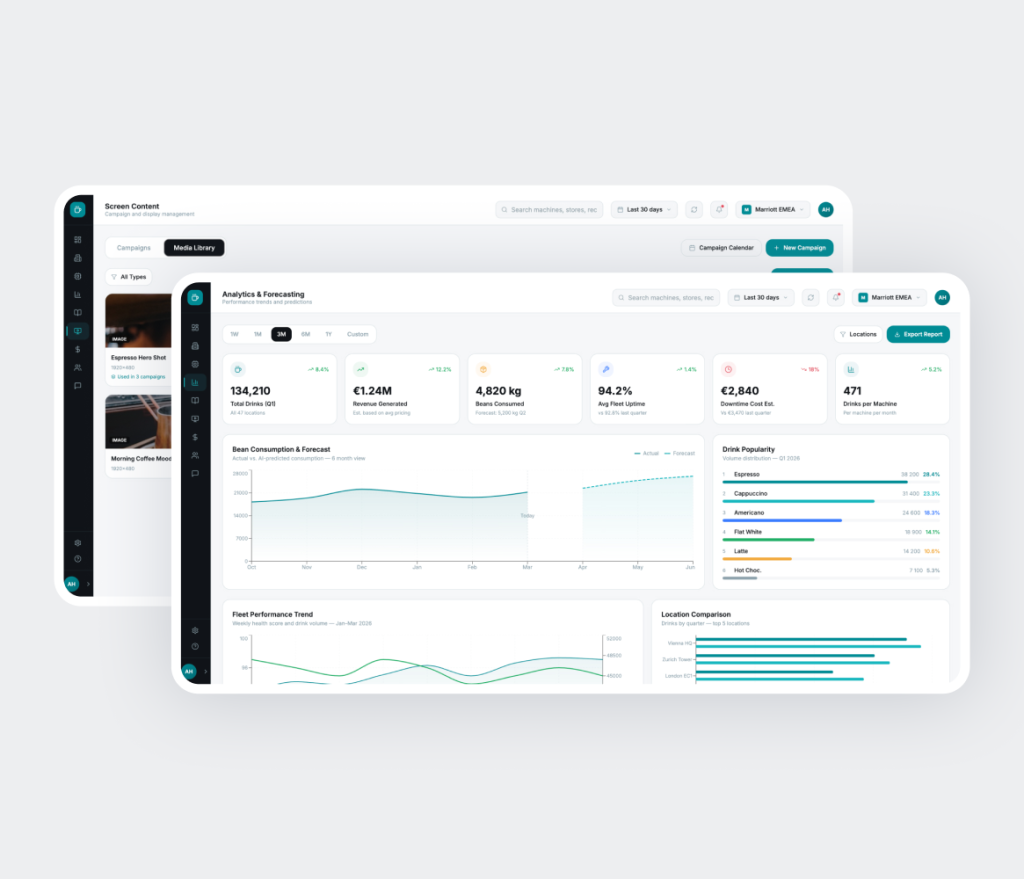
- Operational dashboards and analytics that translate telemetry and usage data into actionable insights, trends, and basic forecasting
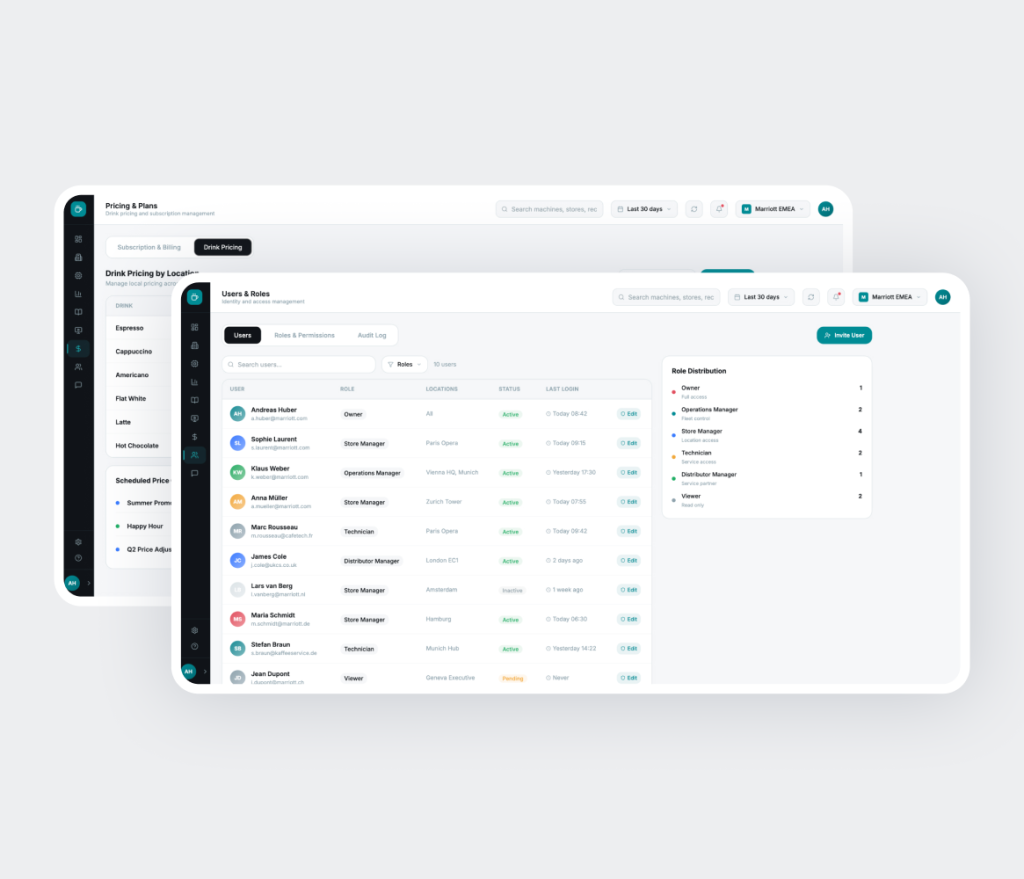
- Role-based administration with improved governance flows for users, permissions, and account-level controls
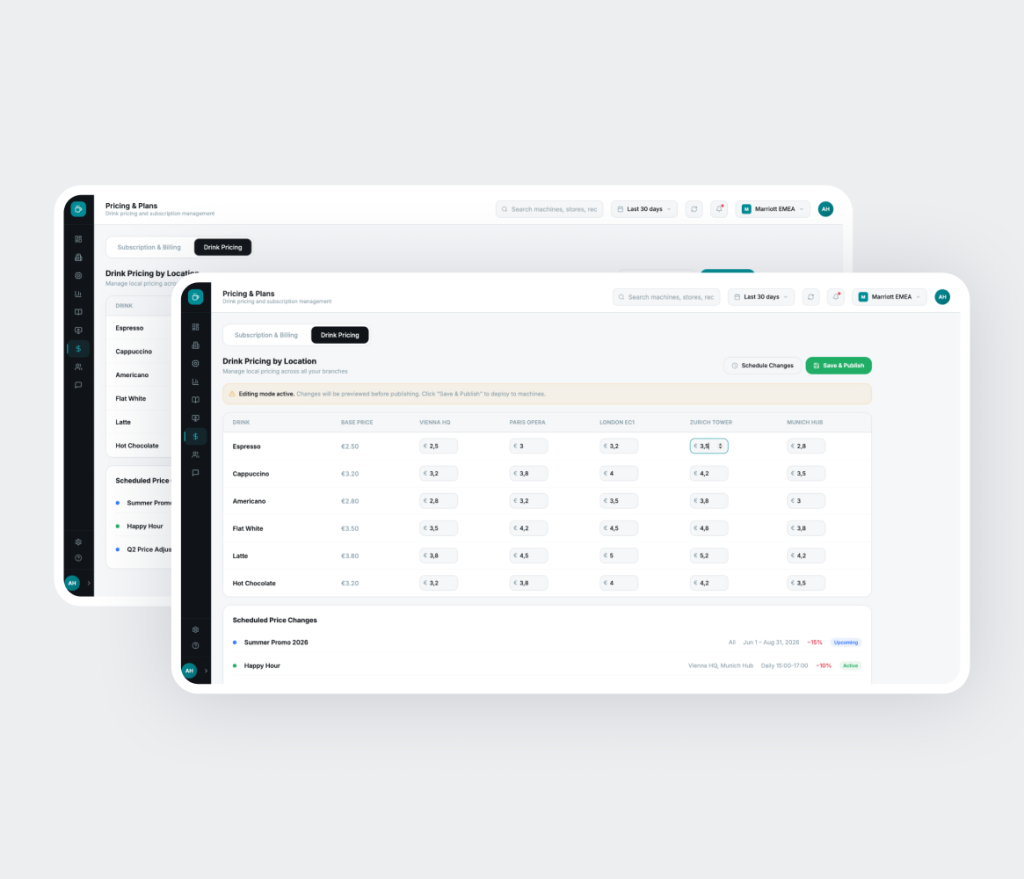
- Content and commercial controls for managing on-device messaging and business parameters (e.g., pricing, plans) in a structured way
- Mobile-first access for technicians and managers, optimized for quick checks, alerts, and essential actions on the go
All modules follow a unified design system with reusable components, consistent interaction patterns, responsive behavior rules, and handoff-ready specifications for future development.
Modules included in the prototype of the IoT fleet monitoring platform (12 modules) (Screenshots have to be anonymized)
- Login & Authentication
- Branch/Store Overview (fleet dashboard)
- Machine Overview (real-time health + history)
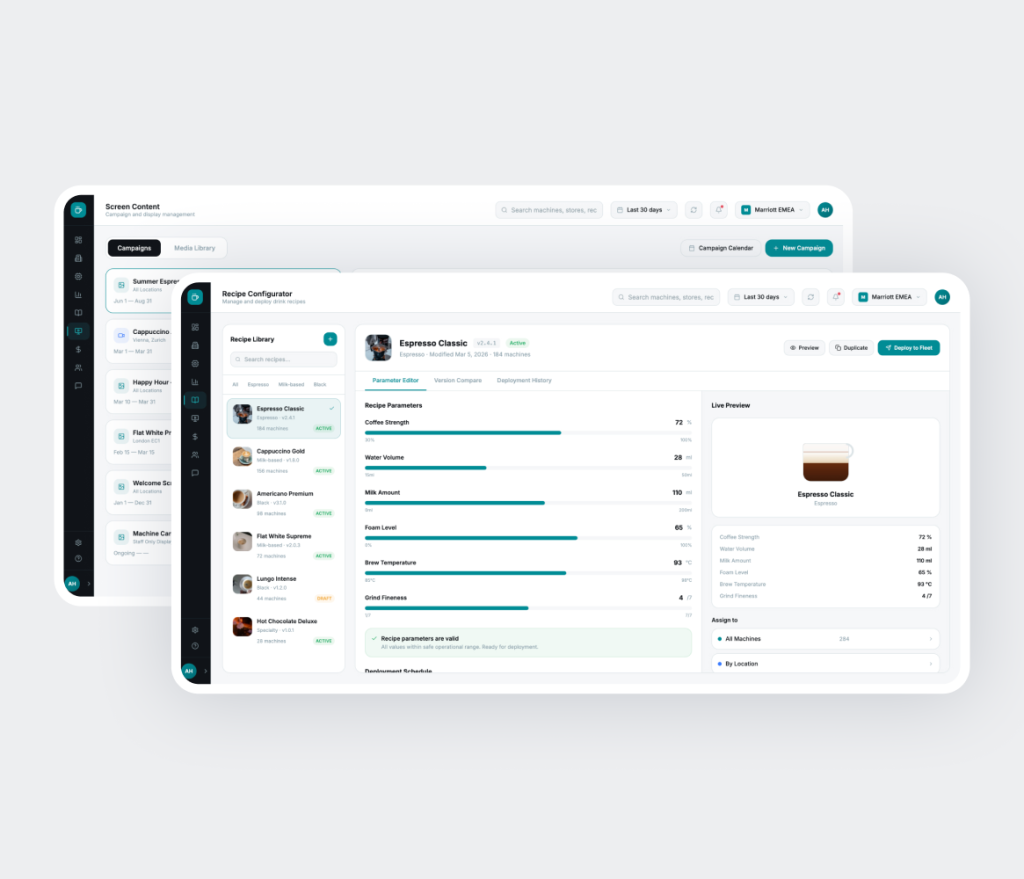
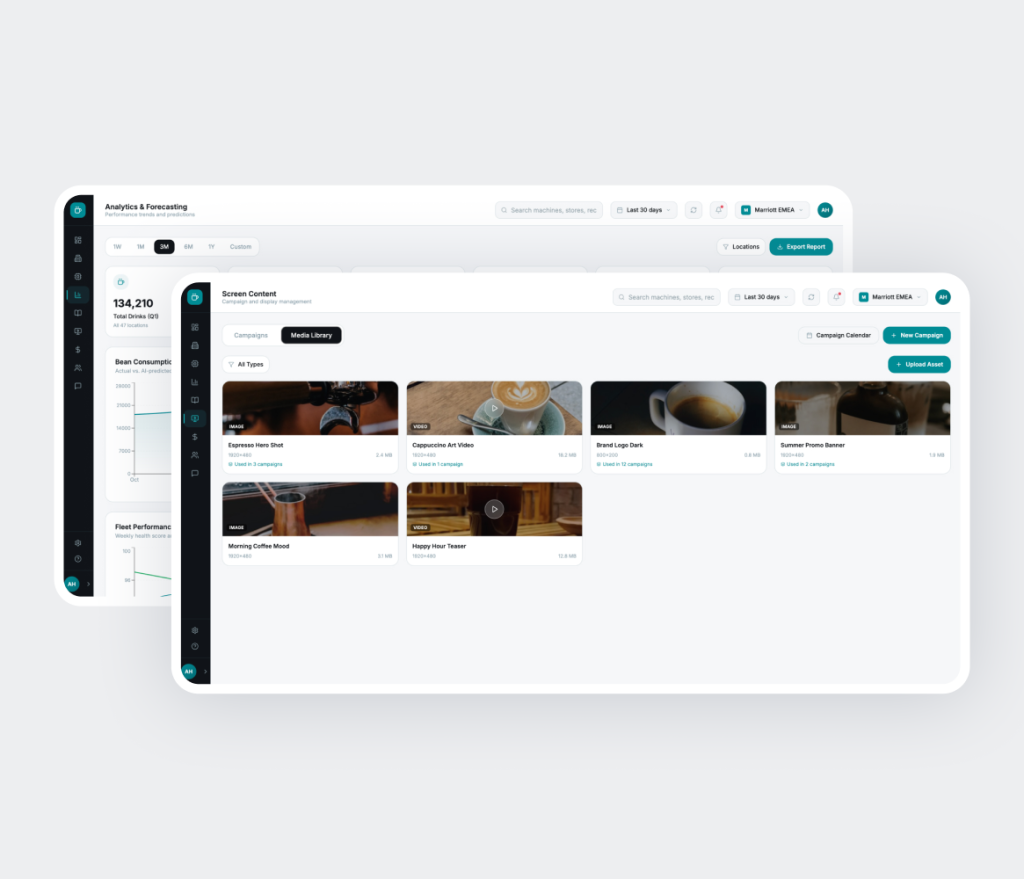
- Machine Screen Settings (remote UI + promotional content)
- Recipe Configurator (drink parameters + rollout)
- Admin Panel (new)
- User Management (new)
- Plans & Pricing (new)
- Content Management (new)
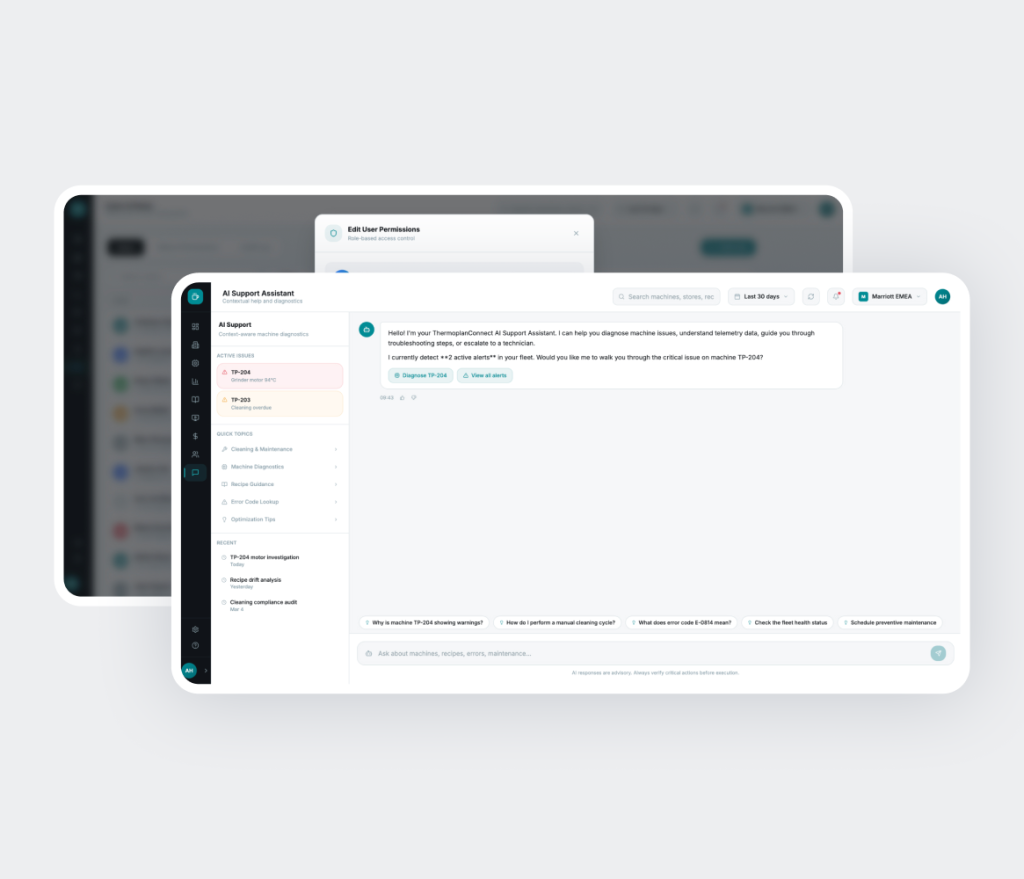
- Chatbot-assisted support concept (new)
- Machines List (new)
- Stores / multi-location management views (new)
Business Effects for Client
Overall, the project transformed a technically functional but underperforming IoT fleet monitoring platform into a structured, enterprise-ready product vision with measurable improvements in usability, scalability, and commercial readiness.
- Identified and resolved 20+ critical and high-severity usability issues during the UX audit phase.
- Reduced estimated task completion steps for core workflows (e.g., locating machine status, applying settings) by 40–50% through improved navigation and information hierarchy.
- Moved key operational data from 3–4 clicks deep to 1–2 clicks, significantly improving decision speed.
Numbers don’t lie:
- Expanded functional coverage by introducing 6+ new conceptual modules, increasing feature completeness by approximately 35–40% compared to the legacy platform.
- Created a reusable design system with 30+ core components and 100+ UI elements, reducing future design effort for new features by an estimated 25–30%.
- Delivered a fully interactive prototype covering 12 core platform modules across desktop and mobile, enabling 100% workflow demonstration without development.
- Enabled enterprise-grade sales presentations through a polished prototype, strengthening positioning in high-value client negotiations.
- Established a scalable UX foundation designed to support thousands of connected devices across multiple locations, aligning with the company’s international growth strategy.