


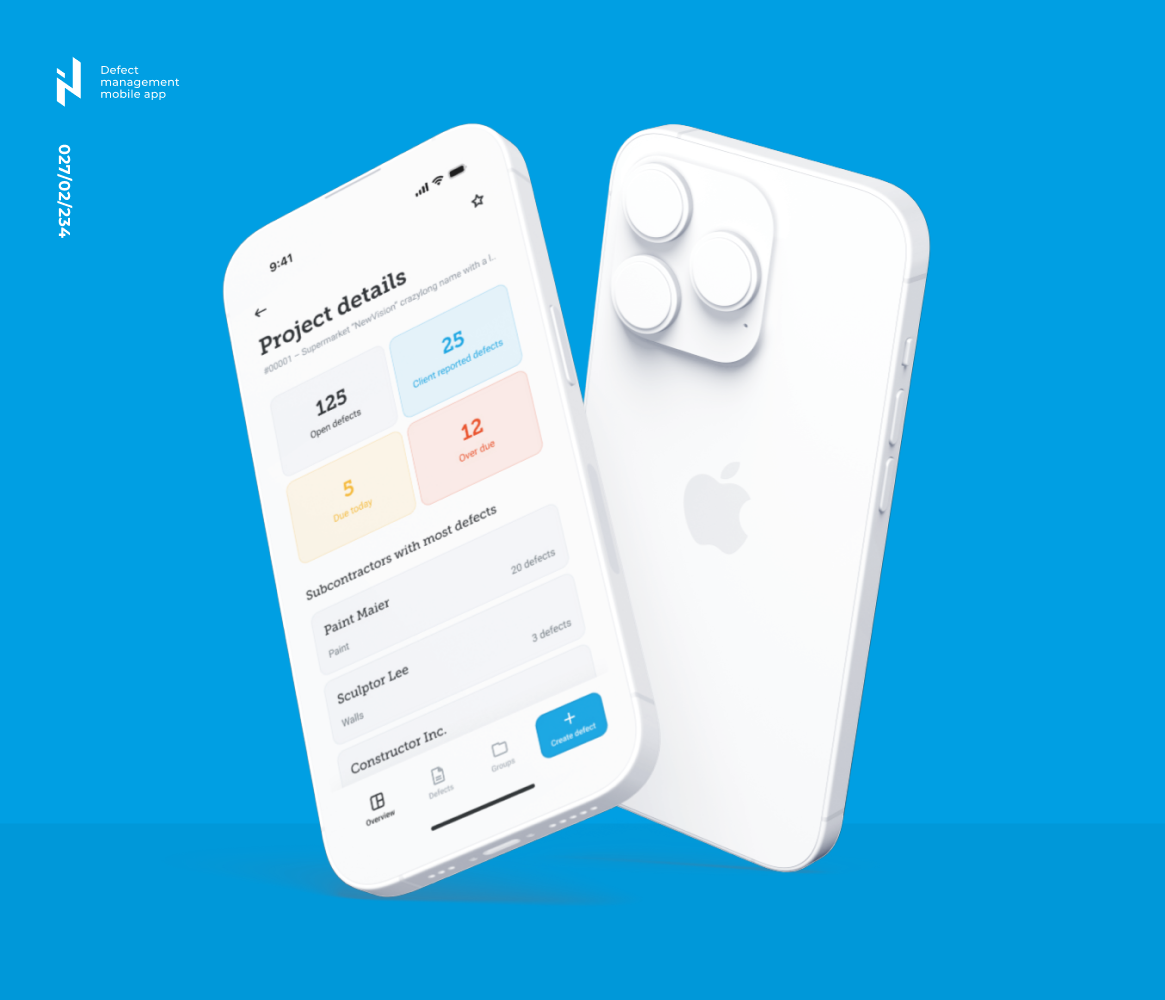
About Client
The client develops digital solutions for the real estate and construction industry, with a strong focus on project controlling, tender and procurement management, and increasing transparency through a centralized portal solution. Their products are designed to support complex construction and real estate projects. Elinext is no stranger to delivering real estate software development services.
The client’s objective was to extend this ecosystem with a mobile, offline-capable field solution that incorparetesAI in mobile user experience and that integrates defect management and site quality tracking into existing project and portal workflows. Because field work often takes place in environments with unstable or no internet connectivity, reliability and offline-first behavior were critical requirements.
The vision was to enable field teams to capture defects, photos, and location data directly on site, while ensuring seamless synchronization with central systems once connectivity is restored. By bridging on-site operations with project controlling and transparent reporting and incorporating AI in mobile user experience, the client aimed to deliver a unified, end-to-end digital workflow through a user-friendly, enterprise-ready mobile experience that hides technical complexity from end users. They didn’t mind the AI mobile app user experience.
Business Challenge
The client set out to build a full-featured mobile application for defect management and on-site quality tracking that could provide AI mobile app user experience andoperate reliably in real-world field conditions, including areas with limited or no internet connectivity. The scope went beyond a simple MVP and included offline-first workflows, media handling, geolocation, structured defect grouping, document export, and seamless integration into an existing real estate project ecosystem focused on project controlling, tender management, and transparency.
The real challenge was to significantly accelerate time-to-market by fully embracing AI for UX design, i.e., adopting an AI-driven development approach, replacing traditional, multi-role team workflows with a new model where AI would act as a force multiplier for predictive UX design architecture and implementation, while human effort would focus on control, validation, and product decisions.
As a result, the project had to balance ambitious functional requirements with the realities of AI-assisted development, including the need to control AI-generated code quality, handle mobile and platform-specific edge cases, and design a robust offline-first synchronization layer without sacrificing user experience.
Despite these complexities, the AI-accelerated approach enabled the entire product, from concept to AI for UX design to production-ready mobile app, to be delivered in just 16 days. The core challenge was not speed alone, but turning AI-generated output into a stable, intuitive, and enterprise-grade experience, where all technical complexity remained invisible to end users and the final result felt seamless, reliable, and human-centered.
Process
The project included generative AI development services delivered; it followed an AI-augmented development process supervised by a human. Our developer was treating AI as a strong engineering assistant rather than a one-shot solution for the AI mobile app user experience. The core principle was simple: AI accelerated execution, while human expertise ensured correctness, quality, and user experience.
Stage One: Requirements Defined
The process started with context and constraints definition. Before any code generation, clear product boundaries, architectural rules, offline-first requirements, and AI in mobile user experience constraints were established. This context was continuously fed back into the AI to prevent uncontrolled or irrelevant output.
Stage Two: Building a Solid System Design
Next, AI was used to rapidly generate foundational structures: screen layouts, navigation structure, data models, offline-first patterns, and synchronization drafts. At this stage, the focus was not on polish, but on building a solid SSD (specification-driven development) that could scale.
Stage Three: Iterative Refinement after Expert Review
Once the foundation was in place, the work shifted to iterative refinement and expert review. AI-generated code, predictive UX design, and UI were continuously reviewed, corrected, and adapted based on real-device testing. Particular attention was paid to cross-platform UX differences (iOS vs Android), offline edge cases, API inconsistencies, and real-world usage scenarios that AI could not reliably anticipate. AI for UX design proved to be effective.
Stage Four: Major Manual Adjustments
For complex areas such as offline synchronization, API changes, and migrations, AI was used to draft solutions and explore variants, while final decisions and logic were validated and implemented manually. This ensured data integrity and predictable behavior under unstable network conditions.
Stage Five (Happened in between other stages): Quality Assurance
QA testing services were embedded directly into the process. AI in mobile user experience supported automated checkability, including i18n parity, pseudo-localization for stress-testing UI, layout resilience, and auto-resizing behavior. This allowed issues like broken layouts, long strings, and localization gaps to be detected early and fixed systematically.
—
Throughout development, the focus deliberately shifted away from “writing code” toward integration, validation, and decision-making. AI handled speed and volume, while human expertise ensured coherence, stability, and a seamless “AI” mobile app user experience.
The result of this process of using AI for UX design was a production-ready, offline-first mobile application, delivered end-to-end in 16 days, where the complexity of AI-assisted development remained completely invisible to users — leaving only a reliable, intuitive, and high-quality product experience.
Final Product Design Overview
The final solution includes AI mobile app user experience and is a production-ready, offline-first mobile application designed for real-world field work in construction and real estate projects. The product delivers a seamless and intuitive experience for managing defects and site quality, while hiding the technical complexity of offline synchronization, data consistency, and cross-platform behavior from end users.
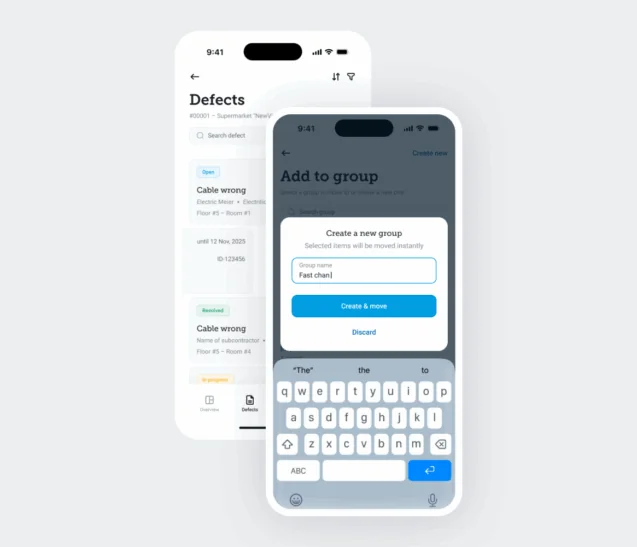
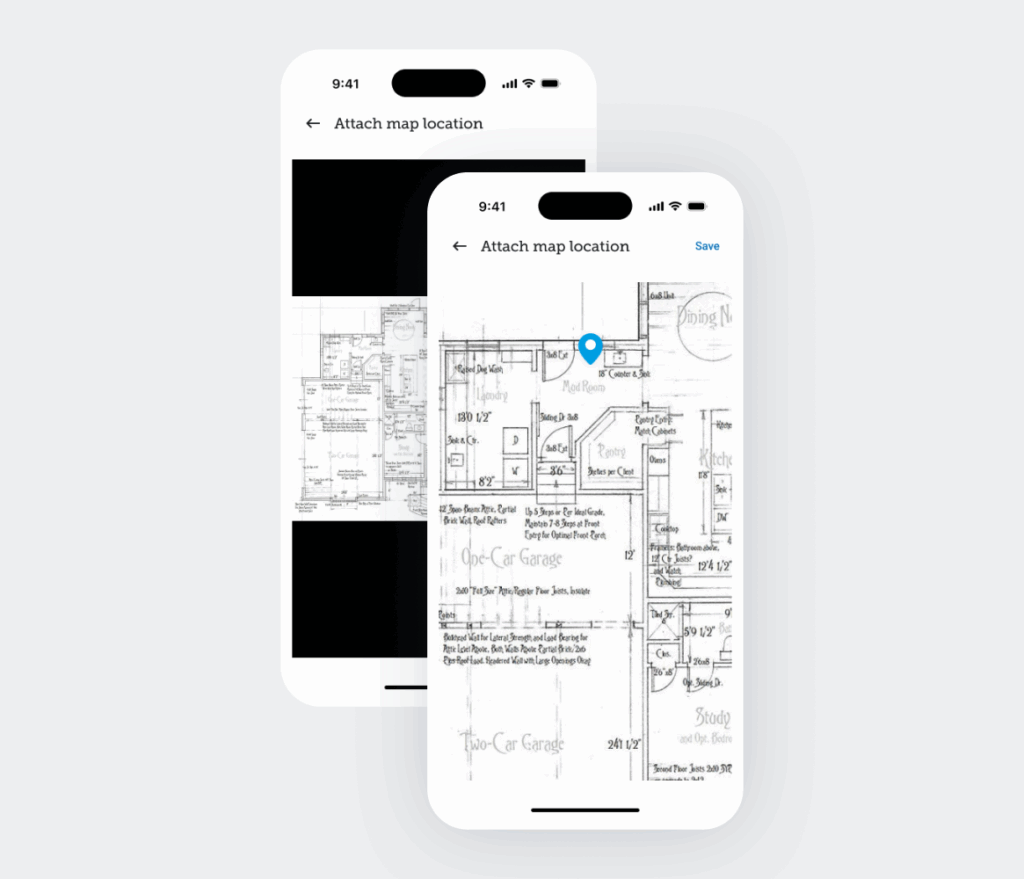
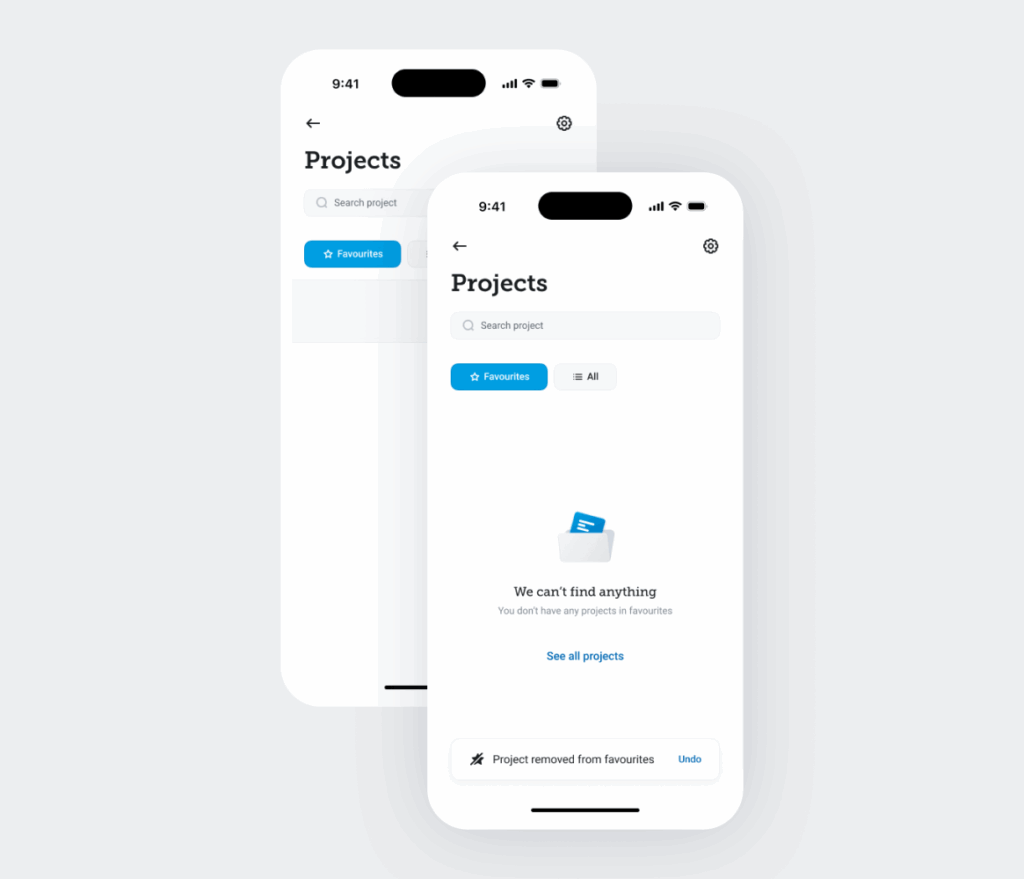
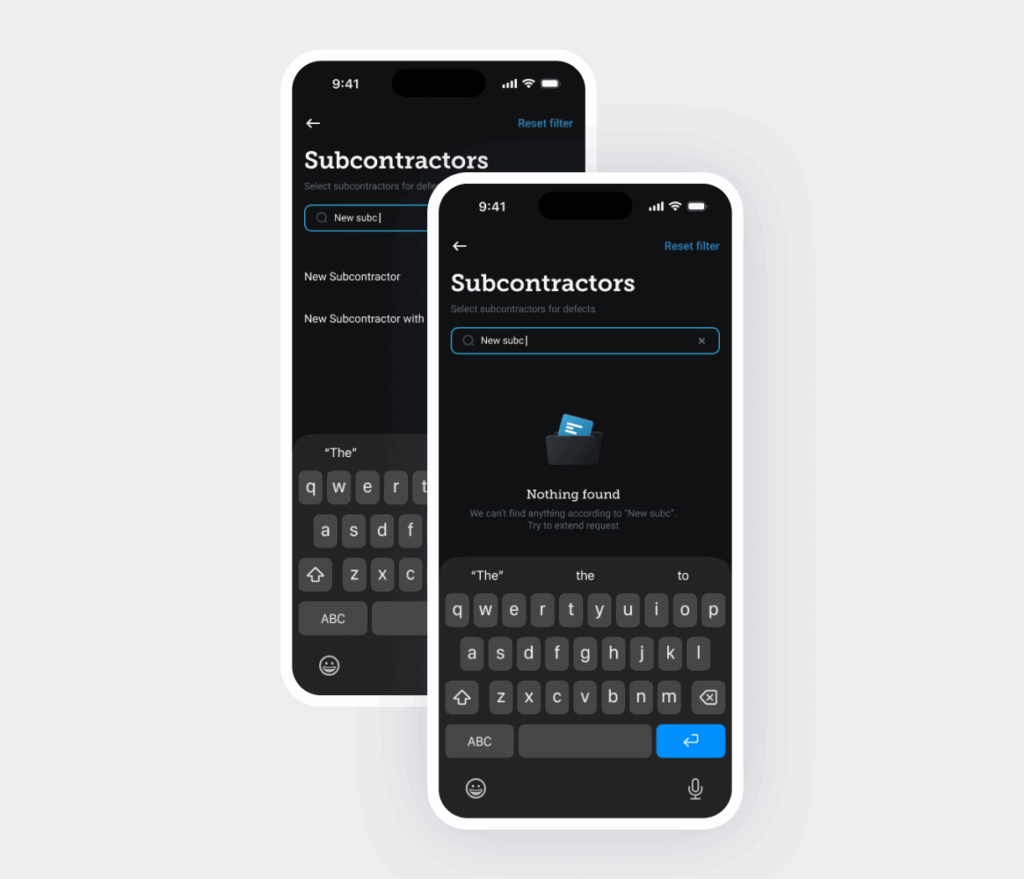
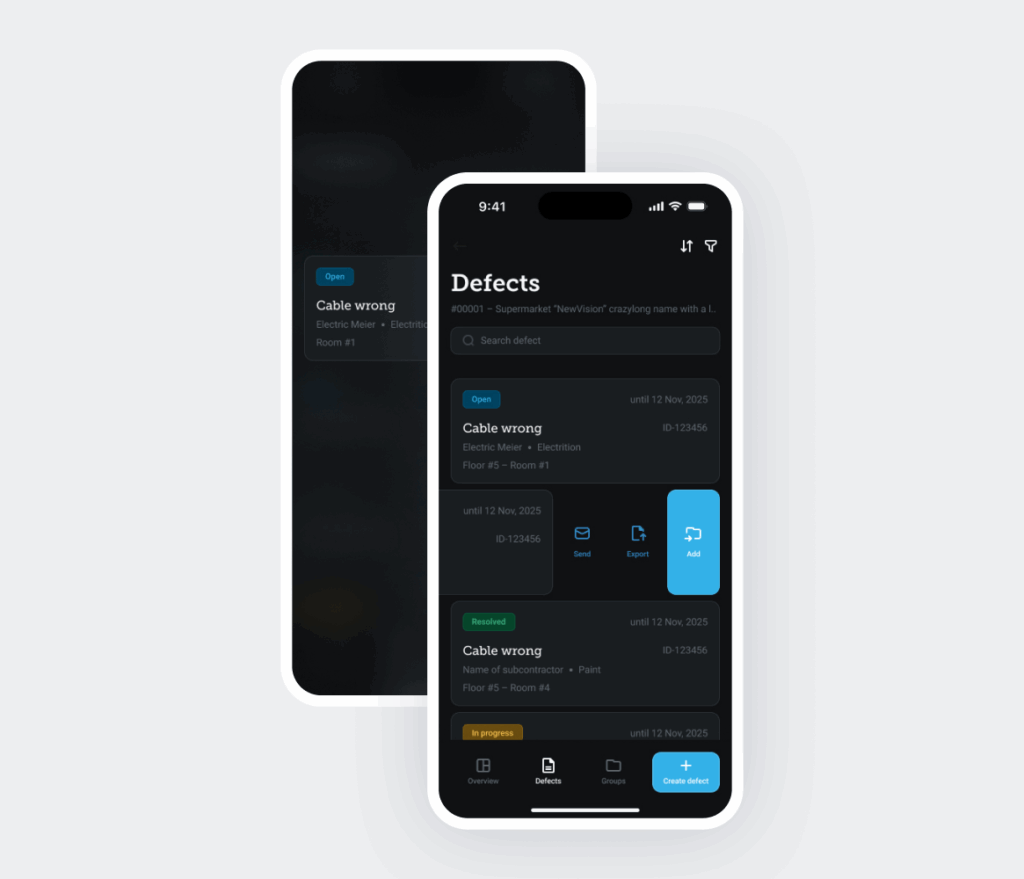
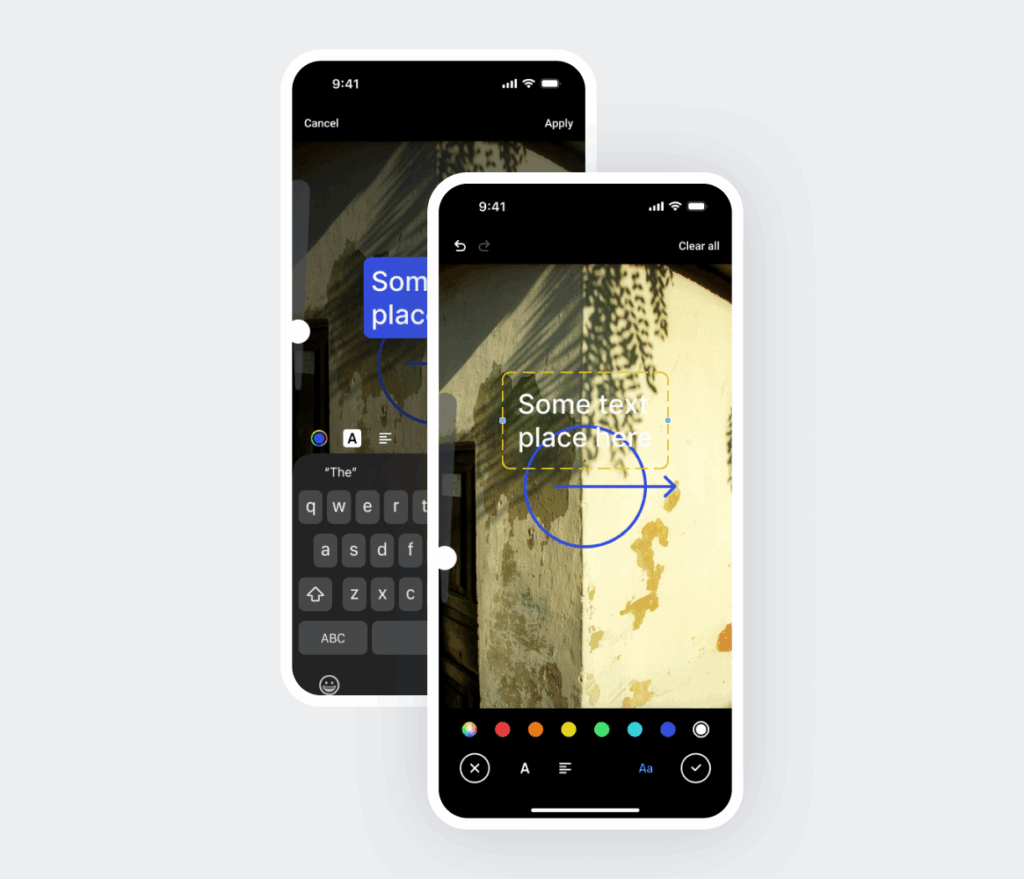
The app enables field users to securely sign in, access project lists with overview statistics, and quickly identify priority projects through favorites. Defects can be created, edited, and managed directly on site, including photos, location data with map pins, status, trade, and subcontractor information. Defects are organized into structured groups and can be exported or shared as documents, supporting clear communication between field teams and office stakeholders.
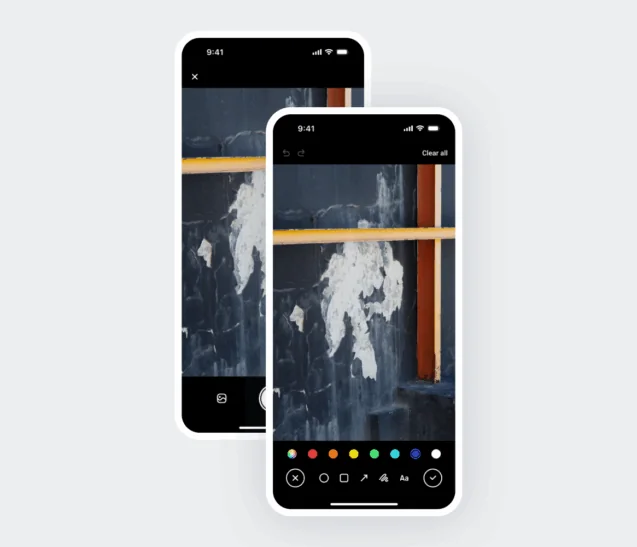
A key design principle was offline-first usability for the AI mobile app user experience. All core actions: browsing projects, managing defects and groups, adding photos, and updating favorites, work reliably without connectivity. Once a connection becomes available, the app synchronizes data automatically using a queued retry mechanism, ensuring data integrity without disrupting the user experience.
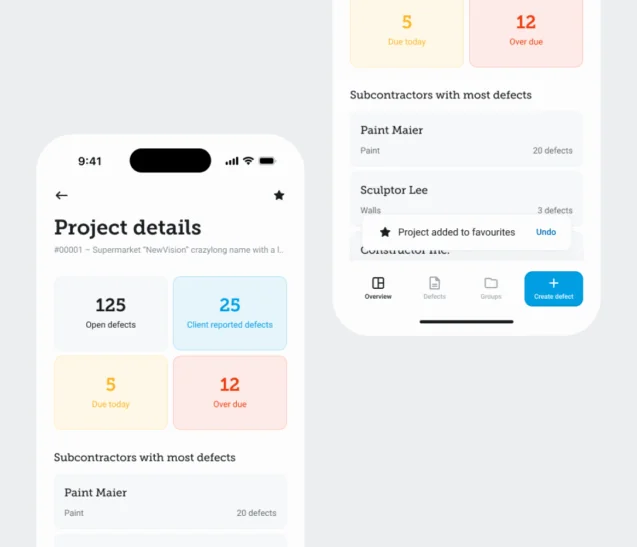
AI for UX design was used, and the UI is clean, focused, and optimized for fast interaction in demanding field environments. Cross-platform nuances between iOS and Android were carefully handled to ensure consistent behavior, while localization support (EN/DE), theming, and configurable server connections make the product adaptable to different operational contexts.
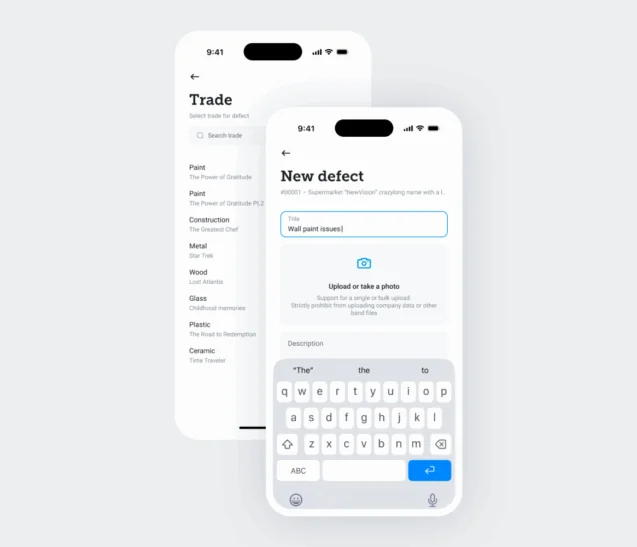
Despite being developed end-to-end by a single developer using AI-assisted workflows and predictive UX design, the final product meets enterprise-grade quality standards. The result is a stable, scalable, and user-friendly mobile experience that demonstrates how AI-driven development, guided by strong product and UX expertise, can deliver a Best-in-Class AI-Driven Customer Experience in a fraction of traditional timelines.
Business Effects for Client
These are some numbers on the business effects for our client. All of the services we’ve delivered, including UI/UX design services, usability testing, UX audit services, and AI software development services, among others, were performed by the agent and supervised by our developer.
- 16 days from concept to production-ready mobile app
- 1 developer delivering an enterprise-grade solution using AI-assisted workflows
- Offline availability: AI in mobile user experience confirmed 100% of core field workflows supported without connectivity
- Time-to-market reduced by ~5–10× compared to a traditional team-based approach
- Immediate ROI through faster defect reporting, fewer manual processes, and improved data accuracy across projects