



There are three outsourcing models: onshore, nearshore, and offshore. Onshore outsourcing involves hiring local specialists; nearshore outsourcing involves working in neighboring countries; and offshore outsourcing involves working across continents. Onshore vs nearshore vs offshore comparisons help companies choose the most suitable option. Startups use offshore software development services to reduce costs by 70% and scale talent globally.
IT outsourcing volume will reach $807.91 billion by 2025. Onshore vs nearshore vs offshore: offshore providers offer savings of 40-70%. Hire dedicated software developers in Eastern Europe at $25-55 per hour vs $150 per hour with domestic providers increases ROI.
According to Gartner, IT outsourcing refers to the practice of using external service providers to effectively deliver some or all IT functions required by a business. And although this approach has been around for ages, it has become a go-to service delivery model for driving business growth and gaining a competitive advantage in the era of digital transformation.
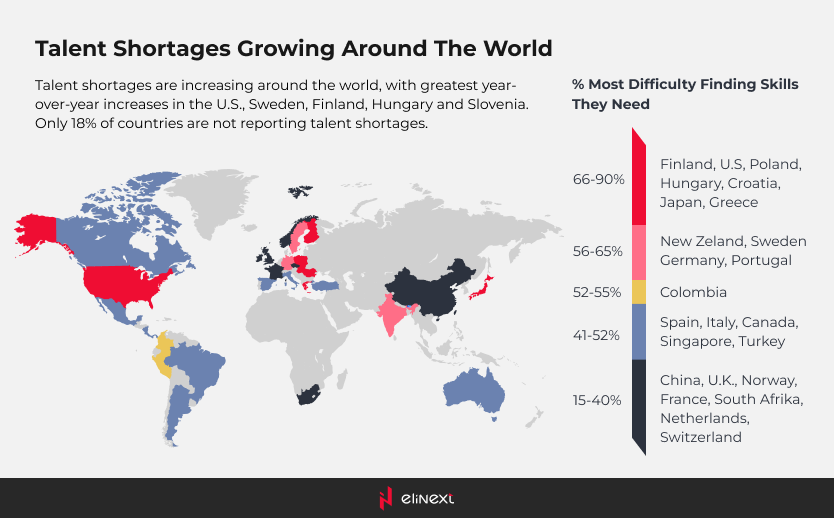
One of the reasons behind the growing IT outsourcing popularity is the increasing shortage of specialized IT skills. As global IT spendings continues to rise, so does the talent gap. In the US, there is a strong demand for cybersecurity specialists, which is currently twice as great as the supply. Europe too is facing a tech skills crisis.
Compare nearshore vs offshore now.
Try nearshore software development services and scale smarter.
Onshore vs nearshore vs offshore: How to Choose Outsourcing
With the race for tech talent in full-on mode, world-leading companies turn to external technology providers to fuel their digital information initiatives. But in order to reap the full benefits of IT outsourcing, a smart vendor strategy is needed. Keep reading to learn how to choose the right model and outsource effectively.
The many faces of IT outsourcing
IT outsourcing comes in different flavors — onshore, offshore, and nearshore. Let’s see what they are onshore vs nearshore vs offshore.
Onshore IT outsourcing
Also called domestic outsourcing, onshore refers to contracting a third-party service provider located in the same country as you for performing IT-related activities. This option is rightfully considered the most convenient as there are no language and cultural barriers, and little to no time difference.
However, onshore developers come with a high price tag, so cost benefits may be limited with this outsourcing approach.
When onshore is the right fit:
- You prioritize ease of communication and face-to-face meetings
- You prefer the convenience of the local industry network
- You are not intimidated by hefty hourly rates
- For those who look for high-quality services on a budget, there are other options.
Offshore IT outsourcing
With offshore outsourcing, a development team is located in another country. Access to high-skilled talent pools, mature value delivery models, and — most importantly — lower development costs make offshoring an appealing option.
But the best deals on price come with certain risks. With a language barrier, a different cultural code, and another time zone, it may be challenging to ensure efficient communication with the team and keep the project on track.
When offshore is the right fit:
- You are looking to tap into the global pool of IT specialists
- You need to have round-the-clock operations that a team in a different time zone can provide
- You are a startup or SME with budget limitations
- The next option is a trade-off between onshore and offshore outsourcing.
Nearshore IT outsourcing
Nearshore outsourcing is considered a compromise as it refers to hiring a third-party vendor from a neighboring or close-by country. This model ticks a number of boxes — competitive rates, cultural alignment, ease of access, and almost-identical time zone.
When nearshore is the right fit:
- You need a close dedicated development team available during your scheduled working hours
- Your project requires regular on-site visits and tight collaboration
- You are looking for the best price and quality balance
Companies often have to choose between nearshore vs onshore models; hidden costs, time differences, and a shortage of qualified personnel derail projects. Elinext software development outsourcing services help clients choose the optimal model: dedicated teams from Eastern Europe provide quality comparable to local outsourcing at offshore prices, resulting in cost savings of 40-60% across more than 1,000 projects.
Elinext Senior Delivery Manager
Conclusion
The choice between nearshore vs offshore outsourcing determines the cost, speed, and quality of your project. The global IT outsourcing market will reach US$807.91 billion in 2025, growing at a CAGR of 8.6%. Near-field partnerships grew by 18% in 2025. According to Statista, IT staff augmentation services help businesses scale quickly 66% of US companies already outsource IT services. Align your model with your goals and lead the way.
Onshore, Nearshore and Offshore: Terms Explained
-
Outsourcing
Outsourcing means delegating tasks to external providers. In nearshore vs onshore decisions, it helps companies access global talent, reduce costs, and focus on core business functions and innovation.
-
Cost Efficiency
Cost efficiency means achieving maximum productivity at minimum cost. In the context of outsourcing, this means reducing developer rates from $150 per hour domestically to $25-55 per hour overseas while maintaining high quality and fast delivery.
-
Time Zone Advantage
Time zone advantage refers to the alignment of working hours for real-time collaboration. In nearshore vs onshore comparison, teams in Eastern Europe have 4-8 hours of overlap with US clients, which accelerates Agile cycles.
-
Cultural Compatibility
Cultural compatibility refers to shared work ethics and communication styles between the client and supplier. High compatibility reduces the likelihood of misunderstandings, aligns expectations, and builds trust for the long-term success of outsourcing.
-
Talent Pool Access
Access to a talent pool means access to qualified specialists outside of local markets. Outsourcing opens access to over 700,000 Eastern European developers worldwide, helping companies cost-effectively fill niche gaps in AI, cloud, and fintech.
-
Regulatory Compliance
Compliance means adhering to legal and data protection standards. In nearshore vs offshore decisions, nearshore vendors align with EU GDPR rules, reducing compliance risks for businesses handling sensitive data.
-
Scalability
Scalability means the flexibility to adjust your team size as your project’s needs evolve. When comparing nearshore vs offshore, offshore offers the widest selection of talent for rapid scaling, while the latter maintains high quality during the growth phase.
FAQ
What is onshore, nearshore, and offshore outsourcing?
Onshore vs nearshore vs offshore are outsourcing models by location. Used to balance cost and talent: offshore for savings, onshore for full control.
What factors should I consider when choosing a model?
Key factors include cost, time zones, cultural fit, and compliance. Nearshore vs onshore decisions hinge on budget and real-time collaboration requirements.
Which model is best for IT and software development?
Both nearshore vs offshore outsourcing are well suited for IT. Nearshore outsourcing is suitable for Agile projects; offshore outsourcing is suitable for large, budget-sensitive software development projects that require a wide range of global talent.
How do I decide which model fits my business?
Start by assessing your budget, complexity, and collaboration needs. The choice between nearshore vs onshore outsourcing depends on the depth of real-time collaboration and the desired cost savings.
