



In 2025, the logistics and transportation industry is witnessing significant technological advancements, especially in logistics and transport software development services. Transportation service providers are increasingly investing in their own logistics CRM to improve operational efficiency, enhance customer relationships, and streamline communications.
Reasons for this shift include:
- Data management: Centralized data allows for better tracking of deliveries and customer interactions.
- Customization: Tailored solutions meet specific business needs, increasing agility.
- Improved customer service: Advanced CRM features provide proactive customer support and personalized experiences.
- Cost efficiency: Streamlined processes reduce overhead costs and increase profitability.
As competition intensifies, having a dedicated logistics CRM is essential to maintaining a competitive advantage.
Industry Requirements for Logistics CRM Software
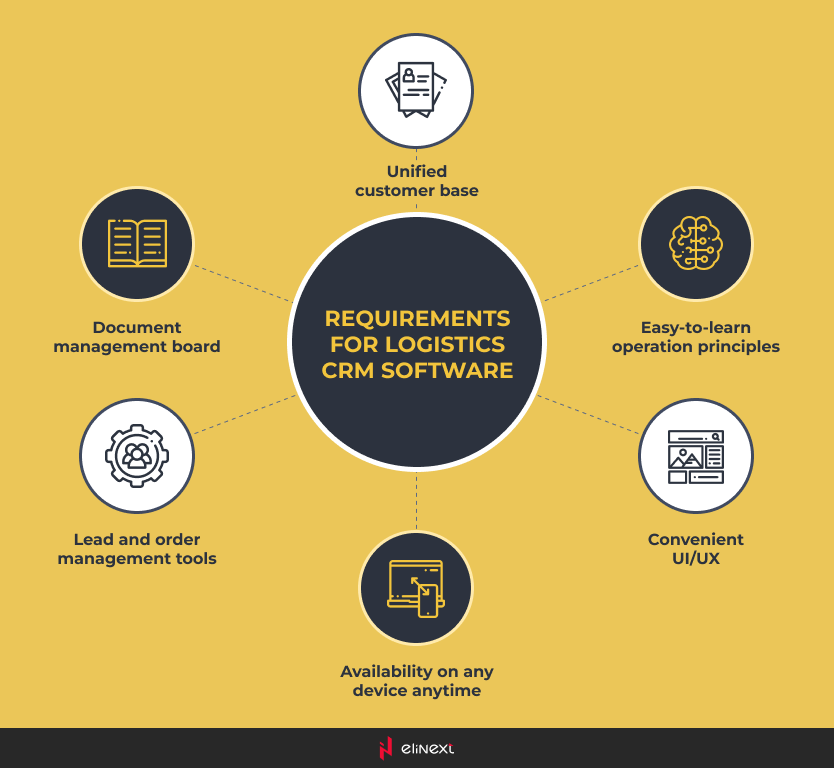
In the logistics sector, CRM software for logistics must meet certain industry requirements:
- Real-time tracking: Allows you to track shipments and updates in real time.
- Integration capabilities: Easily integrates with existing systems such as ERP and TMS.
- Data analytics: Provides insights through robust reporting and analytics tools.
- Scalability: Adapts to growing business needs and user requirements.
- User-friendly interface: Provides ease of use for staff at all levels.
Key Benefits of CRM Software for Logistics
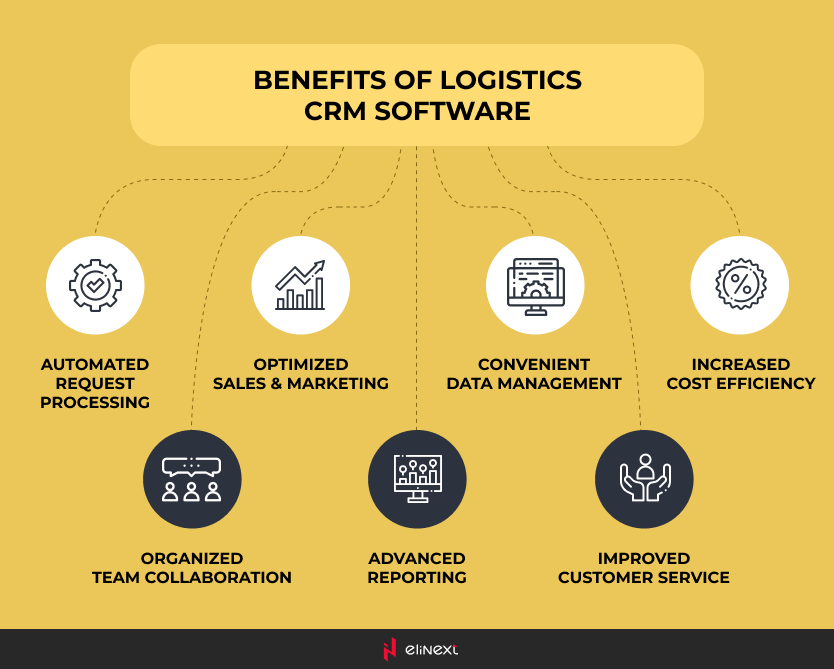
Implementing CRM in logistics with specialized logistics CRM software offers several benefits:
- Improved customer relationships: Build stronger connections with personalized communications and timely updates.
- Increased efficiency: Streamline operations by automating routine tasks and workflows.
- Better data management: Centralize customer and shipment data for easier access and analysis.
- Informed decision making: Use analytics to make strategic decisions and optimize performance.
- Increased customer retention: Build loyalty by meeting customer needs quickly and efficiently.
The Reasons for Implementation of CRM in Logistics
Implementing logistics CRM software offers numerous benefits for logistics companies. It improves customer relationships by maintaining detailed records of interactions, facilitating personalized communications. The software streamlines operations, integrates various functions, and automates routine tasks, increasing productivity. Additionally, it provides real-time tracking, valuable customer insights, and scalability, allowing companies to adapt and grow effectively while improving overall efficiency and service quality.
Reason 1: Improving Productivity with CRM in Logistics
Well-developed and thought out logistics CRM always helps pre-define some general workflows for every department and automate administrative tasks. Using it, your staff members will spend less time on filling forms, making quotes & proposals, creating reports, running calculations and will thereby raise their productivity.
Reason 2: Systematic way to track business activity with Logistics CRM
A systematic way to track business activity with Logistics CRM involves organizing data for easy access and analysis. For example, a logistics company might use CRM to record all customer interactions, shipment statuses, and inventory levels. This organized approach allows managers to create reports, identify trends, and effectively optimize operations.
Reason 3: One Source for All the Necessary Data with CRM for Logistics
A CRM system allows you to have access to constantly updated information for decision-making and communication between staff members and departments with different office locations. It’s an opportunity to build intelligent customized interfaces with all contacts along business lines available by CEOs, CFOs, CIOs, and line managers.
Reason 4: Measurability of marketing and sales activity with Logistics CRM
CRM services can help transportation and logistics businesses capture better understanding of customer needs and behavior. This will give a possibility to manage effectively time, business resources and efforts which then benefits clients and overall business.
Reason 5: Individual customer service due to logistics CRM software
Industry-based CRM platform gives a clear road map for effective communication with partners or clients and provides access to industry best practices. Knowing your customers’ needs you can identify major clients increasing their loyalty and mitigate the possibility of relationship with irresponsible customers.
Reason 6: Automated information updating due to CRM software for logistics
CRM software helps benefit business profitability focusing on timely updating customer information and fast order processing. It also allows to organize efficient shipping of FCL/LCL freight and delivery of dangerous/perishable goods. Automated information updating through CRM software for logistics enhances accuracy and saves time in data management.
Reason 7: Ensuring Security of Supply due to Logistic CRM
With global operations and different regulatory systems in each country, it is usually difficult to offer on-time delivery and 100% security of goods. A customized CRM system can integrate with electronic databases such as Transit MRN to provide information on the current status and location of the shipment.
What are the Future Trends in Logistics
The future of CRM in logistics is rapidly evolving, driven by technology and market demands. Key trends include:
- AI and automation: CRM systems will increasingly use AI for predictive analytics, improving demand forecasting. For example, AI-powered CRM can suggest optimal routes based on historical data.
- Blockchain integration: Increases transaction transparency and security. Logistics companies can track shipments in real-time, building customer trust.
- Mobile CRM solutions: Provides real-time access for logistics teams, ensuring updates and communication in real-time.
- Focus on sustainability: CRMs will include features to track carbon footprints, aligning with green initiatives.
These trends will transform logistics operations, improving efficiency and customer satisfaction.
Conclusion
In conclusion, transportation service providers are increasingly looking for their own logistics CRM to improve operational efficiency and customer satisfaction. Using GIS software development services, they can integrate geographic data for optimized route planning and real-time tracking.
This customized approach allows for better resource management, improved communication, and data-driven decision making. Ultimately, having a dedicated logistics CRM allows transportation service providers to remain competitive and responsive to customer needs in a dynamic marketplace.
FAQ
Why do transport providers need a specialized CRM instead of a general one?
Transportation service providers need a specialized CRM to handle unique industry challenges such as supply chain management, inventory tracking, and route optimization. General CRMs lack the specialized features needed for logistics operations.
How does a logistics CRM improve customer satisfaction?
A logistics CRM improves customer satisfaction by providing timely updates on shipment statuses, personalized communications, and effective problem resolution. This transparency builds trust and improves the overall customer experience.
Can a logistics CRM help reduce operational costs?
Yes, a logistics CRM can help reduce operational costs by automating routine tasks, streamlining resource allocation, and streamlining processes. Increased efficiency translates into lower overhead costs and increased profitability for transportation service providers.
Is it difficult to implement a logistics CRM?
Implementing a logistics CRM can vary in complexity depending on the software and existing systems of the provider. However, with the right planning, training, and support, the transition can be smooth and profitable in the long run.
