











































































































































Imagine you sign off on a new clinical AI initiative, only to watch your data engineering team hit a wall when three out of five upstream systems fail to deliver expected FHIR endpoints. What looked like a standard API ingestion task on paper quickly devolves into an expensive legacy ETL rescue mission. The reality of healthcare data engineering is that model selection or parameter tuning rarely dictates your production launch date. Your infrastructure’s baseline FHIR readiness healthcare systems maturity do. Misjudging how deeply an endpoint adheres to modern standards can instantly add quarters to an integration timeline.
This guide provides a comprehensive healthcare integration map classifying core healthcare software types FHIR compatibility by their actual FHIR maturity. By consulting with specialized healthcare IT consulting services, you can scope integration bottlenecks before committing engineering resources.
- Telemetry and bedside monitoring systems stream high-density vitals via MQTT, Apache Kafka, or legacy HL7 v2 MDM packets.
- Psychiatric and long-term care platforms frequently fall outside the core regulatory mandates that drove acute-care EHR compliance, resulting in low FHIR maturity.
- Inpatient and outpatient dispensing applications are structurally architected around transactional NCPDP SCRIPT standards rather than HL7.
- Surgical management platforms and enterprise scheduling tools typically isolate data behind proprietary SQL views or legacy ANSI X12 transaction sets (such as the 270/271 or 837).
- Clinical speech-to-text and automated scribing platforms emit their primary outputs as unstructured narrative blocks or vendor-specific JSON objects.
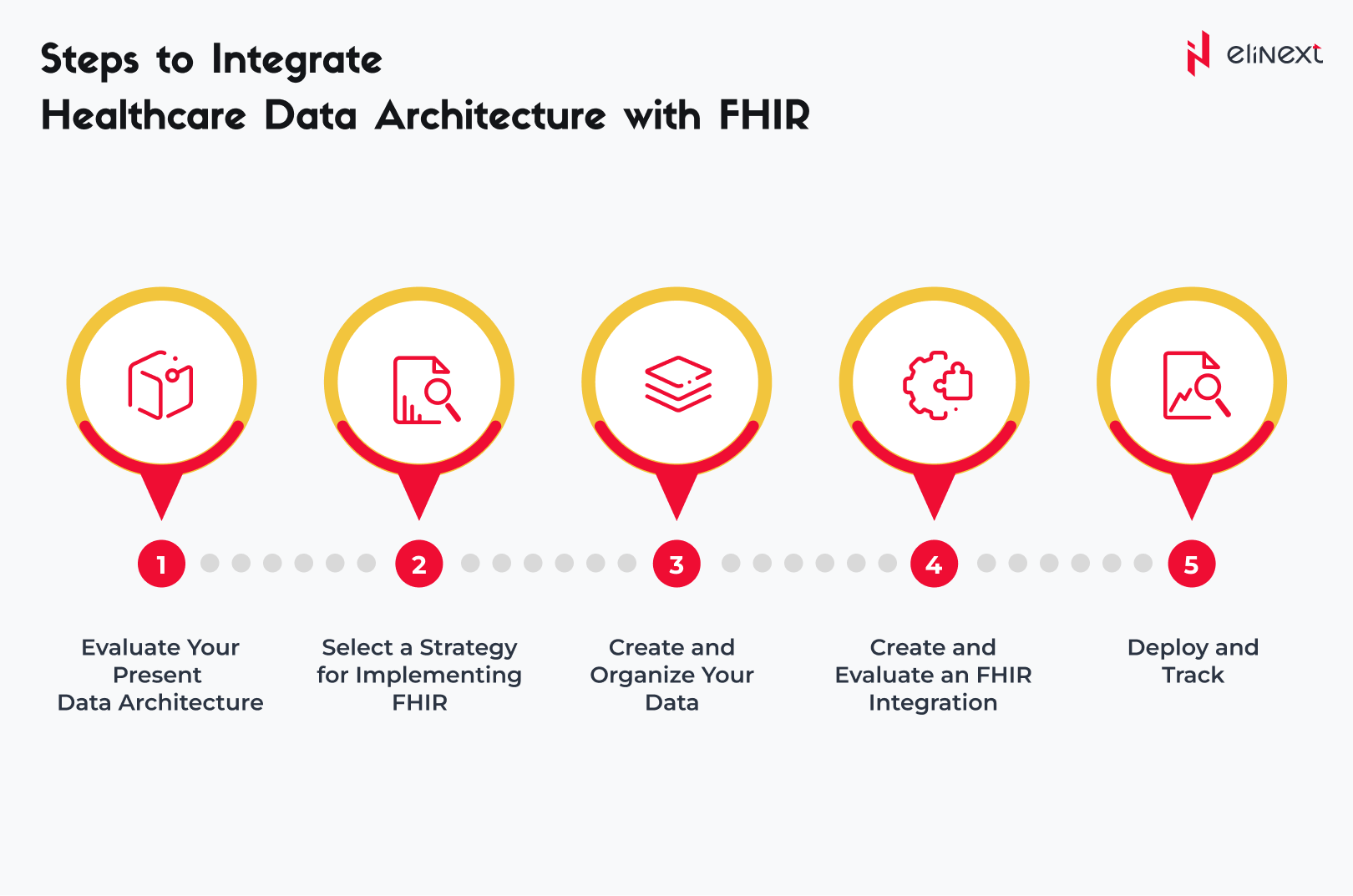
FHIR Readiness Map: Types of Healthcare Software and Their Integration Complexity
Navigating the heterogeneous IT landscape requires understanding the 5 different types of software used in healthcare industry networks. Instead of treating every endpoint as a standard REST interface, enterprise architects must look at healthcare software types FHIR capabilities. So that systems can be categorized by their native compatibility with modern health data standards and safeguard AI execution timelines.
- Level 1. Native FHIR Core – Employs FHIR R4/R5 as the internal storage schema. Features built-in support for SMART on FHIR and CDS Hooks without requiring translation middleware.
- Level 2. Certified FHIR API Layer – Exposes an ONC-certified FHIR R4 API endpoint over a legacy core. This baseline facilitates HL7 FHIR healthcare interoperability, though bulk extraction (export) typically requires separate configuration.
- Level 3. Fragmented FHIR Facade – Provides limited FHIR resources over a dominant legacy backend (often HL7 v2). Lacks bulk data endpoints and necessitates intermediate transformation components.
- Level 4. Legacy Messaging Primary – Reverts to HL7 v2 or NCPDP protocols natively. Demands a dedicated integration engine to execute custom message-to-resource mapping, which requires a 3- to 6-week engineering sprint.
- Level 5. Non-FHIR Domain Architectures – Operate on dedicated vertical standards like binary DICOM or proprietary vendor databases. Requires an entirely isolated ingestion-and-extraction pipeline, decoupled from your FHIR ecosystem.
| Healthcare System Type | Core Vendors | FHIR Tier | Base Protocols | Targeted Resources | AI Engineering Strategy |
| EHR / EMR | Epic Systems, Oracle Health, Athenahealth, Meditech | Level 2 – Certified FHIR API Gateway | FHIR R4 + SMART on FHIR OAuth | Patient, Condition, Observation, MedicationRequest, Encounter, DocumentReference | Provision ONC-certified production endpoints. Leverage Bulk FHIR (export) pipelines for offline training cohorts. Normalize vendor-specific schema extensions against USCDI v3 baselines. |
| Patient Portal / PHR | MyChart, FollowMyHealth, Apple HealthKit | Level 2 – Certified Consumer API | SMART on FHIR R4 | Patient, Observation, MedicationRequest | Utilize public-facing API requirements enforced under ONC Cures Act §170.315(g)(10). Integrate via explicit user-facing SMART apps or OAuth-backed client credentials. |
| Modern CDS Systems | Wolters Kluwer, custom algorithmic rule engines | Level 1 – Native FHIR | CDS Hooks + FHIR R4 payloads | Bundle, CarePlan, ServiceRequest | Serves as the prime insertion point for real-time inference. Architect your AI model directly as a remote CDS Hook service provider to bypass custom ingestion middleware. |
| HIE / HIN (TEFCA QHIN) | CommonWell Health Alliance, Carequality, eHealth Exchange | Level 2-3 – Hybrid Exchange | FHIR R4, legacy HL7 v2, and C-CDA XML | Patient, DocumentReference, Bundle | Pull native FHIR feeds from modern nodes, but implement an automated C-CDA document parser for legacy cross-enterprise exchange members. Designed for aggregating massive multi-institutional training data. |
| RPM / Wearables (Enterprise) | Apple HealthKit, Google Health, Philips, Masimo | Level 2-3 – Vendor Facade | FHIR R4 profiles (Apple/Google) or proprietary vendor REST endpoints | Observation, Device, DeviceMetric | Rely on native R4 schemas for consumer aggregates (Apple/Google). For other hardware vendors, implement a FHIR Observation adapter layer. Construct scalable streaming pipelines for raw sensor feeds. |
| Payer / Insurance Platforms | Availity, Optum, Blue Cross Blue Shield, CMS Blue Button | Level 3 – Regulated Payer APIs | FHIR R4 (Da Vinci Implementation Guides) | ExplanationOfBenefit, Coverage, Claim | Extract data utilizing Da Vinci PDEX profiles. Compliance rules like CMS-0057-F accelerate this layer’s adoption. Target these payloads for automated prior authorization models and utilization management engines. |
| RIS (Radiology Info Systems) | Fujifilm Synapse, Intelerad, Sectra | Level 3-4 – Legacy Workflow Primary | HL7 v2.7 (ORM/ORU message types) + basic FHIR R4 endpoints | ImagingStudy, ServiceRequest, DiagnosticReport | Construct structural mappings from HL7 v2 triggers to FHIR ImagingStudy resources. Route raw image pixels over an independent DICOMweb tunnel. Factor in a 3-to-4-week middleware engineering track. |
| LIS (Laboratory Info Systems) | Sunquest, Mediware, Epic Beaker | Level 4 – Transactional Legacy Primary | HL7 v2 (ORU^R01 observations, ORM^O01 orders) | DiagnosticReport, Observation | Deploy a protocol engine (e.g., Mirth Connect, Azure Health Data Services) to map incoming HL7 v2 streams into structured FHIR entities. Plan for a 4-to-6-week pipeline engineering effort. |
| PACS | GE Centricity, Sectra, Philips IntelliSpace, Hyland | Level 5 – Specialized Image Stores | Native DICOM, DICOMweb | ImagingStudy (contains metadata pointer only) | Treat the FHIR registry as a metadata directory only. Your computer vision or deep learning imaging engine requires an entirely isolated DICOMweb (WADO-RS) data pipeline completely uncoupled from your FHIR stack. |
| Pharmacy / PMS | QS/1, Rx30, PioneerRx, acute care hospital pharmacy software | Level 4 – Transactional Prescription Protocols | NCPDP SCRIPT standards + legacy HL7 v2 | MedicationRequest, MedicationDispense, MedicationAdministration | Engineering teams must provision an NCPDP-to-FHIR parsing engine. Base the model on standard FHIR R4 medication structures. Budget 3 to 5 weeks for custom message mapping. |
| Consumer IoT / Wearables | Fitbit, Garmin, Withings, Samsung Health | Level 3-4 – Isolated Vendor Clouds | Proprietary vendor REST APIs | Observation (synthesized from raw JSON) | Establish a dedicated cloud IoT messaging hub (such as AWS IoT Core or Azure IoT Hub) as an intermediary ingestion environment. Run downstream transformations to fit these telemetry metrics into a FHIR Observation architecture. |
| Healthcare Data Warehouse | Health Catalyst, Arcadia, Snowflake Health, AWS HealthLake | Level 2-3 – Analytics Aggregators | FHIR Bulk Data API (export returning NDJSON) | Global clinical and operational resources via bulk export | Trigger Group/export for stratified patient cohorts or System/export for universal server backfills. Directly connect the extracted NDJSON text streams into your ML training pipeline. |
We build production-ready pipelines to keep your deployment on track.

Why Your Healthcare AI Project Timeline Depends on FHIR Readiness
Your system’s FHIR maturity dictates your engineering timeline. Achieving true healthcare interoperability requires mapping these levels carefully. Level 1-2 endpoints introduce zero delays, but a Level 3 facade adds 2-3 weeks of interface tuning. Level 4 legacy infrastructure requires 4-6 weeks for custom translation, while Level 5 PACS demands a separate imaging track.
This readiness drives machine learning velocity by determining data volume access (Bulk vs. transactional), simplifying schema normalization into ML features, and establishing stable inference feeds.
Because FHIR isn’t universal, you must still support DICOM for pixel data and HL7 v2 for legacy LIS/RIS workflows. A realistic roadmap balances these levels with fallback protocols, as a rule.
Native FHIR and ONC-Certified APIs – Ready for Direct AI Integration
Systems at Levels 1 and 2 offer the fastest path for clinical AI integrations. Because these endpoints natively expose standardized FHIR R4, you can completely bypass custom translation middleware and dive straight into your pipeline development with the help of healthcare software development services.
-
EHR / EMR: ONC-Certified FHIR R4
Under the ONC Cures Act FHIR API guidelines (§170.315(g)(10)), vendors like Athenahealth and Oracle Health expose USCDI v3 via FHIR R4. Partnering with an experienced EHR software development company ensures smooth FHIR R4 EHR integration, though Bulk FHIR export requires a separate backend service registration on platforms like Epic, adding a 1-2 week configuration buffer before data engineering begins.
-
Patient Portal / PHR: SMART on FHIR
Portals like MyChart and Apple HealthKit leverage SMART on FHIR healthcare configurations to expose core Patient, Observation, and Medication Request resources. While Apple natively exports wearable metrics, consumer-entered data often lacks structured consistency, requiring an extra data validation layer in your pipeline.
-
Modern CDS Systems: CDS Hooks
For real-time inference, deploy your model via CDS Hooks AI integration. Triggered by clinical events, the EHR sends an FHIR R4 prefetch Bundle directly to your service. The AI responds instantly with decision-support Cards, providing a native pipeline without custom integration adapters.
Partial FHIR Support – Plan a 2–4 Week Middleware Sprint Before Your AI Project
Level 3 environments present a mixed-protocol landscape where FHIR coexists with legacy payloads. To prevent data ingestion bottlenecks, you must plan a targeted two-to-four-week middleware sprint to patch resource gaps before launching a complex types of healthcare software AI integration project.
-
HIE / HIN: Best Multi-EHR Aggregation
While modern QHINs support FHIR R4, legacy network nodes still exchange older HL7 v2 C-CDA files. This mixed pool offers unmatched longitudinal data, but forces you to run a custom C-CDA parser alongside your FHIR query path to extract text features from DocumentReference.content.
-
RPM / Wearables (Enterprise): FHIR Varies by Vendor
High-frequency sensor data like 1Hz vitals from Philips or Masimo will choke transactional APIs. When collaborating with a telemedicine app development company, build a Kafka streaming pipeline that uses the FHIR Observation schema as its internal data model. Request vendor sandboxes early to determine if a custom FHIR facade is necessary.
-
Payer / Insurance: Da Vinci Accelerating, CMS-0057-F Mandating
Medicare’s Blue Button API provides clean FHIR claims data, but commercial carrier maturity varies. Seamless Da Vinci FHIR payer integration accelerates PDEX adoption ahead of the January 1, 2027, deadline; expect per-payer testing for automated prior authorization models and utilization management engines.
Level 4–5: Legacy and Non-FHIR Systems – The Integration Work Your AI Project Cannot Skip
Levels 4 and 5 bring you face-to-face with heavy legacy infrastructure. If your AI model requires laboratory panels, operational workflows, or diagnostic pixels, these domain-specific platforms represent the critical pipelines your engineering team cannot afford to skip when managing 5 different types of software used in healthcare industry setups.
-
LIS: HL7 v2 ORU Messages
Legacy lab platforms like Sunquest or Epic Beaker rely on traditional HL7 v2 communication channels. Incorporating a dedicated LIS FHIR adapter helps map raw ORU^R01 segments into standard FHIR DiagnosticReport and Observation structures, a process that requires complex LOINC normalization and reference-range standardization. Budget four to six weeks for an engine like Mirth Connect to process these panels securely.
-
RIS: HL7 v2 Plus Partial FHIR
Predictive turnaround time models require operational history, and radiologist reads from systems like Fujifilm Synapse or Sectra RIS. Because a FHIR ImagingStudy provides only lightweight metadata pointers, expect a three- to four-week middleware sprint to extract unstructured narrative text from legacy HL7 v2 ORM and ORU messages.
-
PACS: DICOM Native
For computer vision models, a FHIR ImagingStudy is just a metadata pointer; pixel arrays never touch the FHIR stack. This isn’t an infrastructure gap – DICOM is the correct standard for medical imaging data. Deploying a custom PACS FHIR integration ensures proper metadata tracking, but if you are developing specialized medical software, partnering with medical device software development services can help build a separate DICOMweb WADO-RS pipeline to ingest arrays from platforms such as GE Centricity or Philips IntelliSpace, with a deployment budget of four to eight weeks.
How to Sequence Your Healthcare AI Integrations: A Practical Starting Point
Successfully executing a healthcare AI project means tackling data integration in pragmatic phases rather than attempting a risky big-bang rollout. A clear healthcare integration map and a sequenced set of endpoints allow you to extract high-value clinical features immediately. While your engineering team builds parallel tracks for legacy environments.
-
The Recommended Integration Sequence
Step 1 – EHR via FHIR R4 Bulk Data API (Weeks 1–2)
Configure your SMART backend credentials to authorize extraction pipelines. Triggering a Group/export request via the FHIR Bulk Data API healthcare AI protocol on a patient cohort is your quickest path to structured data, while CDS Hooks can be registered simultaneously within the developer portal to handle future real-time inference needs.
Step 2 – HIE/QHIN for Multi-EHR Coverage (Weeks 3–4)
Tap into TEFCA QHIN nodes for cross-enterprise longitudinal history using a FHIR R4 query track. Be sure to configure an automated C-CDA fallback parser to capture unstructured historical documents from older exchange members who cannot stream native resources.
Step 3 – Middleware Sprint for LIS/RIS (Weeks 3–6, parallel)
Deploy an integration engine like Mirth Connect or Azure Health Data Services to translate incoming HL7 v2 streams into standard FHIR DiagnosticReport and Observation resources. Ensure your engineering track validates these structural mappings against live, multi-line lab panels.
Step 4 – DICOM Pipeline for Imaging AI (Parallel track)
Build a completely independent DICOMweb WADO-RS pipeline to ingest raw binary pixel arrays straight from your PACS. Avoid routing heavy image payloads through your core FHIR stack; instead, correlate them downstream using the ImagingStudy.subject identifier.
Step 5 –Payer Data via Da Vinci PDEX (Weeks 5–8)
Connect directly to payer networks using Da Vinci PDEX profiles to pull administrative claims and coverage history. Prioritize this step early in your discovery phase if your clinical model relies heavily on long-term utilization management or prior authorization data.
-
Integration Hub vs. Point-to-Point: Decision Rule
If connecting two or fewer legacy endpoints, use point-to-point Mirth Connect adapters. For three or more, deploy an integration hub like Azure Health Data Services, AWS HealthLake, or Google Cloud Healthcare API to manage HL7 v2 ingestion and a FHIR normalization layer. Never route raw HL7 v2 straight to ML pipelines without normalization.

Everyone claims they speak FHIR, but underneath it’s usually a chaotic mix of legacy HL7 v2 and incomplete APIs. At Elinext, we specialize in overcoming various types of healthcare software AI integration hurdles by spinning up automated normalization hubs and parallel DICOM tracks right away. It saves teams from getting bogged down in infrastructure, enables clean ML features in days, and protects the AI launch timeline.

Key Takeaways: FHIR Readiness Healthcare Systems for AI Projects
- Not all healthcare software types FHIR frameworks are created equal; infrastructure maturity, not model selection, dictates launch dates. High-maturity tiers cause zero delays, but legacy Level 4 systems require a 4- to 6-week translation layer.
- FHIR registries only hold metadata pointers. Any computer vision track requires building an isolated DICOMweb pipeline completely uncoupled from your core FHIR stack.
- Use Bulk FHIR (export) to pull large training cohorts instead of transactional REST APIs. Budget a 1–2-week buffer for backend app registration with enterprise EHRs.
- Use point-to-point adapters if connecting two or fewer legacy systems. For three or more, deploy an integration hub like Azure or AWS to handle data normalization.
- Stage your rollout by first extracting clean EHR bulk payloads, then expanding to HIE networks, and running complex legacy LIS/RIS data conversions in parallel.
FAQ
-
FHIR readiness is a platform’s capability to natively stream or expose structured payloads over FHIR R4/R5 APIs. High readiness lets you skip custom ETL pipelines and pull features instantly.
-
These are software endpoints graded by their interoperability maturity (Levels 1 to 5), showing if they communicate via native FHIR, intermediate facades, or legacy messaging.
-
Yes, using Group/export endpoints. You’ll need to register it as a backend service app inside their developer portal and configure credentials, which takes about 1–2 weeks.
-
No, FHIR only tracks metadata pointers and accession numbers via ImagingStudy. Raw pixel arrays stay in the DICOM domain, meaning you must build a separate DICOMweb track.
-
Teams typically deploy integration engines like Mirth Connect or Rhapsody, or leverage cloud-native tools like Azure Health Data Services and AWS HealthLake to handle the mapping.
-
It’s an asynchronous protocol (export) that streams NDJSON. AI teams need it because it extracts massive historical datasets at scale without hitting transactional API rate limits.