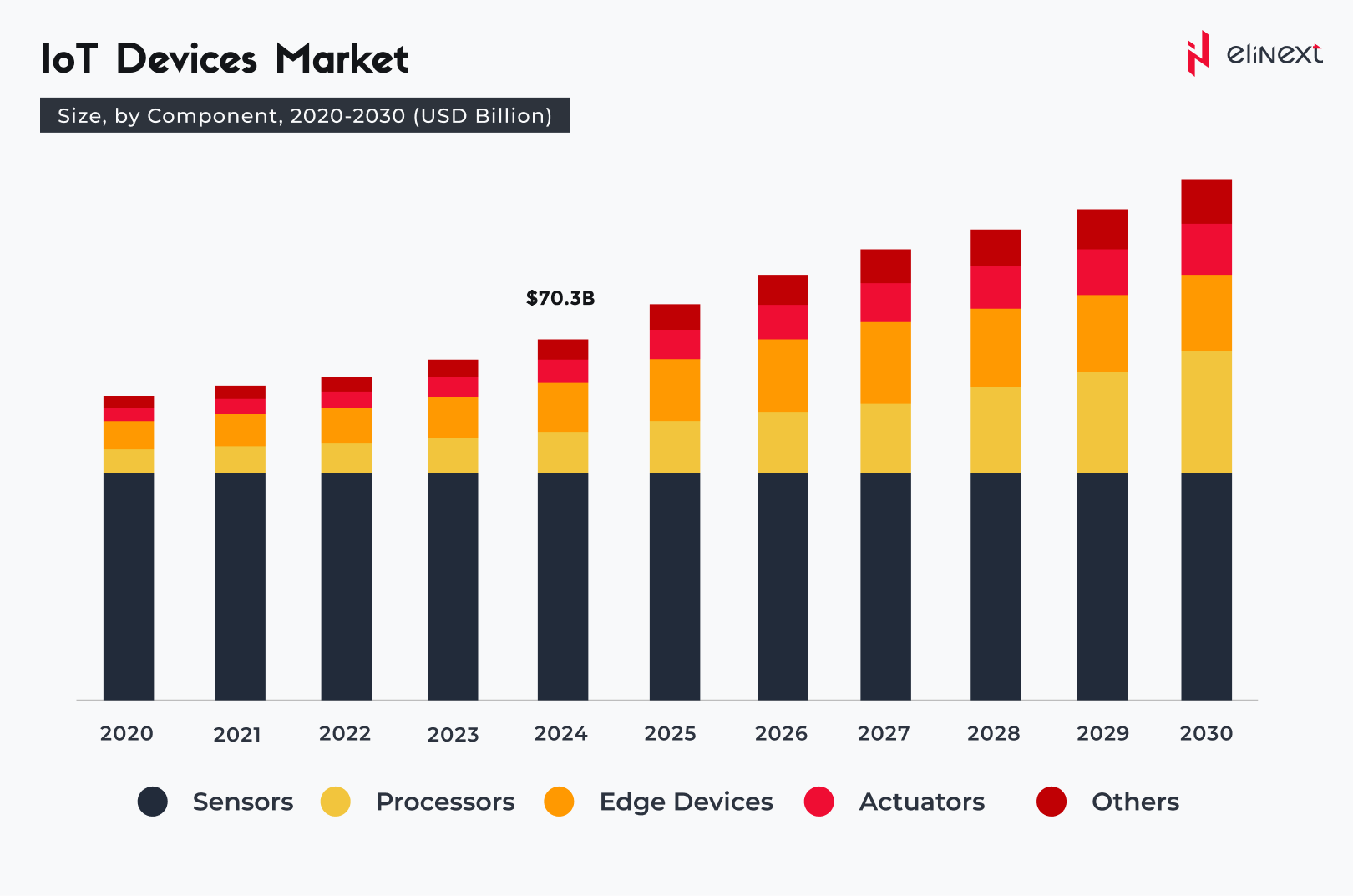
The surge of connected devices is reshaping industrial landscapes. The global IoT devices market is projected to expand from approximately USD 70 billion in 2024 to an estimated USD 181 billion by 2030. At the same time, the number of IoT connections is projected to increase to nearly 30 billion by 2030. Businesses that use IoT are already getting real-time insights that drive efficiency and innovation.
IoT devices market
Key Takeaways
75+ billion devices — Expected global IoT connections worldwide.
$2+ trillion market — Projected global economic value of IoT.
$54 billion manufacturing spend — Forecasted IoT investment in manufacturing.
Why Do IoT Solutions Matter for Different Industries?
IoT solutions help industries turn data into action. By connecting machines, assets, and systems, businesses gain real-time visibility and automate routine tasks, among other benefits. They adapt faster, operate more efficiently, and make industry decisions with greater confidence.
The IoT market is booming. Ready to build your next smart solution?
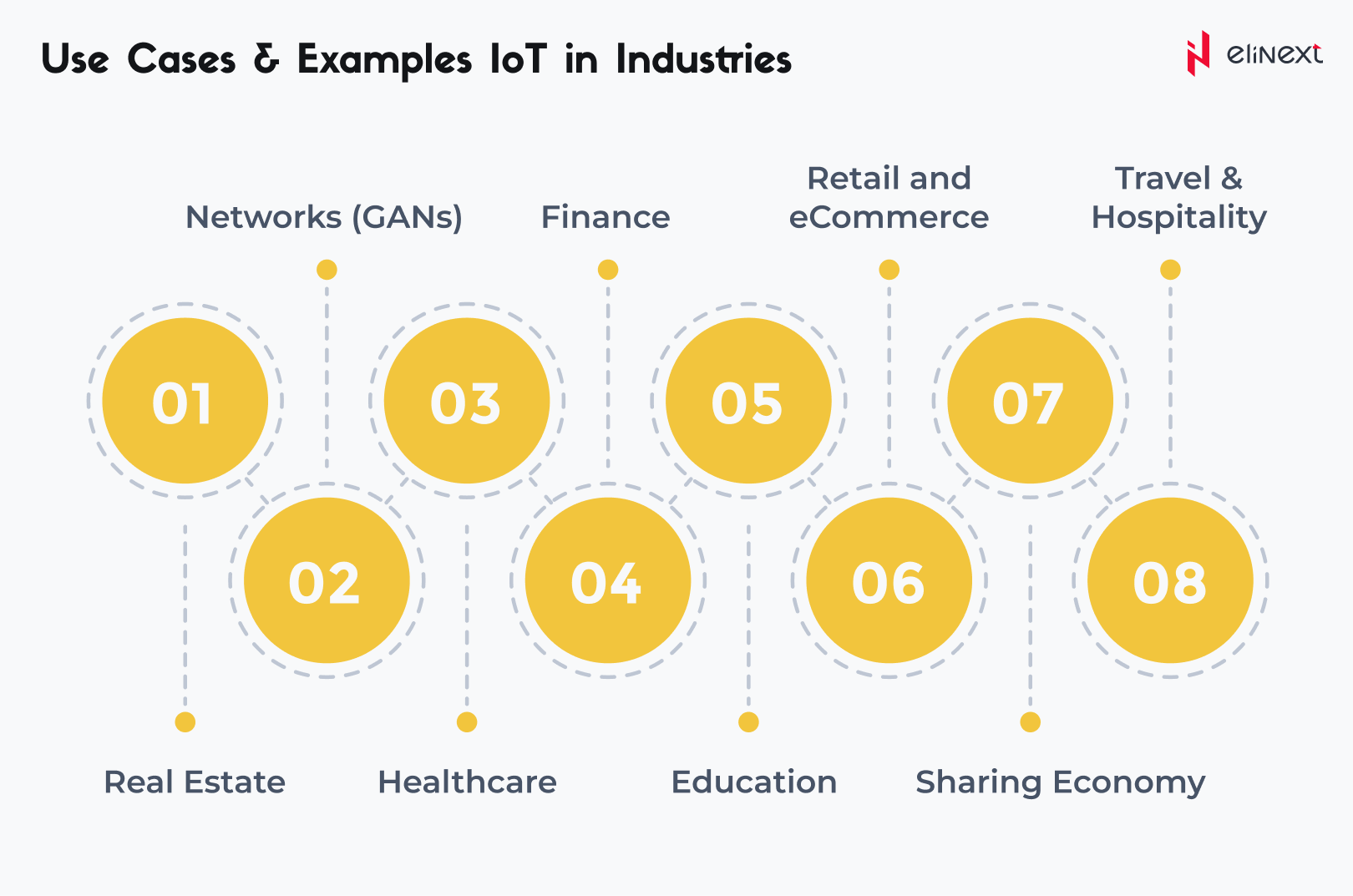
IoT for industries is transforming companies by connecting devices, automating processes, and generating actionable insights. From real estate to retail, businesses leverage smart solutions to boost efficiency, enhance experiences, and make data-driven decisions.
Real Estate
IoT enables smart buildings with automated lighting, climate control, and energy monitoring. Property managers gain real-time insights on occupancy, maintenance needs, and security, improving tenant comfort while reducing operational costs with the help of Elinext’s real estate software development services.
Manufacturing
Connected sensors and machines allow predictive maintenance, process optimization, and supply chain visibility. Manufacturers can prevent downtime, improve product quality, and streamline operations using data-driven insights.
Healthcare
Elinext provides healthcare software development services, where IoT devices monitor patient vitals, track equipment, and support telemedicine. Hospitals and clinics gain real-time data to enhance patient care, reduce errors, and optimize resource allocation efficiently.
Finance
IoT helps banks and fintech firms detect fraud, monitor ATMs, and personalize services. Connected devices provide actionable data, improving security, customer experience, and operational efficiency.
Education
Smart classrooms use IoT for interactive learning, attendance tracking, and facility management. Schools can enhance engagement, streamline operations, and create safer, more connected learning environments.
Retail & eCommerce
IoT supports inventory tracking, smart shelves, and personalized shopping experiences. With eCommerce software development services, retailers can gain real-time insights into customer behavior, optimize stock levels, and enhance both in-store and online experiences.
Travel & Hospitality
IoT enables smart rooms, luggage tracking, and personalized guest services. Hotels, airlines, and travel companies use connected devices to enhance comfort, improve operations, and deliver seamless customer experiences.
Use cases & examples IoT in industries
“The real power of IoT isn’t just connecting things — it’s the valuable data and insights those connections generate, which drive smarter business actions.” — Paul M. Liu, CEO & Co‑Founder of Advantech
Elinext IoT Development Solutions for Business
Elinext offers tailoredInternet of Things (IoT) solutions to transform businesses across industries. By combining deep technical expertise with industry-specific knowledge, Elinext designs and delivers high-performance IoT ecosystems that drive operational efficiency. Elinext’s IoT solutions are applied in sectors such as healthcare, manufacturing, logistics, automotive, and smart buildings.
Ready to boost your operations with industrial IoT services?
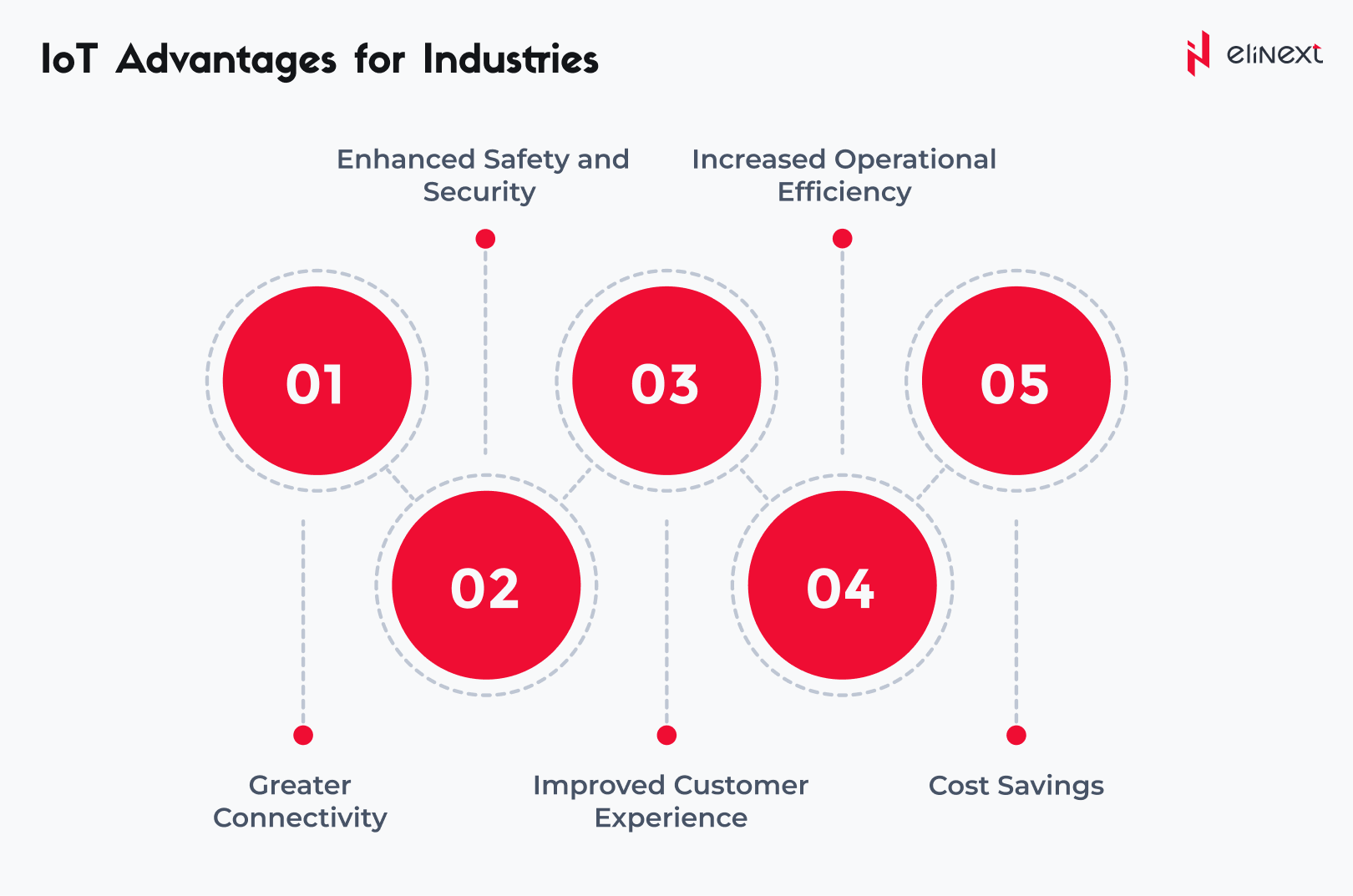
Industrial IoT services are transforming industries by linking devices, capturing critical data, and enabling smarter decision-making. Companies using these solutions can boost safety, improve operations, and create better experiences for customers across the board.
Enhanced Safety and Security
Industrial IoT services let businesses track machinery, environments, and processes instantly. By spotting hazards early and alerting teams, they help prevent accidents and protect employees, creating a safer, more secure workplace.
Improved Customer Experience
With industrial IoT services, companies gain insights into customer behavior and product usage. This data helps tailor services, respond faster to needs, and offer more personalized experiences that build better customer relationships.
Improved Operational Efficiency
IoT solutions improve operations by automating tasks, predicting equipment issues, and monitoring resources. Industrial IoT services allow organizations to cut downtime, reduce costs, and optimize workflows for better results.
IoT advantages for industries
IoT Solutions for Industries: Future Outlook
The future of industrial operations is increasingly shaped by industrial IoT services and advanced IoT solutions for industries. As connected devices and smart systems expand, businesses can expect greater efficiency. Benefits like predictive insights, automated processes, and driving innovation are just around the corner.
Conclusion
As industries embrace change, IoT in industries is shaping a smarter, more connected future. Businesses can anticipate challenges, adapt quickly, and unlock new ways to innovate. IoT solutions for industries help achieve the main goal: turn data into actionable insights that drive growth and long-term success.
FAQ
What is IoT and why is it important for industries?
IoT for industries connects devices and systems to collect real-time data, which helps companies make smarter decisions in increasingly digital industrial environments.
What are the main business benefits of IoT across industries?
IoT in industries enables predictive maintenance, workflow optimization, and better safety measures. This gives businesses the ability to act on insights and enhance efficiency across operations.
How long does it take to implement industrial IoT solutions?
Implementation depends on scale: small setups may take just weeks, while full-scale industrial IoT services deployments can take several months.
Is IoT secure for industrial use?
Security relies on best practices, including device authentication, data encryption, and network monitoring. Systems must be protected against cyber threats.
What are common IoT use cases in smart buildings and facilities?
IoT powers smart lighting, energy management, occupancy tracking, and automated maintenance, helping buildings reduce costs, improve safety, and operate more efficiently.
What role does IoT play in healthcare?
In healthcare, IoT monitors patient vitals, manages equipment, and supports telemedicine, enabling faster responses and improved care.