



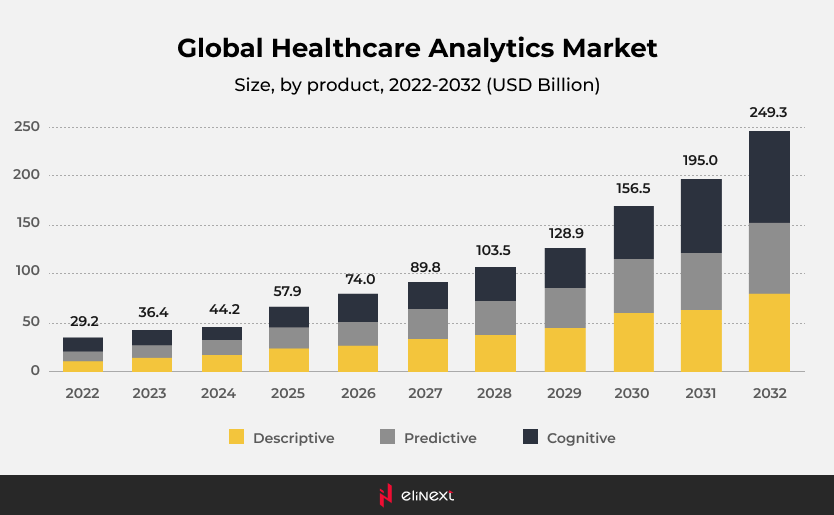
Data science is transforming healthcare by translating vast, complex data into actionable insights, encompassing everything from electronic health records and clinical trials to wearable devices and genomics. With the global healthcare analytics market predicted to grow to USD 249.3 billion by 2032 at a CAGR of 24.6%, data-driven tools of data science in healthcare are improving diagnostics, optimizing operations, personalizing treatments, and supporting predictive care models.
Why Data Science Matters in Healthcare
Data science in healthcare matters because it enables smarter, faster decision-making. Analyzing vast datasets helps predict disease, personalize treatments, reduce costs, improve patient outcomes, and drive the shift toward more efficient, data-driven care systems.
How is Data Science Transforming Healthcare Practices
Data science is revolutionizing healthcare by unlocking insights from massive datasets. It empowers innovation across diagnostics, treatment, and prevention, making healthcare more precise, proactive, and personalized. The integration of AI tools plays a huge role in that.
Genome Research
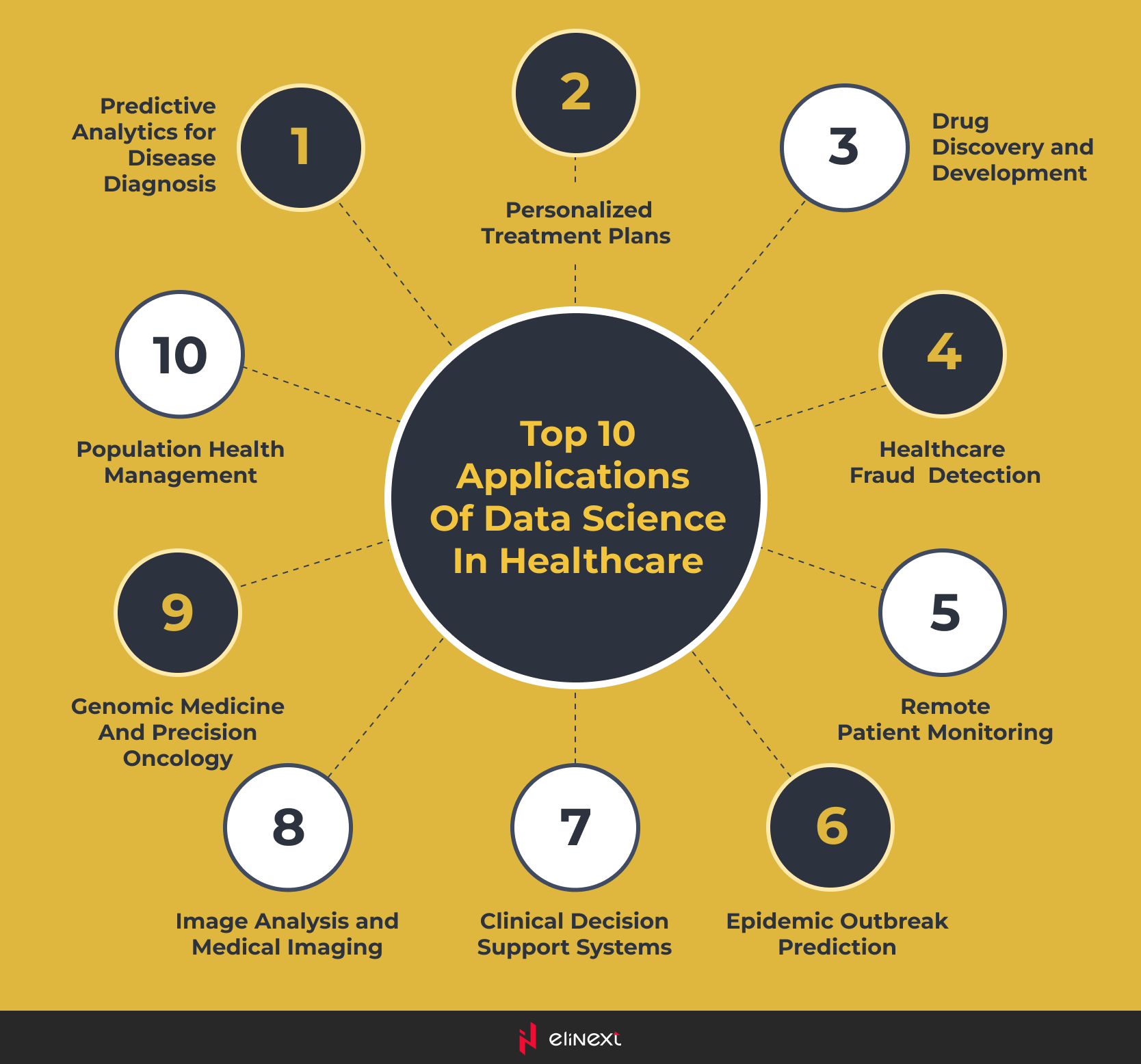
Data science accelerates genome research by analyzing vast genetic datasets to identify disease-linked mutations. This enables early diagnosis, targeted therapies, and advances in personalized medicine, changing how we understand genetic disorders.
Drug Research
By simulating molecular interactions and mining clinical data, data science in healthcare streamlines drug discovery. It reduces trial-and-error, cuts development costs, and speeds up the process of finding safe and effective medications for various conditions.
Medical Image Analysis
AI-powered image analysis uses deep learning to detect abnormalities in X-rays, MRIs, and CT scans with high accuracy. It assists radiologists in early disease detection and improves diagnosis and treatment planning.
Patients’ Health Monitoring
Wearables and IoT devices generate continuous patient data. Data science processes this in real-time to monitor vital signs, detect anomalies, and alert healthcare providers. This allows for early intervention and improved chronic disease management.
Smart Virtual Assistants
AI-driven virtual assistants help manage appointments, provide medication reminders, and answer health queries. They improve patient engagement, reduce administrative burden, and support continuous, accessible care outside clinical settings.
Predictive Modeling and Analytics
Predictive analytics uses historical and real-time data to forecast disease risk, hospital readmissions, and patient outcomes. It helps healthcare providers take preemptive actions, optimize resources, and deliver proactive patient care.
Personalization of Treatment
Data science in healthcare tailors treatments to individual genetic profiles, lifestyle, and medical history. This precision medicine approach allows for better treatments, minimizes side effects, and ensures better patient outcomes through customized care plans.
Disease Outbreak Prediction
Analyzing patterns from various sources like social media, travel data, and health reports, data science predicts disease outbreaks. This supports faster containment, resource allocation, and preventive strategies during pandemics or epidemics.
Pharmaceutical Development
Machine learning models evaluate massive biomedical data to optimize compound selection and dosage. This reduces the time from research to production, improves drug efficacy, and enhances regulatory decision-making in pharmaceutical development.
Disease Tracking and Prevention
Data science tools track disease spread geographically and demographically. This insight guides targeted public health interventions, early warnings, and strategic policymaking to prevent disease escalation and ensure population health.
Digital Security
With rising healthcare data breaches, data science strengthens cybersecurity by detecting threats and anomalies. It helps encrypt sensitive information, protect patient privacy, and ensure compliance with data protection regulations.
Vaccine Development
AI accelerates vaccine research by analyzing virus structures, simulating immune responses, and identifying viable vaccine candidates. This shortens development cycles, especially critical during global health crises.
Looking to build a solution that implements data science?
The Benefits of Data Science for Healthcare Industry
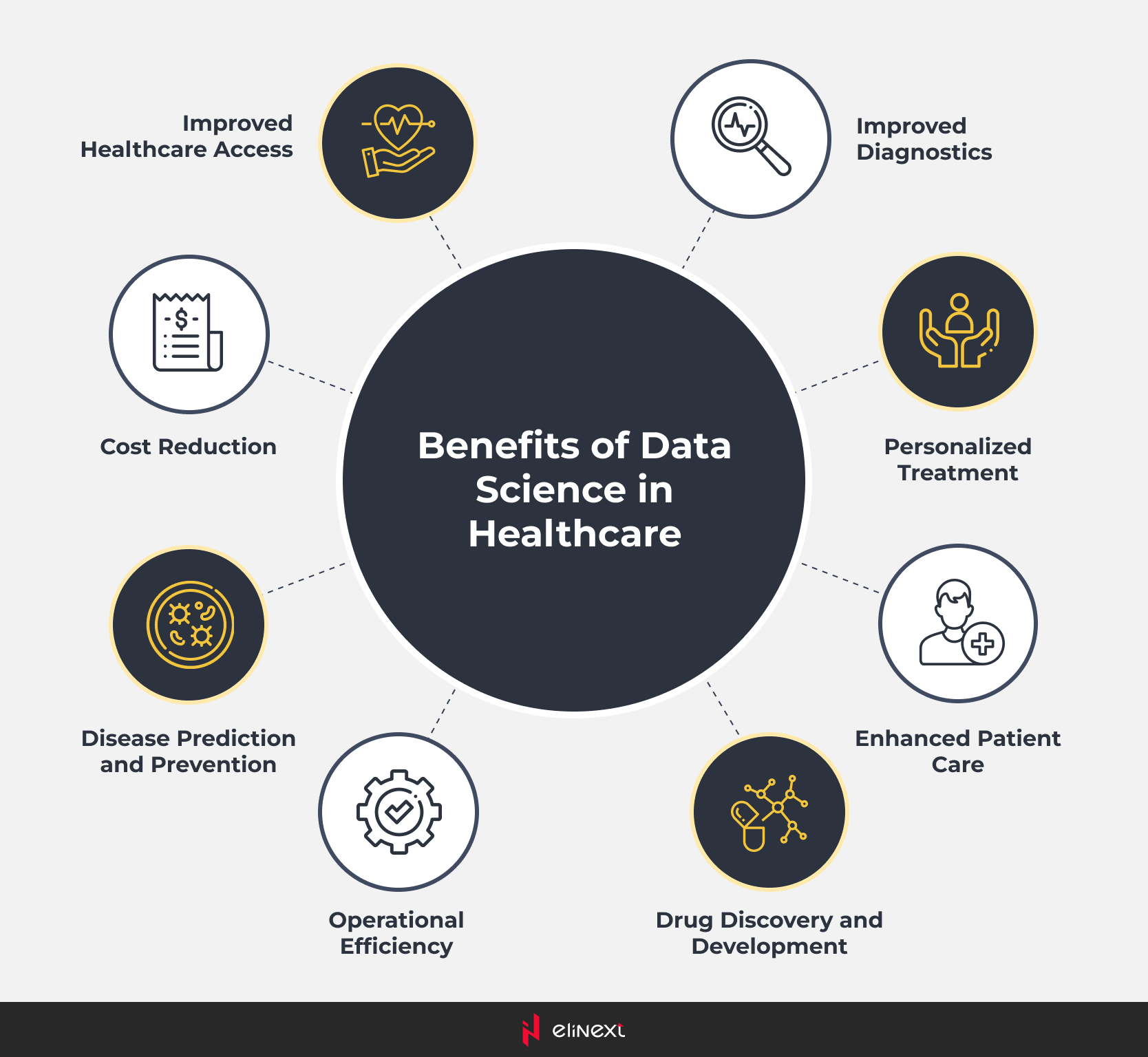
Data science for healthcare brings transformative benefits. It enhances diagnostics, treatment, operations, and accessibility while improving patient outcomes and reducing costs.
Improved Diagnostics
Data science improves diagnostic accuracy by analyzing patient data, imaging, and genetic information. AI models can detect diseases like cancer or heart conditions earlier and more reliably than traditional methods, leading to timely, life-saving interventions.
Personalized Treatment
Using machine learning, clinicians can customize treatment based on a patient’s genetic profile, history, and lifestyle. This individualized care increases effectiveness, minimizes side effects, and leads to better recovery and health outcomes overall.
Enhanced Patient Care
Real-time data from EHRs, wearables, and remote monitoring allows healthcare providers to track patient conditions continuously. This supports proactive decision-making, quicker interventions, and a more responsive, patient-centered care experience.
Drug Discovery and Development
Data science for healthcare reduces the time and cost of drug development by identifying potential compounds and predicting efficacy through simulations and data mining. It streamlines clinical trials, increases success rates, and brings new drugs to market faster.
Operational Efficiency
Healthcare facilities use data science to optimize workflows, manage resources, and predict patient inflow. This leads to better scheduling, reduced wait times, improved staff utilization, and overall efficiency in hospital operations and administration.
Disease Prediction and Prevention
By analyzing historical and real-time health data, predictive models can identify individuals at high risk of diseases. This enables early interventions, tailored prevention programs, and better management of public health strategies and epidemics.
Cost Reduction
Predictive analytics helps avoid unnecessary tests, hospitalizations, and readmissions. Efficient resource management and streamlined operations reduce overall healthcare spending while maintaining or improving the quality of care.
Improved Healthcare Access
Telemedicine, AI chatbots, and mobile health apps powered by data science improve access in remote and underserved areas. They provide patients with timely consultations, self-monitoring tools, and reliable health information regardless of location.
Data science is reshaping healthcare by transforming complex data into actionable intelligence. From early diagnosis and personalized treatment to operational optimization and epidemic prediction, data science and healthcare enable smarter decisions that improve outcomes, reduce costs, and make healthcare more proactive and precise.
Dr. Elena Markovich, Data Science Researcher & Healthcare Analyst
What is the Future of Data Science in Healthcare
The future of data science in healthcare promises smarter, faster, and more personalized care. Advancements in AI, the introduction of ChatGPT for everyday use, real-time analytics, and wearable tech will enable early disease detection, remote monitoring, and precision medicine. As data sharing improves and ethical standards evolve, data-driven insights will revolutionize healthcare delivery, reduce costs, and empower both patients and providers in decision-making.
Conclusion
Healthcare data science stands as a cornerstone of modern medicine, driving continuous innovation across research, treatment, and operations. As the technology evolves, the integration of data science and healthcare will deepen, fostering a healthcare system that is not only more efficient and predictive but also more humane, equitable, and responsive to individual and public health needs.
FAQ
1. How does healthcare data science benefit patients directly?
Healthcare data science improves diagnosis, personalizes treatments, and enables early detection, leading to better outcomes and patient experiences.
2. Can data science help reduce healthcare costs?
Yes, data science and healthcare work together to optimize resources, prevent readmissions, and avoid unnecessary procedures.
3. Is data science only used in hospitals?
No, it’s also used in clinics, research labs, telemedicine, and wearable tech.
4. What are the challenges of healthcare data science?
Key challenges in healthcare data science include data privacy, integration issues, regulatory hurdles, and the need for skilled professionals.
