





Healthcare research companies indicate that mobile apps for healthcare are redefining the medical industry and the traditional doctor-patient relationship. The global healthcare mobile apps market is expected to reach $ 43.13 billion by end of 2025 as compared to $ 37.44 billion in 2024. The growth is associated with the rise in adoption by medical institutions as well as in usage by patients, especially from among youngsters. While North America is leading mHealth app development, Asia is forecasted to boost mobile applications for healthcare in the coming years.
Understanding mHealth Market
Mobile health, or mHealth, refers to the use of mobile devices like smartphones and tablets for health services. Thus, healthcare mobile apps allow patients to enhance their health by sharing vital signs with healthcare practitioners to timely receive appropriate treatment. To a great extent, mobile app development services also target medical professionals for real-time access to patients’ histories, appointment schedules, drug prescription details, billing data, etc.
Types of Healthcare Mobile Applications
As healthcare costs increase annually, cost-effective healthcare mobile applications are emerging as a way out of the situation. This leads to custom healthcare software development offering mobile applications in healthcare for a number of purposes.
Patient-Centric Healthcare Apps
Patient-centric healthcare mobile apps prioritize the patient’s experience, making it easier for them to manage their health, access information, and communicate effectively with providers:
- Telemedicine Apps
- Health Monitoring Apps
- Medication Reminder Apps
- Fitness and Wellness Apps
- Pregnancy & Parenting Apps
Professional Healthcare Apps
Professional mobile applications in healthcare serve medical practitioners in their efforts to access patients’ data or professional knowledge, guide treatment, and even issue invoices:
- Electronic Health Record (EHR) Apps
- Medical Reference Apps
- Clinical Decision Support Apps
- Appointment Scheduling & Telehealth Apps
- Medical Billing & Coding Apps
Emergency & First Aid Apps
Emergency and First Aid Apps empower patients in case of medical emergencies beginning from navigating on immediate assistance delivery and ending with finding closest blood drives or tracking their blood donations:
- First Aid & Emergency Response Apps
- Blood Donor & Organ Donation Apps
- Ambulance & Emergency Services Apps
Hospital & Healthcare Facility Apps
Hospital and Healthcare Facility Apps provide users with information about local healthcare facilities, as well as access to a searchable database of available physicians, dentists, cosmetologists, etc:
- Hospital Navigation Apps
- Patient Portals
- Pharmacy & Prescription Apps
Benefits of Healthcare Mobile App Development for Patients
Healthcare mobile applications for patients ensure immediate comfort for patients in several ways. In the U.S. alone, up to 77% of young adults aged 18 to 29 turned to their smartphones to research health conditions while ca. 84 million people utilized cross-platform app development healthcare solutions.
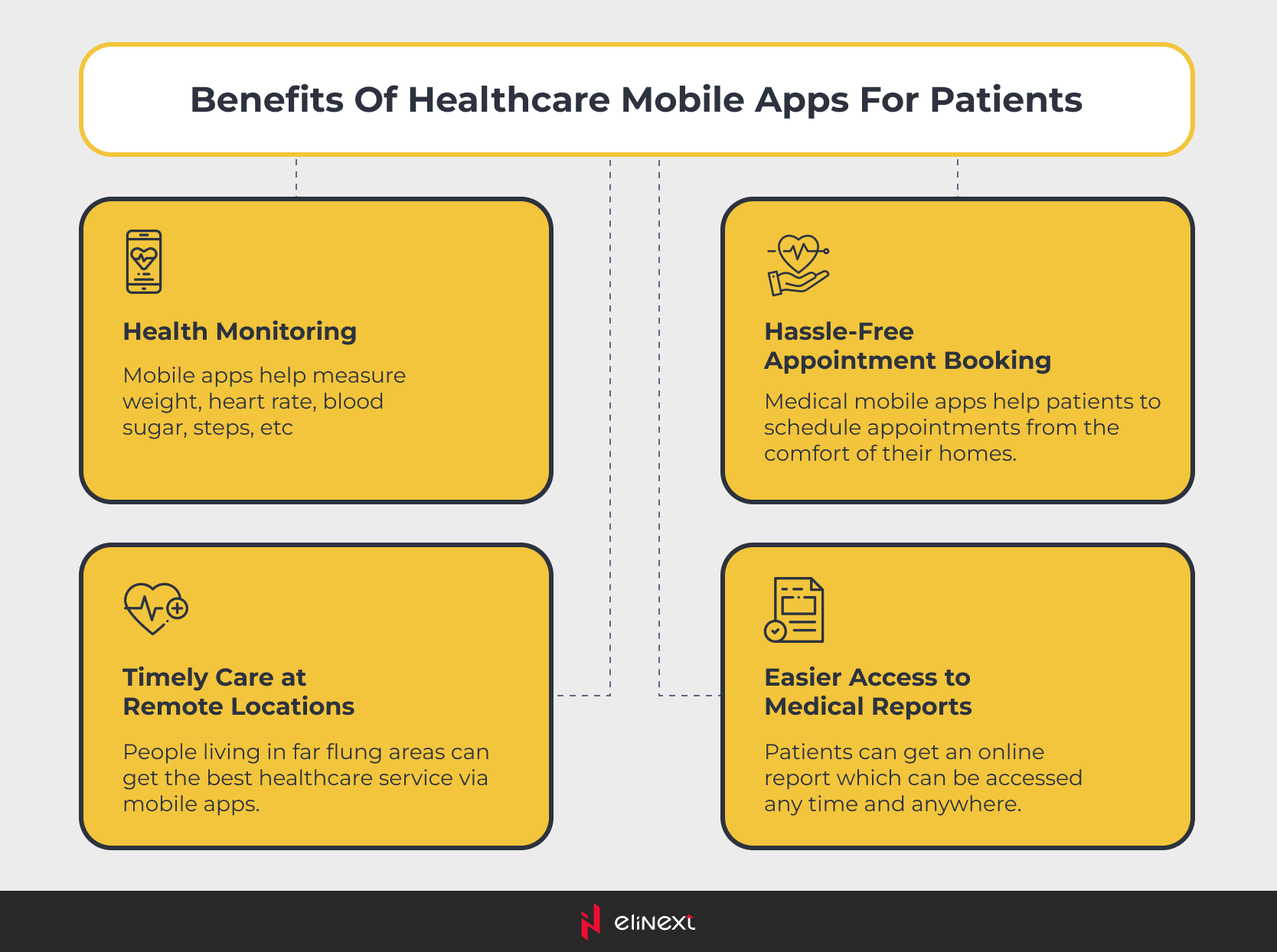
Health Monitoring
Healthcare mobile applications raise awareness of population through
- Managing weight and obesity risks.
- Monitoring daily exercise and nutrition.
- Recording and managing medication intake.
- Tracking gender-specific health aspects.
Effortless Appointment Booking
Mobile applications for healthcare fit both patients and medical workers to schedule and manage appointments online. Additionally, this is a secure direct channel for patients to communicate with health professionals.
Timely Healthcare Provision in Distant Areas
As the software industry delivers both custom iOS development solutions and Android app development solutions, mobile applications in healthcare ensure medical care for patients in distant areas and assist disabled people with independent living.
Simple Access to Medical Reports
Modern mobile apps for healthcare are able to bring the patient’s entire medical history to their fingertips and increase satisfaction by lowering wait times. On their end, health practitioners can remotely and evaluate medical images and scans as well as file e-prescriptions.
Benefits of Healthcare Mobile App Development for Doctors
As a software development company, while working on mobile apps for healthcare, we note that they address the most acute challenges for doctors, as well. This is an unparalleled advantage given the shortage of 1 million health workers by 2030 as WHO estimates.
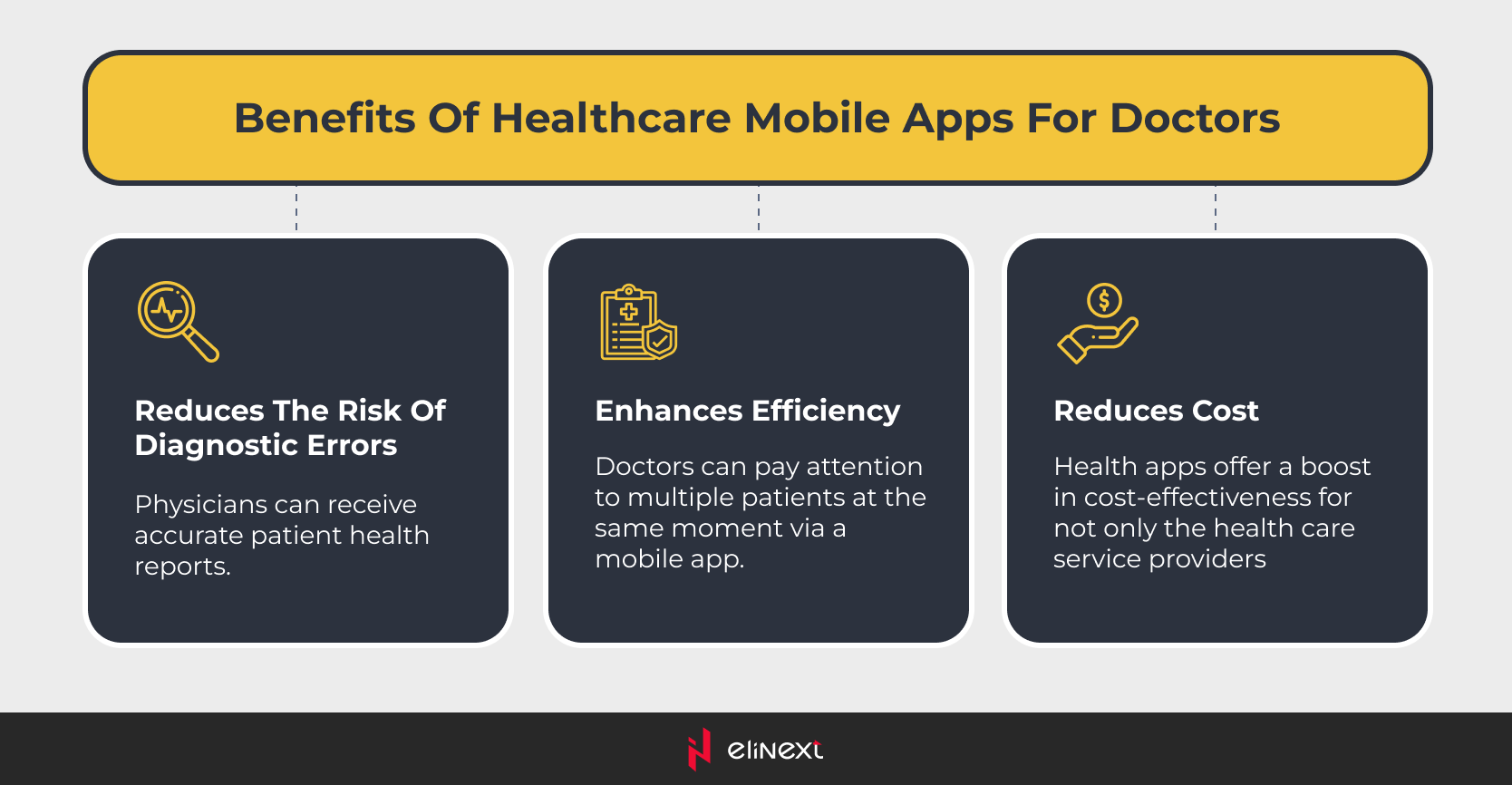
Mitigates Diagnostic Errors
In healthcare mobile applications, physicians can access precise medical records regarding their patients’ conditions. This ensures better treatment and informs decision-making for each individual case.
Improves Operational Efficiency
mHealth apps enable medical professionals to attend to multiple patients simultaneously, prioritizing them on the severity of medical conditions and saving time for serious medical cases.
Decreases Costs
Mobile applications for healthcare save costs for service providers: for example, doctors do not need to go for unnecessary visits optimizing costs distribution for severe medical cases.
Healthcare Industry Transformation with Medical Mobile Apps
Remote Health Monitoring of Patients
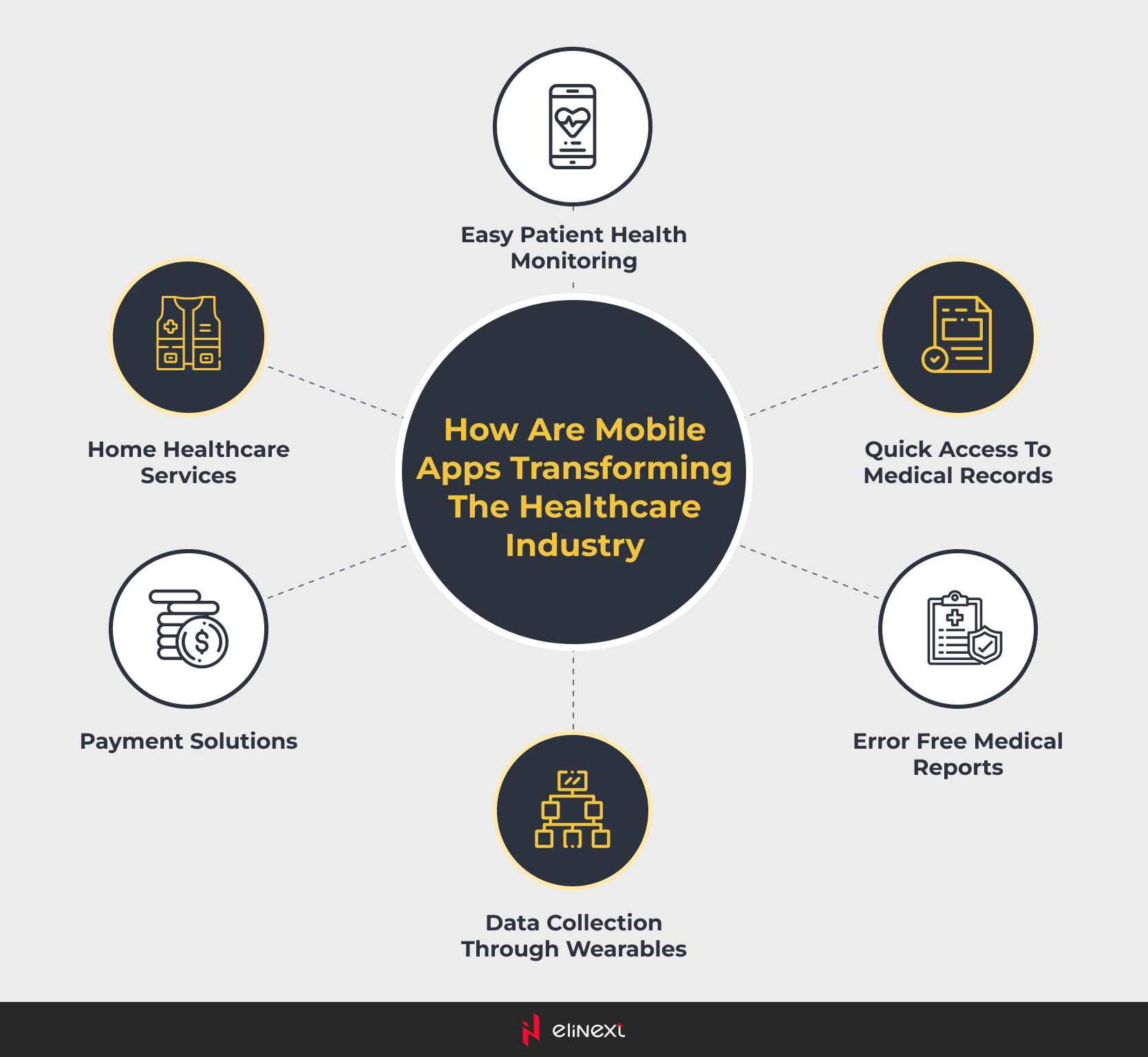
Healthcare mobile apps disrupt access to healthcare services for those in remote areas, enabling individuals to obtain essential health information without lengthy travel.
Easy Accessibility to Home Healthcare Services
Healthcare mobile applications are especially helpful for people with disabilities – no need to go outside or arrange movements – healthcare services are available from home.
Seamless Payment Solutions
Mobile apps for healthcare stand out though their easy and secure payment functions – patients can pay instantly without waiting in a queue.
Easy Access to Medical Records
Both physicians and patients have direct access to medical records whenever they need them – on a single platform. It doesn’t matter what provider you choose, mobile health apps inform them with your medical history, which is crucial for correct treatment.
Precise Medical Reports
Due to machine learning and data analytics features, mobile apps enable medical professionals to provide precise medical reports to their patients. Respectively, this mitigates the risks of incorrect diagnoses and treatment.
Option to Choose Doctors
Via modern mHealth apps, patients can choose doctors as per their respective profiles, ratings, feedback, availability and experiences – in the end, comfort is not the least important thing when you’re medically stressed.
Data Collection to Streamline Wearable Integration
Wearable devices like activity trackers, smartwatches, or glucose monitors can be paired with smartphone-based mHealth applications. In such a way, healthcare mobile apps enable real-time patient monitoring and medical data collection and analysis out of traditional clinical settings.
Promising Business Prospects
With the healthcare industry adopting technology innovations like machine learning and Artificial Intelligence, healthcare mobile applications are very flexible for incorporating these into their functionality. Hence, this entails promising business prospects for healthcare providers and patients.
Future of Healthcare Mobile Applications
As healthcare mobile applications succeed in being starting points for receiving medical care, one of the studies estimate that 43 % of adults in the U.S. prefer telemedicine apps to in-person visits. Apart from telemedicine, the mHealth apps landscape involves broader integration of machine learning and AI like in a ML-based teeth detection application. Further trends will include blockchain for medical data security and big data contributing to wider adoption of hybrid healthcare.
Conclusion
The rise of mobile applications in healthcare is paving the way for a future of more personalized, efficient, and accessible medical services. By prioritizing user experience, data security, regulatory compliance, interoperability, and ongoing enhancements, developers can craft mobile solutions that meet both present and future healthcare needs. We trust that these insights from Elinext as a real-world application development company will serve as a valuable resource aiming to innovate in healthcare.
FAQ
What is a healthcare mobile application?
A mobile healthcare application refers to software developed for mobile devices that allows users to track and monitor their health conditions. Mobile health apps can be used by every person to maintain, improve, or manage their health and include a variety of digital products from telemedicine to payment and insurance apps.
How do healthcare professionals use mobile applications?
Healthcare professionals use mobile applications both for virtual counselling and diagnostics as well as for streamlining administrative tasks such as scheduling, patient record management, and billing processes.
Are healthcare mobile applications secure?
Modern software development companies ensure the security of mHealth apps through utilization of top-notch technologies like blockchain, compliance with regulations like U.S. HIPAA, data encryption, robust authentication mechanism, etc. thus reducing breaches.
Can healthcare mobile apps help in disease prevention?
Healthcare mobile apps in conjunction with predictive analytics and wearable devices enable real-time monitoring of health metrics and thus prevent medical conditions
