







Over 73% of retail sales are now made via mobile devices, and mcommerce development increases conversion by 30%. Mobile app development services enable retailers to offer convenient personalized shopping, push notifications, and fast checkouts. In 2025, mobile app development services are critical for retail. For example, Zara’s mobile app drives instant purchases and personalized offers, and analytics show that retailers using mobile commerce solutions experience higher customer retention and revenue growth, making mobile commerce an integral part of retail success.
Key Takeaways
- 73% of retail sales are made via mobile in 2025 (Statista)
- 60% of shoppers prefer mobile apps for purchases (eMarketer)
- 65% of clicks on Google’s paid search results come from mobile devices
What is Mcommerce? Mobile Commerce Definition
Mobile commerce solutions for retail enable customers to shop, pay, and interact with brands via smartphones or tablets. Mobile commerce (Mcommerce) refers to the buying and selling of goods and services via mobile devices. For example, the H&M app allows users to browse, buy, and track orders, making shopping convenient and accessible anytime, anywhere.
What is the Difference Between mCommerce and eCommerce?
mCommerce examples show shopping via mobile apps (like Amazon or Starbucks) anywhere and anytime, while e-commerce is typically available on desktop computers. Mobile commerce offers features like push notifications, mobile wallets, and location-based offers, making it more personalized and convenient. The SHEIN app offers fast checkout and exclusive offers, unlike traditional e-commerce sites.
Don’t wait – go mobile today.
Order mobile business apps and mCommerce apps today to meet demand, increase conversions with one-touch checkout, and collect your own data.
The Major Benefits of Business Mobile Applications:
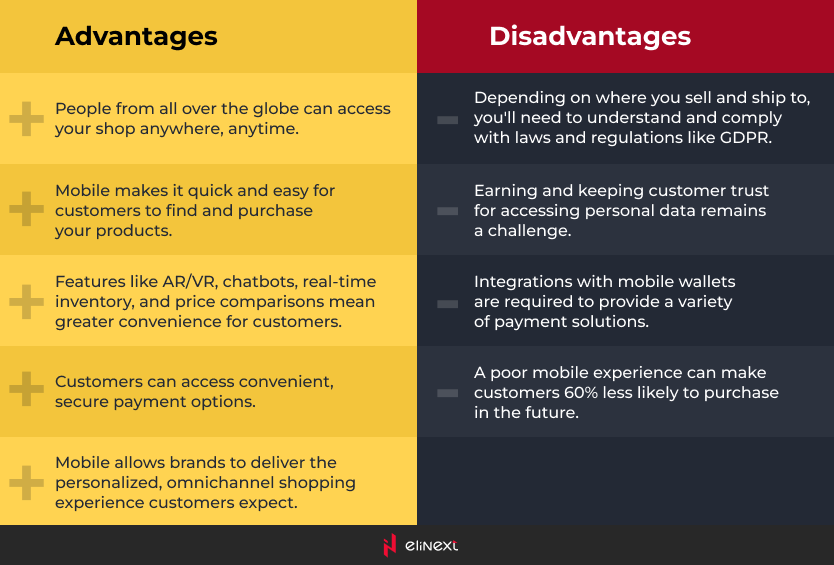
Mobile commerce solutions for retail increase sales, engagement, and loyalty. Apps offer push notifications, AI-powered recommendations, and one-click checkout. For example, the Nike app offers exclusive launches and fitness tracking, increasing user retention. Mobile apps also provide real-time analytics, helping retailers optimize offers and improve customer experience.
-
Ability to Reach More Consumers
mCommerce development allows retailers to reach a global audience 24/7. For example, the ASOS mobile app attracts millions of users worldwide, accounting for 58% of orders via mobile devices. Mobile apps remove geographical barriers, allowing brands to connect with consumers wherever they are, expanding their market reach and increasing sales.
-
Faster Customer Journey
mCommerce examples, such as the Domino’s app, allow customers to order pizza in seconds with one-click checkout. Mobile apps load 2-3 times faster than mobile websites, reducing crashes and cart abandonment. This speed ensures a smooth and efficient shopping experience, increasing conversion and customer satisfaction.
-
New and Useful Technologies
Retailers are using augmented reality, artificial intelligence, and mobile wallets to improve mobile commerce. For example, the Sephora app uses augmented reality for virtual try-ons, and mobile wallets like Apple Pay streamline payments. These technologies enhance personalization, security, and convenience, making mobile shopping more engaging and efficient.
-
Greater Convenience for Customers
Mobile commerce solutions for retail provide unrivaled convenience, allowing customers to browse, compare, and purchase at any time. For example, the Starbucks app allows customers to order and pay from their mobile device, reducing wait times. Features like one-click checkout and real-time order tracking make shopping easy and accessible on the go.
-
More Effective Engagement
Mobile apps drive engagement through push notifications, loyalty programs, and personalized offers. For example, the SHEIN app sends instant notifications about sales, encouraging immediate action. These direct, real-time interactions keep customers informed and encourage repeat purchases, strengthening the relationship with the brand.
-
Personalized Shopping Experience
mCommerce examples like Amazon’s app use AI to recommend products based on browsing history. Personalized offers and content increase satisfaction and loyalty. For example, Sephora’s app provides personalized beauty recommendations, making each user’s shopping experience unique and relevant.
-
Localization
Retailers use localization to tailor offers to a region or store. For example, a retail app might offer a discount when a user is near a physical store. GPS-based features in mobile commerce apps enable local promotions, language settings, and currency options, increasing relevance and conversion.
“Mobile commerce is now the primary driver of retail growth: tap-to-checkout, Apple/Google Pay, and push promotions increase conversion; AR try-ons reduce returns; app loyalty increases average order and retention. Brands that embrace mobile win micro-moments and outpace competitors.”
Elinext Web Developer
What are the Main Types of mCommerce
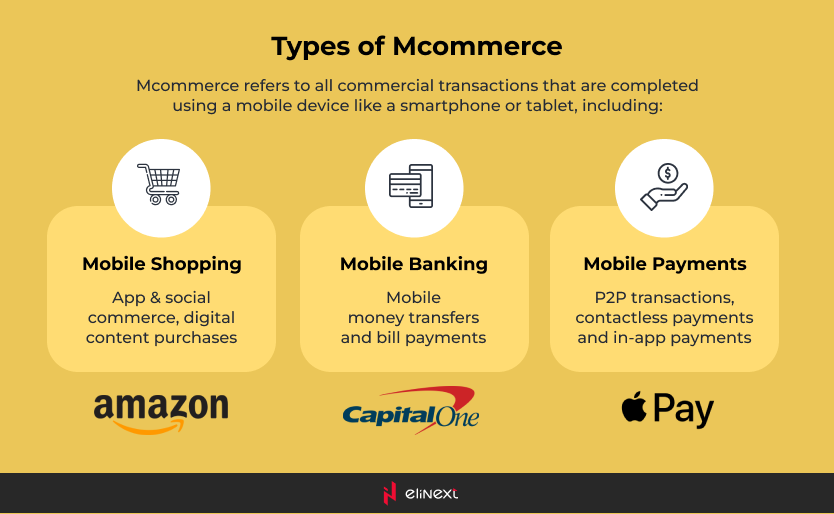
Retail software development services enable three main types of mobile commerce: mobile shopping (purchases through apps like Amazon), mobile banking (financial management through apps like Chase), and mobile payments (using wallets like Apple Pay). For example, the Walmart app integrates shopping and payments, and the PayPal app enables secure mobile transactions.
-
Mobile Shopping
Mobile commerce solutions for retail enable mobile shopping — purchases made through apps or mobile sites. For example, the Nike app offers exclusive products and a convenient checkout. Mobile shopping is fast, convenient, and personalized, which helps increase conversion and customer satisfaction.
-
Mobile Banking
Mobile banking allows users to manage accounts, transfer funds, and pay bills through apps. For example, the Bank of America app offers real-time alerts and the ability to deposit checks into an account. With its convenience and security, mobile banking is becoming a key part of the mobile commerce ecosystem.
-
Mobile Payments
Mobile payments are fast, secure, and reduce checkout hassles, making them indispensable for modern retail. mCommerce development allows mobile payments to be made through wallets such as Google Pay or Apple Pay. For example, the Starbucks app allows in-game payments and rewards.
How Mobile App Development by Elinext Helps eCommerce Industry
AI software development services by Elinext empower e-commerce with intelligent, scalable mobile apps. For example, Elinext’s AI-powered apps offer personalized recommendations, chatbots, and predictive analytics to drive sales and engagement. In 2025, the integration of AI and augmented reality into retail apps will improve user experience, automate support, and optimize inventory management. Elinext’s solutions help retailers adapt to trends, increase loyalty, and stay ahead in a competitive market.
Conclusion
By 2026, mobile commerce solutions for retail will dominate the retail industry, with mobile commerce accounting for 59% of global online sales. Retailers implementing mobile-first strategies are seeing increased engagement, loyalty, and sales. Future trends like artificial intelligence, augmented reality, and mobile wallets will further personalize and simplify the shopping experience. For example, the Walmart app integrates payments and offers in real time, while AR try-on experiences increase conversion. Investing in mobile commerce allows retailers to stay relevant and competitive in a rapidly changing digital environment.
FAQ
Why is mCommerce important for the retail industry?
mCommerce development is crucial, as it will account for 59% of global online sales in 2026. For example, the ASOS app provides personalized shopping and a quick checkout, which helps increase sales and loyalty. Mobile apps help retailers attract more customers and stay competitive.
Are customers really shopping more on mobile?
Yes, mobile shopping is growing rapidly, with 54% of transactions now happening through apps. For example, Domino’s receives more than 50% of its orders from mobile devices. Consumers favor mobile devices for convenience, speed, and personalization, making it the leading retail channel.
What features should a good mCommerce app or site include?
mCommerce examples show key features: intuitive navigation, fast checkout, push notifications, AI recommendations, and secure payments. For example, the Amazon app offers one-click shopping, personalized offers, and real-time order tracking for a seamless experience.
Is mCommerce only for big retail brands?
No, mobile commerce solutions for retail benefit all sizes. Small stores use apps for loyalty programs and local offers. For example, a boutique can launch an app for exclusive offers, reaching more customers and competing with larger brands.
How does mCommerce improve customer loyalty?
Mobile commerce solutions for retail increase customer loyalty through personalized offers, rewards, and push notifications. For example, the Starbucks app rewards repeat purchases and sends exclusive offers, encouraging customers to return and interact with the store more often.
