






A mobile eCommerce app allows retailers to expand into international markets by offering 24/7 access, multilingual support, and a variety of payment options. In 2025, over 39% of US internet users made weekly purchases from mobile devices, reflecting the global shift toward mobile shopping. Mobile app development for eCommerce allows brands to localize content, manage cross-border logistics, and ensure a seamless customer experience. eCommerce software development solutions enable retailers to scale internationally, increase sales, and build a loyal customer base.
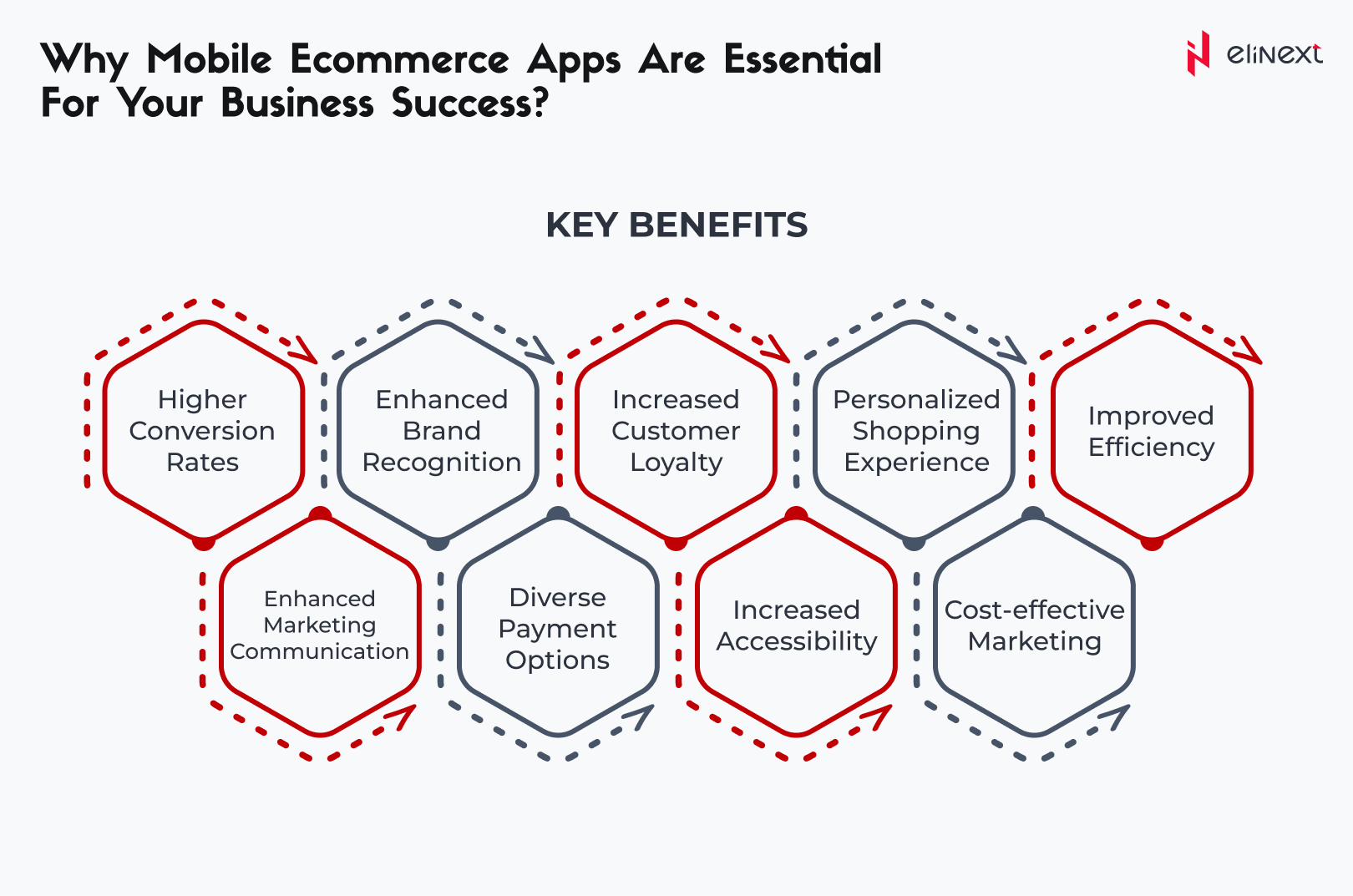
Why Mobile eCommerce Apps are Essential for Your Business: Key Benefits
eCommerce mobile app features such as push notifications, easy checkout, and personalized offers drive engagement and sales. A mobile eCommerce app ensures your business is always accessible, increases conversions, and builds brand loyalty. Retailers using mobile apps experience faster growth and better customer retention than those using websites exclusively.
-
Higher Conversion Rates
Mobile app development for eCommerce increases conversion by streamlining the shopping experience. Features like one-click checkout, payment information storage, and personalized recommendations simplify the shopping experience for users, resulting in conversion rates up to three times higher than those of mobile websites.
-
Enhanced Brand Recognition
A dedicated eCommerce mobile app ensures your brand’s visibility on customers’ devices, strengthening brand awareness. Branded app icons and personalized notifications ensure your business is always visible, increasing repeat visits and strengthening your brand presence in competitive markets.
-
Increased Customer Loyalty
Mobile e-commerce apps build loyalty through rewards, exclusive offers, and a personalized approach. Loyalty programs and discounts available only in the app encourage repeat purchases, while push notifications maintain customer engagement, leading to higher retention rates and overall value.
-
Personalized Shopping Experience
Mobile app development for eCommerce allows you to personalize shopping experiences by analyzing user behavior and preferences. Apps recommend products based on browsing history and send personalized offers, making purchases more relevant and increasing customer satisfaction.
-
Improved Efficiency
Mobile e-commerce apps streamline operations through automated inventory management, order tracking, and customer support. Real-time inventory updates and integrated chatbots reduce manual work, speed up service, and improve the overall shopping experience for both merchants and customers.
-
Enhanced Marketing Communications
Mobile e-commerce apps enable direct marketing through push notifications, in-app messages, and personalized campaigns. Retailers can instantly inform users about sales or new arrivals, capturing attention and driving sales.
-
Diverse Payment Options
Mobile ecommerce app supports a variety of payment methods, including credit cards, e-wallets, and local payments. Users can pay for purchases through Apple Pay, PayPal, or regional payment systems, making the checkout process convenient and appealing to a global audience.
-
Increased Accessibility
Mobile e-commerce apps make shopping accessible anytime, anywhere. Shoppers can browse and purchase products on the go, on the go, or while traveling, allowing retailers to capitalize on sales opportunities outside of traditional store hours.
-
Cost-effective Marketing
Retailers can instantly reach thousands of users with personalized offers, reducing their reliance on costly traditional advertising. A mobile e-commerce app offers effective marketing through targeted push notifications and in-app promotions.
To go global, retailers must invest in eCommerce mobile app development. It unlocks new markets, boosts sales, and delivers seamless, personalized experiences worldwide.
eCommerce Mobile App Development: Real Success Examples
Mobile app development for ecommerce has fueled the success of brands like ASOS and Sephora. ASOS’s app offers personalized news feeds and global delivery, while Sephora’s combines loyalty programs and augmented reality try-on experiences. Since launching their mobile apps, both companies have seen significant growth in international sales and customer engagement.
-
Trusted Relationship and Expertise from MotherCare
The development of the MotherCare e-commerce mobile app demonstrates proven expertise. The app offers intuitive navigation, personalized recommendations, and a seamless checkout process, making it convenient for parents worldwide. By integrating localized content and offering a variety of payment methods, Mothercare has built strong relationships with customers worldwide. MotherCare’s e-commerce software solutions enabled real-time inventory updates and efficient order tracking, resulting in increased customer satisfaction and repeat purchases across multiple countries.
-
Mango: Sophisticated Style Emphasis
Mango’s e-commerce mobile app emphasizes sophisticated style and ease of use. Featuring curated collections, virtual fitting rooms, and AI-powered recommendations, the app appeals to fashionistas worldwide. Mango’s investment in e-commerce software development has enabled a seamless cross-border shopping experience, multilingual support, and local payment methods. As a result, Mango has expanded its international presence, increased mobile sales, and cemented its brand as a leader in fashion retail.
-
Awesome and Simple for Every Day by Walmart
The Walmart ecommerce mobile app features focus on simplicity and ease of use. Featuring easy navigation, barcode scanning, and personalized offers, the app makes shopping easy for millions of people. Features of the Walmart e-commerce mobile app include real-time inventory tracking, in-store pickup, and digital receipts. These innovations, powered by effective e-commerce software development solutions, have helped Walmart maintain its position as a leading global retailer, enhancing customer loyalty and daily engagement.
-
Favorited Items with IKEA
IKEA’s e-commerce mobile app allows users to save and organize their favorite products for future purchases. The app’s intuitive design, room planners, and augmented reality features make the shopping experience even more convenient. Customers can create wish lists, check product availability, and receive personalized recommendations. This approach, combined with convenient ordering and delivery tracking, has driven IKEA’s mobile sales growth and customer satisfaction, empowering customers worldwide to furnish their homes with confidence.
“A mobile eCommerce app allows retailers to reach a global audience by offering convenient shopping, a variety of payment methods, and a personalized experience. With the growing popularity of e-commerce mobile apps, companies can enter new markets, build brand loyalty, and drive growth in the digital age”.
Elinext software development expert
What is the Future of eCommerce Mobile App Development?
Custom mobile application development services are shaping the future of e-commerce thanks to AI, augmented reality, and voice commerce. Apps will offer virtual try-ons, intelligent chatbots, and hyper-personalized recommendations. Integration with IoT devices and advanced analytics will enable real-time inventory tracking and dynamic pricing. With global mobile commerce projected to exceed $4.5 trillion by 2025, investing in innovative app features will be key for retailers to remain competitive and expand internationally.
Conclusion
Ecommerce mobile app features and AI solutions are transforming global retail. Apps offer multilingual support, local payment gateways, and personalized recommendations, making cross-border shopping seamless. AI-powered product recommendations and real-time inventory updates enhance the user experience. Retailers using e-commerce software development solutions can effectively manage logistics, marketing, and customer engagement, enabling them to scale globally and build long-term customer relationships.
FAQ
How can an eCommerce mobile app help retailers expand globally?
Digital transformation in healthcare demonstrates that eCommerce mobile app helps retailers expand globally by offering multilingual support, local payment options, and 24/7 access. Brands can enter new markets and effectively manage cross-border sales.
What features are essential in a global eCommerce mobile app?
Key features include multilingual support, multiple payment gateways, currency conversion, and location-specific offers—enhanced by Machine Learning solutions. A global e-commerce app lets users shop in their language, pay locally, and get regional, ML-personalized promotions.
How does localization impact global eCommerce success?
Localization in mobile app development for eCommerce tailors content, currency, and offers to each market, increasing relevance and trust. Apps that support local languages and payment methods show higher engagement and conversion rates, driving successful global expansion.
Can small retailers go global with an eCommerce app?
Yes, small retailers can go global with an e-commerce app. Niche brands use mobile apps to attract international customers, offer local delivery, and accept international payments, leveling the playing field with larger competitors.
How do eCommerce apps handle international payments?
E-commerce apps integrate global payment systems like PayPal and Stripe, as well as local payment systems. Users can pay in their own currency, use digital wallets, or use regional payment systems, ensuring seamless and secure transactions for international shoppers.
