





In 2025, software outsourcing cultural differences are a top concern, 45% of projects experienced delays of three months or more due to cultural mismatch. Outsourcing success factors include understanding communication styles, attitudes toward hierarchy, and time management. Custom software development companies that invest in cross-cultural training and adapt work processes to local norms demonstrate higher project success rates and innovation. Companies like Coca-Cola and Alibaba have achieved global success by combining local and international practices, proving that cultural compatibility is just as important as technical expertise.
Boost your software success: master cultural nuances in outsourcing. Align values, bridge communication, and thrive globally—start transforming your projects today!
Changing working culture is another challenge for businesses. It’s not just the clients who want to be served in a contactless smooth and innovative manner. Employees are also not eager to come back to the tiny offices. Small talks and free cookies (after a two hour traffic jam)? No, thanks.
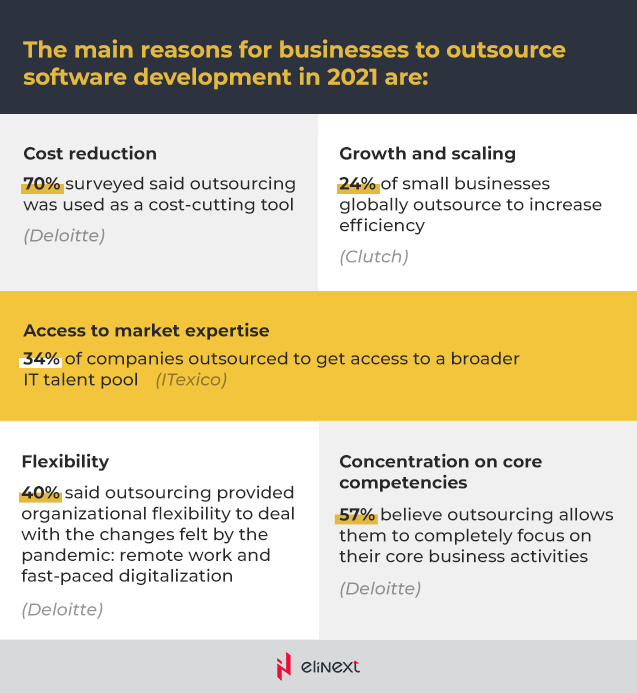
Acceleration of these processes leads to the increasing lack of resources. Not every company can afford to create its own software development department, making factors influencing successful outsourcing —such as vendor expertise, communication, security, and SLAs—critical to achieving goals. In 2024, some reports indicated millions of unfilled tech jobs worldwide: around 1.7 million tech job openings worldwide and 960,000 in Europe alone. And as you can imagine, IT specialists know their value and aren’t afraid to show it during the interview.So, no surprise that ordering software from outsourcing companies is becoming increasingly popular—outsourcing success factors like clear requirements, vendor expertise, communication cadence, and robust SLAs drive predictable results and faster time-to-market. Grand View Research predicts optimistic annual 7% growth of the software outsourcing market from 2021 to 2027. The main reasons for businesses to outsource software development in 2021 are:
But great expectations can bring great disappointments. According to Dun & Bradstreet’s Barometer of Global Outsourcing 2020, every fourth outsourcing relationship fails within five years. But why? Key reasons mentioned in numerous studies are: software outsourcing cultural differences, unclear requirements, weak governance, poor communication, misaligned incentives, and inadequate SLAs.
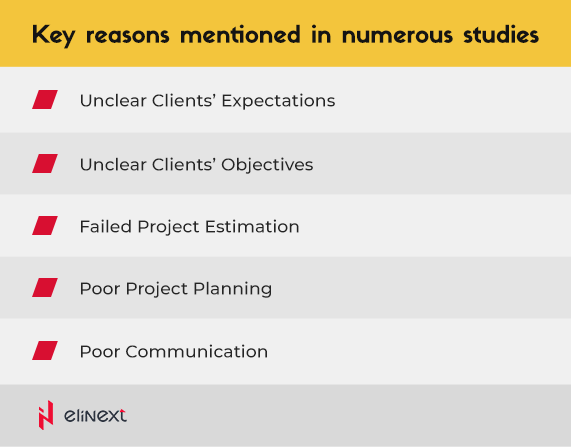
As you see, there is nothing about hard skills and technical knowledge. And now (sorry for the long foreplay), we finally arrive at the topic of our article. Why are communication and soft skills on the top of problems’ list? Why can’t a client just say what he or she wants, and why can’t the dev team simply follow the instructions and create the custom software? What is the problem?
The point you might overlook is the cultural difference between the customer and the outsourcing companies. The main outsourcers today are the USA, the UK, and Germany. The most popular outsourcing destinations are the Asian region (India, Vietnam, China, Philippines), Eastern Europe (Ukraine, Belarus, Bulgaria, Poland, Russia, Lithuania), and Latin America (Brazil, Chile, Colombia, Uruguay, Guatemala).
Globalization, common business codes, and countless team-building events won’t help if you ignore software outsourcing cultural differences — the gaps in communication styles, hierarchy, time perception, and risk tolerance between you, your employees, and the outsourcing company.
Cultural Parameters
There are hundreds of culture definitions and approaches. Below you’ll find the parameters that can influence employees’ behavior the most—key outsourcing success factors to assess for alignment, communication effectiveness, decision-making speed, and risk tolerance.
Time approach
This criteria is important for solving two problems: poor project estimation and failed project planning.
American anthropologist and cross-cultural researcher Edward Hall suggested dividing the cultures on polychromatic and monochromatic depending on the time approach.
Monochromatic cultures
In such cultures, time is strictly regulated. All activities should be scheduled. For representatives of monochrome cultures, punctuality and adherence to deadlines are important.
To be late for a meeting, a call, a meetup, etc. can be perceived as a lack of interest in the project, and it can cause conflict. Time in these cultures is presented as a limited, irreplaceable, and rare resource, the value of which is extremely high.
Polychromatic cultures
Polychrome cultures are freer when it comes to dealing with their own and their partner’s time. Being 10-20 minutes late for a meeting is not rude. It can even be used as a demonstration of the significance of a latecomer.
Keep in mind that in different cultures there may be elements of both types, with one or another type being dominant. So, the Russian culture is often characterized as predominantly monochronic with some elements of polychronic behavior.
Another culture researcher, Richard Donald Lewis, developed a more detailed model in which all cultures could be divided into three types: monoactive, proactive and reactive. It corresponds pretty much with the Hall’s system.
Monoactive cultures
The monoactive or task-oriented culture representatives are calm and rational. It’s common to plan the future systematically, draw up a schedule, and carefully organize activities. A linear workflow boosts efficiency, with fewer abstractions in project talk—“not soon, but tomorrow at 2 pm.” These traits are key factors influencing successful outsourcing, improving predictability and delivery.
Proactive cultures
In proactive or people-oriented cultures, which Lewis also called “talkative” and “sociable”, the main resource is communication. In everyday life, it is not customary to make long-term schedules. Representatives of these cultures often prefer to run many projects at the same time. In this case, projects can overlap.
Reactive cultures
In a reactive or respect-oriented culture, people are careful about planning their routines. There is a saying in some Asian reactive cultures – “When God created time. He has created enough of it. ” This accurately describes the behavior of people in a reactive culture. They hesitate to make decisions. The monoactivers can perceive it as wasting time. But respect-oriented employees try to build relationships with their business partners and colleagues tactfully, to avoid unpleasant moments in negotiations, giving all their strength to building harmonious communication. Lewis calls such cultures “listeners.”
In the 1960s, Geert Hofstede launched a large survey inside IBM, a multinational company. He wanted to find the national differences in values, and to see how they influence behavior in the workplace. Based on the results, Hofstede developed a cultural dimensions theory. Today, this theory is like Newton’s law of universal gravitation in cross-culture studies.
Here, we’ll take the first four dimensions Hofstede analyzed: individualism-collectivism, avoidance of uncertainty, power distance, and masculinity-femininity.
Individualism or collectivism
This is an important parameter that affects how willingly your team engages with overseas partners—shaped by software outsourcing cultural differences — in sharing opinions, challenging poor decisions, and debating uncomfortable calls with managers. Understanding this boosts collaboration quality.
In the Hofstede concept, individualism characterizes a society in which the connection between individuals is less significant and self-interests prevail over the interests of the collective. A collectivist society is a society in which the interests of a group prevail over individual gains.
Conflicts and disputes are perceived differently depending on this parameter. In collectivist countries, it is believed that a conflict within a team is inappropriate, because initially there should be an opinion generally accepted in a group (the one that’s been voiced by the leader), and an opinion of an individual is irrelevant. Representatives of such a culture avoid direct statements, as this can lead to a conflict. Instead of a categorical “no” they will say “maybe” or “we will think.” Also, the word “yes” cannot be taken literally.
In individualistic countries, on the contrary, it is almost essential to argue. Firstly, because everyone has their own opinion, and making an argument for it is a part of the job. Conflicts are natural and normal, and they are beneficial. The dispute is believed to be a sign of interest in the project, and honesty.
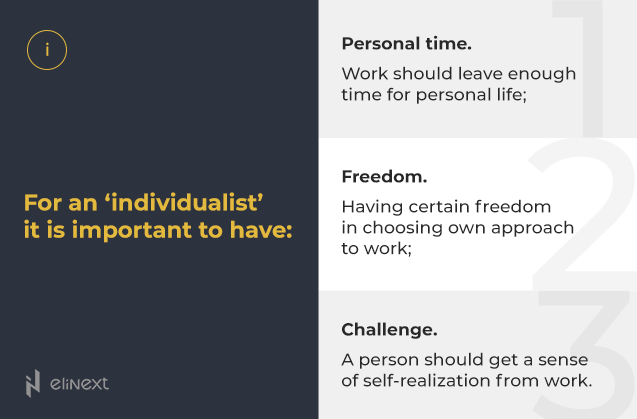
Hofstede found that when choosing a workplace, individualists and collectivists pay attention to different “values”. For an ‘individualist’ it is important to have:
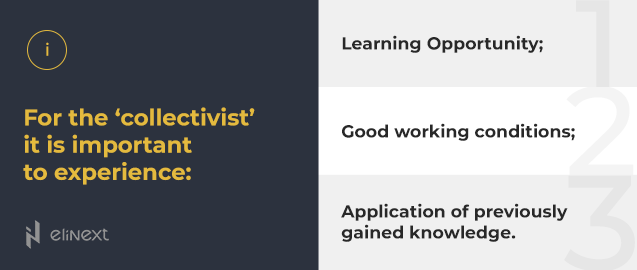
For the ‘collectivist’ it is important to experience:
In collectivist societies, the employee–boss relationship is often emotional, akin to family ties (e.g., close control, few personal boundaries, probing questions). Recognizing and adapting to this dynamic is one of the outsourcing success factors that improves trust, communication, and retention.
Individualists fulfill the assigned task. The emotional and personal component is not so important for them. Instead, there is a contract, and it regulates all relations within the company, with the boss, and the client.
Uncertainty avoidance
This parameter—shaped by software outsourcing cultural differences—strongly affects planning culture, perception of project risks, and the assessment of one’s own and the team’s skills. Understanding these gaps helps set realistic timelines, risk buffers, and training plans.
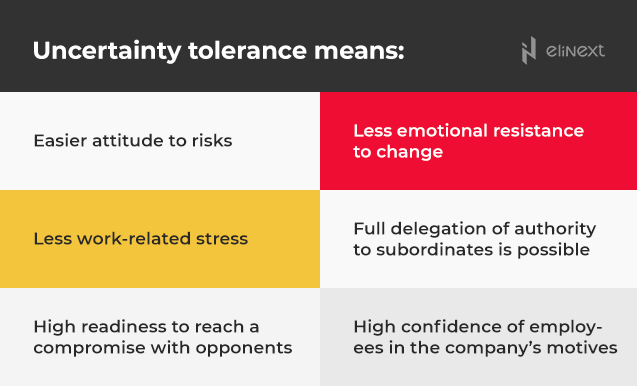
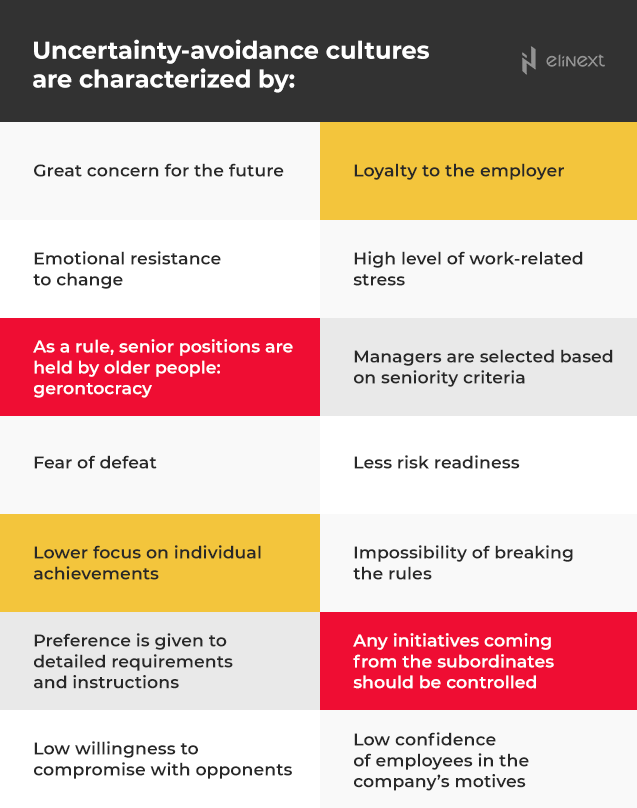
This parameter shows the attitude towards uncertainty. In some societies, uncertainty is perceived as a negative phenomenon, it is customary to avoid it: “take fate into your own hands.” In others, uncertainty is considered a natural state: “take every day as it is.”
Uncertainty tolerance means:
At the same time, uncertainty-avoidance cultures are characterized by:
Power distance
Understanding the power distance—one of the factors influencing successful outsourcing—clarifies expected governance and involvement. Daily meetings might be seen as distrust and fault-finding, while too little oversight may signal disinterest and reluctance to collaborate. Align cadence early.
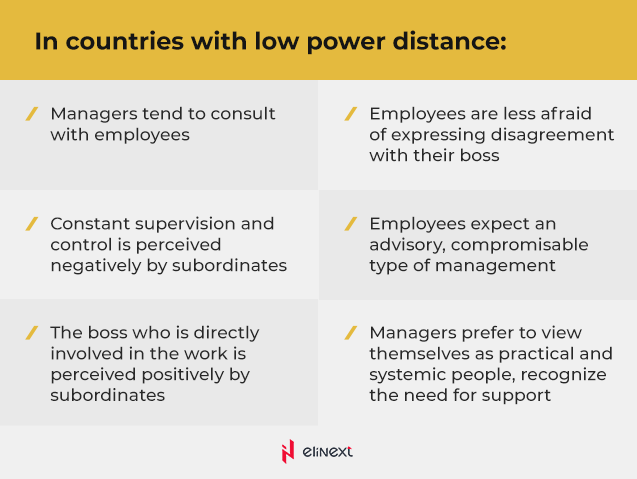
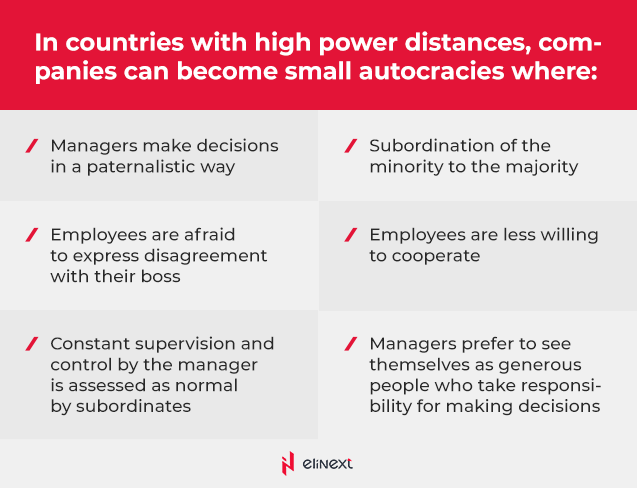
The Hofstede distance of power is the recognized and permissible degree of inequality between people in terms of how much influence they have in the decision making process. Simply put, it is the actual availability of management for subordinates, the ability to influence management’s decisions. Countries where people overwhelmingly agree that power should be unevenly distributed and that social relations are based on inequality are cultures with a high power distance. In cultures with a low power distance, people strive for an equal distribution of power.
In countries with low power distance:
In countries with high power distances, companies can become small autocracies where:
Masculinity vs. femininity
Don’t be irritated by the name of this parameter. This is not about all men in the masculine culture behaving like alphas, and in the feminine culture, there is nothing about all women staying at home with their children. In Hofstede’s model, this dichotomy represents how social roles are distributed, what are the basic values inherent in this culture, and what prevails when making a decision – emotional or rational.
Masculinity is inherited in societies with clear social roles. In such societies, educational success is encouraged, there is a focus on competition and career achievement. The approach to the problem is developed from a rational point of view.
In a feminine society, social roles can be blurred. The emphasis is on building relationships, finding a compromise, and gaining experience. In feminine societies, it is not only the result that is important, but also how the result was achieved. The emotional component of life is not ignored or suppressed here. Work and life balance is the mantra of feminine society.
High and low context cultures
This parameter—overlapping somewhat with power distance and shaped by software outsourcing cultural differences—can drive issues like unclear expectations and objectives. Make norms explicit: define decision rights, escalation paths, and acceptance criteria to reduce ambiguity.
Edward Hall revealed that each culture has its own rules for “reading the context”, understanding the hidden meanings.
In countries with a high-context culture, there are many such “You-Know-Who” or “He Who Must Not Be Named”. Representatives of a culture with a high context do not strive to describe the situation in detail and are not inclined to specify what their interest is. In such cultures, the non-verbal plays a huge role. Perhaps something that was not said in words, was said with a gesture, a look, a smile.
In countries with a low context culture, Voldemort will be called Voldemort. Representatives of these cultures clearly express their attitude to a problem. There is no need to build a system of personal relationships to obtain reliable information. Conversely, vague assessments can be perceived as a lack of competence.
The difficulties associated with the interaction of representatives of cultures of high and low contexts are the following:
A person from a culture of high context is not inclined to make decisions without detailed discussion that a low-contexter may perceive as a waste of time.
For people from high-context cultures, clarification, written and formal documentation, may seem like an unwanted burden rather than part of a business process.
Representatives of cultures with a low context are also focused on long-term cooperation. But for them, it is primarily associated with a successful implementation of the task, and not with building interpersonal relationships during the project.
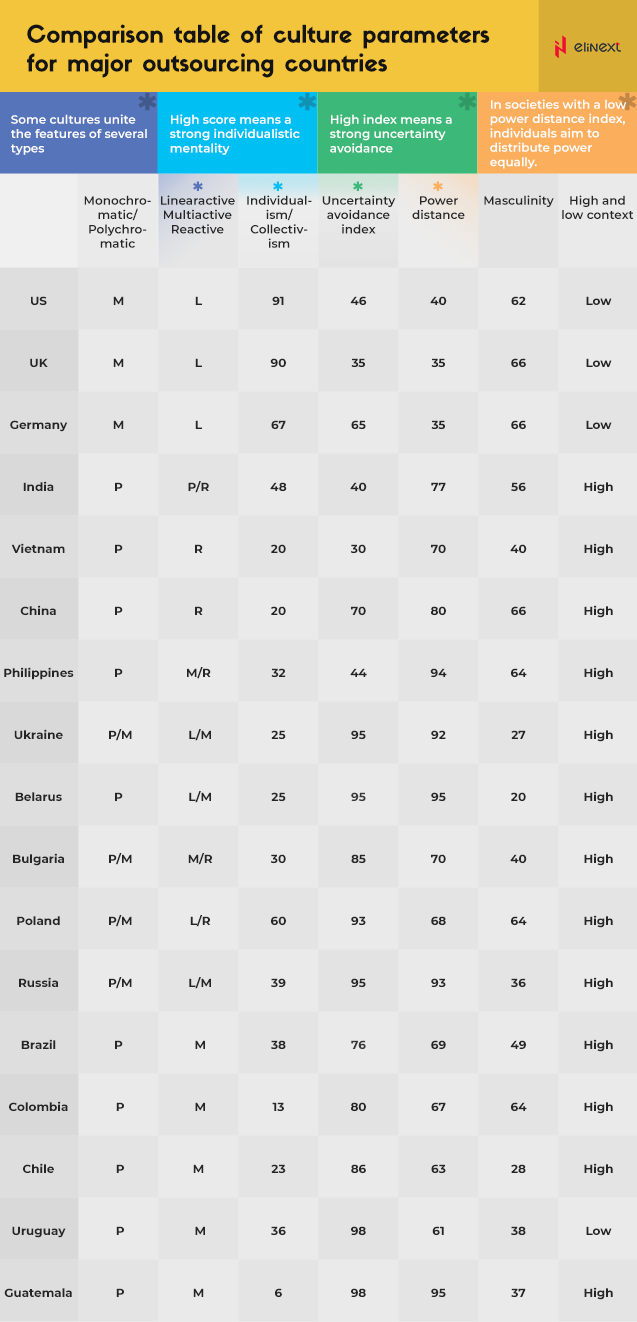
Comparison table of culture parameters for major outsourcing countries
“Factors influencing successful outsourcing go beyond technical skills—cultural understanding, open communication, and mutual respect are crucial. Teams that value diversity, adapt to different working styles, and invest in building relationships consistently achieve better project results and long-term partnerships.”
Elinext software development expert
Conclusion
Outsourcing success factors show that software outsourcing cultural differences can contribute to project success or failure. Nearly half of all projects experience delays due to misaligned values, communication gaps, or differing attitudes toward deadlines. However, companies that prioritize cultural compatibility—through training, clear protocols, and agile processes—enhance collaboration, trust, and innovation. Supporting diversity in custom software development services turns potential differences into a competitive advantage, fostering global growth and project success.
FAQ
Why are cultural factors important in outsourcing?
Cultural factors are vital to outsourcing success because they shape communication, trust, and teamwork. Factors influencing successful outsourcing include adapting to local norms—ignoring miscommunications can lead to costly delays or project failure.
What are the main cultural factors that influence outsourcing success?
Key factors include communication style (direct or indirect), attitudes toward hierarchy, time management, and risk tolerance. A US client may expect proactive updates, while a partner from a high power distance culture waits for instructions.
How does communication style affect outsourcing relationships?
Communication style influences clarity and trust. People who communicate directly can appear abrupt to those from cultures with indirect communication, leading to friction. American teams expect open feedback, while Asian teams may avoid confrontation, risking misunderstandings and project delays.
What role does language play in outsourcing?
Language differences can lead to miscommunication and errors. A lack of a common language or jargon can lead to misunderstandings of requirements or feedback, impacting project quality and deadlines. Bilingual employees can help bridge these gaps.
How does cultural perception of time affect outsourcing?
Software outsourcing cultural differences affect deadlines and urgency. American or German teams value strict deadlines, while some cultures prioritize relationship building over rigid schedules, which can lead to project delays if left unchecked.
How do hierarchy and authority impact collaboration?
Cultures with high power distance may rely on authority and avoid complex decisions, which slows down problem solving. A junior developer in India may avoid asking questions of a manager, while American teams expect open dialogue, which impacts project agility.
How does cultural attitude toward risk influence outsourcing?
Risk-averse cultures prefer detailed planning and avoid uncertainty, which can slow innovation. Japanese teams may require extensive documentation, while American teams use agile and iterative approaches, which impacts project speed and flexibility.
What strategies help overcome cultural barriers in outsourcing?
Outsourcing success factors include cross-cultural training, clear communication protocols, and hiring bilingual employees. IBM invests in cultural awareness programs, and regular meetings and shared glossaries reduce misunderstandings.
Can cultural differences be turned into strengths in outsourcing?
Yes, diversity in teams fosters innovation and market understanding. Alibaba combines Eastern and Western management, leveraging cultural diversity to achieve global success. Embracing differences fosters creativity, adaptability, and competitive advantage.
What is the biggest cultural challenge in outsourcing?
The biggest challenge is miscommunication caused by different norms and expectations. 45% of projects experience delays due to cultural misalignment, highlighting the need to proactively manage communication, hierarchy, and time perception.
