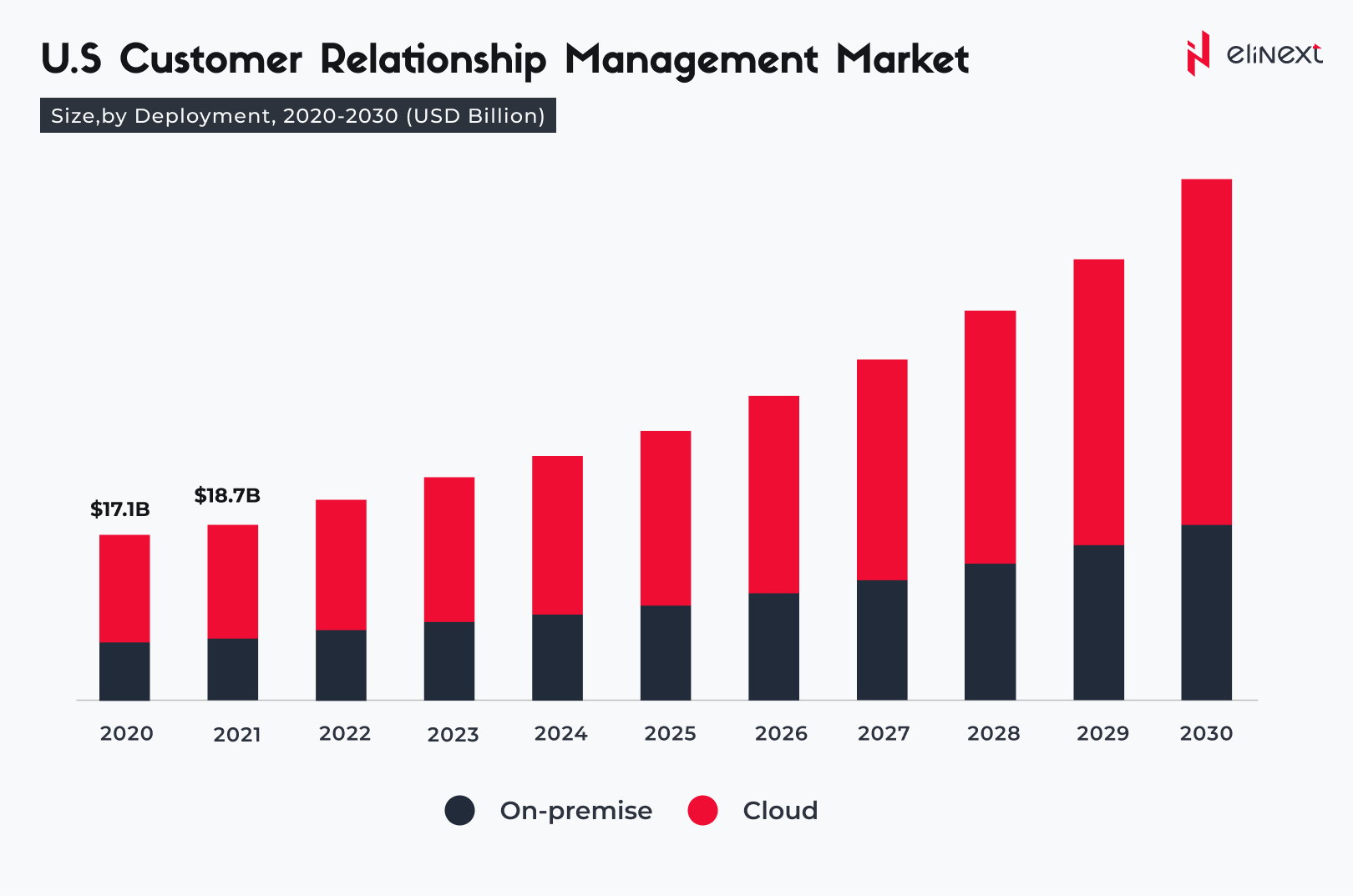
Custom CRM implementation is expected to experience rapid growth in 2025, reaching $112.9 billion. How to build a CRM system? To create a CRM system, start by defining your business goals, then engage then use CRM software development services to design, develop, and integrate features such as contact management, sales automation, and analytics. Modern solutions leverage artificial intelligence and cloud technologies for scalability and real-time analytics.
CRM software development delivers a 29% increase in sales revenue
Key Takeaways
CRM software development delivers a 29% increase in sales revenue and a 34% increase in user productivity.
91% of companies with more than 11 employees use CRM, and 65% are implementing AI for more intelligent automation.
Custom CRM solutions deliver an ROI of $8.71 for every $1 spent, with 74% of users reporting increased customer satisfaction.
What is a Customer Relationship Management (CRM) Software?
Custom CRM development creates platforms for managing customer data, sales, and support. CRM software development centralizes contacts, automates workflows, and tracks interactions. Custom software development services help companies customize dashboards, automate follow-up actions, and integrate marketing tools, improving efficiency and customer engagement.
CRM vs ERP: Understanding the Key Differences
Custom CRM implementation focuses on customer data, sales, and marketing, while ERP manages internal operations such as finance and HR. How to build a CRM system centers on sales pipelines and customer support, whereas ERP integrates inventory and payroll. In 2025, 70% of CRM projects fail when forced into an ERP framework—custom CRM is better suited for customer-centric processes.
Invest in custom CRM development to gain a competitive advantage, optimize workflows, and deliver a personalized customer experience that drives growth and loyalty.
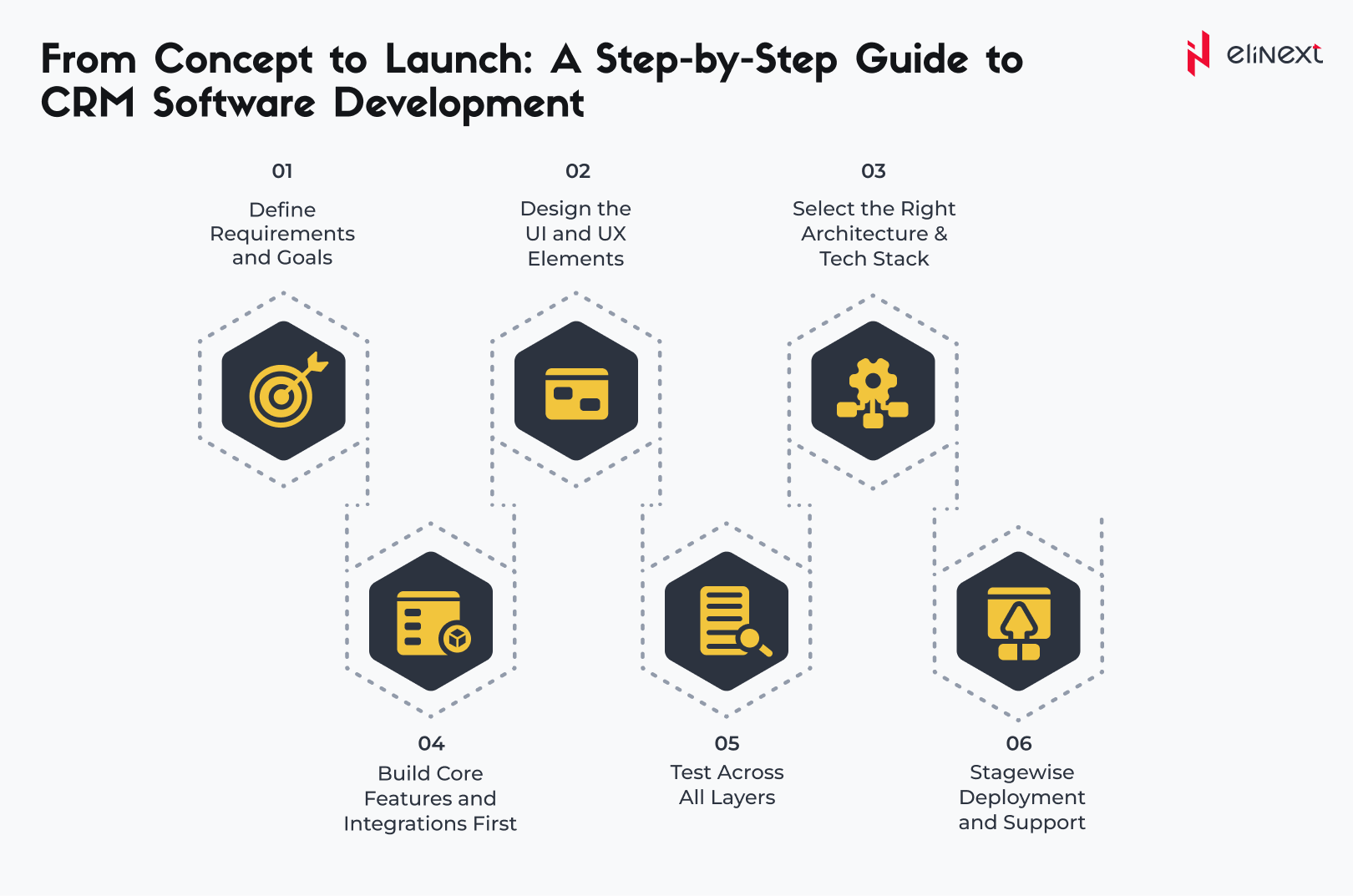
A Structured Guide of CRM Development
CRM software for small businesses begins with a needs analysis, followed by user interface (UI/UX) design, core feature development, and integration. A small retailer uses a custom CRM system to automate sales tracking, contact management, and email synchronization, improving efficiency and customer service.
Define Requirements and Goals
Start by gathering feedback from all stakeholders to define business goals and requirements for the CRM. The sales department may need lead tracking, while the support team may need ticket management. Clear goals ensure that the CRM aligns with real business needs and user workflows.
Design the UI and UX Elements
CRM software development prioritizes intuitive UI/UX. A dashboard with drag-and-drop pipelines and quick-access menus helps users navigate easily, reducing training time and boosting adoption.
Select the Right Architecture & Tech Stack
Custom CRM development uses scalable tech stacks like Node.js, React, and PostgreSQL. Cloud-based architecture ensures secure, real-time access, while open APIs enable seamless integration with marketing and ERP tools.
Build Core Features and Integrations First
Start with essential modules—contact management, sales pipeline, and reporting. Integrate email and calendar tools early, then expand to marketing automation and third-party apps as business needs grow.
Test Across All Layers
Custom CRM development includes unit, integration, and user acceptance testing. QA teams validate data accuracy, workflow automation, and security, ensuring a reliable and user-friendly system.
Stagewise Deployment and Support
CRM software development uses phased rollouts—pilot with a small group, gather feedback, then expand. Ongoing support and updates address user needs and keep the CRM aligned with evolving business processes.
A Structured Guide of CRM Development
Prioritize custom CRM development to future-proof your business, enhance customer relationships, and maximize operational efficiency.
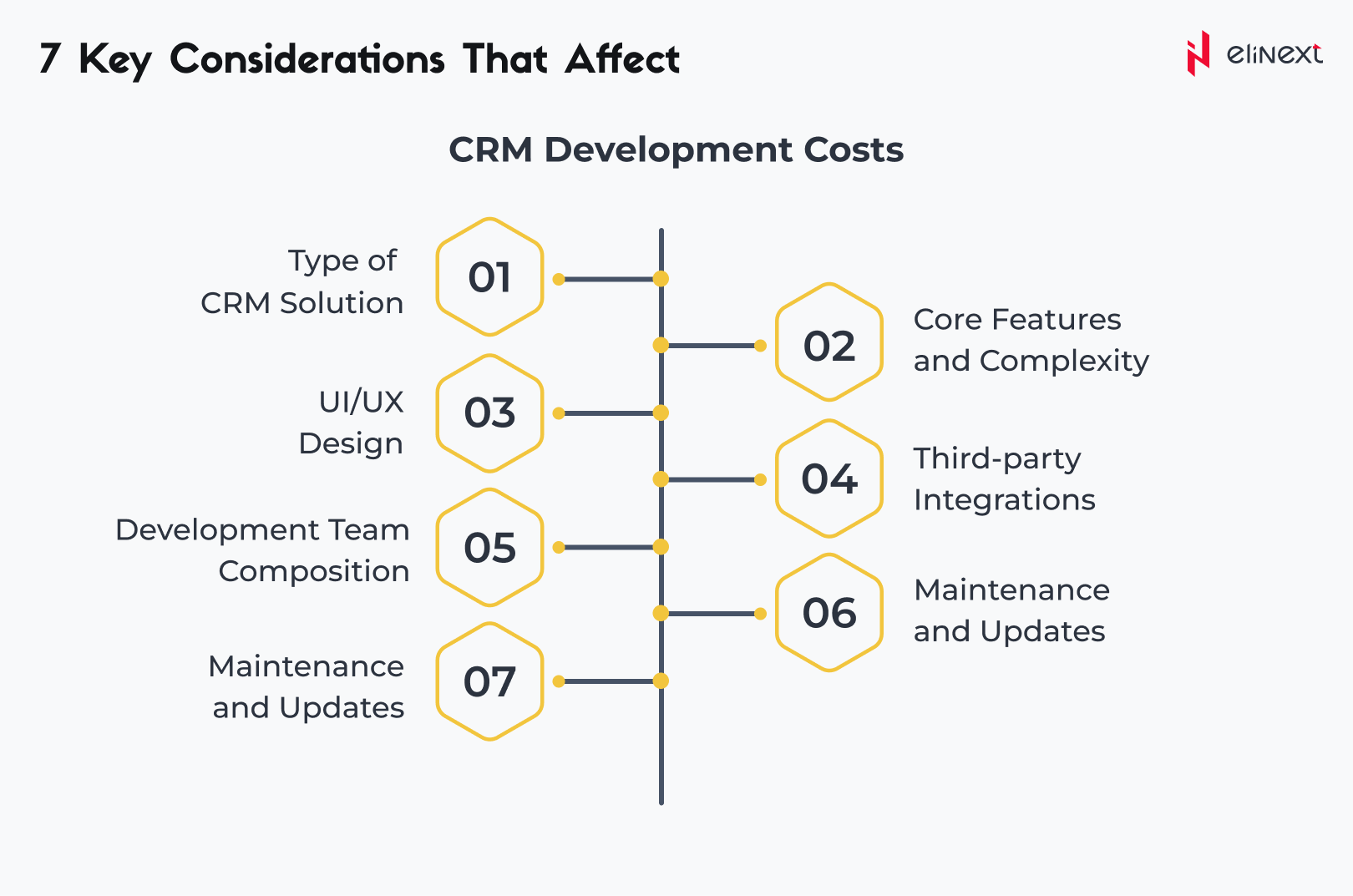
Key Considerations that Affect CRM Development Costs
Type of CRM Solution
CRM software development offers operational, analytical, and collaborative CRM systems. Operational CRM systems automate sales, analytical CRM systems provide analytics, and collaborative CRM systems integrate sales, marketing, and support departments for unified customer management.
Core Features and Complexity
How to Build a CRM System: Include contact management, sales tracking, reporting, and automation. Advanced CRM systems add AI-based lead scoring and multichannel communication, increasing complexity and value.
UI/UX Design
Effective UI/UX design ensures a user-friendly experience. A clear dashboard, customizable views, and mobile responsiveness make the CRM intuitive, reducing errors and increasing productivity.
Third-party Integrations
Synchronization with Mailchimp automates campaigns, while connections to accounting software streamline invoicing. Custom CRM development integrates with ERP systems, marketing systems, and support tools.
Development Team Composition
CRM software development teams include product owners, project managers, business analysts, architects, UI/UX designers, developers, QA specialists, and DevOps specialists. A team of 6-12 people provides expertise across all stages.
Maintenance and Updates
How to Build a CRM System: Schedule regular updates, bug fixes, and feature enhancements. Quarterly releases add new integrations and security patches, keeping the CRM up-to-date and secure.
Security and Compliance
CRM systems must comply with GDPR, HIPAA, and industry standards. Data encryption, role-based access, and audit logs protect sensitive information and ensure regulatory compliance.
Testing & Quality Assurance
Custom CRM development includes comprehensive quality assurance (QA) testing—modular, integration, and user testing. Automated tests identify errors early, and user feedback adjusts workflows to achieve optimal performance.
Key Considerations that Affect CRM Development Costs
“Custom CRM development allows companies to create solutions for unique workflows, easily integrate with existing tools, and deliver measurable growth. Investing in a custom CRM system is key to achieving long-term customer loyalty and operational excellence.”
Elinext software development expert
CRM Development Trends: Future Outlook
Custom CRM implementation and ERP software development services are converging, with AI, automation, and cloud technologies leading the way. AI-powered CRM systems anticipate customer needs, automate follow-up actions, and integrate with ERP systems to deliver unified data. By 2025, 65% of companies will use AI-powered CRM features, and cloud adoption will reach 87%, making systems more scalable and accessible.
Agentic & Generative AI in CRM
Hyper-personalization and Predictive Analytics
Low-code / No-code Development & Configuration
Omnichannel & Conversational Interfaces
Integration of IoT, AR/VR, and Emerging Technologies
Enhanced Security, Data Privacy & Trust Mechanisms
Cloud-based, Scalable, and Vertical-Specific Solutions
Automation Everywhere
Conclusion
Custom CRM development in 2025 requires a strategic approach: defining goals, designing user-centered interfaces, selecting scalable technologies, and integrating core functions. A company that implemented a custom CRM system saw a 29% increase in sales and a 74% increase in satisfaction. Ongoing support, security, and AI integration ensure long-term value. Partnering with CRM development services allows you to create customized solutions that drive growth, improve efficiency, and build customer loyalty.
FAQ
What is a custom CRM system?
CRM software development creates tailored platforms for managing customer data, sales, and support. A custom CRM centralizes contacts, automates workflows, and integrates with marketing tools.
Why should I build a custom CRM instead of using ready-made solutions?
Off-the-shelf CRM systems may not fit your unique workflows. Custom CRM development ensures that the features, integrations, and compliance meet your business requirements, increasing implementation efficiency and ROI. When learning how to build a CRM system, start with user requirements, the data model, integrations, security, and an MVP roadmap.
What are the first steps in developing a custom CRM?
Custom CRM development starts with stakeholder interviews, defining goals, and mapping workflows. Identify must-have features and integration needs before designing.
What core features should a custom CRM include?
How to Build a CRM System: Contact Management, Sales Funnel, Reporting, Automation, and Integration. Add AI-powered lead scoring and multichannel communication to solve complex problems.
How long does it take to develop a CRM system?
Development takes between 3 and 18 months, depending on its complexity. A basic CRM system for a small business can take between 3 and 6 months; enterprise solutions can take over a year.
What technologies are commonly used for CRM development?
CRM software development uses Node.js, React, PostgreSQL, AWS, and APIs. React creates responsive user interfaces, while Node.js handles the backend logic.
How much does it cost to develop a custom CRM?
Custom CRM systems range from $10,000 (basic version) to $700,000 or more (enterprise version). CRM systems for small businesses cost an average of $25,000; complex integrated systems are more expensive.
What are the biggest challenges in CRM development?
Challenges include user adoption, integration complexity, and data migration. 42% of companies cite training as a top obstacle.
Should I include AI in my CRM from the start?
Yes, early integration of AI enables more intelligent automation and analytics. AI-powered chatbots and predictive analytics improve efficiency and customer engagement.