



Corporate applications are revolutionizing business processes with powerful features tailored to the needs of enterprises. With mobile app development services advancing rapidly, the adoption rate of these apps in companies will reach 89.2% by 2025. Corporate app development integrates workflow automation, real-time analytics, and cloud connectivity. Manufacturing companies using enterprise apps report a 42.2% increase in productivity and a 308.3% ROI. These platforms provide seamless data synchronization, employee collaboration tools, and customizable dashboards that adapt to specific business requirements at all levels of the organization.
What are the Key Benefits Corporate Applications
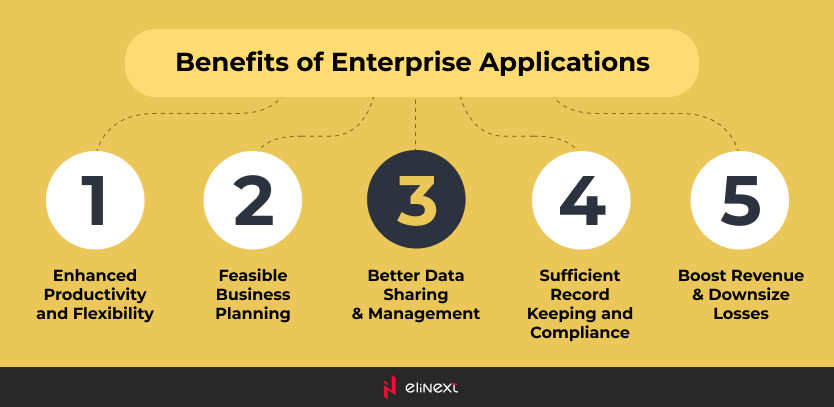
Corporate app benefits include automation, increased data security, time and cost savings, increased productivity, and improved communication. A logistics company using an enterprise application reduced manual paperwork by 60% and improved collaboration between teams across departments.
Automation
Corporate applications automate routine tasks such as invoicing, scheduling, and data entry. An accounting application can automatically generate invoices and process payments, freeing up employees to work strategically and reducing errors, increasing efficiency and accuracy.
Data Security
Corporate app benefits include robust data security. Apps use encryption, access control, and compliance features to protect sensitive business data. A financial company app with multi-factor authentication ensures that only authorized users have access to sensitive information.
Cost & Time Savings
A retail chain that implemented automated inventory management reduced stockouts by 30% and saved hundreds of labor hours annually. Corporate applications reduce costs and save time by streamlining workflows and reducing manual labor.
Increased Productivity
A consulting firm’s project management app enabled teams to track tasks in real time, resulting in a 20% faster project delivery rate. Corporate app benefits drive productivity by centralizing information and automating processes.
Improved Communication
A global manufacturer’s app unified messaging and document sharing, reducing email overload and improving cross-team collaboration. Corporate applications enhance communication with integrated chat, file sharing, and notifications.
What is important for developing corporate applications
Сorporate app development aims to create complex, mission-critical, reliable, distributed, component-based, and scalable apps. These systems must be data-centric and must have an intuitive user interface. The requirements for administration management and security are extremely stringent. It’s of crucial importance that corporate applications could be deployed on various platforms across corporate networks, the Internet or intranets.
Designing corporate applications is a challenging task. If you want your web application development project to be a success, you will have to meet hundreds of separate requirements. In order to design a high quality application, you should take these requirements into account. These include:
- The business goals
- The amount of money you plan to spend on it
- The time-frame which puts limitations on the period the application must be delivered at
- The number of concurrent users it must support
- The number of people involved in its development, testing and maintenance
- The required level of security.
Corporate app development empowers businesses with automation, analytics, and secure mobile access. Our clients use custom apps to streamline workflows, boost productivity, and ensure compliance—delivering measurable ROI and a competitive edge in today’s digital landscape.
Yauheni Shauchenka, Elinext Group Product Delivery Manager
Types of Corporate Applications
Enterprise resource planning systems (ERP)
Custom ERP development solutions integrate finance, HR, inventory management, and purchasing into one platform. A manufacturer using an ERP system automated its supply chain and payroll, gaining real-time analytics and reducing operating costs by 25%.
Customer relationship management systems (CRM)
A CRM software development company creates apps to manage sales, marketing, and customer support. The retail brand’s CRM app tracks leads, automates follow-up, and personalizes offers, increasing customer retention by 30%.
Supply chain management systems (SCM)
Corporate app development for SCM optimizes procurement, logistics, and inventory. The distributor’s SCM application tracks supplies in real time and forecasts demand, reducing delivery delays and inventory carrying costs by 20%.
Electronic document management systems (ECM/EDM)
ECM/EDM systems enable secure digitization, storage, and organization of documents. A law firm’s ECM application enables instant document search, version control, and secure sharing, reducing document retrieval time by 50% and improving compliance.
Functions of Corporate Applications
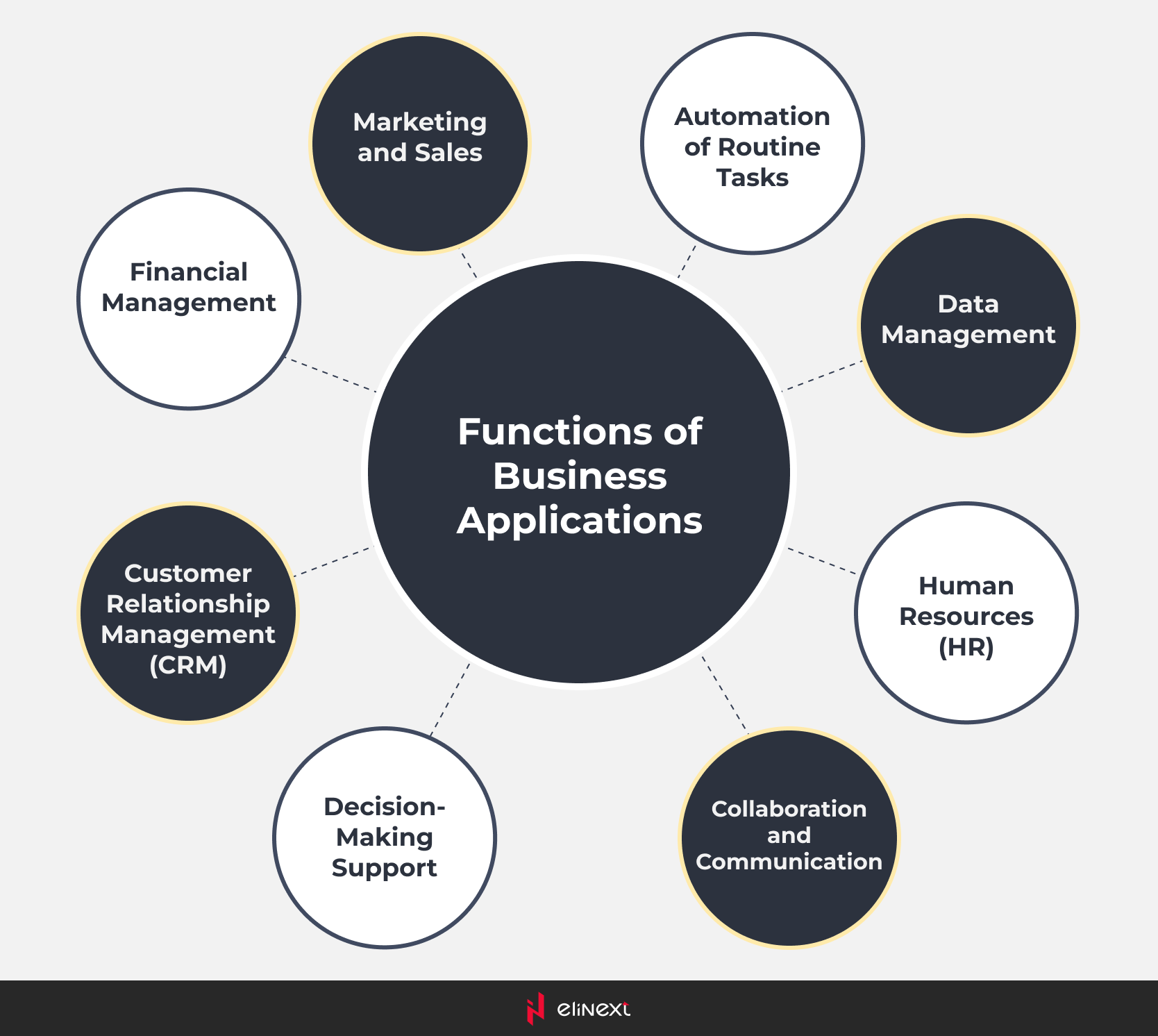
Automation of Routine Tasks
Enterprise applications automate repetitive tasks such as payroll, scheduling, and reporting. HR systems automatically generate payslips and schedule interviews, reducing manual work and errors and allowing HR departments to focus on developing talent.
Data Management
Enterprise applications centralize and manage business data, ensuring accuracy and accessibility. Business intelligence tools aggregate sales, financial, and customer data, providing managers with real-time dashboards to make informed decisions.
Collaboration and Communication
Enterprise applications offer chat, video calls, and file sharing to help teams collaborate seamlessly. A project management application allows remote teams to collaborate on documents and track progress, improving project outcomes and reducing miscommunication.
Decision-Making Support
Enterprise applications provide analytics and reporting tools to make data-driven decisions. A sales dashboard visualizes trends and forecasts, allowing managers to quickly adjust strategies and improve sales performance.
Customer Relationship Management (CRM)
CRM features track customer interactions, automate follow-up, and personalize communications. A SaaS company’s CRM application segments users and sends them targeted offers, which increases upsells and customer satisfaction.
Financial Management
Enterprise applications automate accounting, budgeting, and reporting. A financial application generates real-time financial reports and tracks expenses to ensure compliance and provide analytics for more effective budget planning.
Supply Chain and Inventory Management
Supply chain management applications track inventory, manage orders, and optimize logistics. A retail application tracks inventory levels and automates reorders to reduce stockouts and excess inventory and improve supply chain efficiency.
Human Resources (HR) Management
HR applications automate recruiting, onboarding, payroll, and performance reviews. An HRM application schedules interviews, tracks employee progress, and manages benefits to optimize HR operations and improve employee experiences.
Marketing and Sales
Marketing and sales apps automate campaigns, track leads, and analyze ROI. A marketing automation app sends personalized emails and measures campaign success to increase lead conversion and sales.
Ready to boost efficiency and growth?
Order custom corporate app development for your company and gain access to automation, analytics, and secure collaboration tailored to your business needs!
How Mobile App Development Solutions by Elinext Can Help Your Business
Corporate applications by Elinext streamline operations, automate workflows, and improve data security. Elinext mobile app development solutions helped a logistics company reduce delivery times by 18% and improve real-time tracking, resulting in increased customer satisfaction and operational efficiency.
Conclusion
In 2025, corporate applications play a key role in business success, offering automation, analytics, and secure cloud access. With features like real-time dashboards, workflow automation, and mobile integration, they increase productivity, save money, and improve collaboration. Companies using enterprise applications report a 25% increase in efficiency and a 30% reduction in operating expenses. Partnering with experts like Elinext ensures your business leverages the latest in corporate app development for sustainable growth and competitive advantage.
FAQ
What is a corporate application?
An enterprise app is a business software designed to automate, manage, and streamline operations, such as an ERP, CRM, or HR app. A sales team might use a CRM app to track leads and manage customer relationships.
How do corporate applications benefit a business?
They improve efficiency, reduce costs, and streamline decision-making. Automating payroll and reporting saves time and reduces errors, allowing employees to focus on strategic work.
Are corporate applications scalable for growing businesses?
Yes, modern enterprise apps are designed to scale. A cloud ERP system can add users and features as your business expands, supporting growth without interruption.
Can corporate applications be customized?
Of course. Enterprise apps can be tailored to unique workflows and integrated with existing systems. A retailer customizes its inventory management application to meet the needs of its supply chain.
How secure are corporate applications?
They use encryption, access control, and compliance features. A financial application with multi-factor authentication protects sensitive data from unauthorized access.
What’s the difference between a corporate app and a consumer app?
Enterprise applications (e.g., ERP, CRM) are designed for business operations and focus on security, integration, and scalability. Consumer applications are aimed at end users, focusing on ease of use and entertainment.
