






In 2025, cloud computing continues to revolutionize the technology landscape with innovations in the integration of artificial intelligence, edge computing, and advanced security protocols. Demand for cloud software development services is rapidly growing as companies prioritize scalability and flexibility. Сloud computing recent trends point to multi-cloud strategies and serverless architectures as key factors shaping the future of cloud computing worldwide.
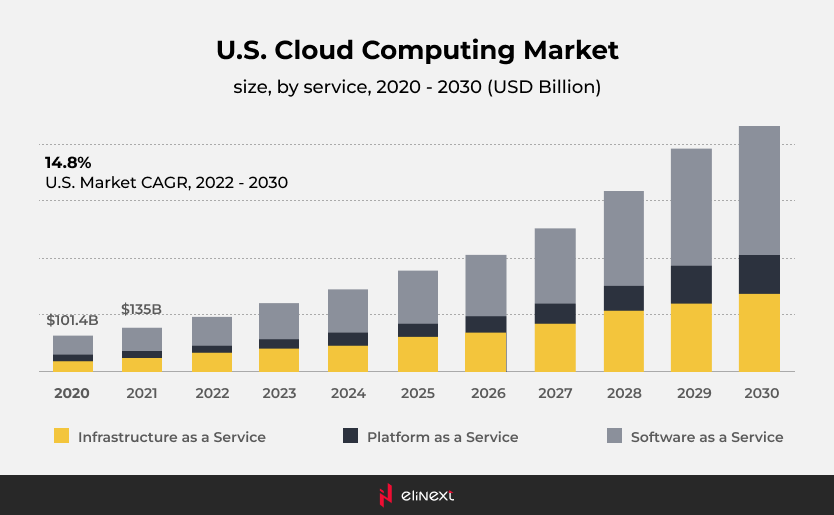
Cloud computing provides on-demand access to computing resources over the Internet, providing scalability, flexibility, and cost-effectiveness. Companies use AWS to deploy applications globally without having to own their own servers.
Latest in cloud computing (2025): Quantum Cloud Services and AI-Powered Automation Revolutionize Performance and Security, Making the Cloud Smarter and Faster Than Ever.
Why Cloud Computing Remains Critical in 2025
In 2025, cloud computing emerging trends continue to drive innovation across industries. With AI-powered automation, edge computing, and enhanced cybersecurity, companies will be able to scale efficiently and securely. Retailers are using cloud AI to personalize shopping experiences in real time, improving customer satisfaction and increasing sales worldwide.
Where cloud investments drive positive outcomes?
- 83% for mitigating business and regulatory
- 80% for building net new product / service revenue
- 74% for expanding into new markets
- 72% for providing better sustainability in support of environmental issues
Top Trends Driving the Future of Cloud
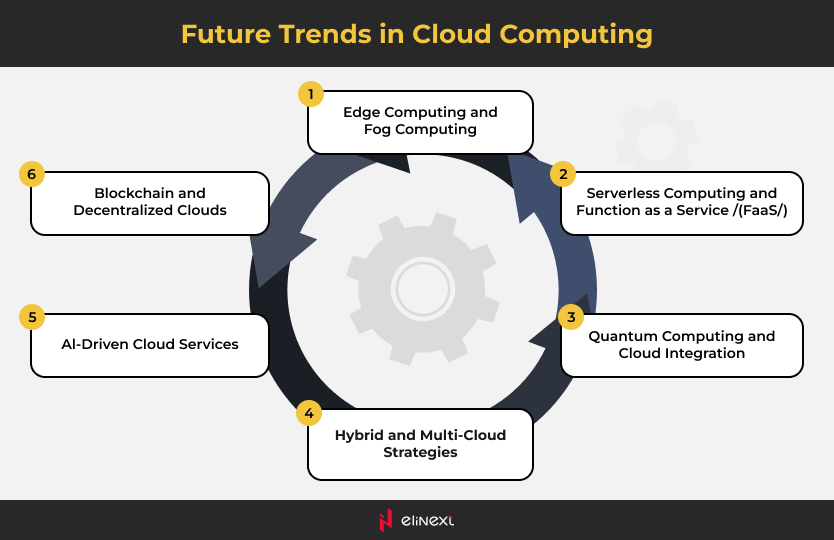
In 2025, emerging trends in cloud computing include AI integration, edge computing, and quantum-ready cloud services. For example, companies are implementing AI-powered analytics in the cloud to provide real-time insights, while edge computing reduces latency for IoT devices. These innovations are increasing efficiency and opening up new opportunities across industries.
-
Rise of Generative AI Supporting Infrastructure
In 2025, cloud computing trends will focus on scalable infrastructure to support generative AI. For example, AI software development services use cloud-based GPUs to accelerate the training of complex models, enabling the creation of sophisticated applications such as real-time content creation and personalized virtual assistants.
-
AI Model Gardens, Robotics and AI Agents
Cloud computing recent trends include AI Model Gardens—centralized hubs for pre-trained AI models—and robotics integration. For example, factories are using cloud-based AI agents to coordinate robots, increasing automation and efficiency in manufacturing.
-
The Rise of RAG Integration
Cloud computing emerging trends highlight the integration of augmented reality (RAG) technologies, which combine AI with access to real-time data. For example, customer support uses RAG-powered chatbots in the cloud to provide accurate and relevant answers, improving user experience and efficiency.
-
Hybrid and Multi-cloud Adoption
Cloud computing trends in 2025 show an increase in the adoption of hybrid and multi-cloud environments. Enterprises are combining public and private clouds to optimize costs and security, ensuring uninterrupted data transfer and disaster recovery across platforms, increasing flexibility and control.
-
Green Cloud Computing
The latest in cloud computing focuses on sustainability through green cloud initiatives. For example, data centers now use renewable energy and artificial intelligence to optimize energy consumption, reducing carbon emissions while maintaining performance and helping companies achieve environmental goals.
-
Serverless Computing
Cloud computing trends highlight the importance of serverless computing to speed up development and save money. For example, startups are adopting serverless functions to automatically scale applications without having to manage servers, enabling rapid innovation and lower operational costs.
-
Quantum Cloud Computing
Quantum cloud computing is transforming ML software development services by offering powerful quantum processors on demand. For example, developers are using quantum clouds to accelerate complex machine learning algorithms, enabling breakthroughs in areas such as drug discovery and cryptography.
-
Confidential Computing
Recent trends in cloud computing emphasize confidential computing, which protects the data in use using hardware encryption. For example, healthcare providers use it to securely analyze sensitive patient data in the cloud, ensuring privacy without sacrificing performance.
-
Edge Computing Integration
Generative AI development services now use edge computing integration to reduce latency. For example, AI models run on edge devices to generate real-time video using smart cameras, improving responsiveness and privacy by processing data locally.
-
Real-time Cloud Infrastructure
Real-time cloud infrastructure enables instant data processing with minimal latency. Financial companies use it to conduct high-frequency trades, analyzing market data in real time and making instant decisions, which increases efficiency and profits.
-
Cloud Security
Cloud security is vital in the face of growing cyber threats. Companies are using AI-powered threat detection systems to monitor cloud environments in real time, quickly identifying and blocking attacks, ensuring data protection and compliance without slowing down operations.
How Elinext’s Cloud Computing Solutions Help Your Business
Elinext cloud solutions provide businesses with scalable, secure, and cost-effective services tailored to their needs.
A retail company leveraged Elinext’s cloud migration expertise to migrate its legacy systems to the cloud, improving data access and reducing downtime. This enabled seamless collaboration, improved customer service, and significantly reduced operating costs, driving growth and innovation.
A healthcare provider leveraged Elinext to implement a hybrid cloud system, ensuring patient data was securely managed and quickly accessed across multiple sites. This improved compliance, accelerated decision-making, and improved patient care, while reducing IT costs.
Conclusion
Emerging trends in cloud computing, such as AI integration and edge computing, are driving innovation. Predictions show that 70% of enterprises will be multi-cloud by 2027. Analytics, for example, enable faster data processing and cost savings, shaping a smarter, more efficient future for the cloud. Companies that embrace these trends gain a competitive advantage through improved scalability, security, and real-time analytics, paving the way for transformative growth across industries.
FAQ
Why is edge computing becoming more important?
Edge computing is becoming vital as it reduces latency, improves data security through local processing, and supports real-time applications such as IoT and AI, improving productivity and efficiency.
What is the difference between multi-cloud and hybrid cloud?
Multi-cloud uses multiple public clouds from different providers (e.g. AWS + Azure) for flexibility. Hybrid cloud combines private and public clouds (e.g. on-premises + AWS) for control and security.
How is AI changing cloud computing?
AI is transforming cloud computing trends by delivering smarter, more personalized cloud services that increase efficiency and innovation. For example, AI-powered hybrid clouds help companies optimize resources and reduce latency.
How is Elinext as a cloud provider addressing sustainability?
Elinext achieves sustainability by optimizing cloud solutions, such as moving from monolithic solutions to microservices, which improves efficiency and reduces resource usage, supporting greener cloud computing practices.
What Industries Benefit the Most from Cloud Computing in 2025?
Cloud Computing Trends 2025: Industries such as agriculture will benefit from cloud computing by using data-driven tools for precision farming, while the financial sector will rely on secure and scalable cloud storage for sensitive data. Education will also benefit from cloud-based learning systems.
