



Ageism in tech industry is a pervasive problem: 60% of workers over 40 report experiencing age discrimination. By 2025, as the workforce ages, combating ageism in IT industry will become critical for innovation and talent retention. Custom software development services can help create inclusive platforms, but cultural change is key. Older employees are often overlooked for promotions or dismissed despite their experience. To combat this bias, companies need to encourage diversity in their teams, value mentorship, and implement fair hiring practices.
Key Takeaways
- Ageism in IT industry is widespread: 60% of technical professionals over 40 have experienced age discrimination.
- Older employees are often the first to be fired: 72% of technical professionals believe age is a factor in dismissals.
- Hiring Bias: Only 15% of tech companies actively hire employees over 50, despite their experience.
To foster innovation and retain talent, focus on solutions that combat ageism in tech industry. Encourage diversity, value expertise, and create inclusive workplaces for people of all ages.
What is Ageism?
Ageism is age discrimination, often directed at older people. In the age discrimination in tech industry, it manifests as assumptions that older workers are less adaptable or tech-savvy. A 50-year-old developer may not be hired for a position despite having over 20 years of experience.
Similar to racism or sexism, ageism is a form of oppression that seriously affects people’s health and general well-being, leading to social isolation, financial insecurity, poorer mental and physical health, etc. The main difference is that ageism is not fully perceived in its real, negative dimension.
Ageism affects old and young people alike and extends to many institutions and social sectors, including the workplace and age discrimination in IT.
Even though there are various laws that bar age-based discrimination, (e.g. The Age Discrimination in Employment Act in the U.S. or The Equality Act 2010 in the U.K.), ageism has turned into a pressing global issue that needs to be addressed.
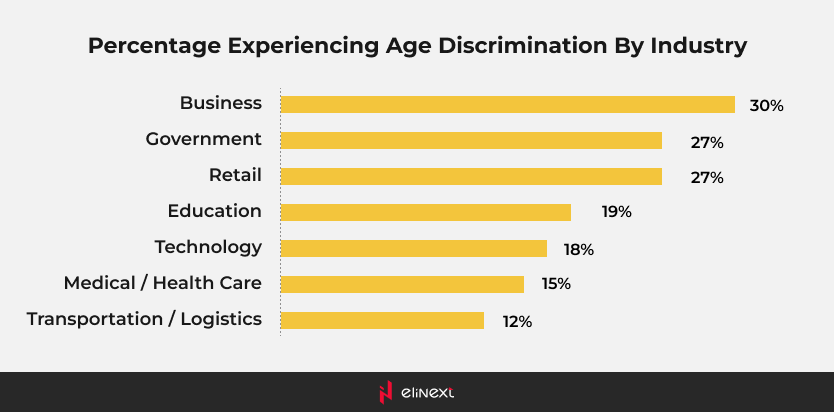
According to SeniorLiving.org, ageism in the technology industry occupies the 5th position, closely following the education industry:
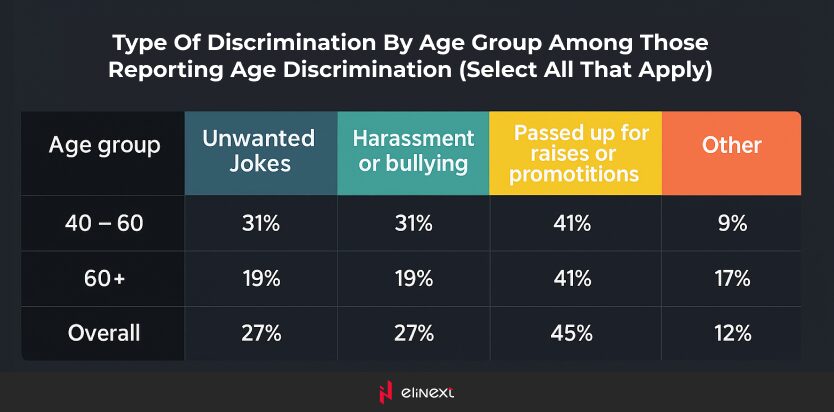
Ageism at the workplace manifests in various ways. However, it stands out that 52% of the respondents over 60 have been passed up for job-related opportunities.
Ageism in Tech Industry
The prevalence of ageism in IT industry is more than likely related to the fact that innovation lies at the core of this fast-paced, ever-evolving industry. This gave birth to the belief that older people find it difficult to keep up with technological progress.
According to a survey sent out by CWJobs, a UK-based tech recruitment website, to 2,000 workers and 250 people who work in the tech and IT sectors, 41% of the IT and tech-sector workers have experienced age discrimination in the workplace. The survey also reveals that only 27% of the workers across the other industries have experienced ageism.
The most striking aspect of the survey is the age at which the respondents started to experience ageism:
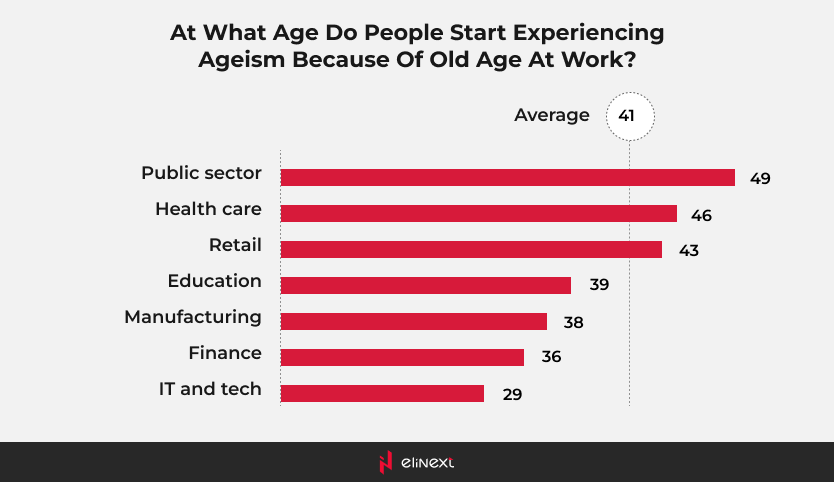
The most striking aspect of the survey is the age at which the respondents started to experience ageismé. The survey also highlights the most common ageist phrases:
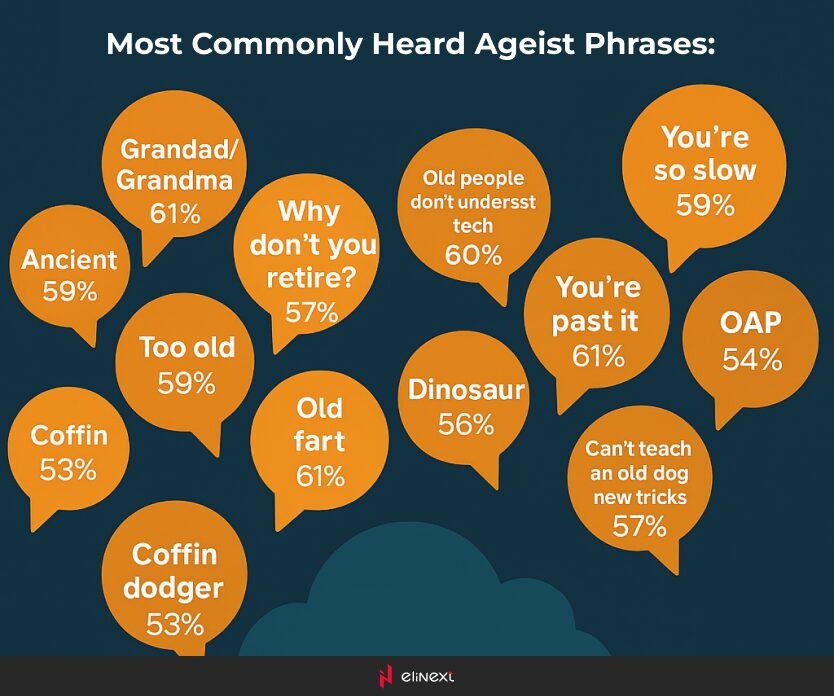
Even if, most of the time, these phrases are said jokingly, they are still an indicator of how old ageism in IT industry is taking a toll on workers’ health, well-being, and motivation.
Other examples of ageism in tech industry include:
- Reluctance to hire people over a certain age
- Policies that favour younger groups
- Age-related bullying and/or harassment
- Unnecessary and hurtful ageist jokes
- Fewer training and/or promotion opportunities
- Exclusion from corporate social events and activities
Why Does Age Discrimination in IT Actually Hurt the Tech Industry?
Older workers not only bring to the table their expertise and knowledge but also valuable insights that younger workers don’t have access to. Let’s think for a moment about open banking, social networks, or content platforms. Whether we like them or not, whether we are ready for them or not, they are here to stay. However, different users have different needs.
Failing to address the needs of older end-users (let’s say +60) directly translates into missing a significant target market. As the prevalence of tech services and products increases and older users need to embrace digital solutions, the problem of age discrimination in tech industry will become more and more pressing. Age diversity at the workplace is – after all – a way of guaranteeing ageless technological inclusion of both workers and end-users.
Additionally, older employees tend not only to commit to their job for a longer period of time but also bring to the table problem-solving, decision-making, time management, and improved communication skills.
How to Combat Ageism in IT industry
Age discrimination is present in virtually all industries. However, as demonstrated above, age discrimination in IT is prevalent, affecting older employees’ chances of getting and keeping a job and diminishing their chances of getting promoted. However, preventing ageism in tech industry is possible if the right strategies are adopted. Here are some steps that employers can take:
Promote multigenerational learning within your business
Fostering the cooperation between older workers and junior employees is a fruitful strategy that will bring together the age-forged professional experience and native digital skills. While it is true that young employees are naturally technically fluent and adapt to change rapidly, the older workforce has a set of abilities and skills that take a long time and professional experience to develop. Fostering this skills exchange will not only allow older workers to become tech-savvy but will also provide younger generations with a valuable experience-forged set of skills and knowledge.
Make sure your employment discrimination policy includes ageism
Clearly state the necessary process to report incidents at all levels (e.g. among co-workers, between an employee and his/her superior, etc.)
Implement regular diversity reporting
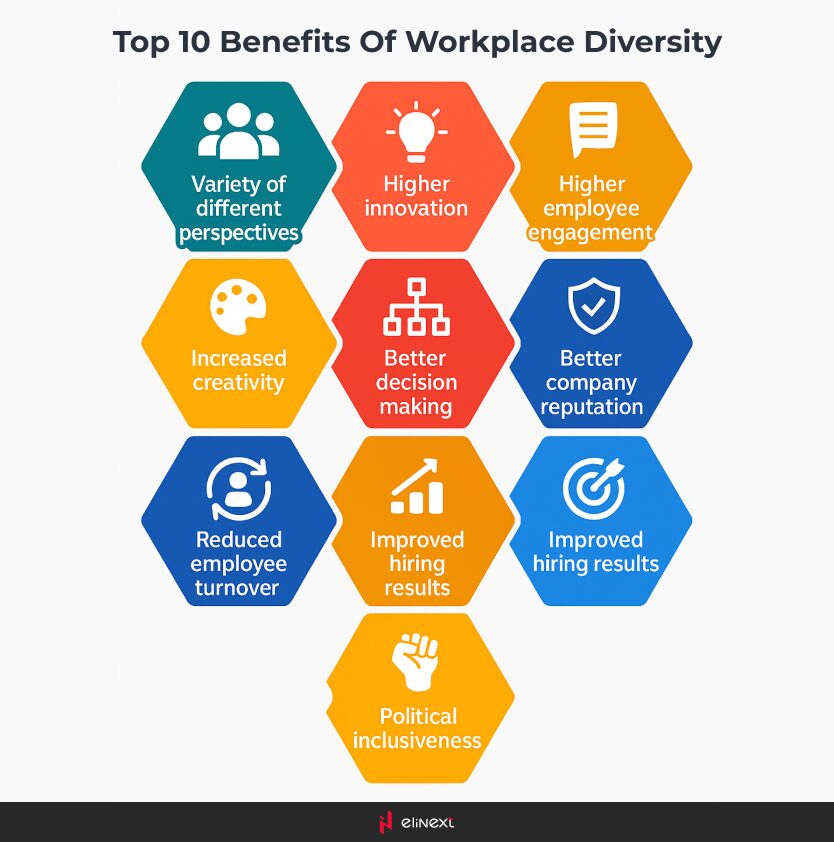
Through this initiative, you will make sure that your business’ workforce is more diverse and inclusive. As TalentLyft points out, diversity in the workplace comes with a series of advantages that no company should overlook:
Use adequate language in job descriptions
Sometimes, the language that companies use within their job descriptions may be age-discriminatory. Instead of describing the type of person needed for the job, the job description and application process should focus on the necessary skills the job requires.
Implement training programs for all age ranges
Creating a mix of skills across all age ranges will ultimately guarantee your business’ sustainable growth. The qualities of your older employees – honed through experience – can be upskilled and modernized with the right training initiatives.
“Age discrimination in tech industry stifles innovation and deprives employees of valuable experience.” Companies must recognize that diverse teams, including those with experienced talent, create more effective solutions. Embracing age diversity isn’t just an ethical issue; it’s a strategic imperative for sustainable growth and creativity.”
Elinext Software Development Expert
Conclusion
Age discrimination in tech industry, often subtle, impacts hiring, promotions, and terminations. AI-powered solutions can help reduce bias in recruiting by anonymizing applications, but human involvement is crucial. An AI-powered resume screening system could be designed to focus on skills rather than graduation dates. Combating ageism requires fostering an inclusive culture, recognizing the value of diverse experiences, and implementing equitable practices to ensure the tech industry has access to the full spectrum of talent.
FAQ
What does ageism in tech look like?
Age discrimination in IT manifests itself when older employees are overlooked for promotions, are dismissed first, or face biases regarding their technical skills. A 55-year-old developer may be deemed a “non-culture fit” despite being highly qualified.
How common is ageism in tech industry?
Older candidates often face hiring bias, as recruiters prefer younger candidates for similar positions. Ageism in IT industry is very common; 60% of tech professionals over 40 report age discrimination.
Why does ageism happen in tech industry?
Ageism in tech industry often stems from stereotypes that older workers are less adaptable, slower to adopt new technologies, or more expensive. Companies may prioritize “digital natives” over experienced professionals out of fear of a lack of innovation.
What are the consequences of ageism?
Ageism in IT industry leads to the loss of experienced professionals, reduced innovation, and lower morale. Companies miss out on valuable institutional knowledge and diverse perspectives, which hinders problem-solving and growth.
What can IT companies do to fight ageism?
IT companies can combat ageism in IT industry by implementing a hiring system that considers age diversity, encouraging mentoring, and offering continuous training. Blind resume review and experience assessment, regardless of age, can create more inclusive workplaces.
What can individuals do if they face ageism?
When faced with ageism, people can document incidents, seek legal advice, and proactively communicate. Updating skills, highlighting experience, and engaging with age-inclusive companies can help them navigate the job market.
How can the IT industry shift its mindset?
The IT industry can change its mindset by recognizing the value of experience, encouraging intergenerational collaboration, and combating age stereotypes. Fostering a culture of continuous learning and recognizing the value of diverse perspectives can spur innovation.
