






















































































































































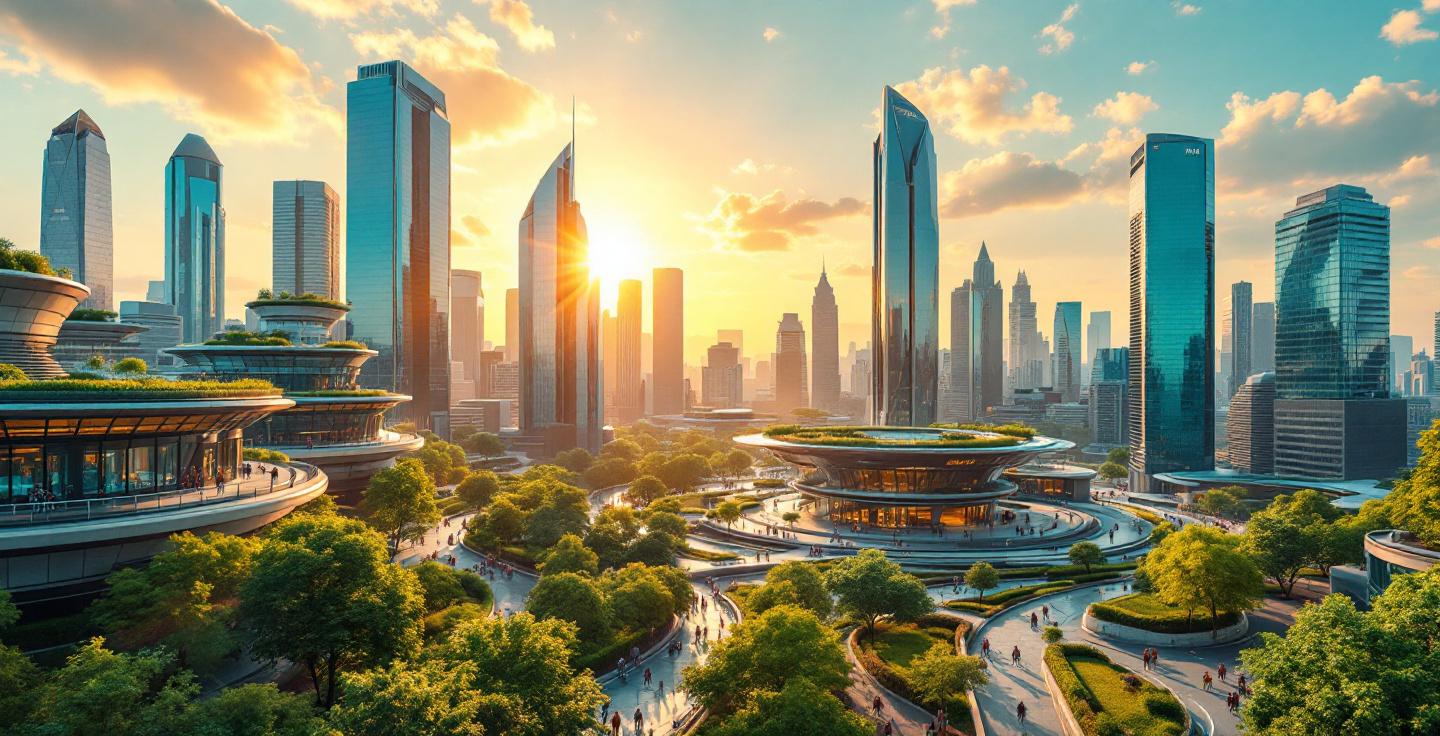
Smart cities solutions are here and you might not even realize it. A smart city is an urban area that uses digital technologies, the Internet of Things, and data analytics to optimize services, increase sustainability, and improve the lives of citizens.
Smart cities solutions and big data development services will transform work and lifestyles by 2032. Imagine AI-powered traffic management in Singapore, intelligent waste management systems in Barcelona, and real-time energy management in Amsterdam. These services are designed for city leaders, businesses, and citizens seeking efficiency, sustainability, and improved quality of life. Results include reduced congestion, reduced emissions, and the creation of more efficient workplaces.
Smart city services are designed for governments, urban planners, businesses, and residents seeking to create efficient, safe, and sustainable urban environments. By 2032, smart cities will deliver up to 48% more energy efficiency, 36% fewer traffic jams, and new digital workplaces, transforming how people work, commute, and live. IoT technologies for smart cities, smart cities software, and cloud application development services enable real-time traffic management, predictive maintenance, and energy savings. By 2026, 49% of cities will use edge AI to monitor the urban environment, reducing traffic jams by 36%.
What are Smart Cities?
Smart cities solutions use digital tech to optimize urban life. Barcelona’s IoT waste management cut truck runs by 90% in 2026. The global smart city market will reach $1.04 trillion by 2025, driven by energy, mobility, and public safety innovations.
In 2026, smart cities technology offers vast digital infrastructures: remote working, online libraries, responsive energy grids, and smart homes. If your hometown boasts these features, you already live in a smart city.
But millions more will reside in smart cities in 2032. In a decade, smart cities software will have transformed work and lifestyles worldwide. Using AI solutions, cloud computing smart cities solutions in 2032 could be more sustainable. They might boast better healthcare. And, they could even give a basic income to all. Or, they might infringe privacy and create an overly artificial world.
What is the Role of IoT Technologies for Smart Cities?
Smart cities are urban areas with interconnected, intelligent services. They exist worldwide. And, they are growing. Brisbane, Singapore, Moscow, New York, and Shanghai are prominent examples.
The term supposedly derives from a 2008 marketing campaign, but cities have used smart cities solutions to optimize residents’ lives for decades now. Recognisable measures include CCTV, app-based bike-sharing schemes, waste management systems, and online community services. Clearly, these initiatives promote health, drive sustainability, and reduce crime.
Yet they also impinge on privacy, because they collect data. And in essence, that’s what defines the concept of a smart city. Smart technologies harvest data. Information from smart technologies then feeds forward into operations across the city. And ideally, this improves services. Sound familiar? Probably.
But IoT technologies for smart cities in 2032 will boast unrecognizable innovations. IoT technologies are the foundation of smart cities technology, enabling real-time data collection and automation. Thanks to AI software development services and cloud engineering services, cities like Singapore use over 110,000 IoT sensors to monitor traffic, energy consumption, and security. Siemens City Performance Manager system integrates IoT and AI to optimize city operations, while cloud platforms aggregate data for predictive maintenance and urban planning. These advances contribute to increased efficiency, sustainability, and the creation of new digital jobs.
Future-proof your city for 2032 digital transformation.

Smart cities in 2032: what will they include?
To address global challenges, smart cities in 2032 will use revolutionary tech. Such technologies are data-driven and solution-oriented: AI, IoT for smart cities, cloud-based systems, and more. Since global problems are interconnected, in smart cities the solutions are too. Below, we discuss some of these problems, potential solutions, and possible consequences.
1. Driverless cars will change the face of smart cities
In 2032, according to UN projections, the world’s population will exceed 8.5 billion. What’s more, half of us will inhabit cities. So, getting around cities needs to be easier.
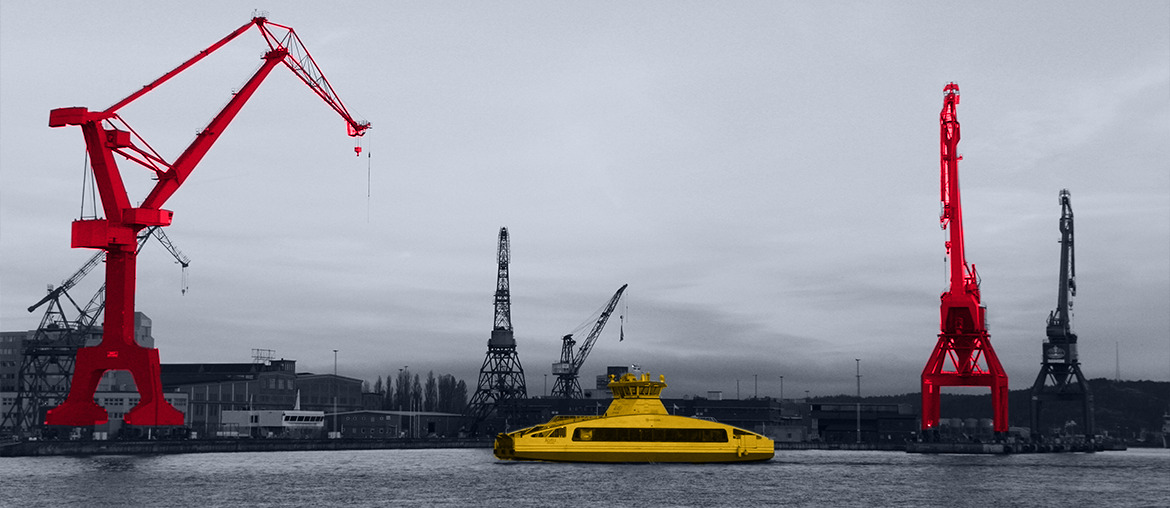
Driverless cars will use tech to communicate with passengers and each other. Responsive and efficient, they will reduce congestion. Mainly, they will do this by optimizing parking. And, they are safer. Swedish smart cities Stockholm and Gothenburg have pioneered driverless buses and cars already. And many notable manufacturers are trialling driverless cars in 2026. So, smart cities in 2032 are likely to offer their residents a mix of self-driving public transport and other vehicles. Can you picture an easier commute? All the same, it lacks the freedom of driving your own car.
2. Sustainable smart cities could help the planet
With climate change fuelling inequality, smart cities must promote sustainability. Sustainable smart initiatives use tech to conserve resources. So, smart cities in 2032 will feature widespread harvesting of rainwater (for non-drinking purposes). They will automate luminosity across all districts. What’s more, reducing pollution and carbon emissions will be key for smart cities in 2026. Smart air quality monitoring, already used in Beijing, will become widespread.
As a side note, driverless cars will also promote sustainability by enabling better city planning. In turn, this promotes greener, more efficient usage of space and resources.
3. Citizens will benefit from smarter healthcare
Smart healthcare already includes remote access to care. Ranging from video consultations to encrypted records, the trend is set to grow. In the coming decade, AI and medical robotics will revolutionize surgery. This automation could promote better outcomes for patients. What’s more, in our homes, smart devices will monitor vital signs and medical indicators. Then, they will communicate data directly to professionals. And data won’t just be used for individual health monitoring. Smart cities in 2032 will use analytics to respond to wider issues. That means they will wield information to alert citizens to diverse health matters, from infection risks to sanitation, safe sex, and more. None of this is outside the realms of possibility. After all, we saw how cities and nations used health data throughout the Covid-19 crisis.
4. Digital finance could dominate everyday life
In smart cities in 2032, smart technologies could account for almost all banking, buying, and selling. Smartphones could accompany every shopping experience, even in person, as deep learning retail environments like Amazon Go proliferate. So you might do your weekly grocery shop, or buy a new outfit, and not interact with anyone in person. Furthermore, smart cities in 2032 will likely use digital taxation systems. This will allow governments worldwide to combat tax evasion and avoidance. Jobs, income, and expenditure will continue to change. Nonetheless, many people already oppose this automation. Usually, this is on grounds of privacy. Others, however, welcome the decentralization of money. And with cryptocurrencies multiplying, the possibilities for the future of money are endless.
What vision for smart cities in 2032?
Cutting-edge digital advances, from NFTs to deep learning, are already at play in cities worldwide. Smart cities are here; millions of us live in them today. And in ten years, they will be unrecognizable. Used well, the smart tech could combat pressing issues already faced in 2026. It could alleviate the climate crisis and fight resource scarcity. Innovations from automated air monitoring to universal basic income might revolutionize millions of lives. This could transform the future of our planet, promote health and sustainability, and improve well-being and equality.
Yet technology is only as good as those who wield it. Moreover, smart innovations are data-driven. So, they can infringe on privacy. At worst, they can even entail surveillance. And despite the efficiencies of automation, perhaps it comes at the cost of our humanity.
One thing is for sure: smart cities in 2032 will have altered work and lifestyles forever.
The question remains how.

Smart Cities in 2032 face complex integration of diverse systems. Elinext leverages smart cities technology, IoT technologies for smart cities, and Internet of Things (IoT) solutions to unify data from traffic, energy, and safety networks. This reduces inefficiencies, boosts sustainability, and delivers measurable business impact for urban stakeholders.

Conclusion
By 2032, IoT for smart cities, smart cities software, and edge AI development services will transform urban life. Cities like Vienna and Singapore are already reporting a 48% increase in energy consumption and a 36% reduction in traffic congestion by 2026. The global smart city market is expected to reach $1.45 trillion by 2030, driven by artificial intelligence, the Internet of Things, and 5G. These technologies enable safer, greener, and more efficient cities, but to maximize the benefits, they require ongoing investment in cybersecurity and interoperability.
Smart Cities Technology: Terms Explained
-
Artificial Intelligence (AI)
Artificial intelligence (AI) is a technology that enables machines to learn, reason, and solve problems, automating complex tasks in smart cities.
-
Internet of Things (IoT)
The Internet of Things (IoT) is a technology that enables machines to learn, reason, and solve problems, automating complex tasks in smart cities.
-
5G / 6G Networks
5G/6G networks are ultra-fast wireless networks that enable real-time smart city applications and massive connectivity of IoT devices.
-
Edge Computing
Edge computing processes data near the source, reducing latency and providing instant analysis for city operations.
-
Big Data Analytics
Big data analytics reveals patterns in large data sets, supporting more informed decisions in city management.
-
Cloud Computing
Cloud computing provides scalable resources and analytics over the internet, powering smart city platforms.
-
Digital Twins
Digital twins are virtual models of city assets used for real-time monitoring, modeling, and planning.
-
Autonomous Vehicles
Autonomous vehicles use AI and sensors to navigate without human driver intervention, transforming urban mobility.
-
Smart Grids
Smart grids use the Internet of Things and artificial intelligence to optimize energy distribution, integrate renewable energy sources, and improve reliability.
FAQ
-
Smart cities solutions are integrated systems using IoT, AI, and big data to optimize urban services, like traffic and energy, for better living.
-
IoT technologies for smart cities include sensors, edge AI, cloud platforms, and 5G, enabling real-time data and automation.
-
Smart cities solutions create roles in data science, IoT engineering, cybersecurity, and urban analytics, e.g., smart grid analysts.
-
IoT technologies for smart cities enable smart homes with automated energy, security, and health monitoring, improving comfort and efficiency.
-
Smart cities software improves efficiency, sustainability, and safety by automating city operations and providing actionable insights.
-
Smart cities technology faces risks like cyberattacks, data breaches, and privacy concerns due to interconnected systems.
-
Smart cities software uses encryption, zero-trust, and privacy-by-design, but evolving threats require continuous security updates.
-
Smart cities technology is deployed globally, with cities like Singapore, Vienna, and Dubai leading in digital twin and IoT adoption.