





























































































































































Flutter and React Native are premier open-source frameworks for cross-platform mobile development. For businesses targeting iOS and Android, these tools provide a single codebase that reduces delivery timelines by 20%-40% while significantly cutting costs. Today, they dominate the market; Flutter leads in developer interest (9.4% vs 8.4%), whereas React Native remains the go-to for complex enterprise solutions with its mature, massive ecosystem.
What is Flutter?
Created by Google, Flutter is an open-source framework using Dart. It renders UI via its Impeller engine, drawing every pixel for native performance. It enables high-quality apps for mobile, web, and desktop from one codebase with pixel-perfect consistency. Global brands trust its secure ecosystem for complex enterprise-level architectures.
What are the Key Features of Flutter?
Flutter’s appeal lies in its comprehensive suite of features that prioritize speed, consistency, and performance. Beyond simple UI rendering, it offers a self-contained ecosystem that simplifies development across diverse environments. These core capabilities empower teams to build ambitious products without traditional multi-platform overhead.
Single Codebase for Multiple Platforms
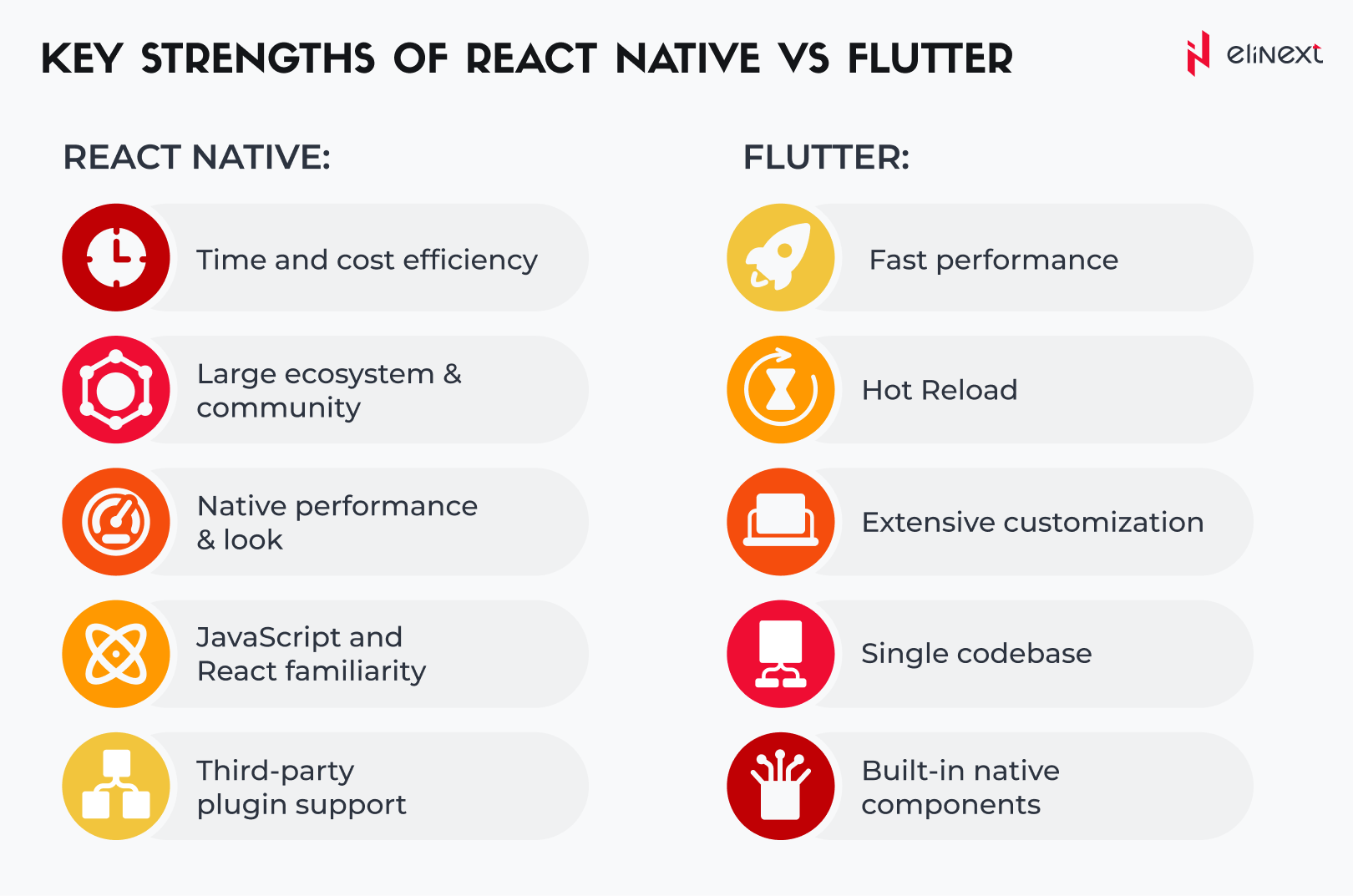
Flutter allows developers to write one codebase for Android, iOS, web, desktop, and even embedded systems. This feature is incredibly useful because it drastically cuts development costs and time-to-market while ensuring a consistent user experience across all digital platforms.
Native Device Feature Access
This feature allows Flutter apps to interact directly with core device functionalities like cameras and sensors without third-party components. It’s beneficial for developers because it enables the creation of apps with a native look and feel, providing high-speed performance.
Testing Support
Flutter provides a robust set of built-in testing features for unit, integration, and widget-level verification. This extensive support is highly valuable as it ensures app stability and quality from the start, complemented by detailed documentation that makes the process efficient.
Responsive and Adaptive Design
This feature utilizes proprietary, 100% customizable widgets like Material Design and Cupertino to render high-quality interfaces. It’s useful because it allows for unified branding while adapting to screen sizes, ensuring layouts remain smooth at 60fps across devices.
Open Source and Backed by Google
Flutter is a free, open-source SDK supported by Google, one of the world’s largest tech giants. This backing is vital as it guarantees long-term reliability, constant updates like the Impeller engine, and high-quality documentation, making it a safe investment for businesses.
What is React Native?
React Native is an open-source framework developed by Meta in 2015 for building iOS and Android apps using JavaScript and React. It leverages native UI components, allowing web developers to create mobile experiences with an authentic platform look and feel. This results in highly responsive, scalable apps like Tesla or Shopify.
What are the Key Features of React Native?
React Native stands as a mature, robust ecosystem that excels in bridging web development with mobile performance. By leveraging native UI components, it ensures applications feel authentic while maintaining a single codebase. This synergy of JavaScript efficiency and platform-native aesthetics makes it a top choice for market-leading brands.
Cross-platform Development
This feature allows developers to build apps for both Android and iOS using a single codebase. It’s incredibly helpful because it can cut your development costs by roughly 15-20% and significantly speeds up your time-to-market compared to building two separate native apps.
Uses JavaScript and React
React Native is built on JavaScript and React, which are standard tools for web developers. This is great because it allows companies to use their existing web talent for mobile projects, ensuring a gentle learning curve and much faster onboarding for the team.
Third-party Plugin Support
The framework offers a massive ecosystem of ready-made libraries and community-driven tools. This is useful because developers can easily add advanced features like maps or sensors without writing everything from scratch, which saves hours of work and reduces project complexity.
Native Module Integration
This capability lets the framework connect directly to native platform features when standard cross-platform tools aren’t enough. It’s essential for complex enterprise apps that need platform-specific functionalities, ensuring you have the flexibility to handle heavy-lifting tasks.
Code Reusability
React Native makes it possible to reuse up to 90% of your code across different platforms. This is a huge win for scaling because it eliminates the need to maintain two different projects, making long-term maintenance easier and keeping your budget under control.
Open-source Framework
Since it’s an open-source project backed by Meta, the framework is free and constantly improving. This is valuable because you have a global community providing updates and documentation, ensuring the tech remains reliable and future-proof for your business.
Supports Android and iOS Development
The framework focuses on the two biggest mobile platforms to ensure a native vibe. This is beneficial because it helps your app look and feel familiar to users on their specific devices, providing a high-quality user experience while keeping the development process efficient.
Our Flutter or React Native development services will help you build apps that feel natural and at home on any device.

Core Differences Between Flutter and React Native
Choosing between Flutter and React Native depends on your technical needs and team skills. While both allow for high-quality cross-platform builds, they differ significantly in their architecture, language, and overall developer experience.
Framework Maturity
When looking at React Native vs Flutter history, we see that React Native was released by Meta in 2015. Flutter is younger, with its first beta appearing in 2018. Because it has been around longer, React Native boasts a more mature ecosystem and a larger community of developers. But Flutter is catching up rapidly, gaining massive traction due to its modern features and strong backing from Google.
Programming Language
React Native uses JavaScript, which is the most popular language for web developers, making it very easy to find talent. Flutter uses Dart, a newer language from Google that is expressive and fast but less commonly known. The benefit of JavaScript is a much gentler learning curve for existing web teams. Dart is optimized for UI tasks, which helps Flutter achieve its high-speed performance.
Installation
To install React Native, developers use the standard Node Package Manager (NPM). Flutter requires you to download a binary for your specific platform from GitHub and manually add it to your system’s PATH. While both frameworks take a bit of effort to get started, React Native’s reliance on standard package managers makes the initial download feel a bit more seamless.
Configuration & Setup
Flutter offers a more user-friendly setup process because it includes automated tools to check your system for configuration errors. React Native lacks these automated health checks, often making the initial environment setup more manual and prone to troubleshooting. This makes Flutter more useful for teams who want to get their project running quickly without hunting for hidden setup bugs.
Technical Architecture
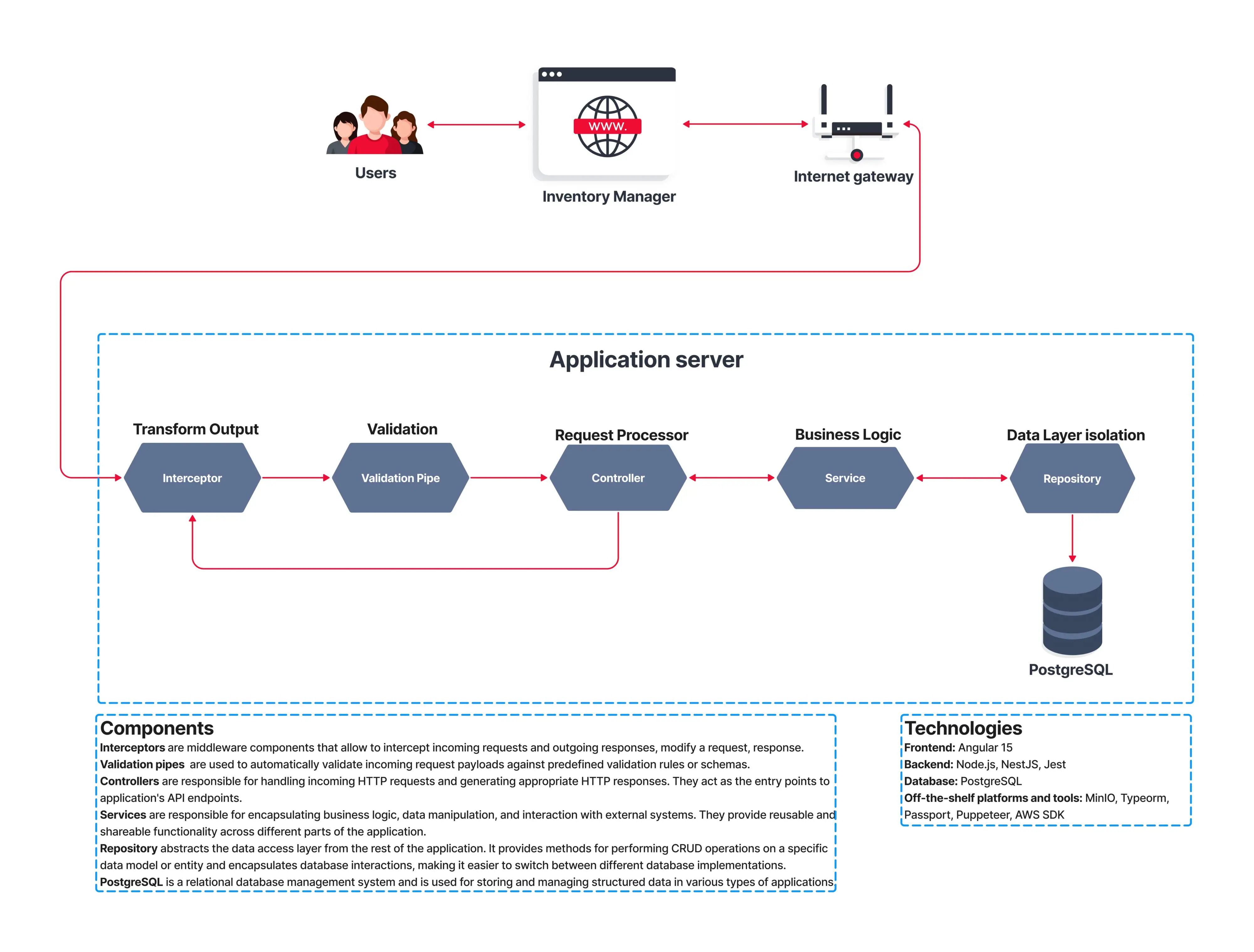
A deep dive into Flutter vs React Native performance shows that architecture drives speed. React Native uses a JavaScript bridge to talk to native modules, causing occasional bottlenecks. Flutter eliminates the bridge by using built-in engine components. This design allows Flutter to be much faster, easily hitting 60fps for complex animations and smooth transitions.
User Interface
React Native uses actual native components, so UI elements look identical in other system apps. Flutter draws its own proprietary widgets from scratch, giving you 100% control over every pixel. When comparing React Native vs Flutter UI approaches, this pixel-level control is incredibly useful for a unified brand appearance where the app looks and behaves exactly the same on both iOS and Android.
Native Appearance
React Native uses platform building blocks to provide the native vibe users expect. Flutter mimics this look with proprietary Material and Cupertino widgets. While Flutter excels at custom designs, the ultimate React Native vs Flutter choice comes down to priority: React Native is the go-to if your app must feel like a standard, integrated part of the operating system.
Documentation
Google is famous for its high-quality documentation, and Flutter is no exception, offering clear and well-organized guides. React Native’s documentation is often seen as more chaotic because it relies heavily on the open-source community. Having structured and official documentation in Flutter is very helpful for teams, as it reduces the time spent searching for answers or troubleshooting issues.

Firms often get trapped in maintenance hell because they rely on unstable third-party plugins that eventually break their app. As a professional mobile app development company, Elinext solves this by picking the right framework for your specific goals, whether it’s Flutter for visual consistency or React Native for a native feel, and building custom modules so your tech never limits your growth.

Explore Flutter and React Native Development Solutions by Elinext
Elinext provides specialized development solutions aligned with your project’s strategic goals. We help businesses understand the differences between Flutter vs React Native performance metrics and choose the most appropriate framework. Our experts guide you through tech stack selection to ensure scalability, whether you need pixel-perfect UIs or seamless JavaScript integration.
Our React Native and Flutter app development company turns your ambitious ideas into beautiful, high-performing apps in record time.
Conclusion
Selecting the ideal framework for your mobile app is a pivotal business decision. In the ultimate Flutter vs React Native matchup, the right choice must perfectly align with your unique growth objectives, performance needs, and existing team expertise. Our specialists are ready to help you navigate these tricky trade-offs, dodge common pitfalls, and build a high-performing cross-platform solution that drives long-term market success.
Flutter VS React Native: Terms Explained
UI Rendering Approach
Flutter draws every pixel via its own engine (Impeller) for total consistency. React Native maps JSX to native components (Fabric) for an authentic at home platform feel.
Programming Language
Flutter uses Dart, a strongly-typed language that compiles directly to native code. React Native relies on JavaScript/TypeScript, the industry standard for web developers.
Performance & Rendering Speed
Flutter achieves native speed through AOT compilation to ARM machine code. React Native offers near-native performance by using JSI for direct communication with native modules.
Architecture
Flutter’s bridge-less architecture compiles directly to native code for better speed. React Native’s New Architecture uses JSI for synchronous, direct communication with native views.
Hot Reload
A core feature in both frameworks allowing near-instant feedback on UI changes without losing the app state, which significantly accelerates the iteration and debugging process.
Fast Refresh
React Native’s specific reloading feature that combines live and hot reloading, designed to recover from typos and maintain application state during rapid development cycles.
Ecosystem
React Native boasts a massive, mature ecosystem with 2M+ npm packages. Flutter’s ecosystem is younger but growing rapidly, featuring 67,500+ specialized packages on pub.dev.
Package Availability
Flutter developers access centralized libraries through pub.dev. React Native leverages the massive npm registry, providing millions of modules for almost any functionality.
Native Modules
Code blocks in Swift/Kotlin used to access device-specific APIs. Flutter uses platform channels, while React Native employs TurboModules for direct, high-speed JS-to-native calls.
Platform Integration
The method for accessing hardware like GPS. Flutter uses asynchronous platform channels. React Native’s JSI allows for synchronous, direct C++ memory-level invocation.
Developer Experience
Flutter provides a cohesive, self-contained SDK with automated diagnostic tools. React Native offers a familiar environment for web developers using standard JS tools and Expo.
Learning Curve
Flutter has a steeper curve as developers must learn the Dart language. React Native is easier for those already proficient in JavaScript or the popular React library.
FAQ
-
Flutter and React Native are the two leading open-source frameworks for cross-platform mobile development. Flutter, created by Google, uses the Dart language and renders its own UI. React Native, by Meta, uses JavaScript to map to native components.
-
Speaking about Flutter vs React Native performance, Flutter is generally faster because it compiles Dart directly to native ARM machine code. React Native offers near-native speed but relies on a bridge or JSI for communication.
-
In the ongoing Flutter vs React Native debate, Flutter is superior for custom, pixel-perfect designs because it controls every pixel on the screen. React Native provides a more native feel by using actual platform components.
-
When analyzing React Native vs Flutter libraries and tools, React Native has a more mature ecosystem with over 2 mln npm packages. Flutter is growing more rapidly, showing higher interest among developers learning to code.
-
Looking at React Native vs Flutter capabilities in cross-platform development, Flutter is better for reaching multiple surfaces, including web and desktop, out-of-the-box. React Native excels as a mobile specialist for iOS and Android.
-
Industry adoption shows how brands trust a framework for high-traffic production apps. Flutter is utilized by BMW, Alibaba, and eBay. React Native powers major apps like Facebook, Instagram, Walmart, and Tesla, proving its enterprise stability.
-
In the Flutter vs React Native breakdown, Flutter wins for visual consistency and graphics-heavy apps. React Native wins for speed of hiring and projects requiring deep JavaScript ecosystem integration.